
In brief: If your 18V battery won’t charge, first check the charger, power outlet and contacts. Extreme temperatures or deep discharge could also be to blame. If the battery drains quickly, it may be worn out or have been stored incorrectly. Testing it with a second battery can help you work out whether the battery or charger is faulty.
You’re in the middle of a project, ready to drive in the last screw or finish mowing the lawn, when your tool suddenly stops. A quick look at the battery confirms it: it’s dead. Then comes the next disappointment when you connect it to the charger: nothing happens. The charging light stays off or flashes a warning. An 18V battery that won’t charge or drains in no time can bring any project to a halt. But that doesn’t necessarily mean it’s time to replace your tool.
Often, a small, fixable issue is all that’s stopping your battery from working. The cause could be anything from a simple power supply problem to a hidden fault in the system. This guide walks you through troubleshooting step by step. You’ll learn how to identify and fix the most common problems with 18V lithium-ion batteries, so you can get back to your projects with a fully charged battery.
The quick solution: A reliable replacement battery
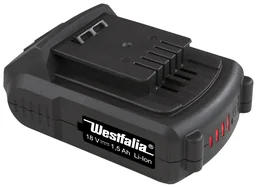
Sometimes, battery problems come down to age or an internal fault. Before spending hours on complex troubleshooting, replacing the battery may be the quickest and safest solution. A fresh battery restores your tool’s full power and runtime. The : 18 Volt Li-Ion battery 1,5 Ah is a dependable choice for many common cordless tools, so you can get back to work without interruption.
Why has my 18V battery suddenly stopped charging? Find the cause
When a battery won’t charge, the cause is often found in the details. Check the likely sources of the problem one by one, starting with the most common. This can save you time and frustration.
Possible cause 1: The charger and power supply
Start by checking the power supply. Is the charger firmly plugged into the outlet? Try another outlet you know works. To be sure, test it with another device, such as a lamp. Check the charger cord for visible damage, such as kinks or cracks. A damaged cord is a safety risk and must be replaced immediately. Also check the charger’s indicator lights. Your owner’s manual explains what the different colours or flashing patterns mean.
Possible cause 2: Dirty or damaged contacts
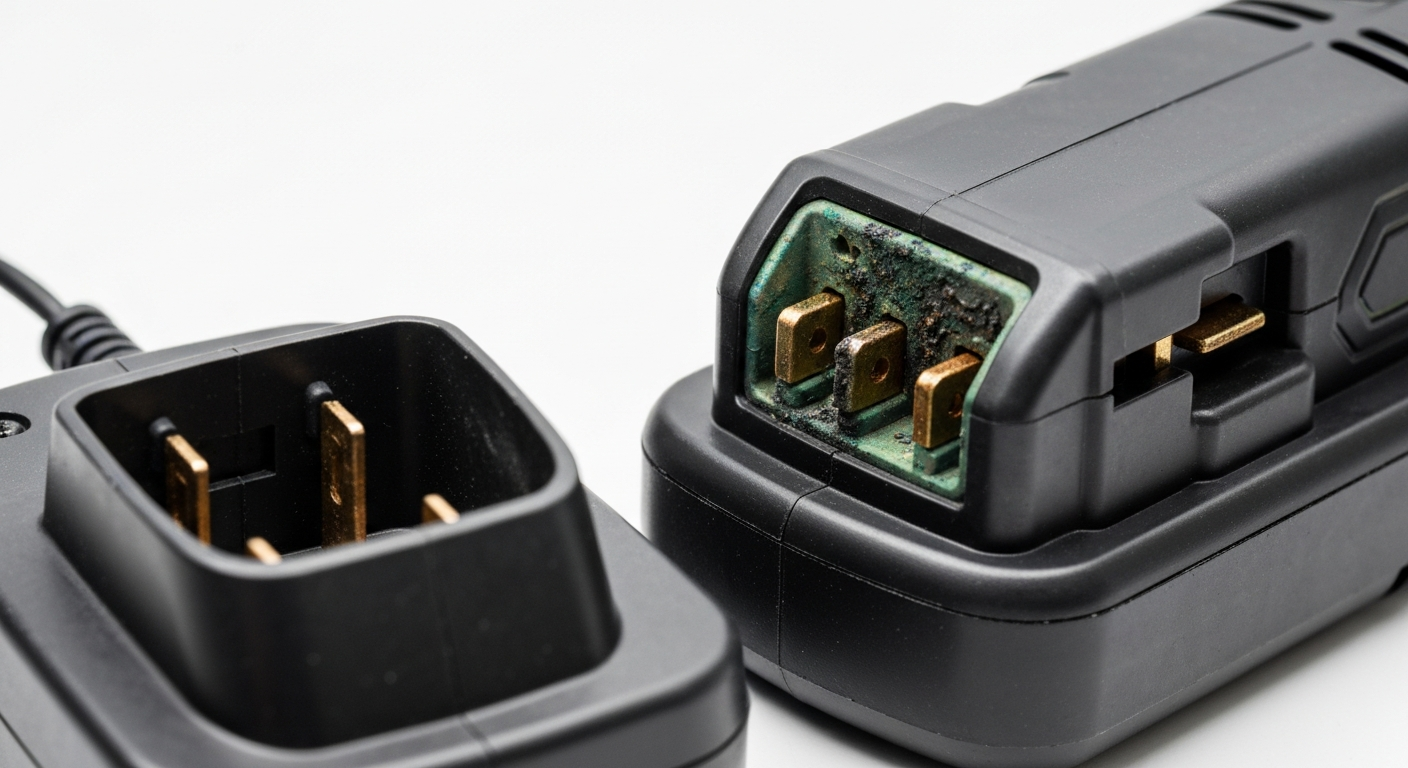
For power to flow, the metal contacts on the battery and charger need to be clean. Dust, sawdust or moisture can create an invisible barrier and interfere with charging. Inspect the contacts closely. Clean them carefully with a clean, dry cloth or a soft brush. Never use water, solvents or metal objects such as screwdrivers, which can damage the contacts or cause a short circuit.
Important note
Lithium-ion batteries are sensitive to extreme temperatures. Never charge a battery in freezing conditions below 5 °C or in direct sunlight above 40 °C. The charging electronics interrupt the process to protect the cells, which can make the battery seem faulty. Let a hot or cold battery reach room temperature before charging it.
Possible cause 3: The ambient temperature
Your battery has a “comfort zone” for charging. Most manufacturers recommend a temperature range of around 5 °C to 40 °C. Below that range, the chemical processes inside the cells slow down. The charging electronics stop the process to prevent harmful “lithium plating”, which can permanently damage the battery. If the battery gets too hot, such as in a car parked in the sun during summer, the electronics also shut off to prevent overheating and the risk of fire.
Possible cause 4: Deep discharge – the silent battery killer
Deep discharge happens when a battery’s voltage drops below a critical level. This can happen if you store a dead battery for months without charging it. For safety reasons, modern charging electronics are designed not to charge a deeply discharged battery. The charger detects the extremely low voltage as a potential fault or safety risk and won’t start charging. In this condition, the battery often can’t be saved.
Avoid deep discharge by never storing your batteries completely flat. A charge level of around 50 % is ideal for long-term storage. Check the charge level every few months and briefly top it up if needed.
How can I tell if my battery is draining quickly, and what can I do?
A battery that charges but doesn’t hold its charge for long is just as frustrating. Its runtime gets noticeably shorter and performance drops. There are several possible causes, from normal wear and tear to user error.
The natural ageing process: Capacity loss over time
Every battery ages. With each charge and discharge cycle, the chemical components inside lose a little of their ability to store energy. A high-quality lithium-ion battery is designed to last for hundreds of charge cycles, often more than 500. After several years of heavy use, it’s normal for the original capacity to drop noticeably. The battery may be fully charged, but it stores less energy than a new one.
Pro tip
Extend your battery’s lifespan by storing it in a cool, dry place with a charge level between 40 % and 60 %. Avoid leaving it fully charged or completely flat for long periods. Remove the battery from your tool after use and store it separately.
Incorrect storage and its consequences
How you store a battery has a big impact on its lifespan. A battery kept in a hot shed or an ice-cold cellar will age faster. High temperatures speed up chemical degradation, while frost can damage the internal structures. Storing a fully charged battery at high temperatures is especially harmful. It puts the cells under constant “stress” and accelerates capacity loss.
Usage: Is your tool demanding too much?
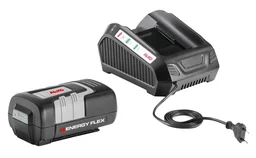
Not every battery is suited to every tool. High-performance tools in the power tools category, such as a cordless circular saw or angle grinder, draw very high currents under load. A small 1,5 Ah (amp-hour) battery will quickly reach its limits and run flat. Higher-capacity batteries, such as 4,0 Ah or more, are much better suited to these applications. They provide longer runtime and deliver high power more consistently. A good example of a set with a high-performance battery is the : "EnergyFlex" Value Set - 4,0 Ah battery and charger.
How can I tell whether the battery or charger is faulty?
To find the right solution, first identify which component is causing the problem. A few simple tests can help you narrow it down quickly.
Cross-testing: the easiest method
The most reliable method is to cross-test the battery and charger. You’ll need a second working battery and charger from the same system. Here’s what to do:
- Put the faulty battery in the known-good charger. If it charges, your original charger is faulty.
- Put the known-good battery in your original charger. If it doesn’t charge, the charger is also at fault.
- If the faulty battery won’t charge in the known-good charger, but the good battery works in your charger, the battery is clearly faulty.
Inspect the battery and charger
Carefully inspect both components. Look for cracks, a misshapen casing or scorch marks. A swollen battery is especially dangerous. A bulging casing can indicate gas buildup inside, which creates an immediate fire risk. Never use or charge a battery in this condition; dispose of it properly. Also check the charging contacts for bends or corrosion.
Additional advice
Faulty lithium-ion batteries must not go in your household trash. They’re considered hazardous waste and should be taken to a local collection point, retailer or recycling center. For safety, cover the terminals with adhesive tape to prevent short circuits.
Faulty battery: when should you repair it, and when should you buy a new one?
Once you’ve identified the battery as the source of the problem, you’ll need to decide whether to repair or replace it. For most users in the Garden + Outdoor sector, the answer is clear.
Repairing Li-Ion Batteries: Is It Worth It?
Battery repairs, such as replacing individual cells, aren’t recommended for nonprofessionals. The casing can be difficult to open and is often damaged in the process. The cells inside are live, and one wrong move can cause a dangerous short circuit. Replacing them also requires specialist spot-welding equipment and in-depth knowledge of the battery management electronics. The risks and effort far outweigh the benefits.
Buying a New Battery: A Safe, Reliable Solution
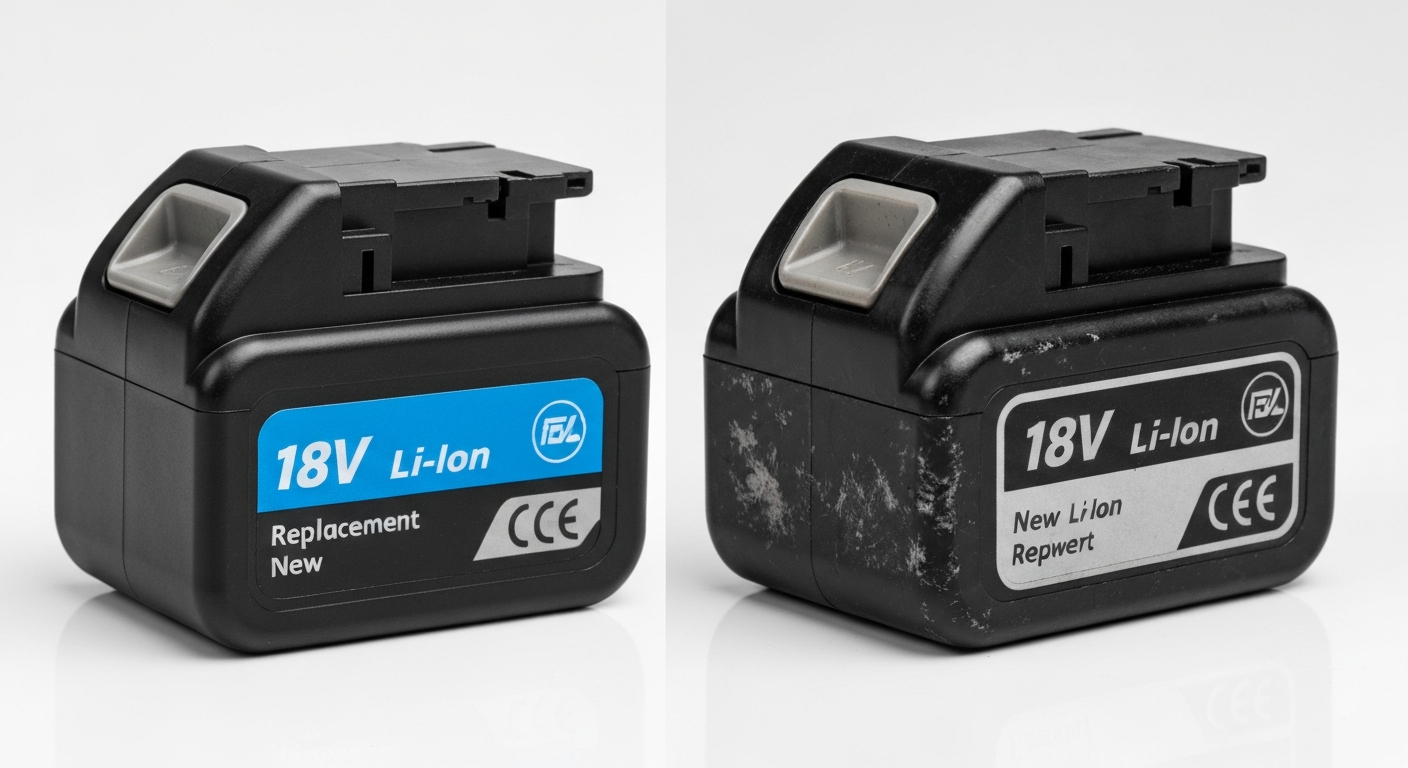
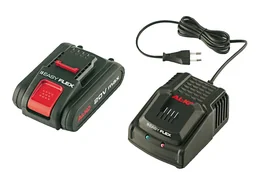
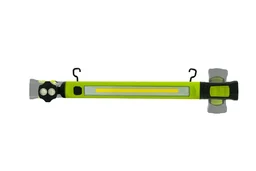
Buying a new battery is the safest, quickest and most reliable option. You’ll get a product with full capacity, the latest cell technology and a full warranty. The : 18 Volt Li-Ion Battery 1,5 Ah is a cost-effective way to get your tool working again. If your charger is faulty too, or you’re ready to upgrade, sets such as the : "EasyFlex" Value Set - 2,5 Ah Battery and Charger are an excellent choice. A new battery can also bring older devices, such as a durable : 10 Watt Multi-Position Battery Light, back to full power.
Recycling batteries properly recovers valuable raw materials such as cobalt, nickel and lithium. This helps protect the environment and reduces our reliance on newly mined materials.
How to Dispose of Old Batteries Properly
A faulty battery doesn’t belong in the household trash. The materials it contains are valuable resources, but they can also harm the environment if disposed of improperly. Many retailers and local recycling centers accept used batteries. You can return your old tool battery to Westfalia, a hardware store or a local recycling center. This helps ensure it’s handled safely and its raw materials are recycled. For larger quantities from business operations, special collection programs may be available.
A failing battery doesn’t have to mean replacing your entire tool system. A systematic troubleshooting process can often identify the problem quickly. In many cases, a new battery is the most cost-effective and safest way to restore the full performance of your power tools and get your projects done.
Frequently Asked Questions
- Can you revive a deeply discharged battery?
- Sometimes, but proceed with caution. Some chargers have a recovery mode. Briefly placing the battery in the charger and removing it again may help. However, this carries risks and isn’t guaranteed to work. For safety, replace a severely over-discharged battery.
- Why does my new battery run out of charge so quickly?
- A new battery may take several charge and discharge cycles to reach full capacity. Also check that the battery capacity (Ah) is suitable for your tool. A powerful tool will drain a low-capacity battery quickly.
- What’s the best way to store a battery over the winter?
- Store the battery at 40-60 % charge in a cool, dry place (approx. 10-15 °C). Avoid freezing temperatures and direct sunlight. Always remove the battery from the tool and charger before storing it.
- My charger is flashing red. What does that mean?
- A flashing red light usually signals a problem. The battery may be at the wrong temperature, deeply discharged or affected by an internal fault. Check your charger’s instruction manual for the exact meaning of the error code.
- Will batteries from different manufacturers work with my device?
- Generally, no. Use only batteries and chargers approved by the manufacturer for your device system. Third-party batteries can reduce performance, damage the device or create safety risks such as fire.
You may also be interested in
- 10 Expert Tips: How to Charge 18V Li-Ion Batteries Properly & Maximize Their Lifespan
- 18V Battery Buying Guide: How to Find the Right Li-Ion Battery
- How to Charge a 10,8V Battery Correctly: Extend Your Tool’s Lifespan
- Cordless Garden Tool Losing Power? 5 Common Problems & Solutions
- Buying an 18V Battery Charger: The Ultimate Guide
- One Battery, Countless Projects: Get the Most from Your 18V Battery