
In brief: In most cases, you can add an air conditioner without major renovations. Portable single-hose air conditioners are suitable for individual rooms; they need a well-sealed window connection and a suitable electrical circuit. Choose the output based on the room size, shade the room and ventilate only during the cool morning and evening hours.
Heatwaves can quickly turn rooms into overheated spaces. Attic apartments, bedrooms with large windows and south-facing living rooms are particularly prone to retaining heat well into the night. When shading and proper ventilation are no longer enough, adding an air conditioner can provide noticeable relief.
A portable air conditioner is usually suitable for individual rooms. It sits directly in the room and vents warm exhaust air outside through a window. A fixed split-system air conditioner cools more efficiently and quietly, but requires a qualified installer and more extensive installation work.
Why is it worth adding an air conditioner?
Adding an air conditioner is worthwhile when individual rooms regularly overheat and structural measures alone are not enough. You cool the areas where you spend time instead of continuously using energy to cool an entire house. This reduces the effort involved and makes temperature control easier.
When is a portable air conditioner enough?
A portable air conditioner is suitable for rented homes, individual home offices and bedrooms. You do not need to make an opening in the wall, and you can take the unit with you when you move. The requirements are a window or another opening for the exhaust hose, plus a socket that can safely handle the unit's power consumption.
A single-hose unit draws in room air, removes heat from it and blows the warm exhaust air outside. This creates slight negative pressure in the room. Warm outdoor air can then enter through leaky windows, doors or roller shutter boxes. Carefully sealing the window therefore significantly improves cooling performance.
Pro tip
Switch the unit on before the room has fully heated up. Close doors to cooler or unused areas and shade the window from the morning onwards. This means the compressor has to remove less heat from walls, furniture and textiles.
Which rooms should you cool first?
Start with the room where the heat most severely affects how you use it. In a bedroom, noise levels are just as important as cooling performance. In a home office, computers, monitors and lighting contribute to the heat load. A living room occupied by several people generally needs more cooling capacity than a small home office.
You cannot reliably cool an entire house with one portable unit. Cold air mainly stays in the room where the unit is installed. Leave the door open only if the adjoining rooms also benefit and furniture or curtains do not block the airflow.
How do you choose the right air conditioner?
Don’t compare maximum cooling capacity alone. Room size, exposure to sunlight, insulation, noise level, exhaust air routing and power consumption are all important. A unit with very high output may cool a small room quickly, but it will switch off frequently. This can reduce dehumidification and increase energy consumption.
How do you calculate the required cooling capacity?
As a rough starting point, allow around 60 to 100 watts of cooling capacity per square metre for normally insulated rooms with average ceiling height. Attic rooms, large south-facing windows and poorly insulated external walls tend to be at the higher end. Several people and running electrical appliances also increase the heat load.
- Room area: Measure the length and width, and take the room height into account.
- Sunlight: South- and west-facing windows bring in particularly high levels of heat in the afternoon.
- Heat sources: Computers, televisions, cooking appliances and several people all give off additional heat.
- Capacity rating: 1.000 watts of cooling capacity correspond to approximately 3.412 BTU per hour.
- Dehumidification: Check how much condensate the unit can drain per day.
Use the manufacturer’s specifications as the definitive basis. This rough calculation helps with preselection, but does not replace an assessment of the specific room conditions.
Important note
Do not connect a portable air conditioner to an overloaded power strip. Check the rated power and fuse, keep the air outlet clear and never place the unit on a wet surface. A qualified contractor must install a fixed air-conditioning system because the refrigerant circuit and electrical work must be carried out professionally.
Monoblock, air cooler or split system?
A monoblock unit with an exhaust hose can be set up quickly and is suitable for targeted cooling. A split system separates the indoor and outdoor units. It is generally more efficient, quieter and provides a more even temperature, but requires permanent installation and a suitable location for the outdoor unit.
An air cooler uses evaporative cooling. It consumes less electrical power and can make the airflow around your seat more comfortable. Its effect is limited in humid rooms because the air can hardly absorb any more water. A DIY air conditioner made from a fan, ice and water is no substitute for a real air-conditioning unit.
Various types of unit are available when choosing from the range:
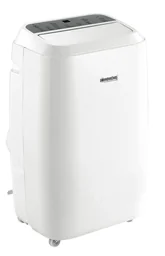
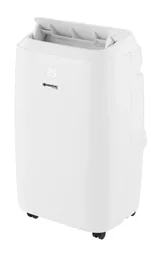
- : Fresco 100 air conditioner with 1,5 m exhaust hose set and 340 m³/h for targeted cooling of individual rooms.
- : Fresco 140 air conditioner with 1,5 m exhaust hose set and 400 m³/h for a higher airflow rate.
- : 3-in-1 air cooler with 80 W as a compact solution for the immediate area around a seat or workstation.

“Portable air conditioners with exhaust hoses are generally less energy-efficient than permanently installed split systems.”
How do you plan the installation of a portable air conditioner?
Plan the location before you buy. The unit needs clearance from walls, furniture and curtains so that it can draw in and discharge sufficient air. At the same time, the route to the window should be as short as possible. A long or kinked hose increases back pressure and reduces cooling performance.
How do you vent warm air through the window?
An open window gap constantly allows warm outdoor air to flow in. Use a fabric window seal, a suitable adapter kit or a professionally adapted window solution instead. In rented accommodation, permanent alterations to the window or external wall must not be made without permission.
- Choose a window: Select the window with the shortest route from the installation location.
- Fit the seal: Close the gaps between the frame and sash as completely as possible.
- Position the unit: Place the air conditioner level and at the wall clearance specified by the manufacturer.
- Connect the hose: Keep it short and straight, without tight bends.
- Secure the window: Prevent the sash from opening due to wind or draughts.
- Carry out a test run: Check that warm exhaust air is escaping and that the hose does not become excessively hot.
Only extend the exhaust hose if the manufacturer expressly permits it. An improvised extension can restrict airflow, put strain on the compressor and shorten its service life.
How do you handle condensate and exhaust air safely?
Many portable units automatically evaporate some of the condensate. However, the tank can still fill up when humidity is high. Position the unit so that you can access the tank without tipping it over. If the manufacturer permits a drainage hose, run it into a suitable container or a safe drain.
For hose and drainage accessories, you can browse the Plumbing + Irrigation section. Permanent condensate drainage must not create trip hazards or cause water damage. For a fixed connection, suitable solutions from the House Drainage Pipe System can help, provided they are suitable for the intended application.
Additional advice
Do not set the target temperature to the lowest possible level. A difference of around 6 to 8 degrees from the outdoor temperature is often enough to provide noticeable relief. A moderate setting reduces energy consumption and puts less strain on your circulation when moving between a hot outdoor area and a cool indoor space.
How can you improve your indoor climate?
An air conditioner works more efficiently when you reduce the amount of heat entering the room beforehand. Shading, ventilating at the right times and controlled air exchange reduce the load on the compressor. These measures cost little and are effective even when the unit is switched off.
Which measures reduce room temperature?
- Provide external shade: Shutters, awnings and external blinds prevent solar energy from reaching the window.
- Ventilate at the right time: Open windows early in the morning and at night, when the outdoor air is cooler.
- Keep things closed during the day: Keep windows, doors and shutters closed as much as possible during the hottest hours.
- Switch off heat sources: Turn off unused screens, lamps and chargers.
- Move the air: A fan distributes cool air but does not lower the room temperature.
For shading on balconies, patios or in the garden, you can find suitable solutions in the Garden + Outdoor category. You can find textile covers and temporary sun protection solutions in the Tarpaulins + Nets section. Secure these materials firmly and keep the air intake and outlet openings of the air conditioner clear.
How can you improve humidity and sleeping comfort?
Air conditioners often remove moisture from the indoor air. This makes humid weather feel more comfortable, but prolonged operation can cause dry mucous membranes. A hygrometer shows whether the humidity is actually too high or too low. For many living spaces, values between around 40 and 60 percent are considered a comfortable range.
In the bedroom, noise, draughts and the position of the unit are important. Do not direct the airflow continuously straight at the bed. Use a timer or night mode and cool the room before going to bed. A slightly higher target temperature is often sufficient during sleep.
A DIY air conditioner made from ice and a fan creates only a limited cooling effect directly in the airflow. Although melting ice absorbs heat, producing and storing the ice requires additional energy. In high humidity, the extra water vapour offers no benefit.
“During hot weather, keep windows and doors closed during the day and only ventilate once the outdoor air is cooler.”
How can you operate and maintain your air conditioner efficiently?
An air conditioner only uses a small amount of energy when you use it selectively. Cool occupied rooms and close the door. A simple calculation shows the running costs: power consumption in kilowatts multiplied by operating hours and your electricity price gives the approximate cost.
How can you reduce electricity consumption?
- Plan ahead: Cool the room before the strongest afternoon heat, rather than starting only once the temperature is at its highest.
- Set a moderate temperature: A comfortable target temperature of around 24 to 26 degrees is often sufficient.
- Use a timer: Stop the unit automatically when the room is no longer in use.
- Keep heat outside: Close windows and sun protection while the unit is operating.
- Keep the filter clean: Dirty filters restrict airflow and increase operating time.
A unit with a power consumption of 1.000 Watt uses approximately one kilowatt-hour during one hour at full load. Actual consumption may be lower or higher depending on room temperature, insulation and compressor control. Therefore, compare the power consumption and efficiency data of the specific model.
How can you avoid noise and safety problems?
Place the unit on a stable, level surface. If necessary, use a suitable mat to isolate it from the floor so that vibrations are not transferred to furniture or walls. Keep air grilles, cables and the exhaust hose clear. The power cable must not run under carpets or be pinched.
Do not use improvised extension cables, and do not connect the unit to an overloaded power strip together with powerful heating or cooking appliances. If you notice an unusual smell, water on the casing or repeated tripping of the circuit breaker, switch the unit off and investigate the cause.
How do you maintain a retrofitted air conditioner?
Clean the air filter according to the manufacturer's instructions, usually every one to two weeks if the unit is used frequently. Allow the filter to dry completely before putting it back in. Remove dust from the air intake and outlet grilles with a soft cloth or suitable brush.
- Empty the condensate tank in good time.
- Check the exhaust hose for cracks, kinks and loose connections.
- Clean the window seal so that it remains tight against the frame.
- Store the unit in a dry, upright position at the end of the season.
- Have a qualified service company maintain split systems.
Which solution is right for your home?
For a single room used occasionally, a mobile monoblock unit is the simplest retrofit option. If you cannot vent exhaust air outside and the air is dry, an air cooler can make a seating area more comfortable. For several rooms, regular summer use and a high level of comfort, it is worth having a qualified service company plan a split system.
Conclusion: Effective cooling starts with the right unit, a sealed window connection and a shaded room. Choose the capacity based on the actual heat load, cool selectively and combine the air conditioner with consistent sun protection and proper ventilation.
Frequently asked questions
- Can I install an air conditioner myself?
- Yes, you can set up and connect a portable monoblock unit yourself. It is essential to ensure a stable position, a tight window seal for the exhaust hose and a suitable power socket. Permanently installed split systems, on the other hand, should be installed by a qualified professional, as the refrigerant lines and electrical connection must be fitted correctly.
- What size air conditioner do I need?
- A rough guide is 60 to 100 watts of cooling capacity per square metre in normally insulated rooms. Attic rooms, large south-facing windows, several people and electrical appliances increase the requirement. Check the manufacturer's specification in watts or BTU and avoid choosing a significantly oversized unit, as short operating times can reduce dehumidification.
- How can I seal the exhaust hose in the window?
- Use a fabric window seal or a suitable adapter kit and close all gaps between the frame and sash. The hose should be short, as straight as possible and free of kinks. If you are renting, do not drill through the exterior wall without permission. A permanent solution requires approval and professional installation.
- How much electricity does a portable air conditioner use?
- Consumption depends on the power rating, operating time, room temperature and insulation. A unit rated at 1,000 watts uses approximately one kilowatt-hour after one hour at full load. Use a timer, increase the target temperature moderately and cool only occupied rooms. The energy efficiency label provides a better basis for comparison than a marketing claim alone.
- What else can help keep a house cool?
- External shading is most effective because it blocks the heat before it reaches the window. Ventilate early in the morning and at night, keep windows closed during the day and reduce sources of heat. Fans circulate the air but do not lower the room temperature. Only use dehumidification when the humidity is actually too high.
You might also be interested in
- Air conditioners for your home: How to keep your house cool
- Air conditioning for your home: How to choose, install and maintain a system
- Reduce air conditioning costs: Money-saving tips for your home
- Heat pumps as air conditioning: How to cool your home in summer
- Air conditioning: Benefits and installation tips
- Retrofitting a heat pump in an older home: Costs and efficiency