
In brief: When buying a cantilever umbrella, first check the area to be shaded, mast position, base, and wind resistance. A cantilever umbrella shades tables and seating without a center pole, but requires a heavy, securely weighted base. Also look for UV protection, tilt and rotation functions, durable canopy fabric, and a suitable protective cover for storage.
Short answer: When buying a cantilever umbrella, first check the area to be shaded, mast position, base, and wind resistance. A cantilever umbrella shades tables and seating without a center pole, but requires a heavy, securely weighted base. Also look for UV protection, tilt and rotation functions, durable canopy fabric, and a suitable protective cover for storage.
A cantilever umbrella creates shade over tables and chairs without a center pole getting in the way. Its side-mounted mast makes it especially useful for large seating areas, lounge furniture, and patios with changing sunlight. However, this design requires more planning than a traditional center-pole umbrella.
Anyone searching for a patio umbrella will find many shapes and materials. However, choosing the right cantilever umbrella involves more than just diameter and color. Location, wind exposure, base, operation, and maintenance determine whether the umbrella remains comfortable and safe to use every day.
That is why the most important cantilever umbrella tips start with measuring. Check how much space the arm requires, where the shade will move, and where the base can go. In the garden and outdoor section, you will find suitable equipment for your patio and yard.
How does a cantilever umbrella work?
With a cantilever umbrella, the mast stands to the side of the seating area. An arm extends the canopy over the table and chairs. Depending on the model, you can rotate the umbrella 360 degrees, tilt the canopy, or move the shade with just a few simple adjustments.
This is its key advantage over a conventional umbrella. You do not have to work around a pole between plates, glasses, or patio loungers. A shaded area can also be used more effectively with a corner bench or lounge furniture that has no center opening.
What are the advantages of a cantilever umbrella?
- Clear table surface: There is no center pole, making every seat easier to reach.
- Flexible positioning: A rotating mast lets you adjust the shade to the position of the sun.
- Large coverage: Rectangular models shade long tables and wide lounge areas.
- Several areas of use: You can shade a seating area, lounger, or sandbox as needed.
However, the side-mounted design creates greater leverage. The open canopy puts more strain on the mast, arm, and base than a small center-pole umbrella. The larger the canopy and the more exposed the patio is to wind, the more carefully you need to choose the base.
The space required when the umbrella is closed also matters. The mast stands beside the seating area, while the arm extends into the space. So measure not only the canopy area but also the width of the base, the swivel range, and the clearance beneath the arm.
“When a thunderstorm is approaching, the umbrella should be closed; it does not provide safe protection outdoors.”
Which size and shape is right for your seating area?
The right umbrella size depends on your table, chairs, and the area where you actually spend time. A canopy that only covers the tabletop often leaves the edges of the chairs in direct sunlight. Plan for extra shade around the seating area.
What dimensions do you need for four to eight seats?
Round umbrellas suit compact, round, or square tables. Rectangular canopies make better use of long tables and lounge areas. The following guide is no substitute for measuring, but it quickly narrows down your options.
| Umbrella format | Often suitable for | Check |
|---|---|---|
| Round, 2.5 to 3 m | Small table with four to six seats | Distance from walls and walkways |
| Square, approximately 3 × 3 m | Rectangular table or compact lounge area | Swivel radius of the arm |
| Rectangular, approximately 3 × 4 m | Large dining table or spacious seating area | Especially heavy and sturdy base |
Consider the canopy height. Tall people should be able to stand comfortably beneath the arm without hitting supports or the crank. At the same time, the open umbrella must not touch windows, awnings, gutters, or branches.
The position of the sun changes the area you need to cover. The midday sun is higher and usually falls more directly on the canopy. In the morning and evening, the shade moves at a lower angle across the patio and yard, making a tilting canopy or rotating mast much more useful than a fixed canopy.
To choose other outdoor equipment, measure the space with a tape measure laid out on the ground. Mark the four corners of a rectangular canopy and the center point of a round canopy. This helps you identify early on whether doors, paths, and nearby seating areas will remain clear.
Pro tip
Mark the planned area of shade in the morning, at midday, and in the late afternoon using chalk or small markers. This lets you see before buying whether a rotation function is enough or whether you need a larger or tilting canopy.
Which materials and features matter when buying?
A cantilever umbrella is exposed to the elements for many hours. Sun, moisture, dust, and temperature changes put strain on the canopy and frame. Pay attention to the quality of the canopy, frame material, finish, and availability of replacement parts.
Which canopy can withstand the sun and everyday use?
Polyester is lightweight, dries quickly, and is used for many patio umbrellas. Its quality depends on the fibers, weave, fabric weight, and coating. A high fabric weight alone does not guarantee better UV protection if the seams or waterproofing are weak.
- Polyester: A practical everyday option when the canopy is regularly closed and protected from the weather.
- Acrylic: More colorfast and dimensionally stable, usually longer-lasting and more expensive than standard polyester fabric.
- Coating: It can repel water and make cleaning easier, but it does not automatically make the canopy fully waterproof.
- Color: Light-colored canopies create a bright, welcoming look and let in more light, while dark canopies usually provide deeper shade.
Check the information on UV protection, colorfastness, cleaning, and replacement canopies. The canopy should be taut without rubbing against the ribs. A coating can provide protection during a light shower, but the umbrella should be closed and stored in a dry place during prolonged rain.
Which mechanism makes operation easier?
A smooth-turning crank opens the canopy in a controlled manner and protects the gears. A tilt function lets you position the canopy to block the low sun. A foot pedal or an easily accessible adjustment handle makes positioning easier when the table is already set.
- Crank: Look for smooth operation and a secure stop when fully open.
- Tilt: Several locking positions are more practical than one fixed position.
- Rotation: A locking mechanism prevents the umbrella from moving unintentionally.
- Ribs and joints: Metal parts should be well finished and operate without sideways play.
is a classic tilting umbrella with a hand crank, made from aluminum and measuring approximately 2.7 × 2.35 m. It has no side-mounted cantilever pole, so it is not a substitute for a cantilever umbrella. It is worth considering if a compact center-pole umbrella, crank operation, and smaller footprint are better suited to your seating area.
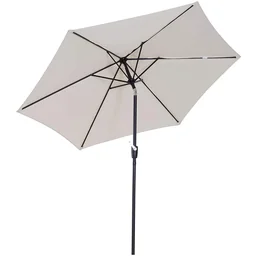
If you are buying a cantilever umbrella, test the mechanism with the canopy open and closed if possible. The crank should not jerk. Also check that you can close the umbrella without excessive force if the wind picks up.
“Shade is an essential part of UV protection, but it does not automatically replace clothing and sunscreen.”
How securely does a cantilever umbrella stand in the garden?
Stability affects both safety and service life. A side-mounted arm acts like a lever as soon as wind gets underneath the canopy. A decorative base that is sufficient for a small center-pole umbrella may be too light for a large cantilever umbrella.
How do you choose the right umbrella base?
On a paved patio, a cross base with suitable patio stones or concrete slabs is a good option, provided the manufacturer approves this setup. An in-ground mounting socket provides a particularly stable connection for large umbrellas, but requires a load-bearing surface and careful installation.
- Patio: Check that the slabs are level and the base does not wobble.
- Lawn: Use a purpose-built ground anchor or a stable foundation.
- Balcony: Check the load capacity, distance from the railing, and building regulations before installing a large umbrella.
- Exposed location: Allow for a greater safety margin and close the canopy sooner.
Set the pole up vertically. Even a slight tilt shifts the load and can make the umbrella unstable when rotated. Carefully retighten the screws after the first use and check them at the start of the season.
Important note
Close the cantilever umbrella when the wind picks up, during thunderstorms, in heavy rain, and whenever you are away. A protective cover protects the closed canopy, but it is no substitute for a suitable base or secure anchoring.
Which wind ratings should you take seriously?
Manufacturer wind ratings apply only to the specific design and appropriate mounting system. They do not mean that the umbrella can be left open in stormy weather. Gusts can suddenly get underneath the canopy and put considerably more strain on the arm, joints, and base than steady wind.
Close the canopy fully, secure it with the included strap, and remove loose decorations. After a windy event, inspect the ribs, seams, crank, and pole. If any parts are bent, do not open the umbrella again until a qualified inspection has confirmed that it is safe to use.
How can you use a cantilever umbrella for sun protection and privacy?
A cantilever umbrella provides shade from above. It does not replace a privacy screen and only blocks views where the tilted canopy actually interrupts the line of sight. So sun protection and privacy involve two functions: blocking direct sunlight and adding privacy on the patio or balcony.
How do you move the shade throughout the day?
Rotate the canopy so the shaded area falls between the sun and your seating area. When the evening sun is low, a tilt function helps because the sun's rays come in at a shallower angle. A large umbrella is of little use if a house wall, tree, or railing prevents it from rotating.
Plan the umbrella's position around the times you use the area most. Breakfast, lunch, and relaxing in the evening often call for different positions. A rotating cantilever umbrella saves you from moving the seating group and can also shade part of the adjacent walkway.
For extra privacy from the side, choose a model with a valance or separately attachable side panels, if the system is designed for them. Do not attach fabric to the arm as a makeshift solution. Additional surfaces can significantly increase the wind load.
Which color suits your patio and house?
The color should complement the exterior, paving, and patio furniture, while also being practical. Dust and pollen show up more quickly on very light-colored canopies. Dark colors make fading more noticeable if the canopy is left open in the sun for long periods.
Regular care remains key. Close the umbrella after use, avoid folding it while wet, and remove stains promptly. This helps the fabric and mechanism work well for longer.
Additional advice
Plan for privacy from the perspective of your seating areas. Sit in each spot and check the view toward neighboring properties, the street, and the house wall. A rotating umbrella solves many privacy issues, but an arm that is too low can obstruct access and your view.
How do you care for and store a cantilever umbrella?
Care starts with closing the umbrella every day. Do not leave the canopy open overnight unnecessarily, and remove leaves, pollen and bird droppings as soon as possible. Moisture trapped under a folded canopy can cause mildew stains and damage the coating.
Which cover fits a cantilever umbrella?
A cover must accommodate the length, width and shape of the closed umbrella. Measure the frame with the arm folded in, including the crank and handle. The cover should not be so tight that the seams or tips remain under constant tension.
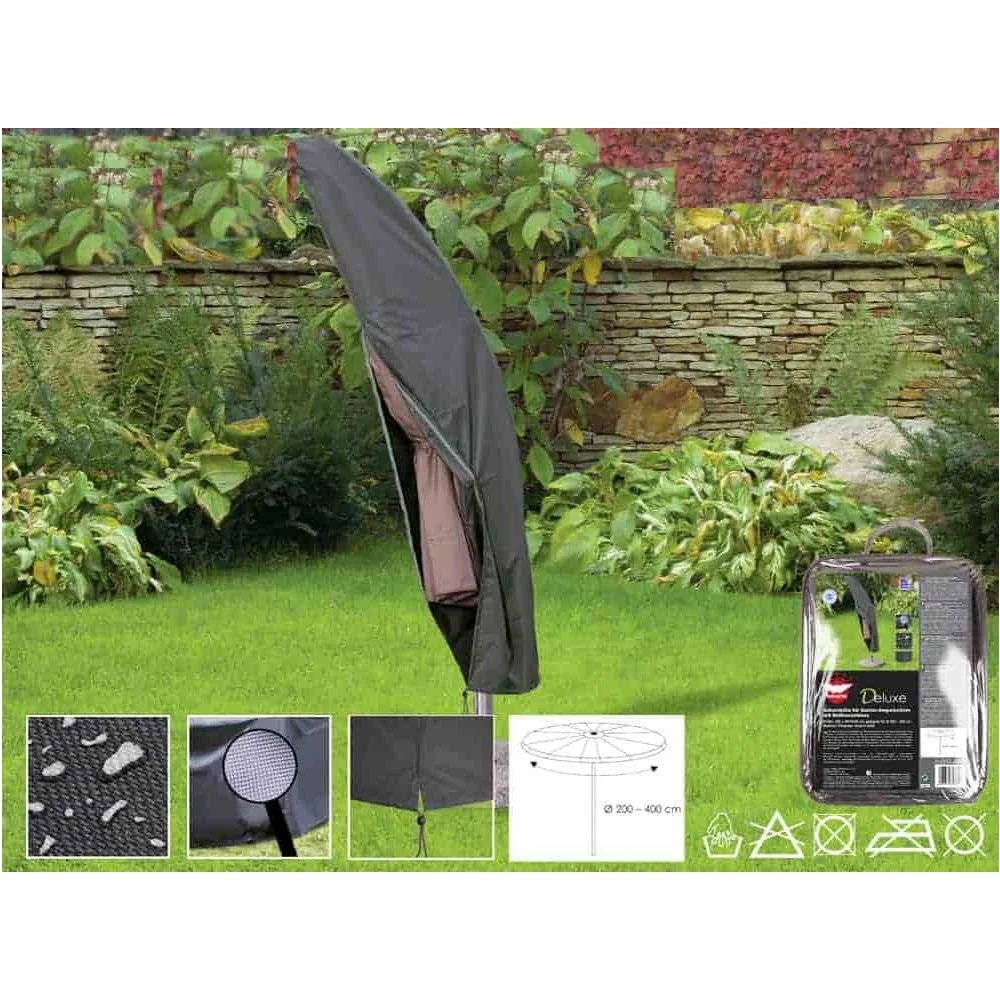
is a weather-resistant, waterproof cantilever umbrella cover measuring 64 × 250 cm. It may be suitable if the length and circumference of your closed umbrella match these dimensions. Still, measure before ordering, as manufacturers specify dimensions differently.
is a transparent cantilever umbrella cover measuring 265 × 40/70/50 cm. Its stepped width may fit umbrella canopies with different shapes. The actual dimensions of your model and a dry canopy before covering remain the deciding factors.
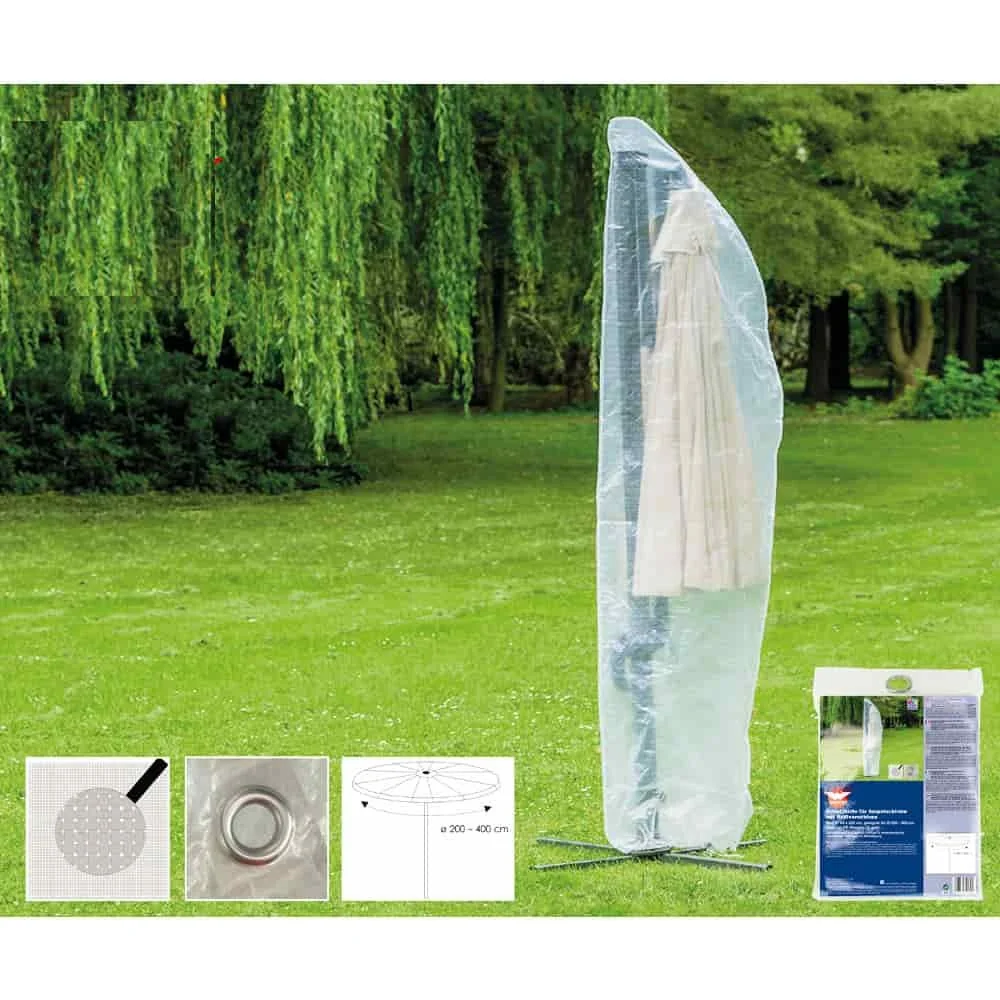
Find more suitable options among our patio furniture covers. If you want to check on the umbrella while it is covered, also take a look at our clear covers.
How should you store the canopy, frame and base in winter?
Clean the canopy with a soft brush, lukewarm water and a mild cleaning solution. Do not use a pressure washer or harsh solvents. Allow all parts to dry completely before folding or covering them.
Store a removable canopy in a dry, frost-free place, loosely folded. The frame should not remain on damp ground for extended periods. In spring, check the joints, screws, seams and crank before opening the umbrella again.
What should you check before buying?
- Measure the table, seating, distance from walls and the umbrella’s swivel range.
- Choose a round, square or rectangular canopy that suits your seating area.
- Check the UV protection, fabric quality, colorfastness and cleaning instructions.
- Test the crank, tilt, rotation and locking mechanism.
- Match the base or ground sleeve to the surface and ground conditions.
- Consider wind exposure, the manufacturer’s specifications and whether the umbrella can be closed quickly.
- Measure the closed umbrella to find a suitable cover.
A well-chosen cantilever umbrella keeps the table area clear while providing flexible shade. When the size, installation and operation suit the location, your patio will be more comfortable and safer to use. Start by considering the conditions on site, and only then choose the color or additional features.
Frequently Asked Questions
- What size cantilever umbrella should I choose for a patio table?
- For four people, a round cantilever umbrella with a diameter of around 2.5 to 3 meters is usually sufficient. Measure the table, chairs and walkways together. A 3 × 3 meter umbrella often works well with rectangular tables. Also check the arm, distance from walls and how far you want to move the shade.
- How heavy should the base be for a cantilever umbrella?
- The required weight depends on the canopy area, arm, ground surface and the manufacturer’s specifications. A heavy base reduces the risk of tipping, but it does not replace secure anchoring. On a patio, use suitable paving slabs or a permanent ground sleeve, and check the stability every time you set it up in a new location.
- Is a cantilever umbrella safe in windy conditions?
- No. A cantilever umbrella remains vulnerable to wind when the canopy is open, even if the manufacturer describes the construction as robust. Close it when the wind picks up, during thunderstorms and whenever it is unattended. Secure the closed umbrella with the strap, and only use a cover when the canopy is completely dry.
- Which fabric provides the best sun protection for a cantilever umbrella?
- Acrylic fabric generally withstands UV radiation and retains its color better than basic polyester, but it costs more. Density, coating, seams and care instructions are also important. Look for a stated UV protection rating, check the manufacturer’s datasheet and do not treat the fabric with harsh cleaners.
- How should I store a cantilever umbrella in winter?
- Let the canopy dry completely before covering or storing it. Remove dust and stains with a soft brush, water and a mild cleaning solution. Store the canopy, frame and base in a dry, frost-free place where no weight rests on the ribs.