
In brief: In our barn fan test and comparison 2026, we present the most important models. An efficient fan lowers the temperature, reduces humidity and significantly improves animal health. We compare ceiling fans and high-volume fans and show what to look for when choosing one.
An optimal barn environment is not a matter of luck, but the result of a well-planned ventilation strategy. In 2026, you have a range of powerful barn fans available for this purpose. This test and comparison will help you find the right model for your needs in agriculture.
We introduce the most important types, provide specific buying recommendations and show how the right technology can improve your animals’ health and your profitability.
Table of contents
Why are barn fans essential?
Barn fans are more than just devices for moving air. They are a key tool in modern herd management. Heat and high humidity cause considerable stress for livestock.
This stress leads to reduced feed intake, falling milk yields and a weakened immune system. A powerful fan provides effective relief.
It cools through evaporative cooling as air flows over the animals’ moist nasal membranes. At the same time, it removes harmful gases such as CO2 and ammonia. Investing in good ventilation therefore pays off directly through improved animal performance and health.
What types of barn fans are available?
There are two basic designs, each suited to different applications. Choosing the right type is the first step towards a better barn environment.
Ceiling fans for even air circulation
As the name suggests, ceiling fans are mounted on the barn ceiling. They move air in a large, downward-facing cone, mixing the air throughout the height of the barn.
This prevents heat pockets from forming below the ceiling. Cool and warm air layers mix continuously. These fans are ideal for barns with substantial ceiling height and evenly distributed livestock.
High-volume fans for wide-reaching airflow
High-volume or horizontal fans generate a powerful, directed airflow. They move large volumes of air over many metres. Use them to bring fresh air into the barn or transport stale air over long distances.
Their large stainless-steel rotor operates particularly efficiently and reliably. They are the first choice for large, open barns or halls where targeted air movement is required. Discover a wide selection in the barn fans category.
Note: Combining both types is often the most effective solution. Ceiling fans provide basic circulation, while high-volume fans supply fresh air at critical points.
Buying guide: these 5 criteria matter
Not every fan is suitable for every barn. Before making your choice, you should check these five points.
- Airflow and reach: The most important figure is the airflow in cubic metres per hour. Make sure the unit is designed for the size of your barn. The reach of the air stream is particularly important for high-volume fans.
- Energy efficiency: A fan often runs for many hours a day. An economical, high-efficiency motor can significantly reduce your electricity costs. Look for modern EC motors or particularly efficient AC motors.
- Durability and materials: The barn environment is harsh. Moisture, dust and ammonia take a toll on every material. Housings and rotor blades made from corrosion-resistant stainless steel or high-quality coated steel are essential. Bearings should be protected against dust and splashing water.
- Control and regulation: Basic models run at a fixed speed. Continuously variable fans or models with a thermostat connection are better. They automatically adjust their output to the current temperature and humidity.
- Ease of installation and maintenance: Check whether the installation is compatible with your building conditions. Are all wear parts, such as bearings, easy to access and replace? Easy maintenance extends the service life.
Tip: Always plan for some spare capacity. A fan operating at its capacity limit will be overwhelmed on hot days and wear out more quickly. A little extra power provides security in extreme conditions.
Best Barn Fans 2026: Test and Comparison
In 2026, models that combine robust construction with smart control are particularly impressive. Here you will find a direct comparison of the most important products.
The most highly rated barn fans in our range compared directly:
| Model | Customer rating | Availability |
|---|---|---|
| Ceiling fan S01 | – | Currently unavailable |
| Ceiling fan S02 | – | Currently unavailable |
| Ceiling fan S03 | – | Currently unavailable |
| Ceiling fan S04 | – | Currently unavailable |
| Fritz Göbel V-Fork plastic manure fork with handle, green - for barns/farms | – | Currently unavailable |
For barns with high humidity and a corrosive atmosphere, the large-space fan RR 100 () is an excellent choice. Its 78 cm diameter stainless steel rotor resists corrosion and delivers a concentrated, powerful airflow over long distances.
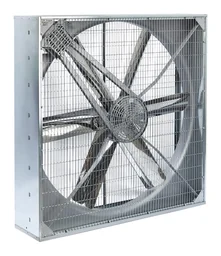
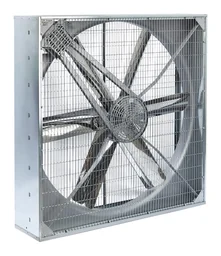
The large-space fan RR 120 () provides even greater reach and airflow. With its 99 cm rotor, it is the solution for very large barns or facilities with particularly demanding ventilation requirements. Both models are core components of professional livestock supplies.
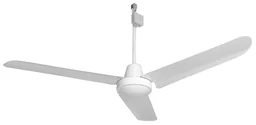
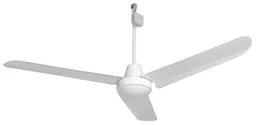
Ceiling fans are suitable for basic air circulation and preventing pockets of heat. The ceiling fan S01 () stands out with its balanced performance and sturdy construction. Its counterpart, the ceiling fan S02 (), often offers additional speed settings.
Installation and Maintenance: How to Do It Properly
The best fan is of little use if it is installed incorrectly or neglected. Follow these points to ensure long-lasting and efficient operation.
Install ceiling fans so that the blades are at a safe height above the animals and all equipment. The airflow cone should cover the animals' resting and feeding areas. With large-space fans, positioning is crucial. Direct the airflow so that it does not create a direct draught on the animals, but instead keeps the air moving throughout the barn.
Maintenance is simple but essential. A dirty rotor loses significant performance and puts strain on the motor.
- Thoroughly clean the blades and guards during the quieter season.
- Regularly check that all screws and fastenings are tight.
- Listen for unusual noises – they may indicate a worn bearing.
Common Mistakes When Choosing and Using Barn Fans
Many barn ventilation problems can be traced back to basic mistakes. Avoid these pitfalls.
The most common mistake is choosing a fan that is too small. An undersized fan cannot create the desired air movement, making it a poor investment. Another issue is incorrect positioning. Too many fans in the wrong locations are ineffective and only increase electricity costs.
Warning: Never use a fan without a protective guard in front of the rotor. This is absolutely essential for the safety of people and animals. Replace a damaged guard immediately.
Do not neglect electrical safety either. All installations must comply with VDE regulations for damp and dusty environments. Choose professionally tested equipment and, if in doubt, have the electrical installation carried out by a specialist company.
Future Prospects: Trends in Barn Fans
Technology continues to evolve. In 2026 and beyond, you will increasingly see these trends in barn fans.
Smart Farming Integration: Fans are increasingly being integrated into digital barn management systems. They can be controlled via an app and respond automatically to data from climate sensors. This allows you to optimise energy consumption and the barn climate in real time.
Material Innovations: Lighter and even more durable composite materials are becoming more common. They enable larger rotor blades with the same stability and reduce the overall weight for installation.
Energy Efficiency 2.0: EC motor technology continues to advance. The next generation offers even higher efficiency across a wider speed range, saving considerable operating costs over the long term.
Investing in a high-quality barn fan is an investment in the future of your business. With the right models, you create the basis for healthy animals, high performance and commercial success.
Frequently Asked Questions
- Why is good ventilation so important in a barn?
- Good ventilation is essential for animal health and performance. It removes excess heat, moisture and harmful gases such as ammonia. This reduces heat stress and helps prevent respiratory diseases.
- Which type of fan is right for my barn?
- The choice depends on the size of the barn and the type of animals. Ceiling fans provide even air circulation throughout the barn. High-volume fans move large amounts of air over long distances and are suitable for large halls.
- How do I choose the right fan capacity?
- Use the airflow rate in cubic metres per hour and the barn's floor area as a guide. A fan that is too weak will not be effective. Also consider the animal density and local climate when planning.
- What should I consider when installing a barn fan?
- Make sure it is mounted securely and stably. The airflow should reach the animals without creating draughts. Plan for professional assistance with heavy models and observe electrical safety regulations.
- How do I keep my barn fan efficient and durable?
- Regularly clean the fan blades and protective grilles to remove dust and dirt. Check the bearings and drive motor at the intervals recommended by the manufacturer. This helps prevent loss of performance and premature wear.
You may also be interested in
- Tower Fans Test & Comparison 2026
- Agricultural Equipment Test & Comparison 2026
- Electric Fence Energizers Test & Comparison 2026
- Fly Traps Test & Comparison 2026: The Best Models for Agriculture and the Home
- Milk Centrifuges Test & Comparison 2026
- Compact Loaders Test & Comparison 2026: The Best Models Reviewed