
In brief: A good all-purpose glue bonds different materials permanently while remaining flexible. You should pay attention to the main ingredients, such as cyanoacrylate, epoxy resin or polymer dispersion. The best choice depends on the materials you are bonding. Special glues are suitable for textiles, while heat-resistant varieties are necessary for extreme temperatures. Our comparison highlights the key differences.
Are you looking for a reliable helper for repairs, craft projects or household tasks? A good all-purpose glue is often the first choice. However, the term "all-purpose glue" makes big promises. Not every product lives up to its name. In our test, we compare the best all-purpose glues for 2026. We take a close look at bond strength, ease of use and material compatibility. This will help you find the right product for your specific requirements.
There is a wide range of glues in the field of fastening technology. Alongside classic all-purpose glue, there are many specialized adhesives. Our focus is on universal glues designed to work with as many materials as possible. We show you what to look for when buying.
Table of contents
What is all-purpose glue?
All-purpose glue is an adhesive developed for a wide range of materials. The idea is simple: one product for many tasks. It is typically based on water-soluble, plastic-based dispersions. These harden as the water evaporates. The bond often remains flexible.
You can use all-purpose glue for wood, paper, cardboard, leather, fabric and many plastics. It is often less suitable for metals, glass or ceramic materials. For these, you need stronger specialized adhesives. Versatility comes at a price. Specialized glues usually offer greater maximum bond strength.
Tip: Before buying, check which materials you mainly want to bond. The information on the packaging will provide useful guidance. A look at the glue category shows the full range.
Buying criteria at a glance
What should you look for when buying all-purpose glue? These properties are crucial.
Bond strength and material compatibility
Bond strength is the most important criterion. A good all-purpose glue bonds materials permanently. It must withstand tensile and shear forces. Check which materials the glue is approved for. Some glues can attack and dissolve plastics such as polystyrene.
Drying time and application
How long does the glue take to dry? How long until it can withstand its full load? Fast-drying glues are convenient, but they give you less time to position the parts. Slow-drying glues give you more room to make corrections.
Consistency and application
The consistency ranges from liquid to gel-like. Liquid glues run easily. Gel glues drip less and are suitable for vertical surfaces. The type of tube or bottle and the applicator affect how precisely the glue can be applied.
Color and flexibility after drying
Most all-purpose glues dry clear. This is beneficial for visible glue joints. Flexibility is also important. Should the bond be rigid or flexible? For moving parts or textiles, you need a flexible glue.
Warning: Use all-purpose glue only in well-ventilated rooms. Some glues may release fumes. Keep glue out of the reach of children. Direct skin contact should be avoided.
Best all-purpose glues tested
Our comparison highlights a selection of currently interesting products. We took a closer look at various types.
The top-rated all-purpose glues from our range compared directly:
| Model | Customer rating | Availability |
|---|---|---|
| Klebfest fabric glue, 50 ml | – | Currently unavailable |
| All-purpose glue "August der Starke", 43 g | – | Currently unavailable |
| Fritz Göbel orange twisted PE rope 6mm x 10 m - Heavy-duty all-purpose rope | – | Currently unavailable |
| Fritz Göbel orange twisted PE rope 6mm x 20 m - Heavy-duty general-purpose rope | – | Currently unavailable |
| Riesentube universal adhesive, 90 g | – | Currently unavailable |
Alongside these comparison criteria, the specific application is the most important factor. Below, we take a closer look at some products that stood out in our test.
High-temperature glue for extreme conditions
For applications involving heat, standard all-purpose glue is not enough. This is where specialist products are needed. The
(JB Weld glue) is a two-part epoxy adhesive. It is heat-resistant up to 300 degrees. You mix the resin and hardener in the correct ratio. The result is an extremely strong, chemical-resistant and heat-resistant bond. It is suitable for metal, ceramic, glass and many plastics. It takes several hours to reach full strength. This type of glue is a good alternative when standard all-purpose glue fails.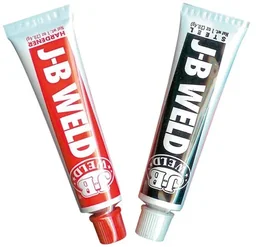
Large volume for frequent use
If you regularly glue larger areas or have many projects, a bulk pack is worthwhile. The
(Riesentube universal adhesive) offers a large volume. Its consistency is typical of universal glue: creamy and easy to spread. It dries clear and remains flexible. This makes it versatile for crafts and light household repairs. For occasional use, a bulk pack like this is often oversized. Make sure the tube is sealed properly after use so the glue does not dry out.
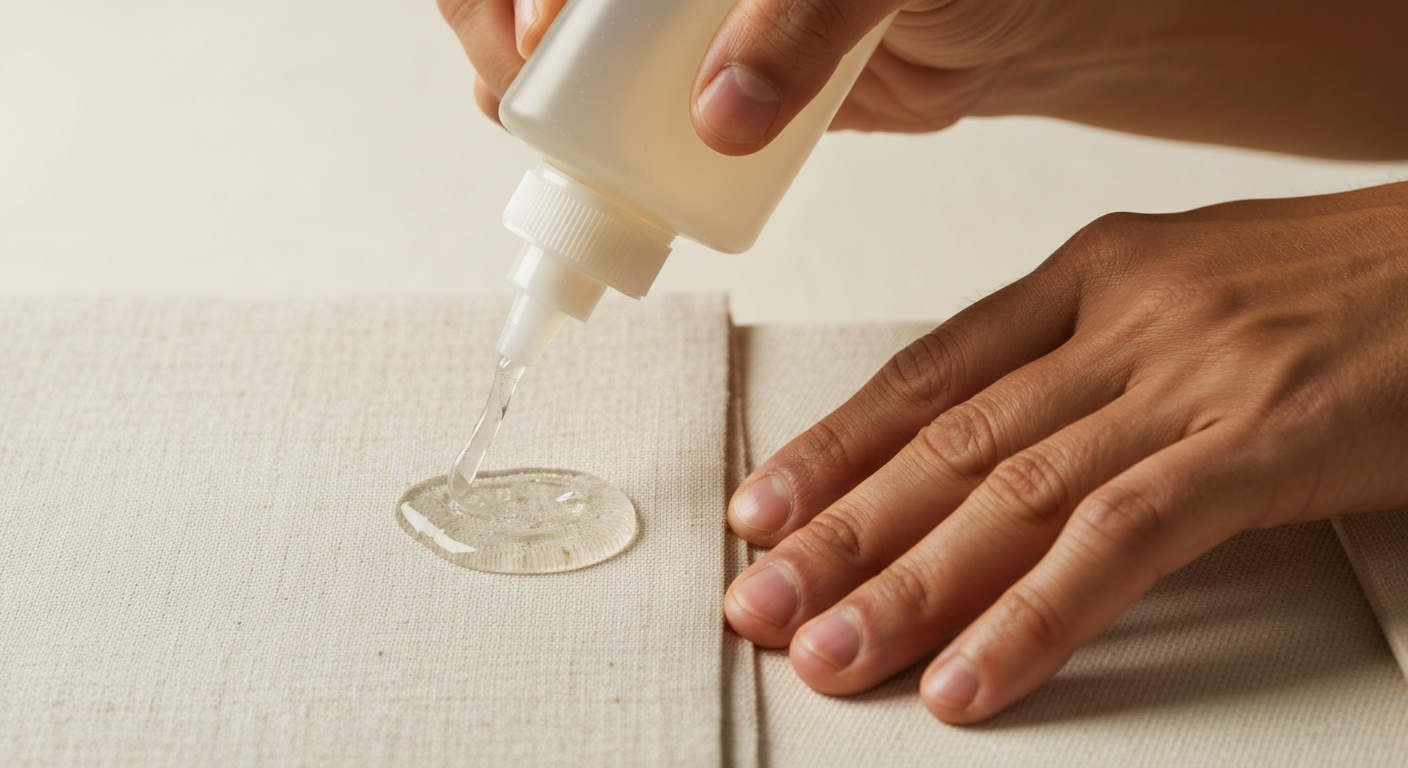
Specialist glue for textiles and flexible materials
Would you like to glue fabric, leather or other flexible materials? Standard all-purpose glue often becomes brittle and cracks in these applications. The
(Klebfest fabric glue) is specially formulated for these applications. It dries soft and flexible. The bond holds even when the material moves and is generally washable. This specialization shows that a true "all-purpose glue" is often a compromise. For the best results, choose a glue suited to your materials. You can find more specialty glues in our all-purpose glue category.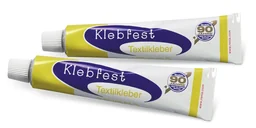
Compact all-rounder for your household toolkit
For quick, minor repairs, a handy tube is ideal. The
(MULTI all-purpose glue) comes in a practical 20-g tube. It is always ready to use and suitable for most everyday materials. It is easy to apply, and accidental smears can be cleaned with water. Glues like these are perfect for a household or toolbox. They cover many standard applications. For demanding bonds or special materials, however, you should choose more powerful products.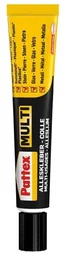
Note: Glues have a limited shelf life. Once opened, they slowly dry out, even when the tube is closed. Do not buy packs that are too large if you only use glue occasionally. Check the consistency before each use.
Application and handling
The success of a bond depends heavily on proper preparation and application. Follow these steps.
Prepare the surfaces
The surfaces to be bonded must be clean, dry and free of grease. If necessary, clean them with a mild detergent. Lightly roughen smooth, non-porous surfaces. This improves adhesion. Thoroughly remove any dust after roughening.
Apply the glue
Apply the glue evenly in a thin layer. With porous materials, you can coat both sides. With non-porous materials, one side is often enough. Press the parts firmly together. Remove excess glue immediately with a damp cloth.
Secure and allow to dry
Secure the bonded parts with tape, clamps or weights. Follow the pressure specified by the manufacturer. Be sure to let the glue dry for as long as instructed. Full load-bearing strength is often only reached after 24 hours.
Care and storage
Here is how to keep your all-purpose glue fresh and ready to use for longer.
Store glue in a cool, dry and frost-free place. Direct sunlight can damage it. Close the tube or bottle tightly immediately after use. Clean the cap opening so it does not become clogged with glue. If the glue sits for a long time, its components may separate. Shake the bottle well before use.
If the glue has thickened or become lumpy, you should no longer use it. Its bonding strength can no longer be guaranteed. Dispose of old glue residue in accordance with local regulations for chemicals.
Alternatives to All-Purpose Glue
For some tasks, better solutions than traditional all-purpose glue are available. Here is an overview.
Super Glue (Cyanoacrylate): Ideal for small, precise bonds on smooth, non-porous surfaces. It sets instantly but is brittle.
Two-Part Epoxy Adhesive: Offers extremely high strength, heat resistance and gap-filling capability. Perfect for metal, ceramics and heavily stressed joints. However, it is more complicated to use.
Contact Adhesive: Apply the adhesive to both parts, let it dry slightly and then press them together. It provides high initial strength immediately. Ideal for large surfaces such as veneers or car carpets.
Hot Glue: Very quick to use and offers good gap-filling properties. However, its adhesion to many materials is limited. Ideal for temporary fixing or craft projects.
Discover more options in our tools range.
Conclusion and Buying Advice
So, which all-purpose glue is best for you? The answer depends on your projects.
For general craft projects, paper, cardboard and light-duty wood joints, a standard all-purpose glue such as the is a good choice. It is affordable, easy to use and provides sufficient strength.
If you need to create heat-resistant or extremely strong joints, for example in an engine compartment or on tools, choose the . The two-part epoxy version offers unbeatable performance in these situations.
For textiles, leather or other flexible materials, you should not use universal glue. Choose specialist products such as the , which remains flexible after drying.
For frequent use or large surfaces, a bulk pack such as the may be worthwhile. Pay particular attention to correct storage.
All-purpose glue is a practical tool for many occasions. It is a versatile helper in the workshop and around the home. For maximum bonding strength and durability, always choose the adhesive specifically developed for your combination of materials. For critical applications, test the bond first in an inconspicuous area.
Frequently Asked Questions
- What is the difference between all-purpose glue and super glue?
- All-purpose glue is often based on polymer dispersions and dries through evaporation. It remains flexible and is suitable for many materials. Super glue cures instantly through air humidity, is more brittle and adheres particularly well to smooth, non-porous surfaces.
- Can I use all-purpose glue on textiles?
- Not every all-purpose glue is suitable for textiles. Use specialist fabric glue or check the manufacturer's instructions. These adhesives remain flexible after washing and adhere to the fabric without stiffening or damaging it.
- How do I remove dried all-purpose glue?
- Carefully try using acetone or nail polish remover on a cotton cloth. Test compatibility first in an inconspicuous area. For sensitive surfaces, use specialist adhesive remover or carefully scrape the glue off with a plastic scraper.
- Can all-purpose glue withstand heat or cold?
- Temperature resistance varies considerably. Standard all-purpose glues often lose adhesion when exposed to heat. For high temperatures, you need specialist heat-resistant epoxy adhesives, which often remain stable at temperatures above 100°C.
- How long does all-purpose glue take to dry?
- The drying time for initial adhesion is usually between 5 and 30 minutes. Many adhesives do not reach their full final strength until after 24 hours. The exact time depends on the material, adhesive layer thickness and room climate.
You might also be interested in
- Super Glue Test & Comparison 2026
- Workshop Tools Test & Comparison 2026: The Best Devices in Practical Testing
- Spirit Levels Test & Comparison 2026
- Multi-Purpose Ladders Test & Comparison 2026
- Tile Cutters Test & Comparison 2026
- Rechargeable Batteries Test & Comparison 2026: The Best Models in Practical Testing