
In brief: Our 2026 barn fan test and comparison covers the most important models. An efficient fan lowers temperatures, reduces humidity and can improve animal health. We compare ceiling fans and high-volume fans and explain what to look for when choosing one.
A healthy barn environment doesn't happen by chance. It starts with a well-planned ventilation strategy. In 2026, you can choose from a range of powerful barn fans. This comparison and buying guide will help you find the right model for your farm.
We cover the main types, offer practical buying advice and explain how the right technology can support your animals’ health and your farm’s profitability.
Table of contents
Why are barn fans essential?
Barn fans do more than move air. They are an important part of modern herd management. Heat and high humidity cause significant stress for livestock.
Heat stress can reduce feed intake and milk production and weaken animals’ immune systems. A powerful fan can help ease these effects.
Air flowing over animals’ moist nasal membranes helps cool them through evaporation. At the same time, airflow helps remove harmful gases such as CO2 and ammonia. Investing in good ventilation can therefore pay off through healthier animals and improved performance.
What types of barn fans are available?
There are two main types of barn fans, each suited to different applications. Choosing the right one is the first step towards a healthier barn environment.
Ceiling fans for even air circulation
As the name suggests, ceiling fans are mounted on the barn ceiling. They move air downwards in a wide cone, circulating it throughout the barn.
This helps prevent heat from building up near the ceiling. The moving air mixes warmer and cooler layers. Ceiling fans are ideal for barns with high ceilings and livestock spread evenly throughout the space.
High-volume fans for powerful airflow over long distances
High-volume, or horizontal, fans produce a strong, directed airflow. They move large volumes of air over long distances, helping to bring fresh air into the barn or push stale air out.
Their large stainless-steel rotor runs efficiently and reliably. These fans are a good choice for large, open barns or halls where targeted airflow is needed. Browse the full range in our barn fan category.
Note: Combining both types is often the most effective solution. Ceiling fans provide general air circulation, while high-volume fans deliver fresh air to key areas.
Buying guide: 5 key criteria
Not every fan is right for every barn. Before choosing a model, consider these five factors.
- Airflow and reach: The key figure is airflow, measured in cubic metres per hour. Make sure the fan is suitable for your barn's size. For high-volume fans, also check how far the airflow reaches.
- Energy efficiency: Barn fans often run for many hours a day. An energy-efficient motor can significantly reduce electricity costs. Look for a modern EC motor or a particularly efficient AC motor.
- Durability and materials: Barn conditions can be tough on equipment. Moisture, dust and ammonia can damage materials over time. Housings and rotor blades made from corrosion-resistant stainless steel or high-quality coated steel are essential. Bearings should be protected from dust and splashing water.
- Controls and speed settings: Basic models run at a fixed speed. Variable-speed models, or fans with a thermostat connection, offer more flexibility. They can automatically adjust their output to the temperature and humidity.
- Installation and maintenance: Check that the fan can be installed in your building. Can you easily access and replace wear parts such as bearings? Straightforward maintenance helps extend the fan’s service life.
Tip: Choose a fan with some spare capacity. A fan running at full capacity may struggle on hot days and wear out faster. Extra power can help it cope with extreme conditions.
Best Barn Fans of 2026: Test and Comparison
In 2026, models that combine rugged construction with smart controls stand out. Compare the top products below.
Our top-rated barn fans, compared side by side:
| Model | Customer rating | Availability |
|---|---|---|
| Ceiling fan S01 | – | Currently unavailable |
| Ceiling fan S02 | – | Currently unavailable |
| Ceiling fan S03 | – | Currently unavailable |
| Ceiling fan S04 | – | Currently unavailable |
| Fritz Göbel V-Fork plastic manure fork with handle, green - for barns/farms | – | Currently unavailable |
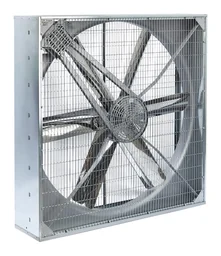
For barns with high humidity and corrosive air, the large-space fan RR 100 () is an excellent choice. Its 78 cm stainless steel rotor resists corrosion and delivers a focused, powerful airflow over long distances.
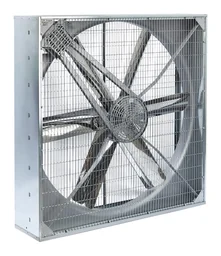
The large-space fan RR 120 () offers even greater reach and airflow. Its 99 cm rotor makes it a strong choice for very large barns or facilities with demanding ventilation needs. Both models are essential equipment for professional livestock operations.
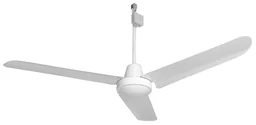
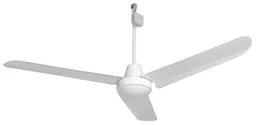
Ceiling fans help circulate air and prevent hot spots. The ceiling fan S01 () stands out for its balanced performance and sturdy construction. Its counterpart, the ceiling fan S02 (), often offers more speed settings.
Installation and Maintenance: How to Do It Right
Even the best fan won't do much if it's installed incorrectly or poorly maintained. Follow these tips for reliable, efficient operation.
Install ceiling fans with the blades at a safe height above animals and equipment. Position them so the airflow covers the animals' resting and feeding areas. With large-space fans, placement is critical. Aim the airflow to keep air moving throughout the barn without blowing directly on the animals.
Maintenance is simple but essential. A dirty rotor loses significant performance and puts extra strain on the motor.
- Thoroughly clean the blades and guards during the off-season.
- Regularly check that all screws and fasteners are tight.
- Listen for unusual noises—they may indicate a worn bearing.
Common Mistakes When Choosing and Using Barn Fans
Many barn ventilation problems stem from basic mistakes. Avoid these common pitfalls.
The most common mistake is choosing a fan that's too small. An undersized fan can't create the desired airflow, making it a poor investment. Incorrect placement is another common problem. Too many fans in the wrong locations won't work effectively and will only increase electricity costs.
Warning: Never use a fan without a protective guard over the rotor. This is essential for the safety of people and animals. Replace a damaged guard immediately.
Don't overlook electrical safety. All installations must comply with VDE regulations for damp and dusty environments. Choose professionally tested equipment and, if in doubt, have a licensed electrician handle the installation.
What’s Next: Trends in Barn Fans
Technology keeps advancing. In 2026 and beyond, look for these trends in barn fans.
Smart Farming Integration: Fans are increasingly being integrated into digital barn management systems. They can be controlled through an app and respond automatically to climate sensor data. This lets you optimize energy use and barn conditions in real time.
Material Innovations: Lighter, more durable composite materials are becoming more common. They make it possible to use larger rotor blades without sacrificing stability, while reducing the overall weight for installation.
Energy Efficiency 2.0: EC motor technology continues to advance. The next generation offers even greater efficiency across a wider range of speeds, helping lower operating costs over the long term.
Investing in a high-quality barn fan is an investment in the future of your business. The right models help create the conditions for healthy animals, strong performance, and business success.
Frequently Asked Questions
- Why is good ventilation so important in a barn?
- Good ventilation is essential for animal health and performance. It removes excess heat, moisture and harmful gases such as ammonia. This reduces heat stress and helps prevent respiratory diseases.
- Which type of fan is right for my barn?
- The choice depends on the size of the barn and the type of animals. Ceiling fans provide even air circulation throughout the barn. High-volume fans move large amounts of air over long distances and are suitable for large halls.
- How do I choose the right fan capacity?
- Use the airflow rate in cubic metres per hour and the barn's floor area as a guide. A fan that is too weak will not be effective. Also consider the animal density and local climate when planning.
- What should I consider when installing a barn fan?
- Make sure it is mounted securely and stably. The airflow should reach the animals without creating draughts. Plan for professional assistance with heavy models and observe electrical safety regulations.
- How do I keep my barn fan efficient and durable?
- Regularly clean the fan blades and protective grilles to remove dust and dirt. Check the bearings and drive motor at the intervals recommended by the manufacturer. This helps prevent loss of performance and premature wear.