
Quick summary: The ideal file type depends on the material and your objective. Coarse rasps are suitable for wood, while finer-cut files are better for metal. Sets offer flexibility, while individual files often provide higher quality. Pay attention to the cut number, shape, handle length and ergonomic grip. Our comparison will help you find the right file for your projects.
Are you planning a DIY project or working professionally with wood and metal? Then a good file or rasp is indispensable. But the choice is huge. Our test and comparison for 2026 will help you find the best tools for your needs. We show which files perform well in practical use and what you should look for when buying.
Contents
File types at a glance
Not every file is suitable for every task. Choosing the right tool starts with understanding the different types.
Rasps for wood and soft materials
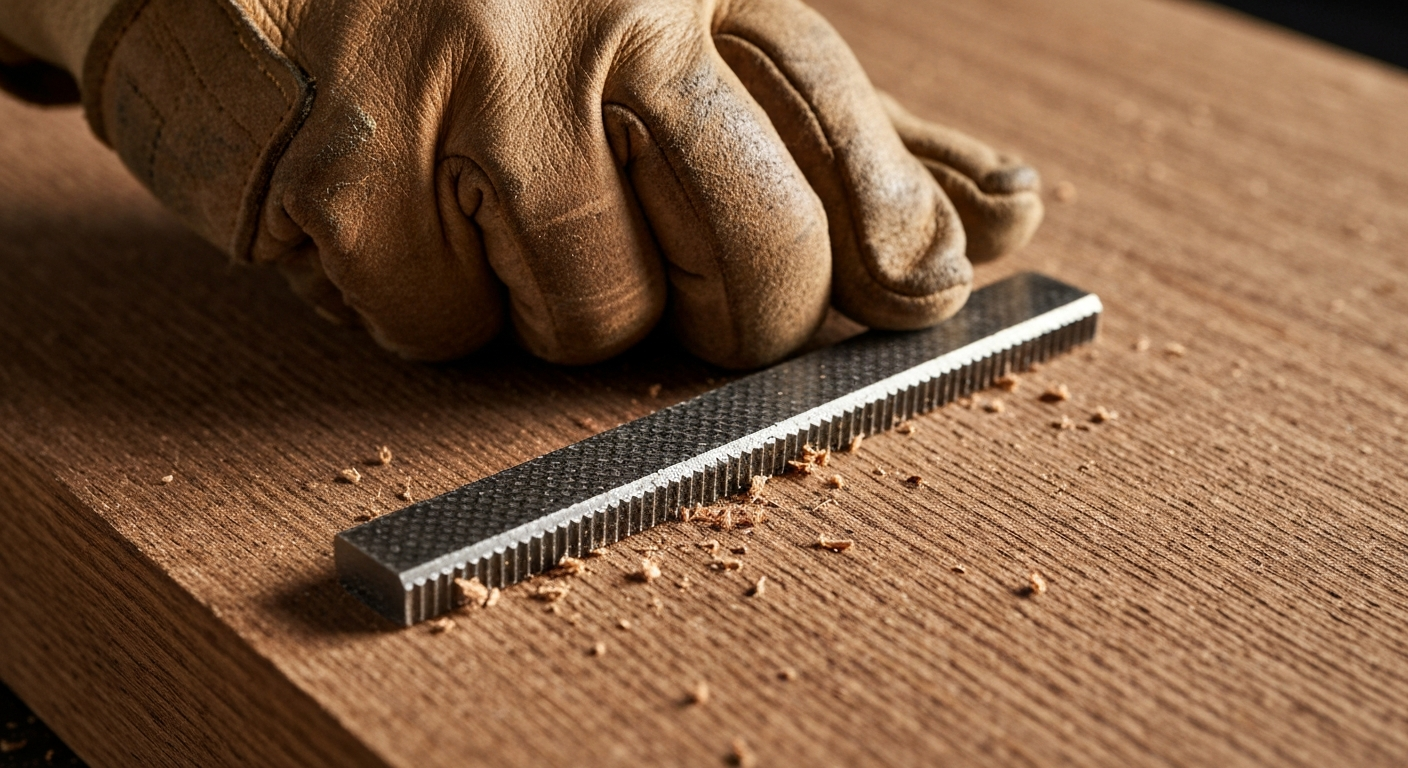
Rasps have coarse, individually raised teeth. They remove material quickly and are ideal for rough shaping wood, plastic or pumice stone. Typical shapes are flat, half-round or round.
Metal files for metal
These files have many closely spaced cuts. They work more precisely and smooth metal surfaces. The cut number indicates the fineness. Metal files are available in various profiles, such as flat, square or triangular.
Diamond files for extreme hardness
Diamond files are used for particularly hard materials such as ceramics, glass or hardened steel. Their surface, coated with diamond grit, is extremely durable and cuts even the hardest materials.
Tip: Start with a coarse cut and work your way up to finer cuts. For large amounts of material, use a rasp first, then a coarse file and finally a fine metal file for the surface.
Important test criteria for files
What really matters in a high-quality file? We defined the most important points for our test.
Material and hardness
The file blade should be made from high-quality, hardened tool steel. It must be hard enough to stay sharp, but also have sufficient toughness to avoid breaking. Cheap steel becomes blunt quickly.
Grip ergonomics
A well-shaped, non-slip grip is essential for fatigue-free work. It should fit comfortably in your hand and provide enough contact area for applying pressure safely. A grip that is too small or smooth quickly causes blisters.
Quality of the cuts
The cuts must be clean, sharp and uniform. Irregularities lead to uneven material removal and chatter marks on the workpiece surface. Look for precise, consistent teeth.
Warning: Never use a file without a firmly attached handle! The pointed end (the tang) can easily slip into your hand under pressure and cause serious injuries. Check that it is secure before every use.
Product comparison: The best files tested
As part of our comparison, we examined various files and sets in detail. Here you can see the results.
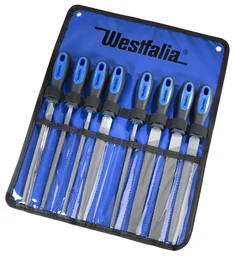
The proved particularly practical for beginners and a wide range of tasks. This 8-piece set offers various shapes and cut numbers and is a good all-rounder for the workshop.
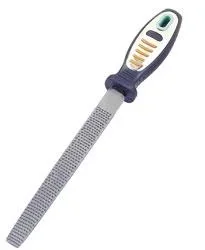
For precise woodworking, such as guitar making or furniture restoration, specialist rasps are the first choice. The in its flat design is ideal for large, flat surfaces.
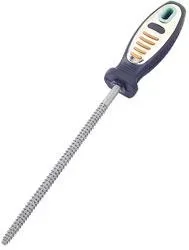
A round rasp is ideal for working on holes or shaping curves. In our test, the stood out for its good balance and sharp teeth.
The most-reviewed files in our range compared directly:
| Model | Customer rating | Availability |
|---|---|---|
| File and rasp set, 8-piece 🏆 Test winner | ★ 4,9 (11) | In stock |
| Flat wood rasp 200 mm | ★ 4,9 (9) | In stock |
| Round wood rasp 200 mm | ★ 4,6 (8) | In stock |
| Diamond triangular file 100 mm | ★ 4,7 (15) | Currently unavailable |
| 3-piece file set | – | Currently unavailable |
Applications: Which file is right for which material?
Choosing the right tool depends largely on the material being worked.
Working with wood using rasps
For wood, you will use almost exclusively rasps. Coarse rasps remove material quickly, while finer ones smooth the surface before sanding. A high-quality wood rasp is a must in any hand tool collection.
Filing metal with metal files
Metal requires files with fine, closely spaced cuts. Choose the cut number according to the desired finish: coarse (No. 0-1) for deburring, fine (No. 4-6) for smoothing. A good selection of files for metal is essential.
Special materials such as plastic or glass
For plastic, sharp rasps with coarse teeth that do not clog are suitable. For glass or ceramics, diamond files are unbeatable. They are a useful addition to any comprehensive tool range.
Note: Always use the correct technique. Apply pressure to the file only on the forward stroke, not on the return stroke. This protects the cuts and delivers better results.
Caring for and Storing Your Files
Proper care can significantly extend the service life of your files.
Clean the teeth thoroughly with a file brush after every use. To do this, tap the file lightly on the workbench to loosen coarse swarf, then brush in the direction of the teeth.
Store files separately from one another. Do not leave them loose in a toolbox, where they could damage each other. Storage blocks or magnetic strips are ideal.
Protect the tools from moisture and rust. A dry place is essential. If you are not using them for an extended period, you can lightly oil the files.
Buying Guide: How to Choose the Right File
Before buying, ask yourself the following questions to choose the best file for your needs.
What is your main application?
- Wood: Choose rasps in the shape you need (flat, round or half-round).
- Metal: Choose engineer's files with the appropriate cut number.
- Different materials: A set containing various files and rasps offers the greatest flexibility.
Do you need a set or a single file?
Beginners and occasional users benefit from a set. It offers more options and is often the more cost-effective solution per tool. Professionals who use a particular file intensively often choose high-quality individual files.
Which quality features are important?
Look for hardened tool steel, an ergonomic handle that fits securely and clean, sharp teeth. Read customer reviews to find out about durability and the results achieved.
In conclusion, choosing the right file makes a noticeable difference to both the quality of your work and your enjoyment of it. With the information from our 2026 test and comparison, you are sure to find the right tool for your next projects.
Frequently Asked Questions
- Which file is best for wood?
- For wood, use rasps with coarse, individually arranged teeth. Flat rasps are ideal for large surfaces, while round rasps are suitable for curved contours. The rasp should be sharp and made from high-quality tool steel to prevent clogging.
- What does the cut number on a file mean?
- The cut number indicates the number of teeth per unit of surface area. Low numbers such as 0 or 1 indicate coarse cuts for rapid material removal. High numbers such as 4 or 6 indicate fine cuts for smooth surfaces. Choose the cut number according to the finish you want to achieve.
- Can I use one file for metal and wood?
- This is not recommended. Metal files have closely spaced, sharp teeth that quickly become clogged with wood. Wood rasps have larger, individually arranged teeth. Always use the right tool for the material to achieve the best results and ensure a long service life.
- How do I care for and clean my files correctly?
- Tap out loose swarf after use. Clean the teeth with a file brush, brushing in the direction of the teeth. Store files separately to prevent damage. Protect them from moisture to prevent rust. Storing them lightly oiled will extend their service life.
- What is the difference between a rasp and a file?
- Rasps have individually arranged, pyramid-shaped teeth and are suitable for removing material quickly from soft materials such as wood or plastic. Files have many closely spaced, sharp teeth arranged in rows and are designed for finer work and harder materials such as metal.