
In brief: The best trellis for you depends on the plant, location and your budget. Heavy climbers such as clematis or grapevines need sturdy metal or wooden structures. Light annual plants can make do with slim trellises. Look for durability, easy assembly and a design that suits your garden. Our comparison will help you make the right choice.
A trellis transforms bare walls and corners into green oases. It gives climbing plants support and structure. But which model is right for your clematis, rose or runner bean?
Our 2026 test and comparison looks at the most important criteria. We show you how to assess stability, materials and design. This will help you choose the right trellis for your garden.
Contents
What types of trellis are available?
Not all trellises are the same. The type you choose determines where and for which plants you can use it.
Wall-mounted trellises
The classic model. You attach it directly to a house wall, masonry or fence. Make sure there is enough space between the trellis and the wall. This helps prevent moisture build-up and damage to the façade.
Freestanding trellises and obelisks
These models do not need a wall. They stand freely in a garden bed or planter and are perfect for adding height and structure to a planting scheme. One elegant example is the
climbing obelisk.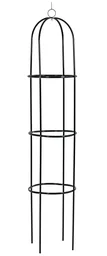
Rose arches and pergolas
They create dramatic walkways and gateways in the garden. They often support heavy climbers such as roses or honeysuckle, so they need a sturdy construction and secure anchoring in the ground.
Trellises for planters and window boxes
These compact models are built into or attached to planters. They are ideal for balconies and patios. The
cleverly combines a planter and trellis.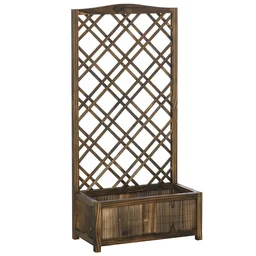
Tip: For a flexible solution, sets such as the
are practical. You can place several small plant supports around the garden wherever you need them.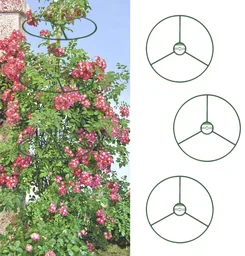
Choosing the right material for your plants
The material determines a trellis's stability, lifespan and appearance. Choose one that can support the weight of your plant.
Metal: Steel and iron
Metal trellises are strong and durable. Galvanised or powder-coated steel resists rust, and metal trellises can easily support heavy, perennial plants. Their design is often slim and modern.
One drawback: They can become very hot in midsummer, which may burn tender shoots.
Wood: Rustic and natural
Wood blends harmoniously into the garden. Pressure-treated wood (KDI) is protected against rot and can last for many years. Durable woods such as chestnut or oak are also suitable.
Wood needs a little more care than metal. Untreated wood weathers more quickly.
Plastic: Lightweight and low-maintenance
Plastic plant supports are lightweight, weather-resistant and require no maintenance. They are well suited to light annual plants.
Stability can be limited. Plastic supports may break in strong winds or under the weight of heavy plants. High-quality plastic is UV-stabilised, while cheaper versions can become brittle.
Warning: Be careful with very cheap, thin trellises made of metal or plastic. They bend easily and may not provide your plant with secure support. It is better to invest in quality once.
Assembly and fixing: What should I consider?
A trellis is no use if it falls over or damages the wall.
For wall mounting: Always use spacer sleeves or stand-off brackets. This allows air to circulate behind the trellis. The screws must be long and strong enough. Make sure the wall plugs are firmly secured in the masonry.
For freestanding models: Look for stable feet or a way to set the trellis deep into the ground. With obelisks, ideally insert the rods 20-30 cm into the soil.
Assembly should be straightforward and possible without specialist tools. Pre-drilled holes make the job easier.
Design and shape: The invisible support
A good trellis supports the plant without taking centre stage.
Mesh size matters. Gaps that are too wide will not support young shoots, while mesh that is too fine can restrict growth. A mesh size of 10-15 cm is ideal for most plants.
The shape should suit the plant's growth habit. Strongly branching plants such as clematis need plenty of horizontal support points. Climbing roses often prefer to grow more vertically.
Choose a subtle colour. Green, black, brown or natural wood blend into the background, keeping the plant at the centre of attention.
Which trellis is right for my plant?
Here are our recommendations for popular climbing plants.
For roses
Roses become heavy and need sturdy support. Choose a robust wall-mounted trellis made of metal or wood with both vertical and horizontal elements. Freestanding rose arches must be securely anchored.
For clematis
Clematis climbs using its leaf stalks, so it needs plenty of thin support points. Trellises with lots of horizontal crossbars or fine mesh are ideal. An obelisk in a flower bed makes an attractive climbing frame.
For annual plants (runner beans, nasturtiums)
Lighter solutions are enough for these plants. A simple bamboo trellis, a slim metal trellis or a set of stakes will do. Browse our plant supports category to find a suitable model.
For vegetables (cucumbers, tomatoes, beans)
Stability and easy harvesting are key. Cordon tomatoes need tall, strong stakes or trellises. Cucumbers do well on wide, sturdy nets or trellises that let the fruit hang freely.
Note: Always plan for something larger than you think you need. Plants grow quickly and often more abundantly than expected. A trellis that is too small will restrict their growth.
Care and durability
With minimal maintenance, your plant supports can last for many years.
Metal: Check the coating once a year. Treat any rust spots with rust converter straight away, then repaint. Tighten any loose screws.
Wood: Check the protective finish. If it is wearing away, reapply wood stain or oil. Areas touching the ground or walls are especially vulnerable.
Plastic: Clean it in spring to remove dirt. Check for cracks or breaks, especially after a frost.
Lightweight plant supports can be stored away at the end of the season. Heavy models that are permanently installed can stay outdoors.
Here are the highest-rated garden trellises in our range, compared side by side:
| Model | Customer rating | Availability |
|---|---|---|
| Garden Obelisk Ø 40 x 190 cm 🏆 Test winner | ★ 4,6 (16) | In stock |
| 3x Plant Support Set of 3 | – | Currently unavailable |
| Climbing Aid + Plant Support for Growing and Raising Plants | – | Currently unavailable |
| Extension Set, Trellis for 949797 Raised Bed “City Jungle Heidelberg”, Extension, Plastic, Green | – | Currently unavailable |
| Anke Pergola | – | Currently unavailable |
Our verdict on buying a garden trellis
A garden trellis is a smart investment for any garden. It guides plant growth, protects your plants and adds striking vertical interest.
Choose a material that can handle the expected load. Look for sturdy construction and secure fixings. The design should be practical and suited to the plant.
Think long term: a high-quality metal or pressure-treated wooden trellis can support your plants for decades and become an integral part of your garden design.
Explore our range to find the right plant support for your gardening project. Start with our garden trellises or browse all planters.
Frequently asked questions
- What is the most durable material for a garden trellis?
- Galvanized steel and powder-coated metal are exceptionally durable and weather-resistant. High-quality pressure-treated wood can also last for many years. For a permanent trellis, avoid thin, untreated wood and unstable plastic.
- How do I securely attach a garden trellis to a house wall?
- Always use suitable wall spacers so the trellis does not sit directly against the facade and air can circulate behind it. Secure it with sturdy wall plugs and screws in a solid surface such as masonry. Check that it remains stable regularly.
- Can I use a garden trellis for tomatoes?
- Yes. Sturdy trellises and obelisks such as PRODUCT_74028 are suitable. Choose a model that can support the weight of mature tomato plants. For tomatoes in pots, freestanding metal or wooden plant supports are ideal.
- What is the difference between a garden trellis and a plant support?
- A garden trellis usually means a flat grid mounted on a wall. Plant support is a broader term that also includes freestanding obelisks, arches, pyramids and trellises. See the full range in our plant supports category.
- How do I clean and care for a wooden garden trellis?
- Brush off any dirt. For treated wood, that is usually enough. Treat untreated wood regularly with a suitable wood stain or oil to protect it from moisture and rot. Check its stability every year.