
In brief: In our 2026 gas string trimmer review and comparison, we look at powerful tools that work without a cord or battery. A gas string trimmer is especially useful for large yards, overgrown areas and places far from a power source. We compare models with different engine sizes, cutting widths and features to help you choose. Consider the shaft type, weight and whether the tool accepts attachments.
Looking for a powerful yard tool that doesn’t need to be plugged in? A gas string trimmer could be just what you need. In 2026, these tools offer improved technology, longer run times and more comfortable operation. Our reviews and comparison will help you find a model that fits your needs.
Table of Contents
What are the benefits of a gas string trimmer?
A gas string trimmer gives you freedom and power in the yard. You’re not tethered to a cord or limited by a battery’s run time. Just fill the tank and get started. That portability makes gas string trimmers a practical choice for large yards, remote parts of a property and places without an outdoor power outlet.
A gas engine delivers more power than most electric models. It can cut through tall, wet grass, dense weeds and even thin branches with ease. That makes it a strong choice for clearing overgrown areas and trimming along property lines.
Tip: Get the most out of your gas string trimmer on large areas by working in a steady pattern. Trim in strips and hold the tool at an even distance from the ground. You’ll get a cleaner cut and put less strain on your back.
What should you look for when buying a gas string trimmer?
One gas string trimmer won’t suit every job. Before choosing a model, think about how you’ll use it. The size of your yard, the type of vegetation and your physical comfort all matter.
Engine, power and displacement
Engine power determines what you can cut. A small engine with a displacement of around 25 cm³ can handle regular grass and soft weeds. For tougher jobs, look for a tool with 30 cm³ or more. The engine type also matters.
- 2-stroke engine: Lighter and more compact, but it requires a gas-and-oil mix.
- 4-stroke engine: Quieter and more fuel-efficient; fill it with straight gas. It also produces fewer emissions.
Cutting system, shaft and weight
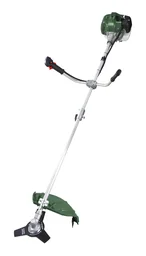
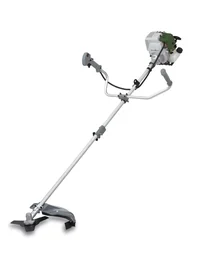
The shaft distributes the tool’s weight. A straight shaft is sturdy and transfers power efficiently. A curved shaft or split shaft can be easier to balance and more comfortable to use, especially on uneven ground.
The cutting width tells you how much ground you can cover in one pass. Widths between 40 and 45 cm offer a good balance of efficiency and ease of handling. Most models use nylon trimmer line. Higher-end tools may also include a metal blade for tougher plants.
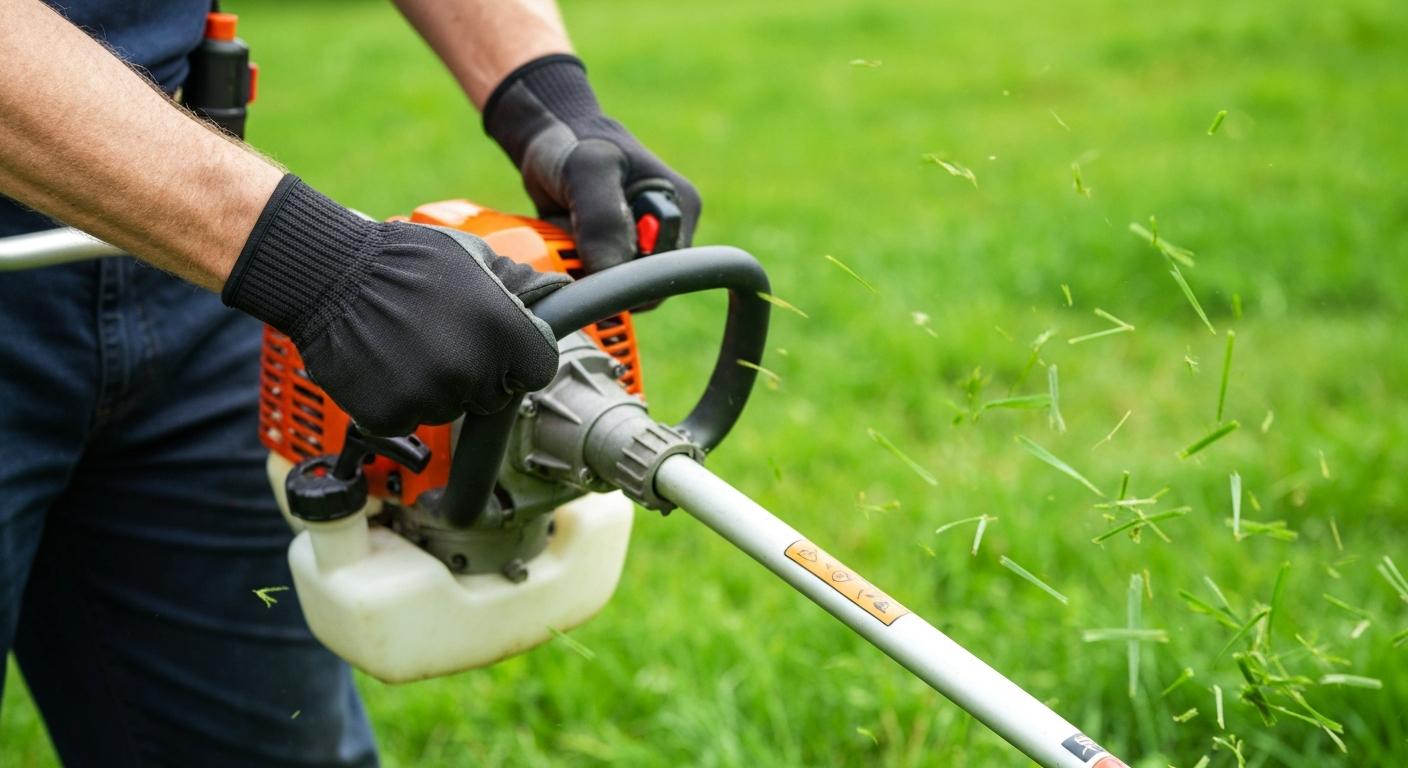
Important: Remember to factor in the operating weight, including fuel. A heavy tool can wear you out faster during extended use. If possible, try it at a dealer to check its weight and balance. A well-balanced trimmer can feel lighter than it is.
Best Gas String Trimmers Compared: 2026
Our comparison covers three types of gas string trimmers, each with strengths suited to particular jobs.
Here’s a side-by-side look at the highest-rated gas string trimmers in our range:
| Model | Customer rating | Availability |
|---|---|---|
| 2-in-1 Gas String Trimmer and Brush Cutter 🏆 Top pick | ★ 4,9 (19) | In stock |
| Gartenmeister GM 4T-700 Gas Brush Cutter with 4-Stroke Engine | ★ 4,8 (9) | In stock |
| BFF52 Gas Brush Cutter, Wheeled | ★ 5,0 (7) | In stock |
| 26cc Split-Shaft Grass Trimmer with 4-Stroke Gas Engine | – | Currently unavailable |
| 4 IN 1 GAS MULTI-FUNCTION TOOL | – | Currently unavailable |
This model is a classic 2-in-1 gas string trimmer and brush cutter. Switching between the line head and blade makes it a versatile choice for a wide range of yard tasks. It’s a great option if you want a powerful, do-it-all tool.
If smooth operation and easy maintenance are priorities, this model with its 4-stroke engine is a great fit. It produces less vibration and uses less fuel. Find it in our gas string trimmers category.
For very large, flat areas, consider the
, a wheeled gas brush cutter. There’s no need to carry the machine; simply push it in front of you. That takes pressure off your back and helps you work longer without getting tired. Find more practical helpers in our yard equipment range.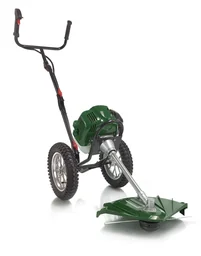
Note: Product availability can change at short notice. The products featured here were available to order when this review was created. Check current stock before ordering.
How to Use Your Gas String Trimmer Correctly
Using your trimmer correctly extends its service life and keeps you safe. Always wear sturdy footwear, long pants, safety glasses and hearing protection. Before starting, check the area for rocks or other debris that could be thrown into the air.
Always start the engine on firm, level ground. Hold the trimmer at an angle of around 30 degrees to the ground and guide it with steady, sweeping movements. Work away from yourself so that clippings are not thrown toward you. For a clean edge along flower beds or paths, hold the line parallel to the edge.
Maintenance and Winter Storage
Remove heavy dirt and debris after every use. Allow the engine to cool completely before storing the trimmer. If it will not be used for an extended period, such as over the winter, empty the fuel tank or add a fuel stabilizer to prevent deposits from forming.
- Clean the air filter regularly or replace it.
- Check the condition of the trimmer line or blade and replace it when worn.
- Store the trimmer in a dry, frost-free place.
Regular maintenance not only keeps the trimmer working properly but also ensures safe operation the next time you use it. Find everything you need to care for your garden in our garden section.
What Are the Alternatives to a Gas String Trimmer?
For smaller gardens, or if you prefer quiet, emission-free operation, an electric string trimmer is worth considering. Cordless string trimmers have become much more powerful in recent years and are now a genuine alternative for many everyday tasks. They require little maintenance and are ready to use right away.
Corded electric string trimmers deliver full power continuously, but their range is limited by the extension cord. For working on very large, overgrown areas or for professional use, however, a gas string trimmer remains unmatched in terms of power, runtime and freedom of movement.
Ultimately, the right choice depends on your specific needs. Our review and comparison is designed to help you choose the right trimmer for your garden.
Frequently Asked Questions
- Who can benefit from a gas string trimmer?
- A gas string trimmer is a good choice if you have a large property, overgrown areas or steep terrain. It does not depend on a power outlet and delivers consistently high performance, making it ideal for longer jobs. Compared with cordless models, it offers more power for dense grass and weeds.
- What is the difference between a 2-stroke and a 4-stroke engine?
- A 2-stroke engine is lighter and more compact but requires a gas and oil mixture. A 4-stroke engine runs more smoothly, uses less fuel and takes straight gasoline. For regular work in hard-to-reach areas, the lighter 2-stroke model is often more practical.
- How do I maintain a gas string trimmer?
- After working, let the engine idle briefly to cool down. Remove grass and other clippings from the housing and blade. Check the air filter regularly and replace it if it is dirty. Store the trimmer in a dry place over the winter and remember to replace the spark plug annually.
- Can I also use a gas string trimmer as a brush cutter?
- Many models are designed from the outset as combination string trimmers and brush cutters. You can identify them by their metal blade or heavy-duty cutting head. When shopping, look for the designation "2 in 1" or "brush cutter".
- How loud is a gas string trimmer?
- Gas string trimmers are considerably louder than electric models. Noise levels are often between 95 and 105 dB(A). Always wear hearing protection for this reason. Modern models with noise reduction are somewhat quieter but are still loud power tools.