
In brief: A good jobsite radio combines rugged construction, plenty of volume, and flexible power options. Choose between battery and corded power based on how often you need to move it around the jobsite. Bluetooth and DAB+ add convenience. Always protect your radio from dust and splashing water.
Best Jobsite Radios of 2026: Find the Right Sound for Your Jobsite
A jobsite radio is more than a source of entertainment. It helps structure the workday, keeps the crew motivated, and makes long hours more enjoyable. But it also has to stand up to dirt, dust, and rough handling. Our 2026 comparison shows which models are tough enough and which features really matter.
Contents
What to look for when buying a jobsite radio
Not every radio can handle the conditions on a jobsite. You need a model built for the job. The most important buying criteria are ruggedness, volume, and a reliable power supply. Strong protection against dust and splashing water is essential. You also need enough output for the radio to be heard over machinery.
Before you buy, consider how often you'll need to move the radio. If you move it frequently, a battery-powered model is the better choice. If it will usually stay in one place, a corded model may be enough. Modern connectivity such as Bluetooth or DAB+ adds convenience.
Tip: Check whether the radio works with your existing battery system. Many manufacturers offer radios that use the same batteries as their drills or saws. This can save money and give you more flexibility.
Battery or corded power? Choosing a power source
The power source largely determines where you can use the radio. Battery-powered models offer maximum freedom. You can put the radio wherever you need it without dealing with a cord. Look for long battery life and the option to charge the battery while the radio is in use.
Corded radios are often more powerful and don't run out of battery. They're ideal for fixed locations such as workshops or jobsite trailers. Some models offer both options, so you can use them with a power outlet or a battery. This is the most flexible solution.
Radios that work with popular battery platforms are especially practical. You can use the same batteries with multiple tools and your radio, helping to keep costs down.
Advantages of battery-powered models
- Maximum mobility across the entire jobsite.
- No tripping hazards from power cords.
- No need for an outlet, even in unfinished buildings.
Advantages of corded models
- No charging time or battery capacity limits.
- Often higher continuous output and volume.
- Generally lower purchase price.
Ruggedness and protection ratings: Built to last
A jobsite radio might get dropped, covered in dust, or caught in a rain shower. Its IP rating (Ingress Protection) indicates how well the housing is protected against solids and water. For use on a jobsite, an IP rating of at least IP54 is recommended.
IP54 protects against harmful amounts of dust and splashing water from all directions. For very dusty work such as drywall installation or sanding, choose a model with IP55. The housing should be made of impact-resistant plastic or have a rubber covering. Corners and edges are often reinforced.
Protection for the controls is another important detail. Dials and buttons should also prevent moisture and dirt from getting inside the radio. A built-in handle makes the radio easier to carry and can help protect it if it falls.
Warning: Even with a high protection rating, don't expose the radio to a direct, powerful stream of water or place it in puddles. IP ratings apply to specific test conditions, not continuous exposure in every real-world situation.
Reception and connectivity: More than FM radio
Modern jobsite radios offer much more than traditional FM reception. The digital standard DAB+ is becoming increasingly popular. It offers a wider choice of stations and clear, interference-free sound. This is especially useful when you move between locations, since the station list updates automatically.
Bluetooth is a must-have for many users. Stream music from your smartphone or tablet and listen to personal playlists, podcasts, or streaming services. Look for a stable Bluetooth connection, even over several meters and through minor obstacles.
Some high-end models also have a USB port for charging your smartphone or playing music from a USB flash drive. An AUX input for a 3.5 mm jack is still useful for older devices. A combination of DAB+, Bluetooth, and FM gives you the most flexibility.
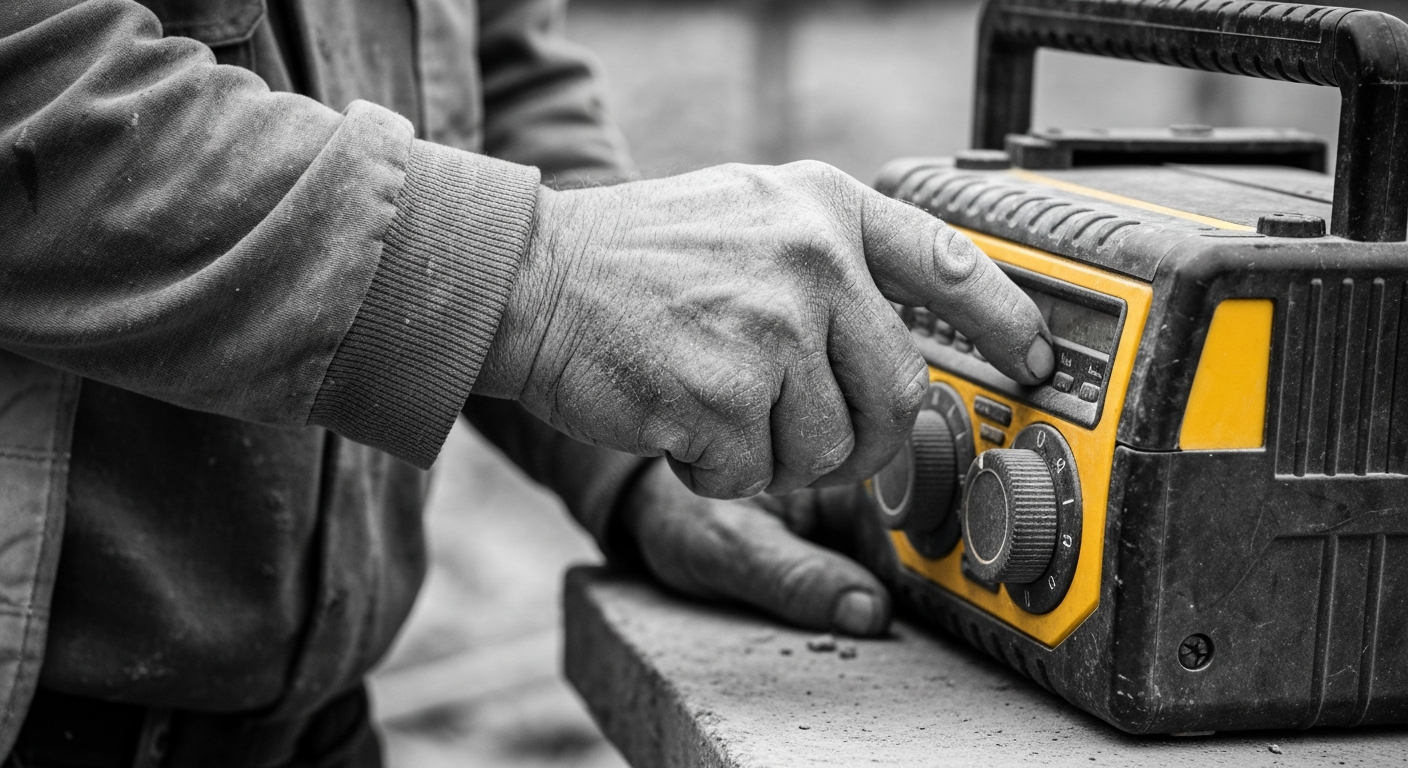
Sound and volume: Cutting through jobsite noise
Wattage isn't everything. What matters is how well the radio reproduces sound in a noisy environment. Boomy bass can drown out the mid and high frequencies that carry vocals and speech. Look for a well-balanced sound profile.
Maximum volume should be at least 90 dB to cut through noise from loud construction equipment such as compressors or demolition hammers. Clear sound at high volume is a sign of quality. Check whether the sound stays clear at full output or becomes distorted and harsh.
The position of the speakers and the housing design affect how the sound travels. Some models have speakers that project forward and to the sides, spreading sound across a larger work area.
Note: Protect your hearing. Even on a jobsite, don't play music continuously at full volume. Set the volume so you can still hear warning signals clearly and communicate with your coworkers.
Listening tests to help assess sound quality
- Speech and podcasts: Clear midrange frequencies are crucial.
- Guitar music and rock: Clear reproduction of high frequencies matters.
- Electronic music with bass: Check whether the bass sounds clear and controlled.
Useful accessories and extra features
Accessories can make your jobsite radio much easier to use. A rugged carrying handle or shoulder strap is invaluable when you're on the move. An integrated smartphone compartment protects your phone from dust and bumps while it streams music.
For stationary use, tripod threads on the bottom are useful. They let you mount the radio securely on a tripod or bracket, out of reach of splashing water or falling objects. Some manufacturers offer special tool case adapters.
Other useful features include a built-in microphone for announcements, an LED work light for dark corners, or a weather radio (S.A.M.E.). Consider which features make sense for your workday.
Best Jobsite Radios of 2026: Comparison
After taking an in-depth look at the criteria, we now compare selected models side by side. These radios stand out for their durability, sound quality and versatility. The table below gives you a quick overview of their key specifications.
Top-rated jobsite radios from our range, compared side by side:
| Model | Customer rating | Availability |
|---|---|---|
| Allweiler L5 pressure flap for valve system - Rugged construction for agricultural applications | – | Currently unavailable |
| BR10 DAB+ jobsite radio | – | Currently unavailable |
| DMR116 jobsite radio - without battery and charger - | – | Currently unavailable |
| 40V max. cordless jobsite radio (without battery, without charger) MR003GZ | – | Currently unavailable |
| 7.2 Volt to 18 Volt cordless jobsite radio DMR108 (without battery and charger) | – | Currently unavailable |
Our pick for maximum flexibility is the . It combines DAB+ and Bluetooth with compatibility across a wide battery voltage range, from 7.2V to 18V. That makes it compatible with many popular battery platforms. Its IP54 rating makes it suitable for most jobsites.
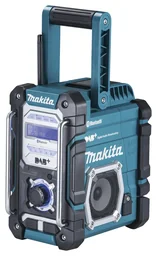
If you want reliable DAB+ reception, the is an excellent choice. It’s easy to use and delivers very good digital reception. Its rugged construction is built to last.
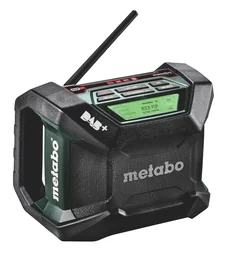
The stands out for its Bluetooth connectivity and compatibility with standard 12V-18V batteries. It’s a great choice if you already own tools that use this battery system.
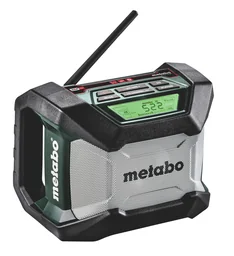
A great entry point to cordless jobsite radios is the . It covers the same voltage range as model 117747 and focuses on the essentials. Without DAB+, it’s a more affordable alternative.
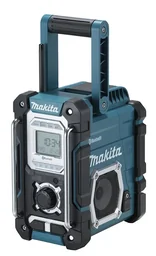
Our recommendation by use case
- For maximum flexibility and modern radio reception: Choose a model with DAB+ and Bluetooth, such as the .
- For a fixed setup with a power outlet: A powerful corded radio is the right choice. Explore our jobsite radios category.
- If you already own a battery system: Choose a radio that works with your batteries, such as the or .
When choosing your radio, consider suitable multimedia accessories or other technology for your workplace. The right equipment can boost productivity and make work more enjoyable.
There’s no single best jobsite radio for everyone. The right choice depends on your needs. With the criteria in this guide and our model comparison, you’ll be well equipped to find the perfect soundtrack for your jobsite.
Frequently Asked Questions
- What’s the difference between DAB+ and FM on a jobsite radio?
- DAB+ broadcasts digitally and usually offers more stations and clearer sound without static. FM is analog and widely available. For reliable reception, especially when you move between jobsites, a DAB+ radio is a good choice. Many models support both formats.
- Can I power a jobsite radio with a power bank?
- Yes, if the radio has a USB port that supports power input. Check the technical specifications. Many cordless models can also be powered via USB-C or Micro-USB while in use. A power bank can significantly extend runtime.
- How can I protect my jobsite radio from dust and water?
- Check the IP rating. IP54 protects against harmful amounts of dust and splashing water from any direction. For very dusty environments or exposure to water spray, IP55 or higher is a good choice. Clean the ventilation slots regularly and store the radio in a closed case.
- Will a jobsite radio be loud enough for a noisy construction site?
- Modern jobsite radios often reach over 90 dB, which is enough for typical construction site noise. Clear midrange and treble frequencies matter, too. Look for a model with a balanced sound profile that can cut through background noise.
- Are replaceable batteries useful in a jobsite radio?
- Yes, replaceable batteries are very practical. You can charge a spare battery while the other is in use, so your work isn’t interrupted. Check whether the radio is compatible with other devices in your battery system to save money.
You may also be interested in
- Two-Way Radio Test & Comparison 2026: The Best Devices Reviewed
- Sound System Test & Comparison 2026
- Cordless Tool Test & Comparison 2026
- FM Transmitter Test & Comparison 2026: The Best Transmitters for Your Car
- Workshop Tool Test & Comparison 2026: The Best Devices in Practical Testing
- Watch Test & Comparison 2026: The Best Models at a Glance