
In brief: A lawn tractor is ideal for large, level lawns of around 1,000 square meters. The best models in our review combine sturdy construction, plenty of engine power, and easy operation. Choose gas or battery power based on your lawn’s size and how much noise you can tolerate. Key factors include cutting width, ride comfort, and compatibility with attachments.
A perfect lawn is a source of pride for many homeowners. But maintaining a large yard can take a lot of physical effort. That’s where lawn tractors come in. They combine the cutting power of a riding mower with the comfort of a vehicle. Our 2026 review and comparison will help you find the right model for your needs. We look at drive systems, cutting systems, and comfort features to help you make an informed choice for your garden.
Table of contents
- Key buying criteria at a glance
- Gas or battery? Choose the right drive system
- Cut quality and mulching
- Ride comfort and controls
- Accessories and attachment options
- Maintenance and care
Our most-reviewed lawn tractors compared side by side:
Model Customer rating Availability AT4 84 A lawn tractor winter set - 3-piece – Currently unavailable AT4 84 A lawn tractor winter set - 5-piece – Currently unavailable Accessory - grass catcher box for SWS 800 – Currently unavailable Lawn tractor attachment grass and leaf collector 96 cm working width – Currently unavailable Balcony herb garden bed on legs, anthracite – Currently unavailable
What makes a good lawn tractor?
Not every lawn tractor is right for every yard. Before choosing a model, consider the following points.
Choosing the right cutting width
The cutting width determines how quickly you can mow your lawn. A wider cutting deck saves time but makes the tractor less maneuverable. Measure your lawn and check for narrow passages between trees or buildings.
Engine power and performance on slopes
Engine power is specified in cubic centimeters (ccm) or kilowatts (kW). Mid-range power is sufficient for gentle slopes and typical lawn conditions. Wet or tall grass and steep inclines call for more power.
Tip: If possible, test a demo model on terrain similar to your yard. That’s the best way to see how it handles slopes and how easily it turns.
Gas, battery, or diesel? Choose the right drive system
Your choice of drive system has a major impact on running costs, maintenance, and the overall mowing experience.
Gas engines: The classic choice
Gas-powered lawn tractors deliver plenty of power and long runtimes. They don’t depend on charging stations and are well suited to very large areas. They do need regular maintenance, including oil changes, and a steady supply of fresh fuel.
Battery-powered lawn tractors: Quiet and clean
Electric models such as the
are quiet, emissions-free options. They start instantly, need little maintenance, and are ideal for residential areas. Battery life limits how much you can mow on a single charge. Check that replacement batteries are compatible.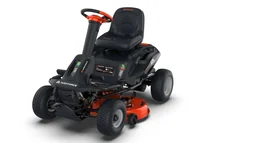
The diesel option
Diesel lawn tractors are mainly used for professional work. They’re very durable and fuel-efficient under constant load. For residential yards, they’re often less practical because of their purchase price, noise, and emissions.
Warning: Never store gas or diesel in unsuitable containers or near heat sources. Always refuel outdoors with a suitable funnel. Follow the manufacturer's instructions for the correct fuel.
A clean cut and practical features
A lawn tractor should do more than mow quickly. It should also leave a clean, even cut. The cutting system plays a key role.
Mulching or collecting grass clippings?
Most lawn tractors offer several mowing options. With mulching, grass clippings are finely chopped and spread across the lawn as fertilizer. Collecting them in a bag or grass catcher leaves a tidy finish but means stopping to empty it. Side or rear discharge is handy when you want to leave clippings along the edge.
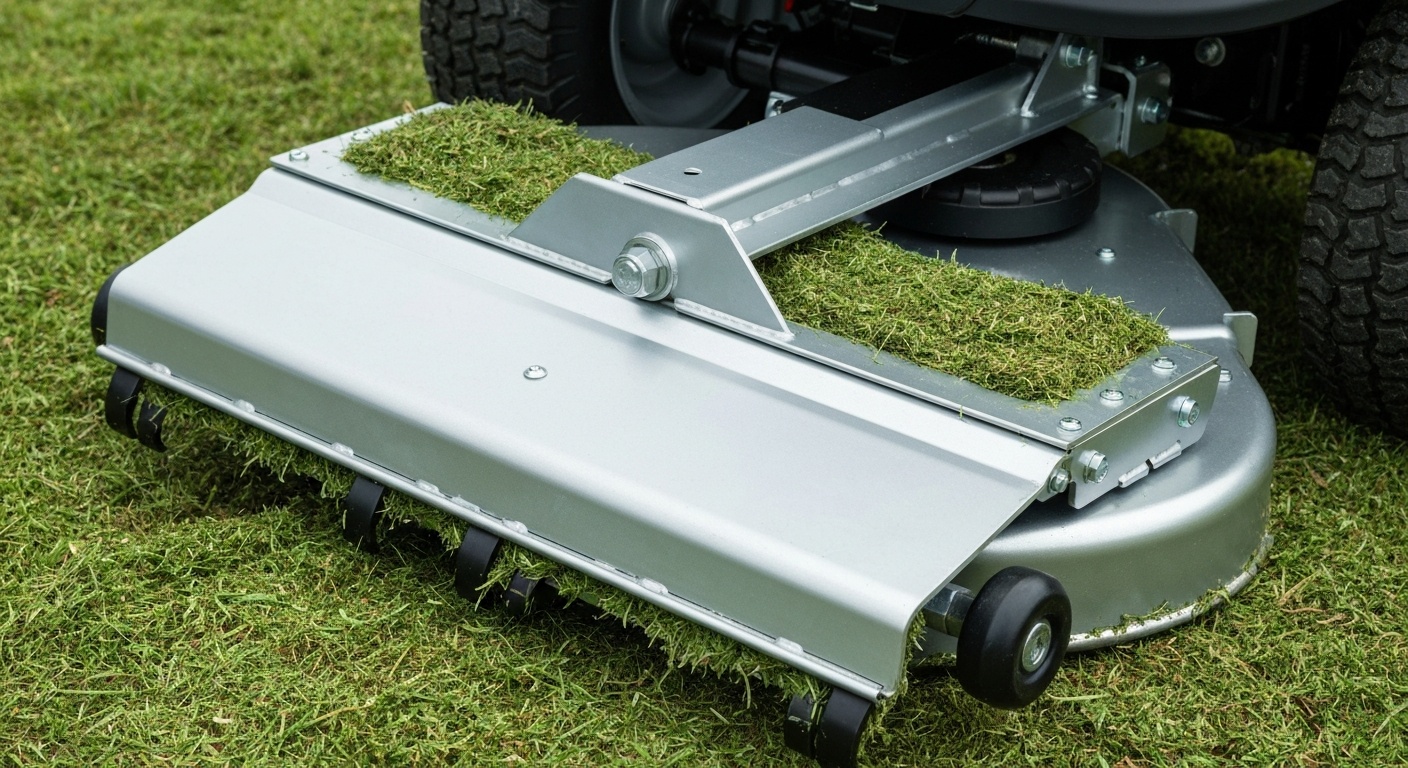
Adjustable cutting height
An easy-to-adjust cutting height is essential. It should range from a low setting for ornamental lawns to a higher setting for meadow-like grass. Central adjustment lets you raise or lower all wheels at once with a lever or button, saving time.
Ride comfort and safety
You’ll spend a lot of time in the seat, so ergonomic details matter.
Seat, steering, and handling
An adjustable, padded seat with armrests makes mowing more comfortable. The steering should feel smooth and precise. A hydrostatic drive lets you adjust your speed continuously without shifting gears. Check how easily the tractor turns, especially if you have a compact yard.
Safety features
A lawn tractor is a powerful machine. Essential safety features include a switch that stops the blade when you leave the seat and an engine kill switch. Good stability and specialized safety training are recommended for sloped terrain.
Note: Always wear sturdy footwear and hearing protection while mowing, especially with gas-powered models. Keep children and pets at a safe distance while you work. Never mow wet grass or in the intense midday sun.
Useful accessories expand what your lawn tractor can do
A lawn tractor can do more than just mow. With the right accessories, it becomes a true all-around machine.
Winter and maintenance kits
Special kits such as the
or the more comprehensive prepare your tractor for winter. They often include a snow plow, weights and tire chains, so you can use your machine year-round.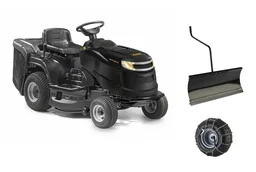
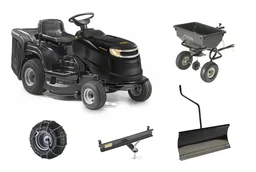
Attachments for lawn care
Many models have a PTO or standard attachment points for equipment such as dethatchers, aerators or spreaders. Before buying, check that the accessories you want are available and compatible.
Transport and storage
A trailer or utility cart makes it easier to move leaves, soil or equipment. A sturdy protective cover or garage shields your tractor from the weather and helps extend its service life.
Maintenance keeps your lawn tractor in top shape
Regular maintenance helps your investment perform well and last longer.
Getting ready for the season
Before your first mowing session, check the oil level, air filter and fuel. Check that the mower blades are sharp and balanced. A dull blade tears the grass and makes your lawn more susceptible to disease.
Care during the season
After each mowing session, clean grass clippings from the underside of the mower deck. Check the tire pressure regularly. The correct pressure helps ensure an even cut and protects your lawn.
Getting ready for winter
At the end of the season, either run the fuel tank empty or add a fuel stabilizer. For battery-powered models, store the battery in a frost-free place at a medium charge level. Having your tractor serviced by a qualified dealer every few years is recommended.
The best lawn tractors compared
Below, you’ll find a clear comparison of selected models and kits that performed well in our test. Use the table to quickly compare their features.
{{COMPARISON_TABLE}}Conclusion: How to find the right lawn tractor
Choosing the right lawn tractor depends largely on your lawn’s size, the terrain and your priorities. Powerful gas models are a good choice for large, level areas. If quiet, low-maintenance operation matters to you, choose a battery-powered model such as the . Think about future needs, too: Would you like to use accessories such as a winter kit (, ) later on? Invest in quality and service, because a lawn tractor is a long-term purchase for your garden. With the criteria outlined here and our comparison, you can make a confident choice for years of reliable lawn care.
Frequently asked questions
- How large does my lawn need to be for a lawn tractor to make sense?
- A lawn tractor is worth considering for a lawn of around 1,000 to 1,500 square meters. For smaller lawns, a powerful riding mower or even a sturdy lawn mower is often more efficient and economical. Also consider your property’s layout and any obstacles.
- What are the advantages of a battery-powered lawn tractor?
- Battery-powered lawn tractors are quiet, produce no exhaust emissions and require little maintenance. They start right away and don’t need fuel. Modern lithium-ion batteries provide enough runtime for large lawns. Make sure the battery has enough capacity and that you can use a spare battery if needed.
- What cutting width is best for my lawn?
- For average-sized lawns, a cutting width of 90 to 110 cm offers a good balance between mowing speed and maneuverability. On very large, open lawns, 120 cm or more can save time. A narrower cutting width is an advantage in lawns with many trees or tight spaces.
- Can I attach other equipment to my lawn tractor?
- Many lawn tractors have a trailer hitch and often a PTO for garden accessories. Common attachments include spreaders, aerators and snow plows. Before buying, check whether accessories such as a grass catcher bag are available for your model.
- How important is the type of transmission?
- The transmission affects comfort and performance on uneven terrain. A hydrostatic transmission offers smooth speed control and easy operation, but costs more. A mechanical transmission is more rugged and affordable, but requires you to operate the clutch. All-wheel drive is recommended for hilly terrain.