
In brief: Choosing the right metal saw depends on the material and the cut you need to make. Reciprocating saw blades work well for rough prep and cutting pipes, while jigsaw blades allow precise curved cuts. Band saws make clean, efficient cuts in larger workpieces. In our test, we compare different types and show which tool is right for each job.
Cutting metal is one of the most demanding jobs in the workshop. The right saw affects the result, how quickly you work and your safety. Our 2026 test and comparison shows you which metal cutting saws and blades are best for different projects. We focus on practical buying criteria to help you find the right tool in the metal saws range.
Table of contents
What types of metal saws are there?
Metal saws generally fall into two categories: handheld tools and stationary machines. Handheld options include reciprocating saws, jigsaws and traditional hacksaws. For stationary use, band saws are a top choice, especially for precise, repeatable cuts. Each type has its strengths.
A reciprocating saw is a versatile choice for demolition, cutting pipes in tight spaces and cutting through metal profiles. A jigsaw excels at cutouts, curved cuts and detailed work on sheet metal. A band saw is the professional choice for straight cuts, miter cuts and efficiently cutting bar stock.
The right choice depends largely on how you plan to use the saw. Consider whether you usually need quick, short cuts or long, precise ones. The full range of tools has options for both.
Tip: For occasional cuts in thin metal, a sturdy jigsaw with a metal-cutting blade is often enough. If you regularly cut profiles or pipes, consider investing in a good reciprocating saw or band saw.
How do you choose the right saw blades?
The saw blade is the heart of any metal saw. The wrong blade can make even the best saw ineffective. The key factors are the material, tooth count (TPI) and shank, which must fit your saw.
For metal, bi-metal blades are almost always the best choice. They combine a flexible backing with extremely hard, wear-resistant teeth, making them durable and less prone to breaking. For a clean cut, look for quality features such as milled, set teeth.
Manufacturers specify tooth count in TPI (teeth per inch). Coarse teeth (low TPI, e.g. 10-14) work well on softer, thicker metals such as aluminum or iron. Fine teeth (high TPI, e.g. 18-24) are better for hard metals such as stainless steel or thin sheet metal.
Consider blade length and thickness
The overall length (GL) and free length (VL) must match your saw's blade holder. Blade thickness (ZT) affects stability. A thicker blade is less likely to deflect while cutting, but requires more power from the saw.
Reciprocating saws: Testing and practical use
Reciprocating saws are powerful tools for rough to moderately precise work. In testing, they stand out for their versatility and durability. With the right blade, they can cut metal, wood and plastic.
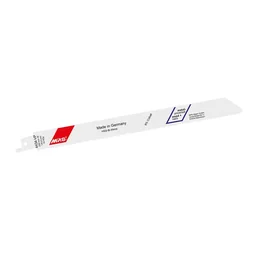
When cutting metal, choosing the right blade is essential. A blade such as the (bi-metal, GL 230 mm, 10-14 TPI) is ideal for fast, aggressive cuts in softer metals or thicker sections. Its coarse teeth help clear chips efficiently.
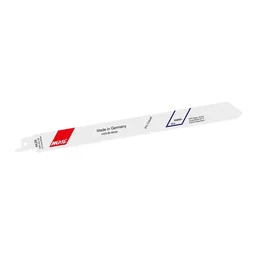
For harder metals or cleaner cut edges, choose a blade with finer teeth. The (bi-metal, GL 230 mm, 18 TPI) cuts stainless steel or thin-walled pipes more cleanly and with less vibration.
Important: Always secure the workpiece firmly. A reciprocating saw produces strong vibrations and can kick back. Loose material can be thrown and cause serious injuries. Always wear safety glasses and gloves.
Jigsaws for precise curves and cutouts
For cutouts in sheet metal, trimming shapes and making curved cuts, a jigsaw is hard to beat. It offers excellent control and precision, but requires a blade designed for metal.
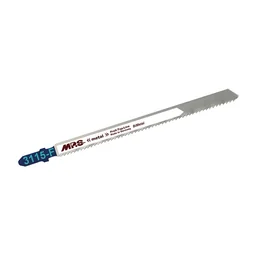
Metal jigsaw blades are shorter and sturdier than wood blades. A blade such as the (bi-metal, GL 130 mm, 12 TPI) offers a good balance of cutting speed and finish for many metalworking jobs. Its wavy tooth set helps keep the blade from jamming in the cut.
Guide the jigsaw with moderate pressure and a low to medium stroke rate. When cutting thin sheet metal, use a backing board to minimize deformation. For professional metalworking, a jigsaw with orbital action is a good choice.
Band Saw Review: Benefits and Suitable Models
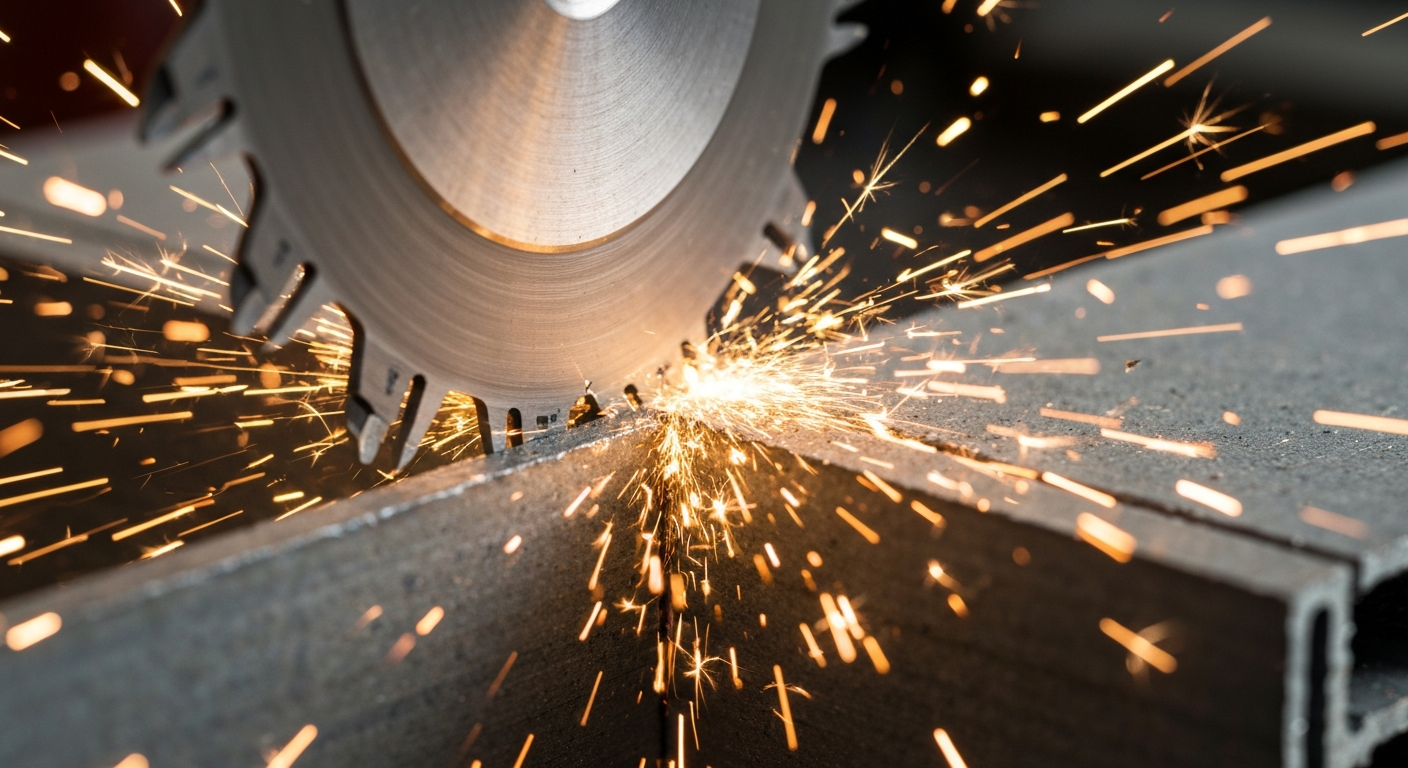
Stationary band saws are the most efficient tools for cutting metal. The continuous cut made by the circulating blade delivers high cutting speeds, minimal material waste, and excellent cut quality. They are ideal for workshops.
Our review shows that band saws are particularly effective for repeated straight cuts or miter cuts. They operate with little vibration and produce an almost finished edge. A compact model for the workshop is the (Bernardo Vario 125). It offers plenty of power in a compact space.
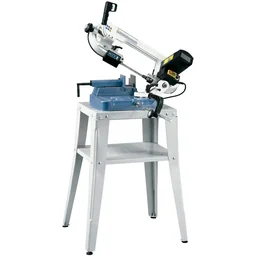
Horizontal vs. Vertical Band Saws
Horizontal band saws cut from top to bottom and are typically used for cutting off or cutting bar stock to length. Vertical band saws work like a coping saw and are suitable for contour cuts and cutouts. Your choice depends on the task at hand.
Note: Power consumption and the required voltage (230V or 400V) are important buying considerations for band saws. Before purchasing, check whether your power connection can supply the required power.
What safety precautions should you take when cutting metal?
Safety comes first. Metal produces sharp chips and sparks, while machines generate considerable force. Always wear certified safety glasses to protect yourself from flying chips. Hearing protection is recommended when using loud machines such as reciprocating saws.
Wear sturdy gloves to prevent cuts from sharp edges. However, do not wear gloves when operating machinery with rotating parts, such as table saws or band saws, because they can get caught. Wear close-fitting clothing and tie back long hair.
Make sure your work area is well lit and tidy. Position the machine or workpiece securely to prevent loss of control.
How do you care for and maintain your metal saw?
Proper care significantly extends the service life of your machine and saw blades. Clean metal chips and dust from the machine after every use. Use a brush or compressed air.
Do not continue using dull saw blades. They overload the motor and produce rough cuts. Replace blades promptly. Store spare blades in a dry place where they are protected from corrosion.
With band saws, check the blade tracking and guide rollers regularly. A correctly tensioned and guided blade runs more smoothly and cuts more precisely. Consult the operating instructions for specific maintenance intervals.
Here are the highest-rated metal saws in our range, compared side by side:
| Model | Customer rating | Availability |
|---|---|---|
| Bi-Metal Reciprocating Saw Blade, Milled and Side-Set, GL 230/VL 210 mm, ZT 1,8-2,5mm/10-14TPI, 5-pack 🏆 Top pick | ★ 5,0 (11) | In stock |
| Bi-Metal Reciprocating Saw Blade, Milled and Side-Set, GL 230/VL 210mm, ZT 1,4 mm/18TPI, 5-pack | ★ 4,9 (9) | In stock |
| Bi-Metal Jigsaw Blade, Milled and Wavy-Set, GL 130/ VL 110 mm, ZT 2,0 mm/ 12TPI, 5-pack | ★ 5,0 (2) | In stock |
| HBS261 Band Saw Machine | – | Currently unavailable |
| Bernardo Horizontal Band Saw HBS 275 / 400V | – | Currently unavailable |
The right metal saw makes your work easier, safer, and more precise. Whether you choose a robust reciprocating saw blade such as the , a fine jigsaw blade, or a powerful band saw, always consider the quality and suitability for your specific task. With this knowledge, you are sure to find the right tool in the metal saws section.
Frequently Asked Questions
- Which metal saw is best for pipes and profiles?
- For cutting pipes, profiles, or thick pieces of material, a reciprocating saw with the right bi-metal blade is ideal. It cuts with a back-and-forth motion and can reach difficult-to-access areas. Choose a blade with the right tooth configuration for your material.
- What does TPI mean on a metal saw blade?
- TPI stands for "Teeth Per Inch." A low TPI value (e.g. 10-14) means coarser teeth for fast, aggressive cutting in softer metals. A high TPI value (e.g. 18-24) means finer teeth for clean, slower cuts in hard or thin metals.
- Can I use a wood saw to cut metal?
- No, you should avoid this. Wood saw blades have a different tooth geometry and are made from softer material. They become dull immediately when used on metal and may even break. Always use special metal saw blades made from bi-metal or carbide.
- What are the advantages of a band saw over a reciprocating saw or jigsaw?
- A band saw cuts with a continuous, circulating blade. This produces a smooth, low-vibration, and very straight cut. It is particularly efficient for series cuts, cutting long stock to size, or making precise miter cuts in metal profiles.
- What should I look for when buying replacement saw blades?
- Check compatibility with your machine's blade mount, blade length, material (bi-metal for durability), and tooth configuration (TPI). The tooth configuration should match the type of metal: coarse for soft, thick metals and fine for hard or thin metals.