
In brief: The right pool cleaner depends on your pool type and size, and how much cleaning you want to do yourself. In our test, fully automatic robotic pool cleaners work especially well for large above-ground pools, while manual pool vacuums and brushes are an affordable option for small and medium-sized pools. The best choice depends on your needs.
Contents
A clean pool is essential for a relaxing swim. But leaves, insects and dirt can quickly cloud crystal-clear water. Cleaning your pool by hand with a skimmer net and brush takes time and effort. Modern pool cleaners do the work for you. In our 2026 test and comparison, we look at the leading technologies and help you find the right cleaner for your pool.
What types of pool cleaners are available?
There is a wide range of pool cleaners to choose from. They generally fall into three main categories, each with its own cleaning method, level of convenience and price.
Manual pool cleaners
Manual cleaners are the simplest and most affordable option. They usually consist of a pool vacuum head, a telescoping pole and a hose connected to the pool's filter system. You guide the vacuum head across the floor and walls yourself. It takes some physical effort, but gives you full control over the cleaning. Manual cleaners are ideal for small and medium-sized pools and occasional cleaning.
Semi-automatic pool cleaners
Semi-automatic cleaners, often called pressure-side or suction-side cleaners, use water pressure or suction from your pool pump to move around. They connect by hose to the filter system or a separate booster pump. These cleaners move around the pool in a random or preset pattern as they collect dirt. They save time, but still need you to monitor them and turn them on and off.
Fully automatic robotic pool cleaners
The premium option is a fully automatic robotic pool cleaner. These smart devices work independently of your filter system. They have their own filter and pump and simply plug into a power outlet. Using sensors, gyroscopes and often AI-powered programs, they map the pool and clean the floor, walls and sometimes the waterline in a systematic pattern. They cost more, but offer greater convenience and better cleaning performance.
Tip: Fully automatic robotic cleaners are a great choice for large above-ground pools. They clean a large area efficiently and reduce the work for you. For small above-ground pools, a manual pool vacuum is often all you need.
How do you choose the right pool cleaner?
Before choosing a model, answer these four key questions. Your answers will help guide your purchase.
How large is your pool? Pool size determines the cleaning power and runtime you need. A cleaner that's underpowered for a large pool will take too long, while an oversized model for a small pool can cost more than necessary.
What shape and surface does your pool have? Robotic cleaners with smart navigation can usually handle complex shapes, steps and corners. Basic vacuums are better suited to rectangular pools. Check that the cleaner is designed for your pool surface, such as a vinyl liner, tile or concrete.
What's your budget? Prices vary widely. Set a realistic budget that accounts for the purchase price and any future costs for replacement parts or repairs.
How much time and effort do you want to put in? Do you want to clean the pool yourself occasionally, or would you prefer a fully automatic helper? The time you have available is a key factor.
Key buying criteria at a glance
Along with choosing the right type, consider the technical details. These features can set a good cleaner apart from a great one.
- Cleaning coverage: Does the cleaner cover only the floor, or does it also clean the walls and waterline? Top models cover all three areas.
- Filter technology: Fine filter bags or cartridges can capture tiny debris such as sand. A coarse filter basket catches larger debris like leaves.
- Navigation and programming: Smart navigation with wall and step detection helps ensure thorough cleaning without manual guidance.
- Cord length and climbing ability: The cord must be long enough to reach every part of your pool. Climbing ability shows how steep the pool walls can be.
- Ease of maintenance: An easy-to-open filter basket, wheels that are simple to clean and readily available replacement parts all matter for long-term use.
Warning: Never plug a robotic pool cleaner into an outlet without a GFCI. Water and electricity are a dangerous combination. Use only the included cable and power adapter, and look for a recognized safety certification.
Pool cleaner test: Our top picks
We tested a range of models in real-world conditions. The devices that impressed us most combined efficient cleaning with useful features. Water care products are also essential for keeping your pool clean. An automatic helper such as the
releases a steady, measured amount of chlorine, making cleaning easier by reducing the amount of organic matter in the water.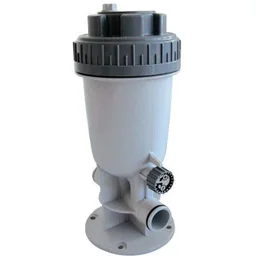
For precise chemical dosing, a
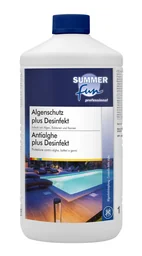
is a great addition that automates another part of pool maintenance. To control algae, which can grow even with effective mechanical cleaning, a reliable is essential. Together with a mechanical cleaner, these products help keep your pool water crystal clear.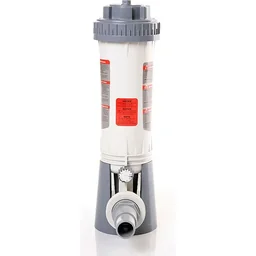

Best for large pools
Our top pick among fully automatic robots for large pools impressed us with its excellent mapping feature. On its first run, it created a digital map of the pool and then cleaned methodically without going over the same areas repeatedly. It climbed walls with ease, and its fine filter captured even the smallest particles. The folding frame and easy-to-reach components also made maintenance simple.
Best value among semi-automatic models
In the mid-range category, one semi-automatic pressure-side cleaner stood out. It made efficient use of the pump's water pressure to move around the pool and provide strong suction. The large debris collection bag was especially handy because it needed to be emptied less often. For standard pools with a simple shape, this model offers an excellent balance of cleaning performance and price.
Care and maintenance for a longer service life
A pool cleaner needs care, too. Regular maintenance can significantly extend its service life and help it clean consistently. Keep these tips in mind.
Clean the filter basket or screen after every use, and rinse away larger debris. For fine filter bags, follow the manufacturer's cleaning instructions. Check the brushes, rollers, or wheels regularly for wear, and remove any tangled hair or threads. This is especially important for products used in the garden, where more dirt can build up.
At the end of the season, don't leave a dirty cleaner in the shed. Clean it thoroughly, dry every part completely, and store it in a dry, frost-free place. For battery-powered models, follow the battery storage recommendations.
Note: Many manufacturers offer a limited warranty, which may require you to use original replacement parts and maintain the product properly. Keep your proof of purchase and records of any maintenance. These may be helpful if you need to make a warranty claim.
Best pool cleaners of 2026 compared
To help you choose, we've summarized the key specifications and features of the tested models in a handy table. See at a glance what each device does best.
Here are the top-rated pool cleaners in our range, compared:
| Model | Customer rating | Availability |
|---|---|---|
| 3-in-1 pool cleaning brush | – | Currently unavailable |
| 8-piece pool cleaning set incl. telescopic handle, water thermometer and much more | – | Currently unavailable |
| Absorbent pool sponges | – | Currently unavailable |
| Algaecide, 1 litre | – | Currently unavailable |
| Automatic chlorine dispensers | – | Currently unavailable |
Conclusion: Find the right pool cleaner for you
Choosing the right pool cleaner comes down to your needs. Consider your pool's size and type, your budget, and how much convenience you want. A fully automatic robot is the most convenient option and works well for large, frequently used pools. For smaller pools or occasional cleaning, manual and semi-automatic systems are effective, budget-friendly choices.
Remember that a mechanical cleaner is just one part of pool maintenance. Pair it with reliable water treatment, including the products mentioned above, for a clean, hygienic swimming experience. With the right helper, you can spend less time on maintenance and more time enjoying summer and your pool.
Frequently Asked Questions
- Which is better: a robotic pool cleaner or a manual pool vacuum?
- A robotic pool cleaner works automatically, saving you time and effort. It cleans the pool floor, walls and sometimes even the waterline. A manual pool vacuum requires you to do the work, but costs considerably less upfront. The right choice depends on your budget and how much convenience you want.
- How often should I clean my pool?
- Give your pool a thorough clean once a week. Clean it more often after heavy use, a storm or during hot weather. You can also run an automatic pool cleaner for short periods each day to reduce maintenance and keep the water consistently clean.
- Are pool cleaners safe to use on vinyl pool liners?
- Yes. Most modern pool cleaners are suitable for common pool surfaces, including vinyl liners, tiles, fiberglass and concrete. Before buying, check that the cleaner is approved for your pool surface. Robotic cleaners with soft brushes are especially gentle on vinyl liners.
- Can a pool cleaner remove algae?
- A good pool cleaner can scrub dirt and algae deposits from pool surfaces. However, controlling algae also requires balanced water chemistry and an algaecide. A cleaner helps by removing algae from surfaces, but it cannot replace chemical treatment. Use both for the best results.
- What should I do if my automatic pool cleaner stops moving?
- First, check that the cables and plugs are intact and the power supply is working. Then clean the filter basket and remove debris from the wheels or rollers. For robotic cleaners, restarting the unit may help. If the problem continues, contact the manufacturer's customer service.