
In brief: The right saw blade depends on the material and the type of saw you use. For versatile woodworking, bi-metal blades with variable teeth are a great choice. For metal, choose a dedicated HSS or carbide blade. The tooth pattern (TPI) affects cutting speed and finish. Our review shows which blades are suited to different projects.
Best Saw Blades of 2026: Reviews & Buying Guide
A sharp blade designed for the job makes cutting precise and effortless. Whether you are cutting wood for a shelf, shortening metal pipe or working with plastic sheet, the wrong blade can lead to frustration and poor results. Our 2026 review and comparison helps you find the right saw blade for your project. We explain the most important buying criteria and introduce suitable products.
Table of Contents
- What types of saw blades are available?
- Choosing the right blade material: steel, bi-metal or carbide?
- Tooth pattern and TPI: the key to cutting speed and finish
- What should you look for when buying a saw blade?
- Tips for using saw blades
- How proper care and storage extend blade life
- Test results and our buying recommendation
What types of saw blades are available?
Saw blades are designed for specific sawing methods and tools. The most common types include:
- Hand saw blades: For panel saws and fine-tooth saws. They are flexible and come in a range of lengths.
- Reciprocating saw blades (sabre saw blades): For reciprocating saws, also known as sabre saws. They have a straight or wavy tooth set and are ideal for rough cuts and demolition work. A handy multipack for these jobs is the bi-metal reciprocating saw blade .
- Jigsaw blades: Short blades with a small shank for jigsaws. Ideal for curved cuts and cutouts.
- Circular saw blades: Round blades for handheld circular saws and table saws. They vary widely in diameter, tooth shape and tooth count.
- Chainsaw bars and chains: Designed specifically for powered chainsaws.
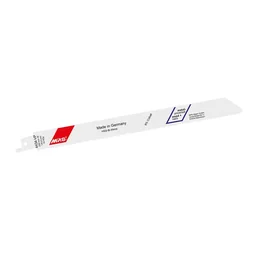
Always choose a blade that is specifically compatible with your saw and suited to the job.
Choosing the right blade material: steel, bi-metal or carbide?
The blade material affects its hardness, edge retention and price.
- Carbon steel: Inexpensive but relatively soft. It dulls quickly when cutting hardwood or metal, so it is best for occasional, light-duty woodworking.
- High-speed steel (HSS): Much harder and more heat-resistant than carbon steel. A good choice for hardwood, aluminum and plastic.
- Bi-metal: A great all-around choice. The teeth are made from hard HSS, while the flexible blade body is made from spring steel. This combination resists breakage and lasts longer. The is a typical example.
- Carbide: The teeth have small carbide tips. Extremely wear-resistant, carbide is suited to abrasive materials such as wood with glue residue, chipboard, fiberglass and soft metals. It is commonly used for circular saw blades.
Tip: For frequent, varied DIY projects, bi-metal blades are a smart investment. They offer excellent value and last much longer than plain steel blades.
Tooth set: Why the blade does not bind
Tooth set is the alternating bend of the teeth to the left and right. It creates a kerf wider than the blade itself, allowing the blade to move freely without binding. If the set is too narrow, the blade rubs against the cut. If it is too wide, the cut can be less accurate and the blade may wander.
Tooth pattern and TPI: the key to cutting speed and finish
Tooth shape and the number of teeth per inch (TPI) have a major effect on the cut.
- Low TPI (3-10): Coarse teeth for fast, aggressive cuts in softwood, plastic pipe and demolition work. The cut edge will be rough.
- Medium TPI (10-18): A versatile tooth pattern for most DIY projects involving wood and plastic. It balances cutting speed and finish.
- High TPI (18-24+): Fine teeth for slower, cleaner and more precise cuts in hardwood or thin metal, especially when you need a smooth edge.
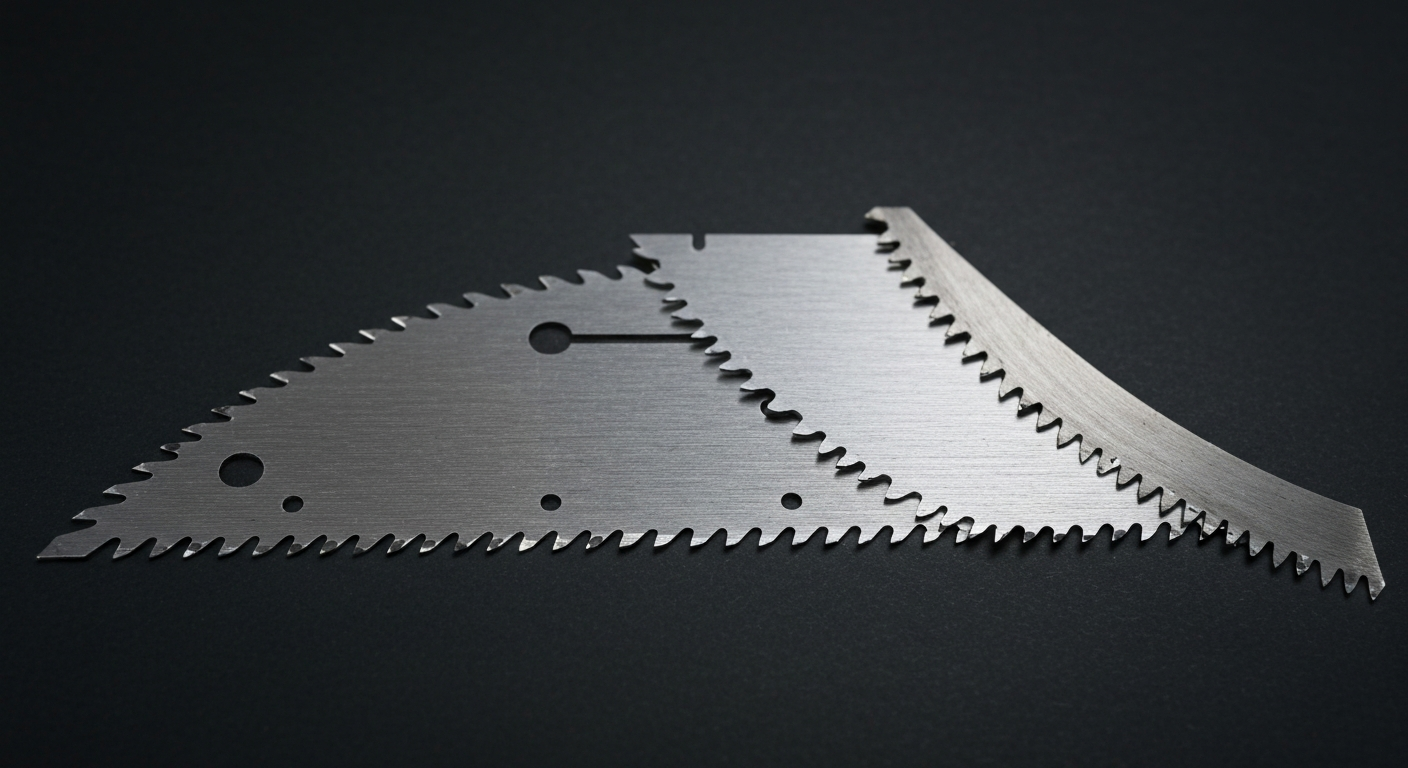
For a range of jobs, consider blades with progressive teeth. They have coarse teeth at the base for faster cutting and finer teeth toward the tip for a clean finish. The offers this versatile range with 10-14 TPI.
Warning: Never use a blade with dull teeth. It can greatly increase the risk of kickback because you have to apply more force. The saw may slip and cause serious injury. Replace the blade as soon as it becomes dull.
What should you look for when buying a saw blade?
Before buying a new saw blade, check these four things:
- Compatibility: Is the blade physically and functionally compatible with your saw? Check the shank type, mounting hole and maximum blade length.
- Workpiece material: Match the blade material (HSS or bi-metal) and tooth pattern (TPI) to the material you are cutting.
- Project requirements: Do you need a fast, rough cut or a smooth, finished edge? This helps determine the right tooth shape and TPI.
- Quality: Look for evenly set, sharp, ground teeth. On bi-metal blades, check that the weld between the teeth and blade body is clean.
Browse our saws category to find the right tool for your blades.
Choosing the right length and thickness
The blade should be longer than the maximum cutting depth of your workpiece. A blade that is thicker than necessary creates extra friction and takes more effort to use. Thin, narrow blades work best for thin materials and curved cuts.
Tips for using saw blades
The right technique helps reduce blade wear and makes the job safer.
- Clamp the workpiece securely. Slipping is a common cause of broken blades.
- Let the saw do the work. Too much pressure can dull the teeth.
- When cutting metal, use a coolant or lubricant (such as special saw oil) to reduce heat buildup.
- For long, straight cuts, use a guide rail or clamp a straightedge in place.
- With power saws, start cutting only after the machine reaches full speed.
Find more advice on using hand tools safely in our advice section.
How proper care and storage extend blade life
A well-maintained saw blade lasts much longer.
- After use, clean the blade to remove resin, plastic residue and metal filings. Use a brush and, if needed, a suitable solvent.
- Dry the blade thoroughly after cleaning to prevent rust.
- Do not store blades loose in a box, where they can knock against each other and become dull. Keep them in their original storage boxes or protective covers.
- Store saw blades in a dry place.
Note: Even the best saw blade will eventually wear out. A clear sign is that you need to apply much more pressure when sawing, even though the material has not changed. When that happens, it is time for a new blade. A multipack such as the is practical and often more economical.
Test verdict and buying recommendation
Our test shows that there is no one-size-fits-all saw blade for every material. Choose a blade based on the material, the type of saw and the finish you want.
For versatile DIYers who frequently work with wood and softer materials, bi-metal saw blades with a medium TPI count (e.g. 10-14) are the best all-around choice. They combine durability, fast cutting and good value for money. A product such as the bi-metal reciprocating saw blade in the handy 5-pack is a solid choice for reciprocating saws.
For precise work on hardwood or when cutting metal, choose specialty blades with a higher TPI count or carbide teeth. Invest in quality—a good saw blade makes the work easier and safer and delivers better results.
Here are the highest-rated saw blades in our range, compared side by side:
| Model | Customer rating | Availability |
|---|---|---|
| Bi-metal reciprocating saw blade, milled and side-set, GL 230/VL 210 mm, ZT 1,8-2,5mm/10-14TPI, 5-pack 🏆 Test winner | ★ 5,0 (11) | In stock |
| Aesculap Double Hoof Knife Large Blade for Livestock - Professional Trimming | – | Currently unavailable |
| Aesculap Double Hoof Knife, Medium Blade, Ergonomic Design | – | Currently unavailable |
| Aesculap GH 700 Clipper Blade - Precision Replacement | – | Currently unavailable |
| Aesculap GH 703 Clipper Blade for Optimal Cutting Performance | – | Currently unavailable |
Explore our wide range of tools for every project.
Frequently asked questions
- How can I tell if a saw blade is high quality?
- Check the material. Bi-metal blades with HSS teeth on spring steel bodies are durable and resistant to breaking. The teeth should be set evenly to keep the blade from binding. Quality blades have precisely ground teeth, often with a coating to reduce friction and extend blade life.
- How often should I replace a saw blade?
- Blade life depends on the material and how often you use it. Dull teeth require more pressure, make rough cuts and increase the risk of accidents. Replace the blade when cutting becomes more difficult or the material starts to fray. If you work regularly, a multipack such as PRODUCT_73737 is a worthwhile buy.
- Can I use the same saw blade for wood and metal?
- This is not recommended. Metal-cutting blades have finer teeth and a different tooth angle. Using a blade on the wrong material quickly dulls it and can be dangerous. Use specialty blades for the best results and safety.
- What does TPI mean on a saw blade?
- TPI stands for "Teeth Per Inch" and indicates the number of teeth per inch. A low TPI value (e.g. 10-14) means coarse teeth for fast, aggressive cuts in softwood. A high TPI value (e.g. 18-24) means fine teeth for slower, cleaner cuts in hardwood, plastic or metal.
- Do I need special saw blades for my jigsaw?
- Yes, jigsaws require compatible blades with the correct shank (usually T-shank or U-shank). The blade length must match your saw's stroke length. For curved cuts, choose narrow, fine-toothed blades; for fast, straight cuts, choose wider blades with coarse teeth.