
In brief: Our 2026 test and comparison shows calcium silicate bricks and perforated clay blocks to be the best all-rounders for load-bearing walls. For facing brickwork, clinker bricks and concrete blocks stand out for their weather resistance. Make your choice based on the planned height, structural requirements and desired appearance. Easy-to-work-with blocks such as aerated concrete are suitable for DIYers.
Planning a new wall in your garden? Whether as a privacy screen, retaining wall or decorative feature, choosing the right blocks is crucial. Our 2026 wall block test and comparison shows you which materials are suitable for your project. We compare stability, ease of use and appearance to help you make the best buying decision.
What types of wall blocks are available?
The world of wall blocks is diverse. They are generally classified by material, format and intended use. The most common blocks for garden and house construction are concrete blocks, calcium silicate bricks, clay bricks and natural stone. Each type offers specific advantages.
Concrete blocks are versatile and robust, and are often available as interlocking system blocks. Calcium silicate bricks offer high compressive strength and a pleasant indoor climate. Clay bricks, such as clinker bricks or perforated clay blocks, are traditional and extremely weather-resistant. Natural stone such as granite or sandstone offers a unique appearance.
Concrete blocks tested
Concrete blocks are a classic choice. In our test, they show very high compressive strength and frost resistance. They are available as solid blocks, hollow blocks or decorative facing blocks in many colours and surface textures.
Their advantages include good availability and a comparatively straightforward installation process. Their high weight and less natural appearance can be disadvantages. They are a first choice for retaining walls and sturdy boundary walls.
Calcium silicate bricks under scrutiny
Calcium silicate bricks are made from lime, sand and water under steam pressure. Our comparison shows that they are particularly strong in compression and dimensionally stable. This makes them ideal for load-bearing masonry.
They offer good sound-insulating properties and help regulate humidity. Bear in mind that they must be protected against moisture penetration. On freestanding walls, an external cladding or render is often necessary.
How do you choose the right wall blocks?
The choice depends on three main factors: the function of the wall, your DIY skills and the desired appearance. Ask yourself the following questions before buying.
What purpose should the wall serve?
Is the wall purely decorative, intended to support a slope or designed to provide privacy? For purely decorative or low edging walls, lighter blocks such as aerated concrete or thin-format clinker bricks are sufficient.
For load-bearing or tall walls, you need solid blocks with high compressive strength, such as solid calcium silicate bricks or heavy concrete blocks. For retaining walls, water permeability is also important to minimise pressure from behind.
Tip: For walls over 1.20 metres high or for retaining walls, always have the structural design checked by a structural engineer or civil engineer. This ensures safety and durability.
How important is appearance to you?
Would you like to leave the blocks exposed? If so, facing blocks are suitable. Clinker bricks offer a traditional, weather-resistant appearance. Facing concrete blocks often imitate natural stone and are available in many colours.
The classic choice for exposed masonry is the natural stone wall block. Every stone is unique. Installation is more demanding, but the result is unmistakable. For a rendered wall, the surface appearance of the blocks is less important.
What are the most important technical properties?
In addition to appearance, technical specifications determine suitability. Pay particular attention to compressive strength, thermal conductivity and frost resistance.
Compressive strength and bulk density
Compressive strength is specified in Newtons per square millimetre (N/mm²). For a freestanding garden wall, blocks in strength class 12 or higher are often sufficient. For foundations or heavily loaded walls, it should be 20 or higher.
Bulk density indicates weight. Heavy blocks with a high bulk density are usually stronger and provide better thermal insulation, but they are more difficult to work with. Lighter blocks make the job easier.
Important: Frost resistance is essential for all external walls. Only blocks labelled as frost-proof or frost-resistant will withstand temperature fluctuations over the long term. Cheap, non-frost-resistant blocks can quickly become brittle and crumble.
Thermal insulation and soundproofing
If the wall is attached to the house or serves as a garage wall, thermal insulation is important. Aerated concrete blocks and lightweight concrete blocks provide very good insulation. Solid calcium silicate or concrete blocks often require an additional insulation layer.
Heavy, dense blocks such as calcium silicate bricks are suitable for good soundproofing. They reduce noise effectively.
How do you lay wall blocks successfully?
A stable wall starts with a correct foundation and proper installation. The following steps are essential for a long-lasting result.
Foundation and first course
Every wall requires a frost-proof concrete foundation. In Germany, the depth is usually 80 to 100 cm. The width should exceed the wall thickness by at least 10 cm.
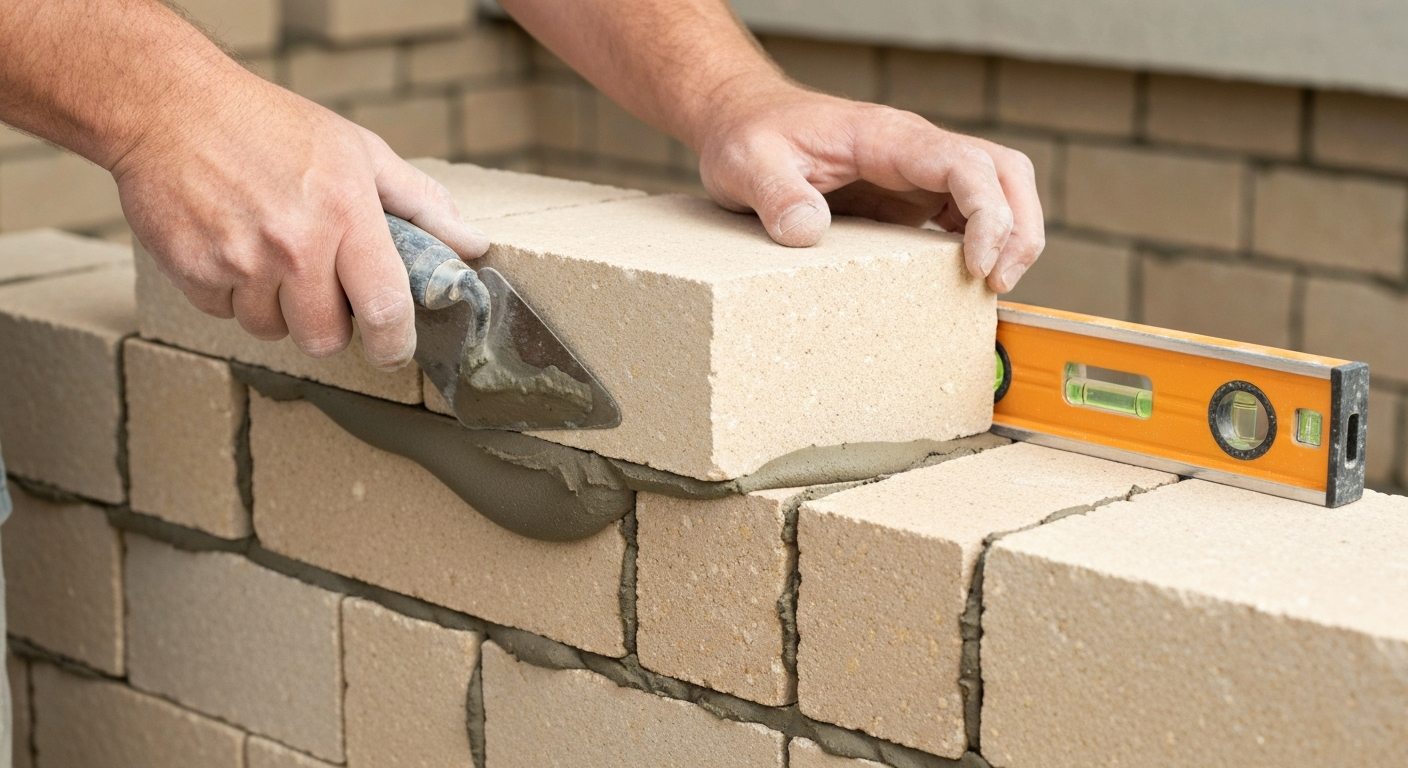
The first course of blocks must be perfectly level and even. It is the foundation for the entire construction. Use high-quality mortar for this and check carefully with a spirit level.
Mortar and joints
The choice of mortar depends on the block. Use masonry mortar for standard masonry blocks. For particularly absorbent blocks such as calcium silicate brick, you need special KS mortar.
For particularly heat-resistant constructions, such as a pizza oven, a special high-temperature adhesive is required, such as the product
. Ensure a consistent joint thickness of about 1 cm. Vertical joints must be completely filled.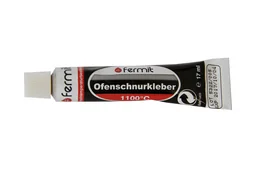
Note: Special materials such as the Humus brick
may also be interesting for ecological projects. Such blocks are often not intended for structural purposes, but for specific uses such as supporting planting or improving the microclimate.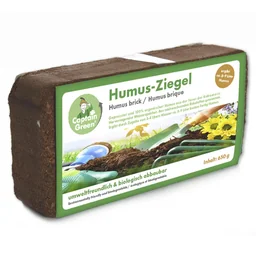
What special applications are there for wall blocks?
In addition to classic garden walls, wall blocks also serve special purposes. Two interesting examples are pizza ovens and gabions.
Wall blocks for pizza ovens
An outdoor pizza oven, such as the
, requires special heat-resistant bricks known as firebricks. They withstand extremely high temperatures, retain heat well and release it evenly.
Normal wall blocks would crack or burst when exposed to the heat. When building your own oven, always make sure you use the correct materials and suitable mortar.
Gabions as a modern alternative
Gabions are wire baskets filled with stones. They do not require mortar. Suitable materials include frost-resistant, weather-resistant stones such as granite, basalt or large pebbles.
The advantage is that the construction provides drainage, allowing water to pass through, and has a modern appearance. It is particularly well suited to retaining walls and tall privacy screens.
Conclusion: How to find the best wall blocks
The best wall block for your project is the one that combines function, appearance and budget most effectively. For most garden walls, frost-resistant concrete or calcium silicate blocks are a reliable choice. DIY enthusiasts can opt for precision blocks.
For a distinctive look, choose exposed brickwork made from clinker bricks or natural stone. Always compare the technical specifications and seek professional advice if you are unsure. With the right preparation and choice of materials, you can build a wall that lasts for many decades.
Browse our extensive Garden range for inspiration and the right materials for your building project.
The most highly rated wall blocks from our range compared directly:
| Model | Customer rating | Availability |
|---|---|---|
| Fritz Göbel Himalayan rock salt lick 1.75 kg - mineral feed | – | Currently unavailable |
| Fritz Göbel natural sharpening stone 20 x 5 cm - sharpening stone for blades | – | Currently unavailable |
| Fritz Göbel plastic salt lick holder - for 10 kg stones | – | Currently unavailable |
| High-temperature adhesive for wood-burning stoves and firebricks, 17 ml | – | Currently unavailable |
| Humus brick | – | Currently unavailable |
Frequently asked questions
- Which wall blocks are best for a freestanding garden wall?
- For freestanding garden walls up to 2 metres high, frost-resistant and weather-resistant materials such as solid concrete blocks, clinker bricks or calcium silicate blocks are recommended, especially in harsh climates. Make sure the foundations are deep enough and plan for structural calculations for taller walls.
- Can I lay wall blocks myself?
- Yes, laying system blocks such as precision blocks or aerated concrete blocks is possible for experienced DIY enthusiasts. An even foundation, suitable mortar and careful use of a spirit level are essential. Always consult a professional for load-bearing or very tall walls.
- What is the difference between solid blocks and hollow blocks?
- Solid blocks have a void volume of less than 15% and are heavier, stronger and better at insulating against heat. Hollow blocks have larger cavities, are lighter and are often cheaper. They are well suited to non-load-bearing masonry or, with reinforcement and concrete filling, to higher loads.
- Do I always need mortar for a natural stone wall?
- Not necessarily. For a dry-stone wall, you can lay natural stones such as granite or sandstone without mortar. This requires skill but allows the wall to breathe. Mortar is essential for stable, tall or straight walls. A natural stone specialist can advise you.
- Are concrete wall blocks sustainable?
- Modern concrete blocks can contain recycled aggregates. Their durability and reusability support sustainability. Alternatives include clay or wall blocks made from locally sourced natural stone, which often have a better carbon footprint.