
In brief: For a dense boxwood hedge, choose a sunny to partially shaded location with well-drained soil. Plant in fall with a spacing of 20-30 cm. Water moderately but deeply. Fertilize in spring and prune the hedge after its first flush of growth in June using sharp shears.
A boxwood hedge is more than just a property boundary. It makes a statement. For centuries, it has shaped gardens with its dense, evergreen foliage and ability to be trained into almost any shape. Whether used as a low border in a cottage garden or a tall, formal privacy hedge in a modern landscape, boxwood (Buxus) is a timeless classic. With the right planning and care, you can create a lasting green feature for your garden.
This guide takes you through every step: from choosing the right variety and planting it with care to expert advice on maintenance and disease prevention. Transform your garden with the perfect boxwood hedge.
Why is boxwood the ideal hedge plant?
Boxwood's popularity is no coincidence. It combines several qualities that make it a top choice for formal hedges. Its small, leathery leaves form an exceptionally dense screen that allows few views through and helps dampen noise. As an evergreen plant, boxwood adds color and structure to the garden year-round, even in the depths of winter.
Its slow growth is a key advantage. Fast-growing hedges may need heavy pruning several times a year to stay in shape, while boxwood usually needs just one or two careful trims per season. This makes it easy to maintain and ideal for topiary. It is also adaptable and thrives in both sun and partial shade.
Choose the right variety and prepare the site
Before you reach for the shovel, start with a plan. Choosing the right variety and preparing the site carefully lay the foundation for a healthy, beautiful hedge that can bring you joy for decades.
Popular boxwood varieties for hedges
Not all boxwood is the same. Varieties differ in height, growth rate, and hardiness. For classic, low garden borders, dwarf boxwood 'Suffruticosa' (Buxus sempervirens) is a good choice. It grows very slowly and stays compact.
If you are planning a taller privacy hedge, Common Boxwood 'Arborescens' is a better choice. It grows more vigorously and can reach several meters tall. A particularly hardy alternative that is less susceptible to common boxwood diseases is 'Faulkner' (Buxus microphylla). Its slightly rounded leaves and robust growth make it an easy-care option.
Additional advice
Before planting, check your soil's pH. A simple test from a garden center will give you a quick answer. Boxwood prefers neutral to slightly alkaline, lime-rich soil (pH 6,5 to 7,5). If the pH is too low, you can raise it with garden lime.
The perfect site: sun, shade, and soil
Boxwood is adaptable but has clear preferences. A site in light partial shade is ideal. It also tolerates full sun, but in dry summers it needs more water to prevent leaf scorch. Avoid locations with intense midday sun and strong, drying winds.
The soil must be one thing above all: well drained. Waterlogged soil is boxwood's greatest enemy and can quickly lead to root rot. Thoroughly loosen heavy clay soils and work in coarse sand or fine gravel to improve drainage. Adding mature compost enriches the soil with valuable nutrients and helps the plants get off to a good start.
How do you plant a boxwood hedge correctly? Step by step
Proper planting determines how quickly your hedge fills in and how well it grows. Taking care with each step pays off.
The best time to plant
The ideal time to plant boxwood is fall, from September to the end of October. The soil is still warm from the summer sun, giving the plants time to grow new roots before winter. In spring, they can then get a head start on growth. You can also plant in spring (March/April), but be sure to water regularly throughout the first summer.
Never plant boxwood deeper than it was growing in its pot. The top of the root ball should be level with the soil surface to prevent rot at the root collar.
Plant spacing and trench depth
For a perfectly straight hedge, stretch a string line. Instead of digging individual planting holes, dig one continuous trench. It should be about twice as wide and deep as the plants' root balls. Spacing depends on the size of the plants you bought and how dense you want the hedge to be. As a rule of thumb, plant around 5-7 plants per meter for a low border, while 3-4 plants per meter are enough for a taller hedge.

Detailed planting instructions
- Prepare the soil: Thoroughly loosen the bottom of the planting trench with a garden fork to break up compacted areas. Mix the excavated soil with compost or high-quality planting soil.
- Water the plants: Before planting, immerse the boxwood root balls in a bucket of water until no more air bubbles rise to the surface.
- Position the plants: Place the plants in the trench and line them up with the string. Make sure the spacing is even and the planting depth is correct.
- Fill the trench: Fill the trench with the prepared soil. Gently firm the soil around the plants to close air pockets and give them a stable footing.
- Water thoroughly: Create a small watering basin around the hedge, then water the new planting generously and deeply. This helps the roots make good contact with the soil.
The Art of Boxwood Care: Watering, Feeding and Pruning
Once planted, boxwood is relatively easy to care for. A few targeted care steps will help you maintain dense growth, rich green foliage and strong resistance to disease.
Watering correctly: Less is often more
Boxwood does not like wet feet. Water only when needed, after the top layer of soil has dried out. When you water, do so thoroughly so the moisture reaches deeper layers of soil. This encourages roots to grow downward and helps the plant withstand dry spells. Always water at the roots rather than over the leaves to help prevent fungal diseases.
Feeding for vigorous growth
Applying nutrients in spring, at the start of the growing season, gives the hedge the energy it needs to produce new growth. Organic fertilizers such as mature compost or horn shavings are ideal. An additional application of algae lime strengthens the plant tissue and improves the soil's pH. The product
provides your boxwood with essential nutrients and trace elements. You can also find suitable lawn and garden lime in our range.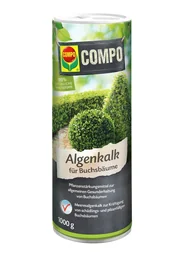
Expert tip
Coffee grounds are a gentle, effective organic fertilizer for boxwood. Dry the grounds and lightly work them into the soil around the hedge in spring. They provide nitrogen, phosphorus and potassium and slightly acidify the soil.
The perfect cut: Shape and timing
Pruning is the most important step in keeping a hedge dense and well shaped. Ideally, do the main pruning between late May and late June. You can give it a second, lighter trim in August. Avoid pruning later in the season so fresh shoots have time to mature before winter. Choose a cloudy, dry day to help prevent sunscald on the cut surfaces.

Sharp, clean tools are essential for a neat cut. The
is a versatile multi-purpose cutter that is also ideal for shaping boxwood with precision. A wide range of other garden tools can help with your gardening projects. Always trim the hedge slightly narrower at the top so it is a little wider at the bottom. This ensures the lower branches get enough light and helps prevent the hedge from becoming bare at the base.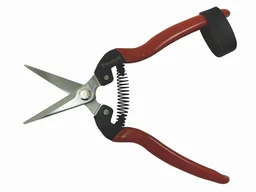
Common Problems: Boxwood Diseases and Pests
Even with the best care, pests and diseases can appear. Early detection and action are key to preventing serious damage to your valuable hedge.
Box tree moth: How to identify and control it
The box tree moth is one of the best-known boxwood pests. Its voracious caterpillars can strip a hedge bare in a very short time. Starting in spring, check your plants regularly for fine webbing inside the shrubs. At the first sign of an infestation, look for green caterpillars with black markings. Remove them thoroughly by hand. For a severe infestation, biological products may help, or you can use suitable pest and plant protection products.
Prevention is the most effective protection. A well-ventilated location, appropriate watering and balanced fertilization to strengthen the plants significantly reduce the risk of fungal diseases such as boxwood blight.
Boxwood blight (Cylindrocladium buxicola)
This fungal disease causes dark spots on the leaves and black streaks along the shoots. Leaves soon drop, leaving entire sections of the hedge bare. The fungus spreads in damp weather. Prevention is essential: ensure good air circulation, water only at the roots and carefully remove fallen leaves. Prune infected shoots well back into healthy wood.
Important note
After working on infected plants, thoroughly disinfect your pruning tools with alcohol or rubbing alcohol. Do not put infected clippings in the compost; dispose of them with household waste instead to prevent the pathogens from spreading through the garden.
A boxwood hedge is an investment in the future of your garden. With patience and the right care, you can create a green masterpiece that adds structure, elegance and timeless appeal. It is a reward for careful work and a testament to your passion for gardening. Discover more useful garden and plant accessories to bring your gardening projects to life.
Frequently Asked Questions
- How fast does a boxwood hedge grow?
- Boxwood grows slowly, at around 10-20 cm per year, depending on the variety and location. This slow growth makes it ideal for precise topiary and reduces maintenance because it needs trimming less often than fast-growing hedge plants.
- When is the best time to trim a boxwood hedge?
- The main trim is best done between late May and late June, after the first flush of growth. Light corrective trimming is possible until the end of August. Avoid trimming late in the year, as new shoots will not have enough time to harden before winter.
- How can I control box tree moth?
- Check regularly for caterpillars and webs. Remove the pests by hand. In cases of severe infestation, biological products containing Bacillus thuringiensis or approved insecticides can help. You may also need to cut back heavily infested parts.
- Why does my boxwood have yellow leaves?
- Yellow leaves can indicate a nutrient deficiency, usually nitrogen, or waterlogged soil. Check the soil moisture and loosen the soil. Applying a balanced fertilizer or compost in spring can often solve the problem.
- How far apart should I plant boxwood for a hedge?
- For a dense hedge, plant around 5 to 7 young plants per linear meter, depending on their size. Larger plants often require only 3 to 4. Closer spacing creates a solid hedge more quickly but requires more plants.
You might also be interested in
- How to Control Box Tree Moth: The Ultimate Guide
- Planting & Caring for Beech Hedges: Robust Privacy Screening
- How to Trim Boxwood Properly: A Guide to Perfect Shapes
- Choosing and Planting Hedge Plants: The Complete Guide
- Planting and Caring for Thuja: The Ultimate Guide
- How to Trim Hedges Properly: When Is the Best Time?