
In brief: Building your own secretary desk for working from home gives you complete control over its dimensions, storage, and design. Start by planning what you need to store and choosing the right desk height. Your choice of solid wood, plywood, or veneered panels affects both durability and appearance. A simple design with a folding or pivoting work surface can create a fully functional workspace in even the smallest room.
Build a Secretary Desk for Your Home Office: DIY Guide
A DIY secretary desk can solve space problems in your home office. Tailor its dimensions, storage, and design to your needs. Materials often cost less than a ready-made desk, and you end up with a one-of-a-kind piece that fits the way you work.
Why build your own secretary desk?
Ready-made secretary desks can have awkward dimensions or too little storage. With a DIY project, you get to choose every detail. Adapt the desk to an unusual room layout or make space for specific equipment. You’re also in control of the material quality.
You can save money while achieving the same or better quality. The project also gives you valuable hands-on experience for future furniture-making projects. A well-built secretary desk can become a durable, functional centerpiece for your home office.
Inaccurate measuring and transferring of dimensions are among the most common causes of furniture-making errors. Always use a stop guide and check your right-angle cuts several times.
How do I plan my DIY secretary desk?
Start by listing the equipment you use. Note the dimensions of your laptop, monitor, printer, and any storage trays you need. Carefully measure the available space, including door swings and power outlets.
Sketch your design with all the dimensions. Decide whether the work surface should fold down or open upward. Leave enough legroom and plan for cable management. A detailed drawing can help you avoid changes later in the build.
Pro tip
Mark your design to scale on the floor. This makes it easy to see whether the planned size will fit and how much room you’ll have to move around. Place a chair in the marked area to check the seating position.
Choosing the right desk height
Desk height has a major effect on your comfort and ergonomics. When you’re seated, your forearms should rest horizontally on the work surface. The standard height of 75 cm may not suit everyone.
Measure from the floor to your elbow while seated. Add 2-3 cm to find your ideal desktop height. A standing secretary desk follows different guidelines: the work surface should be level with your wrists when your arms hang naturally at your sides.
Which materials should I choose for a sturdy desk?
Your choice of material affects durability and appearance. For the cabinet, plywood panels at least 19 mm thick are a good choice. They resist warping and are less likely to splinter. Melamine-coated chipboard (MDF) has an easy-care surface.
The desktop bears most of the weight. Plywood or solid wood panels 28 mm thick are ideal. For visible fronts and drop-leaf surfaces, use veneered panels or attractive solid wood. Choose matching edge banding for a clean finish.
Important note
Keep the panels in the room where you plan to install them for at least 48 hours. This gives them time to acclimate to the room’s conditions and helps prevent warping after cutting. It’s especially important with solid wood if you want to make stable joints.
Tools you’ll need to get started
You’ll need a basic set of tools. A circular saw with a guide rail helps you make clean cuts. Use a jigsaw for cutouts and a drill with Forstner bits for concealed hinges.
A cordless screwdriver makes assembly faster. Clamps hold the parts together while the glue sets. A level and a long metal ruler are essential. Remember furniture dollies or moving aids for heavy panels.
Invest in a good saw blade. A sharp blade with plenty of teeth helps prevent tear-out along the edges and saves you a lot of sanding later. Replace it before it gets too dull.
How do I build a sturdy folding mechanism?
The folding mechanism is the centerpiece of a secretary desk. Specialized drop-leaf hardware with gas struts is a convenient option. It helps hold the work surface in position and makes it easy to open. Gas struts are designed to support specific weights.
Calculate the weight of the desktop, including any equipment mounted on it. Then choose hardware with the right load capacity. Install the hinges and gas struts according to the manufacturer's instructions. Test the movement before tightening everything fully.
Sturdy side guides help keep the work surface from jamming. Two gas struts can help support wider panels. Add a catch to keep the desk closed. Magnets or simple latches work well.
Additional advice
Decide whether the drop-down panel will be used only for writing or will also support a monitor. Monitors need heavy-duty hinges and may need a support chain when the panel is open. Keep the weight evenly distributed and close to the hinge axis.
Organizing storage efficiently
Make good use of the inside of your secretary desk. Simple compartments for folders and office supplies are quick to build. A pull-out keyboard tray frees up work surface space. Narrow drawers keep pens and small items organized.
Plan a compartment for printer paper or books. Cable openings in the back panel or desktop keep cords out of sight. An integrated power strip in the cabinet reduces cable clutter. Open compartments give you quick access to frequently used items.
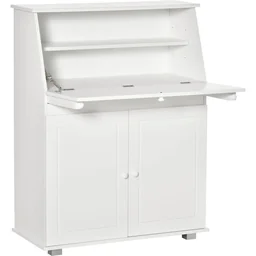
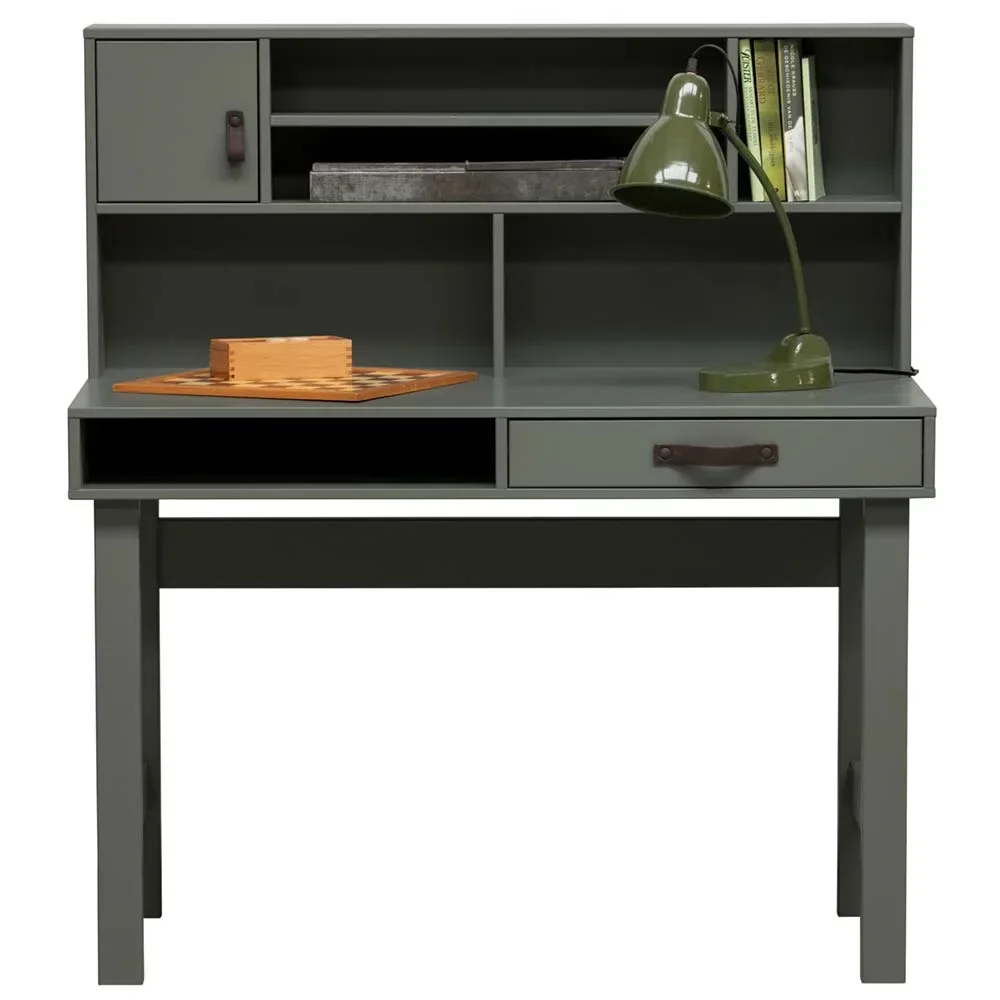
Products such as the
What finish will protect the wood?
A finish protects wood from stains, moisture, and wear. Durable varnish or wood oil works well on desk tops. Water-based clear varnish dries quickly and has little odor. Apply several thin coats for a durable surface.
Wood oil penetrates deeply and brings out the grain, but needs regular reapplication. Wax offers natural protection but is less scratch-resistant. You can skip this step for melamine-coated panels.
Sand the wood thoroughly before applying a finish. Start with coarse-grit sandpaper and work up to a fine grit. Remove all dust after each sanding step. Apply varnish or oil in a well-ventilated area.
Adding lighting and ergonomic features
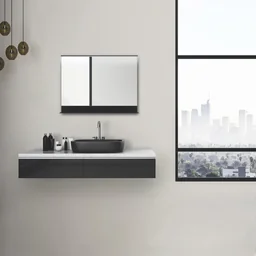
Good lighting is essential in a home office. A permanently mounted desk lamp saves space on the work surface. Route the cables out of sight inside the cabinet. LED strips under a shelf provide indirect lighting.
Lighting should be glare-free and illuminate the entire work area. A product such as the
Ergonomics starts with your sitting posture, so an adjustable chair is important. A sturdy seat such as the
can also provide ergonomic support for adults, especially during long work sessions.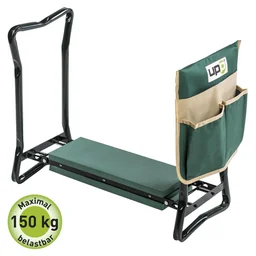
Avoid common mistakes when building furniture for the first time
Many DIY projects run into trouble because the plans are too ambitious. Start with a simple box design. Leave complicated swivel mechanisms to experienced DIYers. Check that everything is level after each step.
Use the right screws. Partial-thread screws for particleboard hold better in wood-based materials. Screws that are too long can poke through the front. Dowels and wood glue make critical joints much stronger.
Don't forget the back panel. It stabilizes the entire cabinet and keeps it from twisting. Even a thin hardboard panel will do the job. Work carefully and patiently. Rushing can lead to small errors that add up.
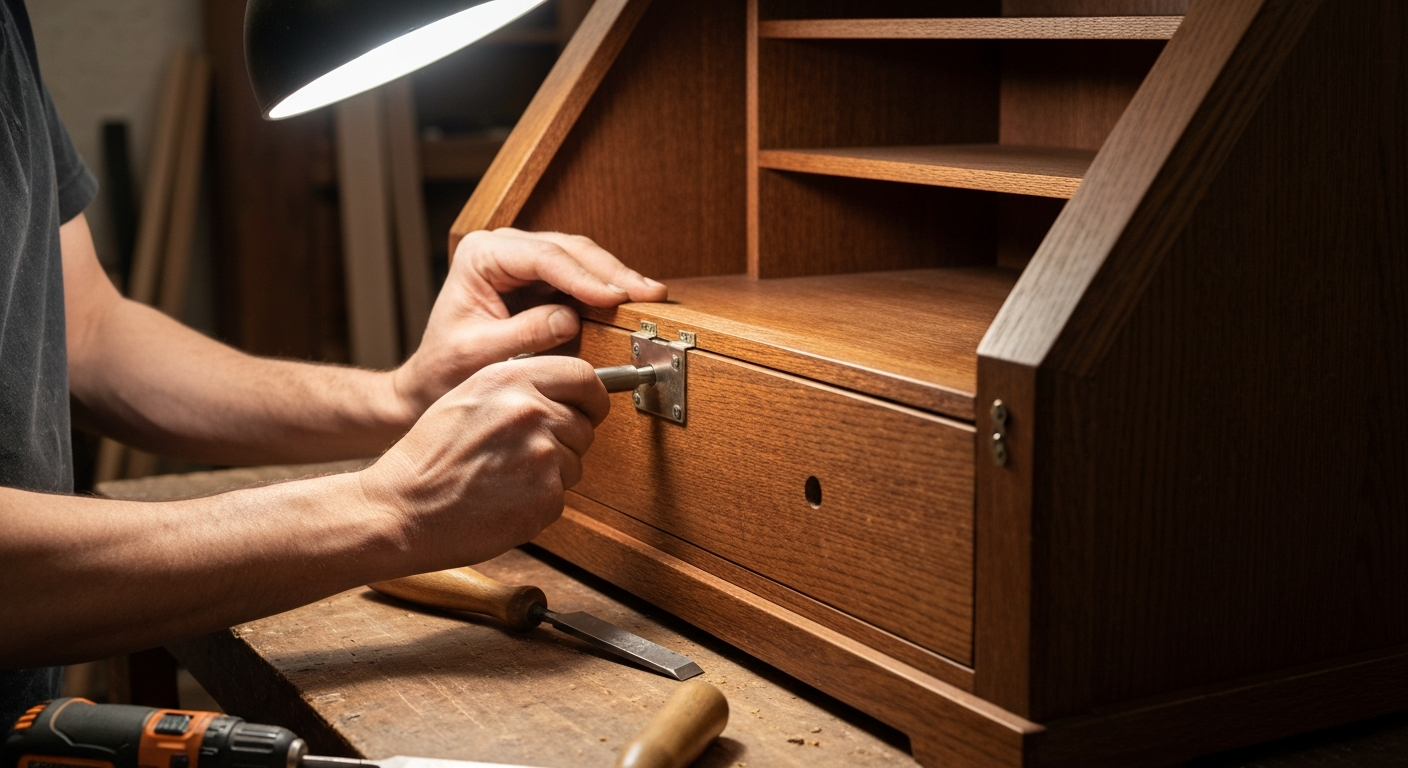
Ideas from children's furniture
Children's furniture is often designed to save space and make the most of every feature. Browsing categories such as kids' desks or play furniture can spark ideas for folding or height-adjustable features. Brands such as Bopita focus on sturdy, safe mechanisms.
You can apply these ideas to adult furniture, too. The solutions are often simpler and more reliable. Take inspiration from them without making the design look childish. Stability and safety should also be top priorities when building your secretary desk.
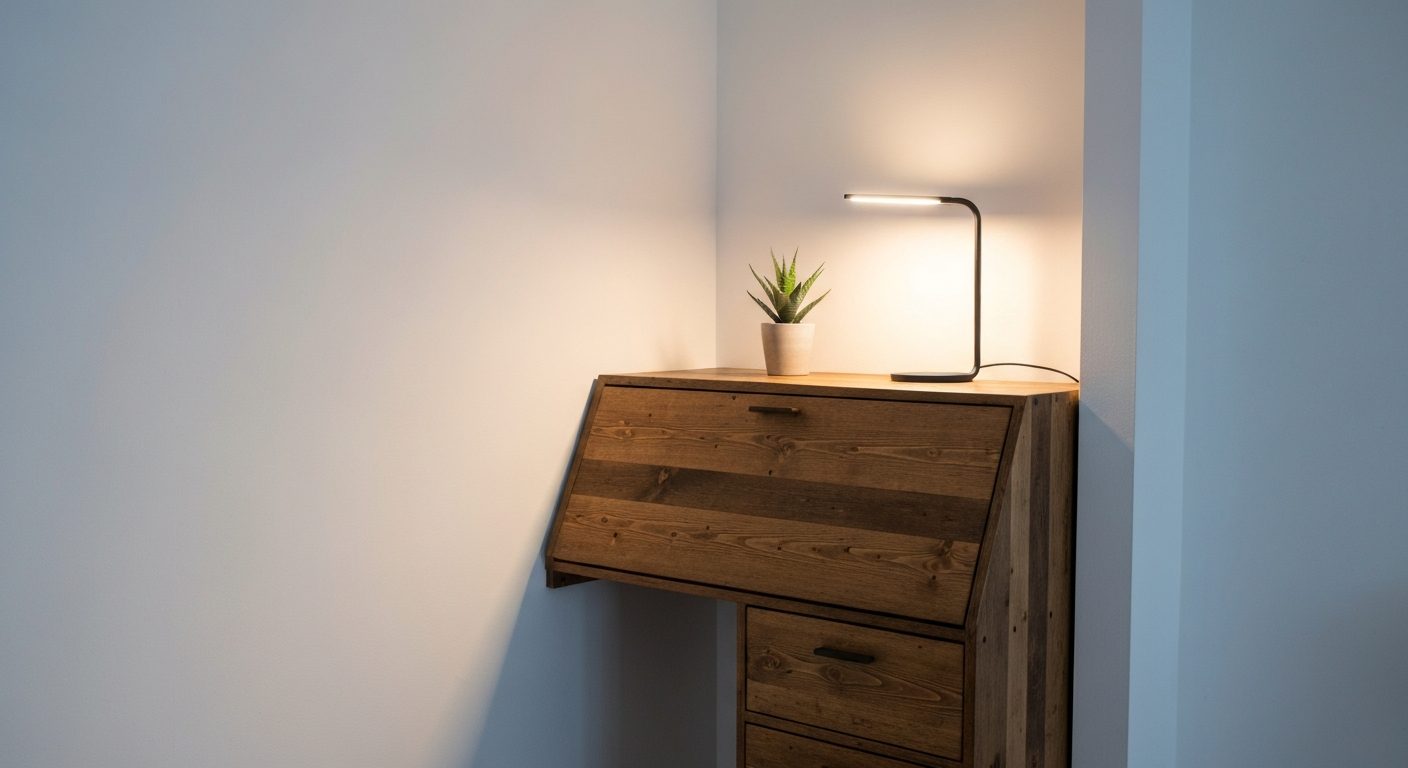
Finishing touches: Turn your build into a finished workspace
Once assembly is complete, fine-tune the details. Check that all doors and flaps open and close smoothly. Make sure the secretary desk is perfectly level; small shims can often help. Add felt pads under the feet to protect the floor.
Set up your new workspace one step at a time. Position the monitor and keyboard first. Then organize storage for items you use often and those you use less frequently. A cable management system keeps cords tidy.
Your homemade secretary desk is ready for productive work. It fits your space perfectly and meets your needs. Working at a piece of furniture you built yourself can make working from home even more enjoyable.
Frequently Asked Questions
- What wood is best for a DIY secretary desk?
- Plywood or melamine-coated MDF panels are ideal for the cabinet because they're sturdy and resist warping. Make the desktop from thicker material, such as 28mm plywood or solid wood. Veneered panels or high-quality pine or beech work well for visible fronts and flaps.
- How do I choose the right height for my DIY desk?
- A standard desk is 72 to 76 cm high. While seated, measure from the floor to the underside of your elbow. For a standing desk, add 30-50 cm. A height-adjustable desk needs sturdy gas springs or a crank mechanism. Try the height with temporary boxes before you build.
- What tools do I need to build furniture?
- Essential tools include a jigsaw or circular saw for precise cuts, a drill with Forstner bits for concealed hinges, and a cordless screwdriver. A doweling jig or router can help you make more accurate joints. Furniture dollies can help move heavy panels.
- How do I make a stable folding or swivel mechanism?
- Use folding-table hardware with gas springs for smooth operation. Make sure the hinges are rated for the panel's weight. Attach the mechanism to a load-bearing side panel, not a thin back panel. Test it several times before final assembly.
- Can I build a secretary desk in a small apartment?
- Yes. Build it in modules: start with the cabinet, then make the flap separately. Save space with features such as pull-out shelves or a compact small furniture setup. A secretary desk designed to fit an alcove or serve as a room divider can make the most of your space. Plan the build at the installation site to avoid transport problems.
You might also be interested in
- Build your own furniture: Creative projects for your home
- Build your own home bar: The perfect guide to your DIY bar furniture
- Build your own workbench: The complete guide to your home workshop
- Build your own wooden table: Custom furniture for your home
- Build your own sideboard: Custom furniture for your living room
- Build your own industrial-style shelving unit: Step-by-step guide