
In brief: The choice between DIY and a ready-made cabinet depends on your budget, time and DIY skills. A self-built garden storage cabinet offers maximum flexibility for unusual spaces. A purchased tool shed saves time and often offers better weather resistance thanks to industrial treatment. Smart organisation improves both options.
Build your own garden storage cabinet or organise it cleverly
A tidy garden starts with the right storage. A garden storage cabinet or tool shed keeps shovels, pots and garden toys under control. But should you build one yourself or choose a ready-made solution? We compare both options and show you how to make the most of your storage space.
Why do you need a garden storage cabinet?
A dedicated garden cabinet provides more than just storage space. It protects valuable equipment from rain, snow and UV rays. This significantly extends the life of your garden tools. It also keeps everything organised and easy to find. A tidy garden looks better maintained and more inviting.
A tool cabinet also keeps fertiliser, seeds and plant protection products safely locked away from children and pets. It is the logical addition to a well-equipped garden.
Expert tip
Plan the location before building or buying. Ideally, choose a level, easily accessible spot close to the house, but not directly in view from the patio. Consider the route you will need to take with heavy equipment such as a lawn mower.
The pros and cons: DIY or ready-made cabinet
Both options have their advantages. Your choice should suit your skills, budget and schedule.
Build your own garden storage cabinet: freedom in form and function
A DIY garden storage cabinet offers maximum flexibility. You can adapt the dimensions exactly to your available space, whether it is a narrow side passage or a wide garage wall. You decide on every shelf, hook and door. You can choose the material yourself, from robust solid wood to low-maintenance WPC.
The costs are often lower than those of a comparable branded product. However, you will need to invest several weekends of work. You need basic woodworking skills and suitable tools. Weather resistance depends heavily on the quality of your preparation and construction.
The biggest mistake when building your own cabinet is underestimating the impact of the weather. A garden building is outdoors 24/7. Every unprotected joint and every unsealed cut becomes an entry point for moisture.
Buy a garden storage cabinet: a quick and reliable solution
A ready-made cabinet from a specialist retailer delivers immediate results. It can be assembled and ready to use within a few hours. Manufacturers guarantee its stability and often provide several years of protection against rot and fungal growth. The design is well thought out, with integrated shelves and ventilation slots.
There is a wide range of sizes and colours, but they are not custom-made. The purchase price is higher than the cost of materials for a DIY build. In return, you save a great deal of time and effort. Products such as the or the slimline are immediately available solutions.
How do I plan my DIY garden storage cabinet?
Good planning prevents frustration during construction. Start by taking stock.
Make a list of everything you want to store in the cabinet. Measure the largest items, such as a lawn mower or scarifier. Add up the floor space you need and allow room for the long handles of rakes and shovels. Sketch a floor plan showing the door and interior layout.
Consider access. A wide door or even double doors make it easier to move large equipment in and out. Plan shelves at different heights and a row of hooks on the wall from the outset.
Important note
Never work without a suitable base. A garden storage cabinet must stand on a stable, level and well-drained foundation. A simple gravel base or paving slabs are the minimum requirement. A concrete pad foundation provides the greatest stability for large cabinets.
Choosing materials: wood, metal or plastic?
Wood is the classic and most popular material. It is easy to work with and has a natural appearance. Use only pressure-treated wood or durable species such as larch or Douglas fir. Untreated spruce is unsuitable for outdoor use.
Metal cabinets are very robust and slim. However, they can rust if the coating is damaged. Plastic models are low-maintenance and rust-free, but can become brittle under intense UV exposure. The
shows what a sturdy solid wood cabinet can look like.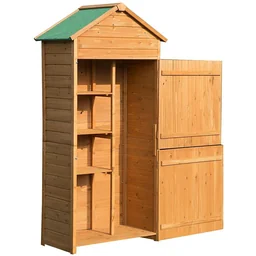
Do not forget the right fixings. Use stainless steel or galvanised screws and hinges. Standard steel screws will rust within a year and leave unsightly marks on the wood.
Organise cleverly: make every garden storage cabinet more efficient
Whether you build it yourself or buy it, the interior layout makes the difference between chaos and order. The aim is to find everything within seconds.
Use the full height. Upper shelves are suitable for light, infrequently used items such as spare plant pots or garden lanterns. Store heavy equipment such as a chainsaw close to the floor. Mount organisers for small tools or seed packets on the inside of the doors.
Clear storage boxes are a game-changer. You can see immediately what is inside. Transfer leaking bags of fertiliser or soil into sturdy containers straight away. This protects against pests and moisture. Reels or large hooks are ideal for hoses and cables.
The best organisation is the one that suits the way you use your space. Keep the items you need most often – such as gloves, small scissors and plant protection products – at eye level or in the door. You only put the lawn mower away twice a week, so it can stand at the back in the corner.
Additional advice
Integrate a small workbench or fold-down surface into your cabinet. This provides an instant workspace for repotting, cleaning tools or preparing plant protection products. A simple board resting on two brackets is perfectly sufficient.
Protection and Care for Your Garden Storage Cabinet
An outdoor garden storage cabinet needs regular care to last for many years. Check the surface at least once a year.
For wooden cabinets, check whether the coating is still intact. Before applying a fresh coat, remove dirt and any mould from the surface. Apply a special wood stain or paint for garden use in several thin coats. Pay particular attention to the edges and underside.
Check the roof seal. Even with ready-made cabinets, part of the roofing felt can come loose over time. Lubricate the door hinges with a water-resistant lubricant to prevent squeaking and rust. A well-maintained cabinet also provides optimum protection for its contents.
The Right Place for Everything: Categories Help
Organise the items in your cabinet by category. This makes searching and tidying up quicker.
- Lower zone: Heavy machinery (lawnmowers, scarifiers), bagged goods (bark mulch, compost in boxes).
- Middle zone: Long-handled tools (rakes, spades) in holders, watering cans, garden watering accessories such as sprayers.
- Upper zone & doors: Lightweight items (gloves, string, plant labels), plant protection products, seeds, parasol stands.
Separate boxes for children's toys or barbecue accessories prevent everything from getting mixed up. This way, every family member can quickly find what they are looking for.
Conclusion: Find the Right Solution for You
The choice between building or buying a garden storage cabinet is a personal one. Do you enjoy DIY projects, have enough time and need a cabinet for a specific space? Then DIY is the way to create the perfect garden tool storage cabinet. Do you want instant organisation, guaranteed stability and minimal effort? A ready-made cabinet such as the , or is the smart choice.
Whichever option you choose, a well-planned interior with shelves, hooks and clear boxes makes any cabinet more efficient. Combine your new storage space with clever accessories from our range of garden equipment and enjoy a tidy garden where every task is easier.
Frequently Asked Questions
- Which wood is best for building a garden storage cabinet?
- Use pressure-treated construction timber such as pressure-treated spruce, or durable woods such as larch and Douglas fir. These woods are naturally weather-resistant. Avoid untreated standard spruce, as it rots quickly. An additional primer and weatherproof topcoat can significantly extend its service life.
- How can I protect my garden storage cabinet from moisture and mould?
- Place the cabinet on sturdy feet or a gravel bed to prevent rising damp from the ground. A well-overhanging layer of roofing felt on the roof safely directs water away. Add small ventilation slots to the side walls so that air can circulate. Regularly checking the cabinet and recoating protective finishes is essential.
- How much does a DIY garden storage cabinet cost compared with a ready-made one?
- The material cost for a sturdy DIY cabinet made from treated wood starts at around 150-300 Euro, depending on its size and the type of wood. A comparable ready-made cabinet from a specialist retailer costs between 200 and 500 Euro. The DIY option is often cheaper, but it requires tools, time and practical skills.
- How should I organise a garden storage cabinet?
- Make full use of the available height with shelves and wall-mounted peg rails. Heavy equipment such as lawnmowers belongs at the bottom, while lighter items can go higher up. Clear boxes or labelled containers keep everything organised. A garden tools organiser keeps small items within easy reach.
- Do I need planning permission for a garden storage cabinet?
- Generally not, as long as the cabinet is considered a mobile garden shed and is not built on permanent foundations. The exact regulations are governed by local building regulations. Often, no permission is required for structures with a volume of 10-20 m³ and a height of 3-4 metres. Be sure to check with your local building control department in advance.
You May Also Be Interested In
- Build Your Own Garden Tool Shed: Step-by-Step Guide
- Build Your Own Garden Cabin: Your Little Garden Paradise
- Build Your Own Garden Shed: Make Your Dream Retreat a Reality
- Build a Garden Shed: The Ultimate Step-by-Step Guide
- Painting a Garden Shed: How to Keep It Looking Great
- Renovating a Garden Shed: Give Your Garden Paradise a Fresh New Look