
In brief: Professional building insulation is one of the most effective ways to reduce heating costs. It cuts heat loss through exterior walls, the roof and the basement ceiling by up to 80 percent. The investment often pays for itself within a few years through energy savings. An external thermal insulation composite system (WDVS) for the facade is an especially effective and widely used solution.
Table of contents
- Why is building insulation really worth it?
- Where does heat escape? The weak points in your home
- How does exterior wall insulation with WDVS work?
- Roof and basement: Seal the top and bottom
- Which insulation material is right for you?
- How much does insulation cost, and what funding is available?
Why is building insulation really worth it?
Your heating bill provides the clearest proof. Up to 80 percent of your heating energy can escape unused if your home is uninsulated or poorly insulated. You pay for these losses year after year. Building insulation stops this drain on your finances.
It does more than reduce costs. It also improves indoor comfort. Drafty window reveals and cold wall surfaces become a thing of the past. Wall surface temperatures rise, which means fewer drafts and a more comfortable indoor climate.
Insulation also protects your building's structure. It keeps heat inside the home and helps keep the wall construction dry. This significantly reduces the risk of frost damage and mold growth. You are investing in the long-term durability of your property.
Energy-efficient renovation focused on the building envelope is the most effective way to reduce CO2 emissions in the building sector. Every kilowatt-hour saved is one that does not need to be generated in the first place.
Where does heat escape? The weak points in your home
Before you start planning, you need to know where the weak points are. Most heat loss occurs through the exterior walls. In an uninsulated older home, this can account for up to 35 percent of total losses. The facade is therefore the first place to focus.
The roof follows, accounting for around 25 percent of losses. Good insulation is especially important in finished attics. The basement ceiling or the exterior basement walls are responsible for up to 15 percent of losses. Investing here is worthwhile too.
Windows and doors are other critical points. However, they are often only half the solution. New exterior wall insulation can make leaky window connections clearly visible. Ideally, plan these measures as a coordinated project.
Pro tip
Before renovating, have an energy consultant carry out a thermographic inspection. A thermal imaging camera shows you exactly where your home is losing the most energy. This analysis is the basis for efficient renovation planning.
How does exterior wall insulation with WDVS work?
The external thermal insulation composite system, or WDVS for short, is the standard for exterior insulation. It consists of three main components: the insulation material, the reinforcing layer and the finish coat. The system is bonded and mechanically fastened directly to the existing exterior wall.
Its advantage is a continuous protective envelope. WDVS surrounds the home like a second skin and covers thermal bridges such as lintels and balconies. The insulation boards are installed with staggered joints. A reinforcing layer of mesh and render is then applied over them.
Choosing the finish coat is not just an aesthetic decision. It protects the insulation from the elements. Vapor-permeable renders allow moisture to escape from the construction to the outside. This is important for a healthy indoor climate.
An overview of the WDVS installation steps
Installation follows a clear process. First, inspect and clean the substrate. Any loose render must be removed. Then apply the adhesive mortar to the insulation boards, either over the entire surface or in spots.
Position the boards and press them firmly into place. Once the adhesive has cured, secure the boards additionally with plate anchors. Next comes the reinforcing mortar, into which you embed fiberglass mesh. This layer prevents cracks.
Apply the final finish coat after allowing sufficient drying time. It is available in many colors and textures. Make sure every step is completed professionally. Errors in the vapor retarder or reinforcing layer can cause expensive consequential damage.
Workmanship determines how long a WDVS will last. A carefully installed system can easily last for several decades. Defects in detailing, for example around connections, are the most common cause of later problems.
Roof and basement: Seal the top and bottom
The facade is important, but it is not everything. The roof forms the boundary with the cold outdoor air. You can insulate a roof in several ways. In an unfinished attic, simply insulate the top-floor ceiling.
Use insulation batts or blown-in insulation for this purpose. This measure is inexpensive and highly effective. In a finished attic, insulate between, below or above the rafters. Above-rafter insulation installed from the outside is the best solution, but also the most complex.
Basement insulation is often overlooked. If the basement is unheated, insulate the basement ceiling beneath the heated floor above. This prevents cold floors and saves energy. If the basement is heated or is intended for use as living space, consider insulating the basement walls from the outside.
For all these projects, you can find suitable accessories such as drainage pipe systems and specialist sealing materials in our range.
Important note
When insulating a roof, you must pay close attention to installing the correct vapor retarder. It belongs on the warm, interior side of the insulation. A vapor retarder that is incorrectly installed or not airtight can cause severe moisture buildup in the construction and lead to mold.
Which insulation material is right for you?
Expanded polystyrene, or EPS (often called Styrofoam), is a classic choice. It is affordable, lightweight, and easy to work with, and it provides good thermal insulation. EPS is the go-to option for most external wall insulation systems.
Glass or stone mineral wool offers different benefits. It is noncombustible and provides excellent sound insulation. Mineral wool costs somewhat more, and you’ll need protective equipment during installation to avoid contact with the fibers. It is especially suitable for timber-frame walls and areas where fire protection is a priority.
Renewable insulation materials are becoming increasingly popular. Wood-fiber insulation boards, hemp, and cellulose are vapor-permeable and help create a comfortable indoor climate. They often cost more, but have a lower environmental impact. Installation requires specialist expertise.
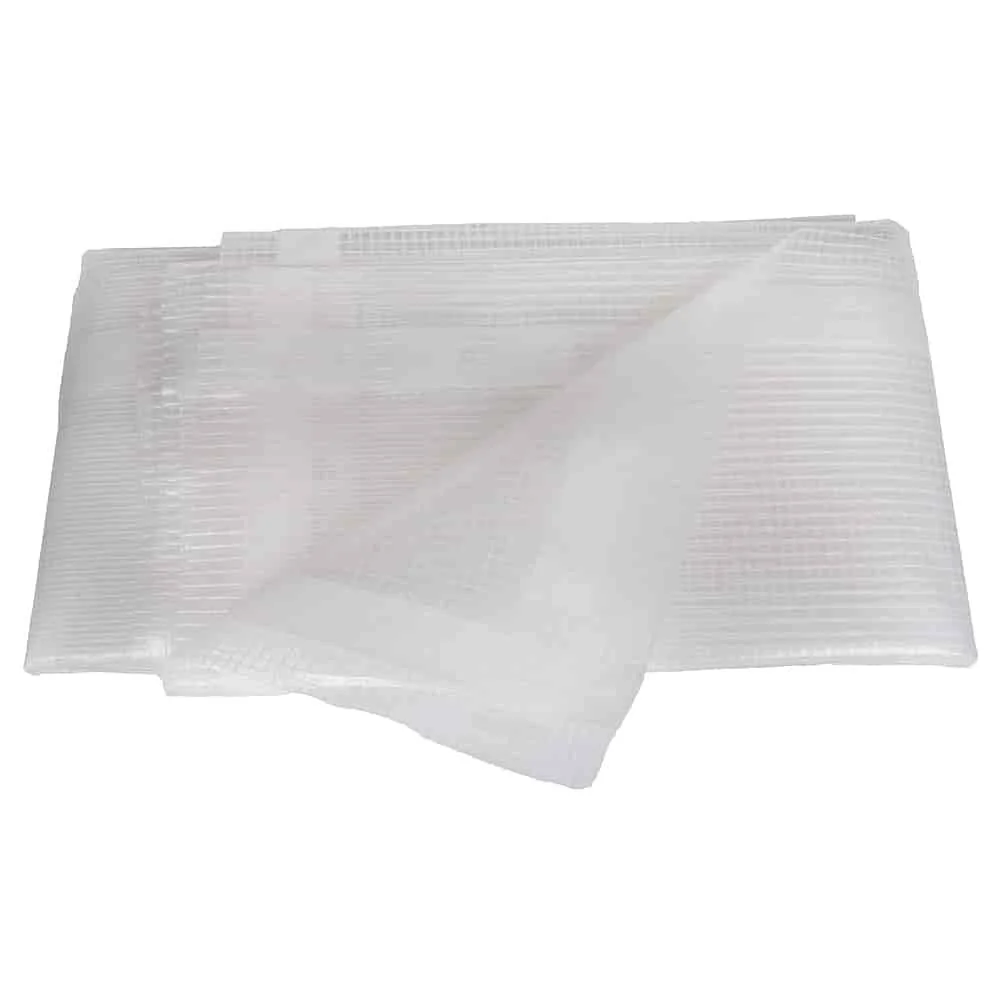
Sturdy tarps can protect materials on site or provide temporary cover. High-quality, transparent mesh tarps such as our
or protect against rain while letting light through. For smaller areas, the is a practical solution.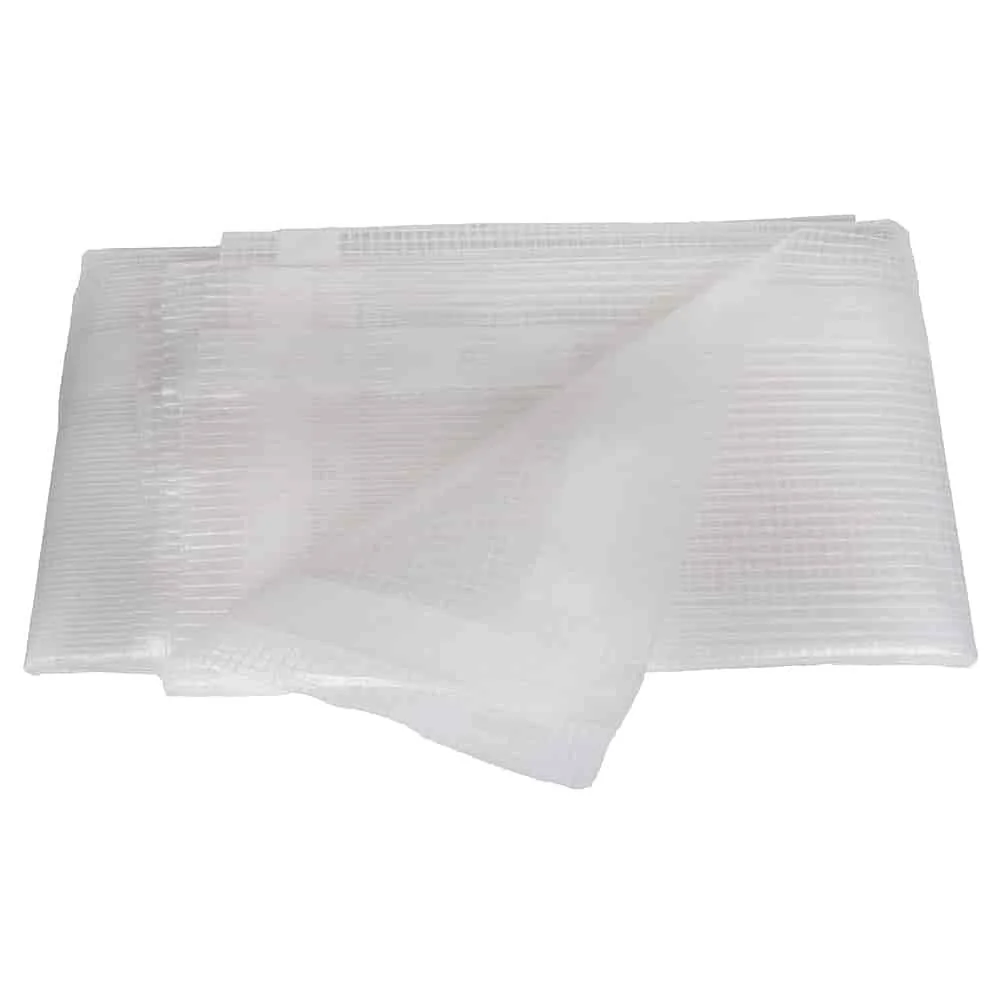

What to consider when choosing insulation
Don’t base your decision on price alone. Thermal conductivity, measured by the lambda value, is a key factor. The lower the value, the better the material insulates. You’ll need a thinner layer to achieve the same level of insulation.
Consider fire safety. EPS is typically flammable, while mineral wool is noncombustible. Building codes require noncombustible materials for certain building types and heights. Check with your designer or architect.
Think about disposal at the end of the material’s useful life. Mineral wool is classified as special waste, while EPS can be recycled. Assessing a material’s overall environmental impact across its life cycle is complex. An energy consultant can offer independent advice.
Additional advice
Compare the total cost of the project, not just the material price per square meter. A more expensive, higher-performance insulation material may require a thinner layer. This could reduce costs for related items such as scaffolding or connection details.
How much does insulation cost, and what financial assistance is available?
As mentioned earlier, insulating an exterior wall with an external wall insulation system costs between 120 and 180 euros per square meter. The price depends on the insulation material, plaster type, and site conditions. Scaffolding needed for several weeks can be a major expense.
Insulating the top-floor ceiling costs 50 to 100 euros per square meter. Above-rafter insulation can cost considerably more. Basement ceiling insulation costs 80 to 120 euros per square meter.
Government funding is available. The Federal Funding for Efficient Buildings (BEG) program offers grants and low-interest loans for energy-efficient renovations. You may qualify for a grant covering up to 40 percent of eligible costs. You must apply before work begins, and an energy efficiency expert must oversee the project.
Check for local funding programs from your municipality or energy provider, too. These may offer additional incentives. Professional energy advice is essential for a successful funding application, so include the cost in your budget from the start.
How to plan your project
Start with an energy consultation. An expert will assess your home and prepare a customized renovation roadmap. It identifies the most worthwhile upgrades and the best order for completing them. The consultation may qualify for funding.
Get several quotes from specialist contractors. Don’t focus on price alone; look for a detailed description of the work. Which insulation material and thickness are included? What plaster systems will be used? Make sure you can compare the quotes.
Submit your funding application before hiring a contractor. Choose companies that specialize in external wall insulation systems and can provide references. Ask about workmanship warranties. A properly installed system can last as long as the house.
For help organizing your construction site and protecting materials and furniture, browse our selection. Practical transparent covers and sturdy mesh tarps are essential helpers.
Comprehensive building insulation is an investment in the future. It lowers your monthly energy bills, increases your home’s value, and helps protect the climate. With careful planning, available funding, and the right materials and contractors, you can prepare your home for decades to come. The best time to schedule your first energy consultation is today.
Frequently asked questions
- How much does exterior wall insulation cost for a single-family home?
- Exterior wall insulation using an exterior insulation and finish system (EIFS) costs between 120 and 180 euros per square meter. For an average single-family home with 150 m² of exterior wall area, this means an investment of around 18,000 to 27,000 euros. Government incentives may cover part of the cost.
- Which insulation materials are suitable for exterior insulation?
- Expanded polystyrene (EPS, commonly known as Styrofoam), mineral wool, and wood fiber insulation boards are particularly suitable for exterior insulation. EPS is affordable and easy to install. Mineral wool is noncombustible and helps reduce noise. Wood fiber insulation boards are vapor-permeable and particularly suitable for older buildings.
- How long does it take for an insulation upgrade to pay for itself?
- The payback period depends on the energy savings and the investment costs. Exterior wall insulation typically pays for itself after 8 to 15 years. The higher your previous heating costs and the better the insulation performance, the faster the upgrade pays for itself.
- Can I insulate my home from the inside?
- Interior insulation is possible when exterior insulation is not an option, for example with historically protected facades. However, it is more technically demanding because it increases the risk of condensation and mold developing within the structure. Always plan interior insulation with a qualified building specialist.
- Do I also need to replace the windows when adding exterior wall insulation?
- Not necessarily, but it is advisable. Old windows are often the biggest thermal bridges. New exterior wall insulation makes this weak point even more noticeable. Replacing the windows as part of the insulation work maximizes energy savings and helps prevent moisture problems around the reveals.
You might also be interested in
- Home insulation: How to insulate walls properly and save energy
- Insulating your roof: How to cut heating costs and improve comfort
- Exterior insulation and finish systems (EIFS): The complete guide for your home
- Cut energy costs: Tips for renovating your home
- Saving energy at home: Top tips for using less energy and cutting costs
- How to plan your insulation project properly