
In brief: When buying a beach chair, start with its dimensions, location and materials. Check that it will fit through doors, leave enough room to move around and that the frame, wickerwork, roof and cushions are suitable for your climate. Also look for adjustable backrests, sturdy fittings, washable covers and a suitable protective cover for garden furniture care.
A beach chair creates a sheltered seating area in the garden, on the patio or balcony. Wind, sun and prying eyes stay outside while you read, eat or relax in comfort. To make a purchase that lasts, the dimensions, materials, features and care requirements all need to work together.
A low price alone says little about quality. What matters is a sturdy frame, tightly woven wickerwork, neatly finished seams, durable fittings and a location with enough space. This guide explains what to look for when buying a beach chair.
How should you plan your beach chair purchase?
Before comparing colours and patterns, decide how you will use it. A beach chair for two people on a small patio needs different dimensions from a large family model. Whether it will be kept outdoors seasonally or all year round also affects the choice of materials, protection and budget.
How will it be used?
Consider how many people will regularly sit in the beach chair. Two adults need a different seat width from a family with children. A compact model is sufficient for occasional breaks. If you want to have breakfast, read and relax for several hours in your beach chair, adjustable backrests, extendable footrests and plenty of storage space are useful features.
- For two people: Look for a comfortable seat width and two independently adjustable backrests.
- For families: An XXL model offers more space but requires a larger footprint.
- For small patios: Pay particular attention to the depth, the hood's opening radius and the space needed for the footrests.
- For frequent repositioning: Castors or a suitable castor set make it easier to move.
- For leaving it outdoors over winter: Plan for a breathable protective cover and a dry, sheltered location.
What should you include in your budget?
Do not budget for the purchase price alone. Delivery, assembly, a protective cover, castors and replacement covers can increase the total cost. A high-quality beach chair costs more initially, but better materials and replaceable individual parts can make it worthwhile over many years.
Compare the features included with each model. Are cushions, footrests and side tables already included? Can the covers be removed? Are replacement parts available for the fittings, hood and wickerwork? Answers to these questions are more useful than a superficial price comparison.
Expert tip
Before ordering, measure door widths, stairs, paths and the final location. Add a few centimetres to the chair's width to allow for manoeuvring. If access is tight, a scale drawing made from cardboard can prevent costly surprises.
What size suits your location?
Size determines comfort and practicality. A beach chair looks compact on a large lawn, but can quickly take up all the available space on a narrow patio. Consider not only the external dimensions but also the extended footrests and the opened hood.
Which dimensions do you need to measure?
Note the width, depth and height of the beach chair. The width determines seating comfort and the distance from walls. Depth becomes particularly important when the footrests are extended. For comfortable access, you should usually leave at least 60 to 80 centimetres clear in front of the chair.
Allow space at the sides for the hood and cleaning. If the beach chair is placed directly against a house wall, the hood may hit the wall when opened. There should be enough room between the chair and the wall for air to circulate and for you to inspect the back.
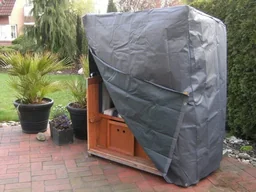
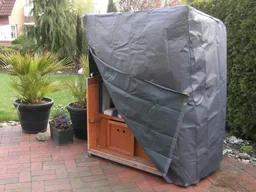
The dimensions of the available protective covers provide useful guidance. is designed for beach chairs measuring approximately 130 x 100 x 170/134 centimetres. The XXL cover fits larger models measuring approximately 155 x 105 x 170/135 centimetres. However, always check the exact product dimensions of your beach chair, as cover dimensions do not replace the manufacturer's specifications.
How can you keep the chair stable?
Choose a level, load-bearing surface. Patio slabs, concrete or compacted ground prevent the beach chair from tipping or sinking on one side. On grass, moisture can remain underneath for longer. A solid base protects the frame and makes it easier to position the chair correctly.
Wind deserves special attention. A heavy beach chair is more stable than a lightweight model, but no chair is automatically safe in a storm. Close the hood in strong winds and secure the beach chair according to the manufacturer's instructions. On an elevated, exposed balcony, you must also follow the requirements of your landlord or building management.
Will the beach chair fit through the delivery route?
Many beach chairs are delivered fully assembled. Measure the narrowest passage, the height beneath the carport and the turning radius on stair landings. Also check whether the delivery vehicle can reach the intended location. A model that does not fit through the front door can quickly become a logistical problem.
“The best wood protection is structural wood protection.”
Which materials and build quality matter most?
Outdoor furniture is exposed to moisture, UV radiation, temperature fluctuations and mechanical stress. The material must therefore suit both the location and the level of maintenance you are prepared to undertake. Look at the combination of materials rather than relying on a single term such as weatherproof.
Which frame will withstand outdoor use?
A solid wood frame looks warm and sturdy. However, wood needs an intact protective coating and should not be left permanently in wet soil or standing water. Check the underside, feet and joints around the armrests particularly carefully.
Corrosion-resistant materials are important for screws, brackets and hinges. Galvanised or stainless-steel fittings withstand moisture better than basic, unprotected metal parts. Ask about the maximum load and whether individual fittings can be reordered.
What are the benefits of PE synthetic rattan?
Weather-resistant PE synthetic rattan is suitable for year-round use in the garden. It absorbs little water, can be cleaned with a mild cleaning solution and retains its shape when it has good UV stability. Depending on its quality, PVC rattan can become more brittle. Natural rattan has plenty of character, but needs considerably more protection from moisture and should not be left outdoors over winter without protection.
Check the rattan around the edges, corners and underneath the armrests. The strands should be tightly and evenly woven, with no protruding ends. Loose sections can quickly suffer further damage under load. A neatly finished edge protects clothing and skin.
How should you assess the canopy, cushions and seams?
The canopy keeps out direct sunlight and light rain, but it does not make the beach chair waterproof. A water-repellent fabric with strong seams dries faster and provides better protection for the interior. Look for a taut cover and a canopy that is easy yet secure to adjust.
Cushions should be sufficiently firm and should not collapse after just a few minutes. Removable covers make cleaning easier. Check the care label before assuming they are machine washable. If the beach chair is used frequently, spare covers or additional seat cushions are worthwhile.
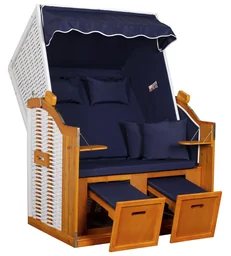
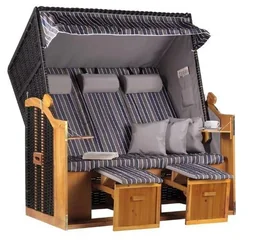
Specific options include, for example,
Important note
“Weatherproof” does not mean maintenance-free or waterproof. Allow wet cushions to dry completely before closing the canopy or protective cover. Persistent moisture encourages mould, mildew stains, rust and material fatigue.
Which features make a beach chair comfortable?
Comfort comes from adjustable elements and sensible seating geometry. Check whether both backrests can be adjusted independently. This allows one person to sit upright while the other reclines to read.
Which adjustments and features matter?
An easy-to-use backrest adjustment is part of the basic equipment. The position should lock securely and remain stable under load. Extendable footrests take the strain off your legs. Side shelves, pockets and small folding tables keep books, drinks and sunglasses within easy reach.
Check the handles and hinges for sharp edges and pinch points. Children can quickly reach into moving parts. A robust locking mechanism prevents sudden folding. The controls should work without requiring much force.
How important are the cushions and seat height?
A firm, well-padded seat makes it easier to stand up and prevents you from sinking too deeply. The seat height should suit the people who use the beach chair most often. Older people benefit from a higher seat edge and sturdy armrests.
Evenly filled cushions retain their shape for longer. Look for neatly closed zips and fabrics that feel pleasant to the touch. Light-coloured covers heat up less in the sun, but show dirt more quickly. Dark fabrics appear less prone to showing marks, but can become hotter.
When are castors worthwhile?
Castors are useful if you move the beach chair seasonally or put it under cover during bad weather. The castor set is designed for this purpose as an accessory. Before fitting it, check the maximum load, mounting points and castor diameter.
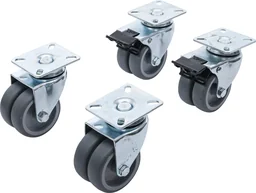
Only move a beach chair on castors across level, load-bearing surfaces. Castors are generally unsuitable for lawns, gravel, steps and high thresholds. Locking brakes prevent the chair from rolling on slight slopes, but do not replace storm protection.
Additional advice
If you move the beach chair regularly, mark the ideal position on the patio. This ensures that the chair is straight again after cleaning and has sufficient clearance from walls, railings and plants.
How do you care for your garden furniture?
Regular care keeps wicker, wood, fabric and fittings in good working order. Remove leaves, pollen and sand promptly. Fine sand acts like an abrasive in moving joints and can damage the surface.
What type of cleaning is suitable for a beach chair?
For the wicker, lukewarm water with a little mild soap is usually sufficient. Use a soft brush or cloth and work from top to bottom. Rinse off any soap residue and leave the beach chair open to dry.
Avoid scouring agents, aggressive degreasers and chlorine-based cleaners. A pressure washer forces water into cushions, wooden joints and fittings. It can roughen the wicker and damage seams. Remove stains from textiles according to the care label instructions.
How should you care for wood and metal?
In spring, check the wood for cracks, swollen areas and peeling coatings. Depending on the type of wood and the manufacturer's instructions, small dry cracks can be repaired. Carefully sand a damaged surface and apply only a suitable care product.
Oil, stain and varnish differ in their effect and application. Do not combine these systems without checking first. Work only on clean, dry wood and observe the drying time. On metal, remove surface rust promptly and check the screw connections.
How do you protect a beach chair when it is not in use?
A cover protects against dirt, leaves and UV radiation. In the garden furniture covers category, you will find suitable solutions for different furniture sizes. For larger areas and additional equipment, tarpaulins for garden furniture may be a practical choice.
The comfort protective cover is designed for more compact beach chair dimensions of approximately 130 x 100 x 170/134 centimetres. For an XXL model measuring approximately 155 x 105 x 170/135 centimetres, is a better fit. Measure the beach chair including its hood before choosing a cover.
The cover must be dry, sturdy and sufficiently well ventilated. Allow air to circulate at the bottom and check the beach chair after rainy days. Remove the cover regularly in dry weather so that any trapped residual moisture can escape.
In winter, store loose cushions and textile accessories in a dry, frost-free place. Clean them beforehand and allow them to dry completely. The beach chair itself can remain outdoors in mild, sheltered weather, but it should not stand directly on damp ground.
“Wood preservatives should only be used when other measures are not sufficient.”
Which mistakes should you avoid when buying a beach chair?
The most common poor purchases result from failing to take measurements and having unclear expectations. A model may be well made but still not fit your patio. So check the practical requirements first, followed by the design and colour.
Which buying decisions can cause problems?
- Insufficient space: The beach chair fits in the intended spot but cannot be opened or cleaned properly.
- Inadequate ventilation: A tightly sealed cover traps moisture and encourages mildew stains.
- Unclear material specifications: Terms such as weatherproof mean little without details about the wicker, wood and fabric.
- Weak fittings: Backrest adjustments and hoods suffer from low-quality materials with daily use.
- Unsuitable castors: Small castors fail on gravel or grass and increase the risk of tipping.
- Choosing based on colour alone: Dark fabrics and wicker can become hotter in direct sunlight.
- Underestimating maintenance: Even weather-resistant outdoor furniture needs cleaning, inspection and protection.
What should you check before placing your order?
- Measure the space, delivery route and area in front of the beach chair.
- Compare the width, depth and height, as well as the dimensions with the footrests extended.
- Check the materials, UV resistance, fittings and load capacity.
- Make sure the backrests, footrests and hood move smoothly.
- Read the care instructions for the wood, wicker, fabric and cushions.
- Allow for a protective cover, winter storage and possible spare parts.
- Choose castors only for a suitable surface.
- Compare the total cost, including delivery and accessories.
If you are looking for more suitable outdoor furniture, the garden and outdoor range offers additional solutions for patios and gardens. You can also find suitable furniture movers for shifting heavy furniture.
Conclusion: The best beach chair suits your available space, how you use it and the amount of maintenance you are prepared to do. Measure carefully before buying, choose durable materials and protect the cushions and wicker from persistent moisture. This will keep your beach chair comfortable, stable and ready to use for many seasons.
Frequently Asked Questions
- What size should a beach chair for two people be?
- A standard model approximately 120 to 130 centimetres wide is usually sufficient for two people. Also measure the depth, height and the space in front of the chair for the extended footrests. An XXL beach chair offers more room to move but requires a larger footprint and is harder to transport through narrow access routes.
- Which material is best for a beach chair in the garden?
- For the garden, choose a beach chair with weather-resistant PE synthetic wicker, a protected solid wood frame and rust-resistant or stainless-steel fittings. Natural materials need more protection and regular care. The workmanship remains crucial: tightly woven wicker, neat seams, sturdy joints and a roof with good water drainage extend the product's service life.
- Does a beach chair need a protective cover?
- A protective cover shields the chair from rain, UV radiation, dirt and pollen, but it does not replace ventilation. Cover the dry beach chair and leave the cover open at the bottom or use ventilation openings. Choose the size based on the actual dimensions. A cover that is too tight will rub, while one that is too large will sit loosely in the wind.
- How should you care for a beach chair properly?
- Remove dirt regularly with a soft brush and clean the wicker with mild soapy water. Dry the cushions completely before storing or covering them. Check the wood, seams, screws and fittings at least once in spring. Avoid pressure washers and aggressive cleaners, which can damage surfaces and fibres.
- Can beach chairs be moved on castors?
- Castors make it easier to move a beach chair across level, load-bearing surfaces. They do not replace a secure location or protection against rolling away. Check the load capacity, castor diameter and brakes. Lift the beach chair over thresholds and do not move it in strong winds. This protects the frame, ground and your hands.
You may also be interested in
- Beach Chairs: Tests & Comparison 2026
- The Perfect Garden Chair: Materials, Style and Care
- Choosing Garden Furniture: Current Trends & Practical Tips
- Relaxing in the Garden: Find the Perfect Sun Lounger
- Buying a Garden Shed: Top Tips for Making the Right Choice
- Choosing Children's Furniture: What Matters in the Bedroom