
In brief: Choosing between a carport and a portable garage depends on your priorities. Portable garages provide quick, temporary protection at a lower upfront cost. Permanent carports made from wood or metal are more stable, durable and enhance the appearance of your property. Base your decision on the intended period of use, wind and snow loads, and your budget for the purchase and any required planning permission.
Your car is parked outdoors and exposed to rain, snow, hail and bird droppings. A garage space is often unavailable or too expensive. The solution: a carport or a portable garage. Both provide valuable protection, but differ fundamentally in terms of materials, durability and appearance. Our 2026 test and comparison will help you choose the best option for your needs. We compare the most important models and provide specific buying recommendations.
Contents
Carport or portable garage? The fundamental difference
The decision usually comes down to a permanent or temporary solution. A carport is a permanently installed, open or partially enclosed shelter. It is made from sturdy materials such as wood, aluminium or steel and built on a foundation. A carport is a long-term investment that adds value to your property.
A portable garage, also known as a shelter or car shelter, is a temporary structure. A metal or plastic frame is covered with a robust tarpaulin or PVC sheet. Its main advantages are that it can be assembled quickly, moved easily and is significantly cheaper to buy. However, its service life is limited, mainly because of the cover.
Tip: Use a portable garage as a temporary solution while you save for a garage or carport. It is also ideal for protecting garden furniture, firewood or agricultural equipment. Discover our range of carports and portable garages.
Carport test: Comparing permanent structures
Permanent carports offer maximum stability and durability. We compare the most common roof shapes and designs.
Flat-roof carport: Modern and space-saving
The flat roof is the classic and most popular design. It has a simple, modern appearance. However, a minimum pitch of around 3-5 percent is essential so that rainwater can drain away safely. One major advantage: with suitable structural support, you can often use the space above the carport as a terrace or storage area.
An example is the
. It provides generous overhead cover and a simple, timeless appearance. The powder-coated steel or aluminium construction is weather-resistant and easy to maintain.
Warning: Always check the permitted snow load for your region when choosing a flat-roof carport. Excessive snow accumulation can put strain on the roof. A slight pitch is essential to prevent standing water, puddles and the leaks that can result.
Arched carport: Optimal water drainage
The curved or arched roof offers significant advantages in terms of weather resistance. Thanks to its curved shape, rainwater runs off immediately, while snow slides off more easily when the pitch is sufficient. This reduces the structural load. Visually, this design also creates an interesting feature.
The
with a length of 17 m is ideal for larger vehicles such as motorhomes or boat trailers. The curved shape is not only functional but also eye-catching. Assembly requires a little more effort than with a flat roof, but the benefits in terms of weather protection are worth it.
Portable garage test: Temporary protection put to the test
Portable garages stand out for their speed and flexibility. The
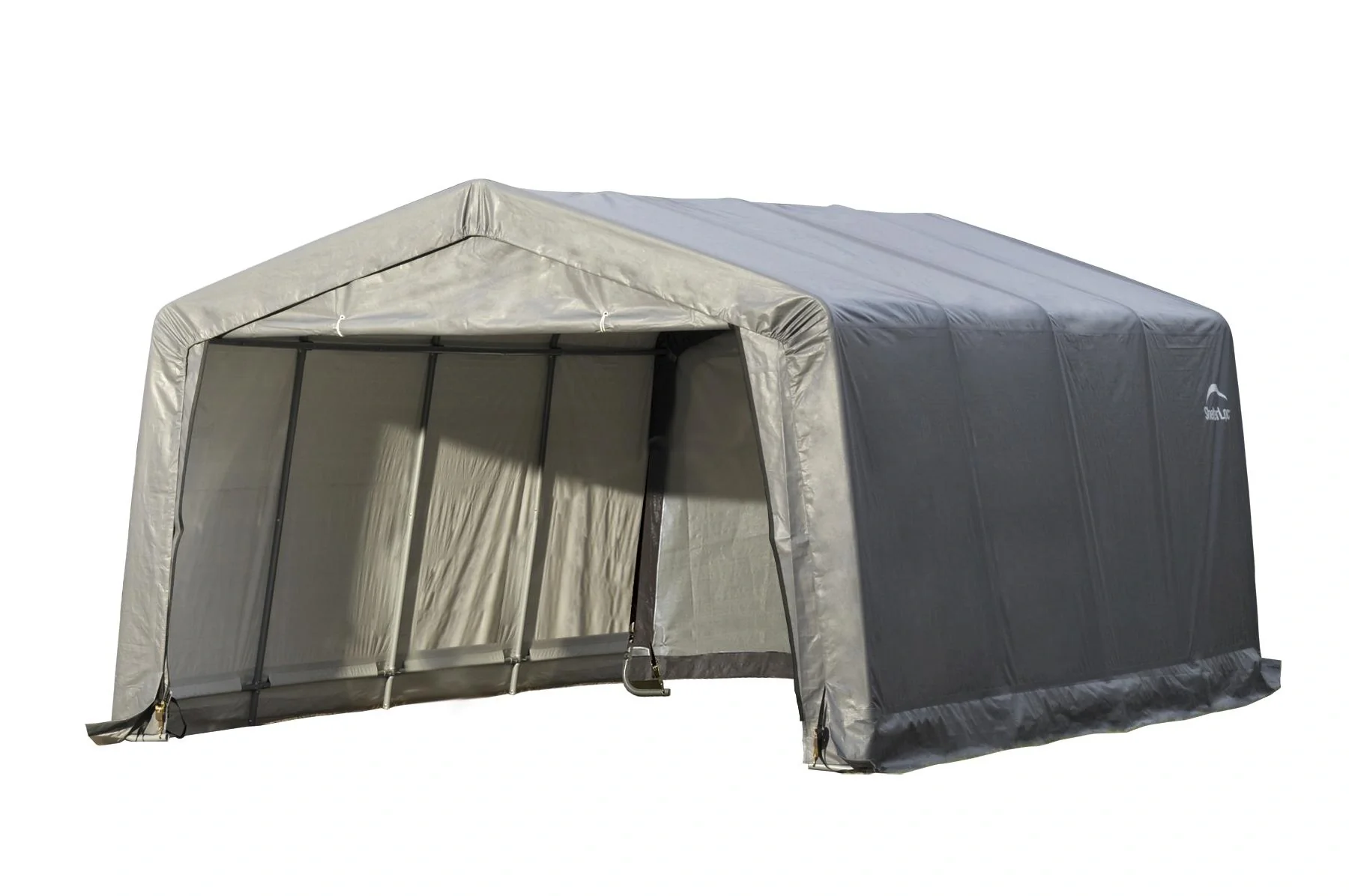
The quality of the cover is the key factor. High-quality models use multi-layer, UV-stable polyethylene or PVC. Pay attention to the thickness, measured in micrometres, and the manufacturer's warranty. With proper care, the service life can be several years.
Note: Even the best portable garage is no substitute for a permanent garage when it comes to long-term protection for valuable classic cars. However, it provides excellent protection against the weather, bird droppings and UV radiation for everyday vehicles and is a practical addition to the garden.
The key buying criteria at a glance
It’s not just the design; details also determine satisfaction and durability.
Material and stability
For carports: Wood (often Douglas fir or larch) requires regular maintenance but has a warm appearance. Metal (aluminium or steel) is easier to maintain and more durable. Look for a high-quality powder coating to protect against rust.
For portable garages: The frame should be made from hot-dip galvanised or coated steel. The cover must be tear-resistant, water-repellent and UV-stabilised.
Assembly and securing
The included assembly instructions should be easy to understand. A carport generally requires a foundation and some DIY skills. For portable garages, anchoring them to the ground is crucial. Always use the included ground stakes or ground plates, especially in areas exposed to high winds.
Weather resistance and durability
Ask for the technical specifications:
- Wind load: What wind strength can the construction withstand?
- Snow load: How much weight can the roof support (in kg/m²)?
- UV resistance: Particularly important for covers.
- Corrosion protection: For metal parts.
A solid carport can last the lifetime of a car if it is well made. A portable garage has a limited lifespan of around 3-8 years, depending on the quality of the cover.
Comparison table of the best models
This direct comparison gives you an overview of the strengths and typical uses of the recommended models.
The most highly rated carports and portable garages in our range compared directly:
| Model | Customer rating | Availability |
|---|---|---|
| Carport Atlas 5000 | – | Currently unavailable |
| Palram Carport Verona | – | Currently unavailable |
| Flat Roof Carport 15 m | – | Currently unavailable |
| Westmann Flat Roof Carport 15 m | – | Currently unavailable |
| Arched Roof Carport 15 m | – | Currently unavailable |
Buying guide: How to find the right model
Take a systematic approach. First, clarify the purpose: permanent protection for your main vehicle or temporary shelter for a seasonal vehicle? Then measure the available space. Add at least one metre to the vehicle dimensions in both length and width for comfortable access.
Check local planning regulations to find out whether planning permission is required. Find out about the ground conditions for the foundation. Set your budget, including any potential costs for the foundation, assembly assistance or optional accessories such as side panels.
Finally, compare the technical specifications of the models you are considering. Use our comparison and the detailed product information in our shop. With this preparation, you can make an informed decision and choose reliable, long-lasting protection.
Frequently asked questions
- Do I need planning permission for a carport?
- Planning permission requirements vary by region. Small, freestanding carports up to a certain size and volume are often exempt. Always check with your local planning authority before buying. A breach can result in costly alterations or removal.
- Which lasts longer: a carport or a portable garage?
- A solid carport made from wood or aluminium is considerably more durable. High-quality models can last for decades. Portable garages have a limited lifespan of just a few years because the cover suffers from UV exposure and the weather. They are a temporary solution.
- Can a portable garage withstand strong winds and snow?
- That depends on the model. High-quality portable garages with a robust steel tube frame and secure anchoring can certainly be suitable for winter use. Check the manufacturer’s specifications for wind and snow loads. Secure anchoring to the ground is absolutely essential.
- Can I enclose a carport at the sides?
- Yes, many carport models offer optional side panels or glazing elements. These provide better protection from splashing water and crosswinds. However, a completely enclosed carport needs adequate ventilation to prevent moisture build-up and mould.
- What type of foundation is best for a carport?
- Individual pad foundations for the posts are the most common and cost-effective solution for level ground. For heavier constructions or difficult ground conditions, a strip foundation or concrete slab is advisable. Seek professional advice on this.