
In brief: To keep glass streak-free, clean the shower enclosure regularly after showering with a squeegee. Remove stubborn limescale with citric acid or a specialist shower enclosure cleaner. Finally, wipe the glass with a microfibre cloth to prevent streaks. Soak dry residue with warm water before cleaning.
Why does shower glass become limescaled and smeared so quickly?
Warm shower water evaporates on the glass surfaces. Limescale, magnesium and other minerals from the water are left behind. These combine with soap residue, hair care products and skin oils.
This creates a stubborn film that leaves streaks and makes the glass look cloudy. The harder your tap water, the faster this process occurs.
A coated glass surface can reduce the effect, but cannot prevent it completely. Regular care is the key to keeping the glass clear.
How do I prepare the shower enclosure for cleaning?
Remove all items such as shampoo bottles, soap dishes and razors. Rinse the entire enclosure thoroughly with warm water.
This loosens dirt and moistens dried-on residue. Now spray your cleaner into hard-to-reach corners and joints first.
Expert tip
It is best to clean the shower enclosure in the evening. This allows soaked, stubborn limescale stains to work overnight. In the morning, you only need to scrub and rinse them off.
Do not forget the shower tray or floor. Limescale and soap also build up here. Working systematically from top to bottom saves time.
Which household remedies remove limescale stains in the shower?
Citric acid and white household vinegar are classic remedies for limescale. Mix one part vinegar or two tablespoons of citric acid powder with one part warm water.
Apply the solution with a spray bottle or dab it onto the stains with a sponge. Leave it to work for five to ten minutes.
The acid dissolves limescale deposits at a molecular level. It is important to rinse thoroughly with clean water after the contact time to remove all acid residue and protect the material.
For very stubborn areas, repeat the process. A soft sponge helps remove the residue. For a glossy finish, polish the surfaces dry with a microfibre cloth afterwards.
Baking powder is suitable as a paste-like cleaning aid for joints. Mix it with a little water to make a paste and brush carefully.
How do I use specialist shower enclosure cleaners correctly?
Specialist cleaners such as our or are formulated to tackle limescale and soap residue. They often contain defoaming agents for streak-free drying.
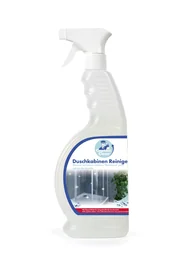
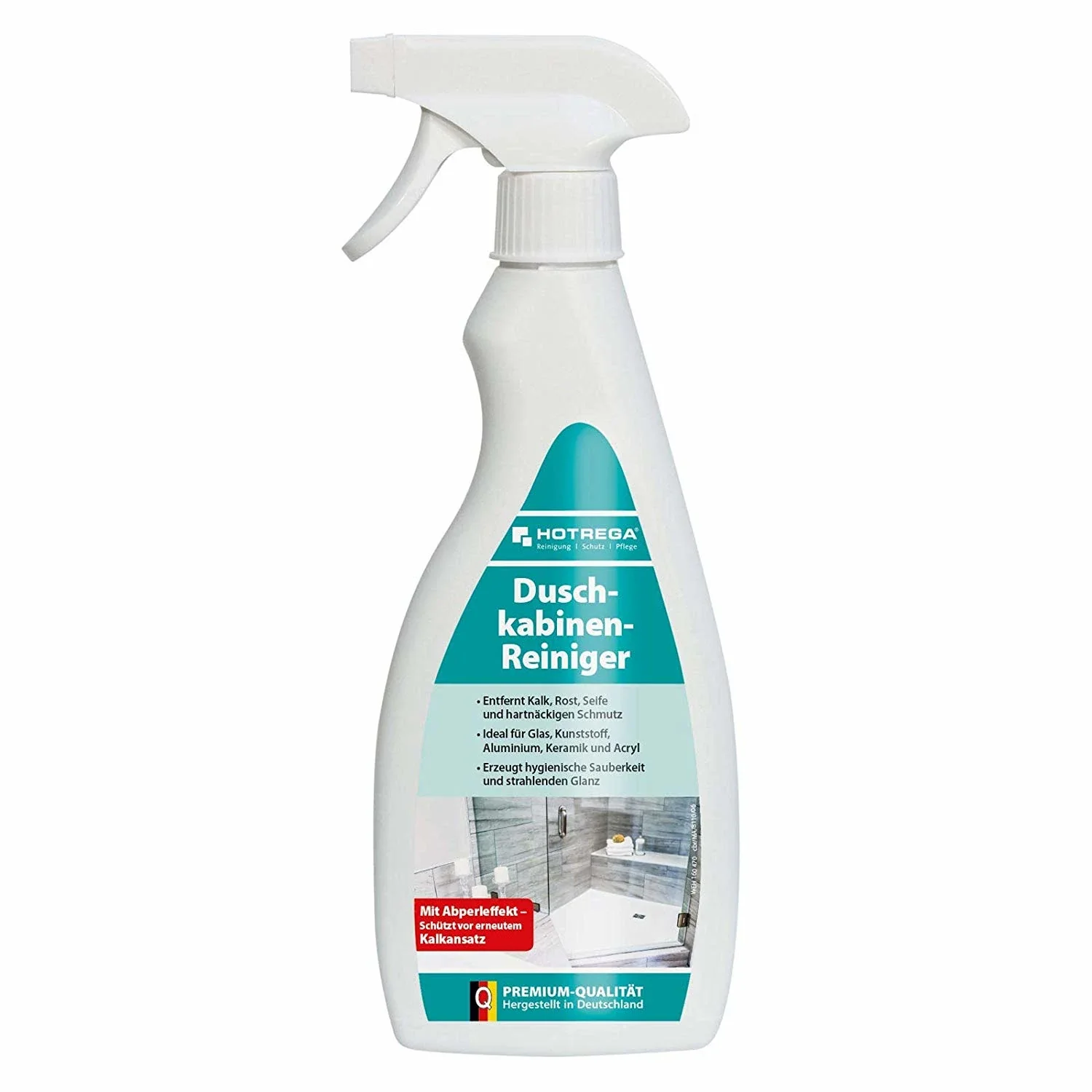
Spray the product evenly onto dry or damp glass. Make sure the surface is completely covered. Do not shorten the contact time specified by the manufacturer.
Important note
Never mix different chemical cleaners, especially acidic products with chlorine-based products. Toxic gases may form. Always ventilate the bathroom well during cleaning.
After the contact time, scrub with a non-abrasive sponge or soft brush. Specialist shower enclosure brushes with long handles are particularly effective.
Then rinse everything thoroughly with plenty of clean water. If the glass already starts to shine while rinsing, you have done everything correctly.
Which tools guarantee streak-free drying?
The classic rubber squeegee is unbeatable for basic drying. Pull it across the glass from top to bottom with even pressure. Start at the shower head.
Wipe the squeegee after each stroke so you do not spread dirty water again. A high-quality microfibre cloth is essential for the final finish.
It absorbs the last traces of moisture and polishes the surface microscopically. Regularly switch to a clean side of the cloth. A window vacuum like those in our range performs a similar function to a squeegee, but is more ergonomic for large surfaces.
Microfibre cloths with a fabric weight of over 300 g/sq m and a fine fibre structure deliver the best results when finishing glass. They leave no lint and attract water like a magnet.
Additional advice
Keep two sets of tools ready: one for rough cleaning with detergents and one solely for the final streak-free polishing of clean glass. This prevents residue from old cleaning products.
How do I clean seals, handles and difficult corners?
Rubber seals are weak points. Moisture collects here and mould can develop. Clean them with a cotton swab dipped in cleaning solution or an old toothbrush.
Use the same product for metal handles and fittings as for the glass. After rinsing, polish them with a separate, dry cloth to prevent water spots.
You can reach the corners of the enclosure with special corner brushes or a cloth wrapped around your finger. A product such as the cordless window vacuum can also be useful for smooth tiles and hard-to-reach glass areas.
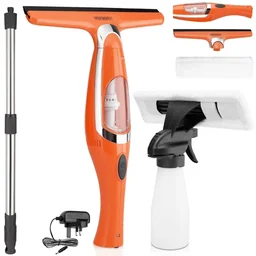
Rinse all small parts and corners particularly carefully. Otherwise, leftover cleaner will attract new dirt like a magnet.
How can I prevent dirt from building up again so quickly?
The most effective method is to squeegee the walls after every shower. It only takes a few seconds and removes most of the limescale-containing water before it dries.
Ventilate the bathroom thoroughly after showering or switch on the extractor fan. This quickly reduces humidity and prevents as many droplets from forming.
Regularly using a mild cleaner prevents thick layers from building up. Cleaning once a week is better than a major cleaning session once a month.
You can find practical tools for daily care and regular cleaning in our maintenance supplies category. A clean shower enclosure makes the day start feeling much fresher.
Frequently Asked Questions
- Which home remedy is best for removing limescale from a shower?
- Citric acid or white household vinegar are excellent for removing limescale. Mix a solution with warm water, apply it to the stains and leave it to work. After a few minutes, scrub with a sponge and rinse with clean water.
- Why does my glass shower still have streaks after cleaning?
- Streaks are often caused by using too much cleaner, the wrong cloths or limescale in the rinse water. Use cleaning products sparingly, polish with a completely clean, dry microfiber cloth and, ideally, use soft water for the final rinse.
- How often should I deep-clean my shower enclosure?
- A thorough clean to remove limescale and soap residue is advisable every one to two weeks. Dry the glass surfaces with a squeegee after every use to extend the intervals. If you have hard water, you may need to clean more often.
- Can I use cream cleaner or a sponge on glass shower enclosures?
- We advise against using abrasive cleaners or rough sponges. They can permanently scratch the often-coated surface of shower glass. Use soft sponges, microfiber cloths or special shower enclosure brushes from our sanitary supplies range.
- What can I do about mold on the seals of my shower enclosure?
- Tackle mold early with high-proof alcohol or hydrogen peroxide. Apply the product to the affected joints, leave it to work and brush gently. Ensure good ventilation after showering to prevent it from returning.
You may also be interested in
- Shower squeegees: For a streak-free shower
- Make your own shower enclosure spray: Sustainable and affordable
- Descale your showerhead: Make it shine like new again
- Say goodbye to streaks: How to clean windows without streaks
- A sparkling-clean bathroom: Clean bathroom cabinets and mirrors
- Cleaning the bathroom: Top tips for a sparkling-clean bathroom