
In brief: For a clematis to flower spectacularly, give it a sunny spot with cool roots, deep, nutrient-rich soil and prune it at the right time. The variety determines its pruning group and winter hardiness. With regular feeding and protection from clematis wilt, you can enjoy abundant blooms year after year.
Clematis Care: How to Keep It Blooming Every Year
A clematis covered in flowers is a point of pride for any gardener. Caring for one is easier than its reputation suggests. Four things matter most: the right location, proper planting, regular feeding and correct pruning. Here’s how to enjoy a spectacular display year after year.
How do I find the perfect spot for my clematis?
Clematis like their heads in the sun and their feet in the shade. Choose a spot where the base of the plant and its roots are shaded, while the shoots and flowers get full sun or bright partial shade.
Shade the roots with a low-growing perennial, a layer of bark humus or a flat stone. This helps keep the soil cool and moist. Avoid hot, south-facing spots where the base is unprotected. Intense midday sun can dry out the root ball.
Expert tip
Plant your clematis about 5 to 10 centimetres deeper than it grew in its container. This encourages new shoots to grow from lower buds and helps the plant recover if affected by clematis wilt.
Why is proper planting so important?
Proper planting lays the foundation for healthy growth. Clematis prefer deep, humus-rich, well-drained soil. Loosen heavy clay soil with sand, and improve poor sandy soil with mature compost.
Dig a planting hole twice as wide and deep as the root ball. Set the clematis deep in the hole, then fill it with a mixture of garden soil and compost. Firm the soil gently and water thoroughly. Give your clematis a climbing support right away.
The right planting accessories make care easier. Watering rings and mulch mats help the soil retain moisture.
How do I feed my clematis properly?
Clematis are heavy feeders. A regular supply of nutrients supports flower growth. In spring, apply an organic all-purpose fertilizer or a specialist flowering plant fertilizer. Feed it again after the first flowering period in early summer.
Do not apply highly concentrated mineral fertilizer directly around the root collar, as this can scorch the plant. Carefully work the fertilizer into the top layer of soil. Water thoroughly after feeding to carry the nutrients down to the roots.
Important note
Watch for clematis wilt, a fungal disease that causes shoots to wilt suddenly. Cut affected shoots back to healthy wood right away. To help prevent it, choose a spot that is not too wet and plant a resistant variety such as
(Clematis 'Rouge Cardinal').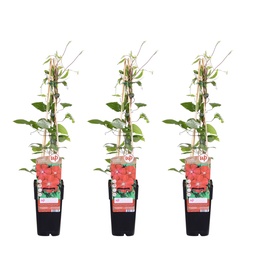
The three clematis pruning groups
Pruning is one of the most important parts of clematis care. The right method depends on when the plant flowers and which of the three pruning groups it belongs to.
Pruning Group 1: Spring-flowering varieties
These varieties flower in April and May on old wood. They include wild species and Clematis montana. They need little pruning. Thin them out after flowering only if they have grown too large.
“Clematis montana is a vigorous climber for large areas. It also tolerates hard rejuvenation pruning, but may not flower the following year.”
Pruning Group 2: Twice-flowering varieties
These clematis flower in early summer on old wood and again in late summer on new wood. They include many large-flowered hybrids, such as 'The President'
. Prune lightly in late winter, removing dead and weak shoots. Harder pruning can encourage a second flush of flowers.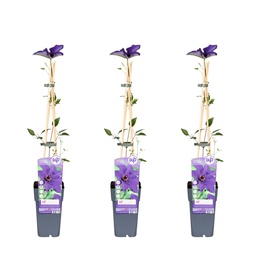
Pruning Group 3: Summer- and fall-flowering varieties
These varieties flower from July onward on new growth produced during the current season. They include Viticella and Jackmanii hybrids, as well as 'Rouge Cardinal' (). In late winter (February/March), cut them back hard to 20-50 centimetres above the ground. This encourages vigorous new growth.
Additional advice
If you do not know your clematis’s pruning group, pay attention to when it flowers. You can also use a compromise method: cut every other shoot back hard and prune the remaining shoots lightly. This gives you flowers on both old and new wood.
Which clematis varieties are especially worth growing?
There are plenty to choose from. For beginners, hardy, prolific varieties from Pruning Group 3 are ideal. They are easy to prune and are often more resistant to wilt.
: Clematis 'Rouge Cardinal' produces large, velvety red flowers from June to September. It belongs to Pruning Group 3 and should be cut back hard.
: Clematis 'The President' produces purple flowers with red centers. This classic Pruning Group 2 variety flowers twice a year.
: Clematis 'Justa' has pure white, medium-sized flowers with yellow stamens. It is versatile and flowers from June to August.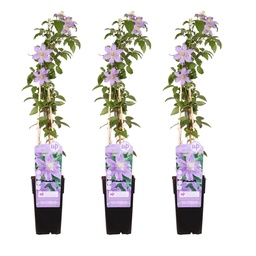
For an early display of blooms, Clematis montana varieties are hard to beat. They quickly cover fences and pergolas.
“Choosing the right variety is key to success. Combine early-, mid- and late-flowering clematis for months of blooms on a climbing support.”
Clematis care throughout the year
In spring, check the climbing support and tie in new shoots. Feed the plant and mulch around the roots. In summer, water regularly during dry spells, but avoid waterlogged soil. Remove spent flowers from twice-flowering varieties to encourage a second flush.
In fall, thin out the plant again if needed. In winter, a layer of leaves or brushwood protects the roots from severe frost. Prune Groups 2 and 3 in late winter.
How do I protect my clematis from disease?
The disease gardeners fear most is clematis wilt. To help prevent it, choose a resistant variety and make sure the soil is loose and well-drained. If your plant is affected, cut it back hard to healthy wood. It often regrows from the base.
Slugs love young shoots. Protect them with a slug barrier. Powdery mildew can develop when the roots are too dry and the foliage stays damp. Water at soil level and make sure the plant gets enough moisture.
With the right care, proper pruning and a variety suited to your garden, your clematis can bloom reliably for many years. Start with a hardy variety and add to your collection over time.
Frequently asked questions
- When should I prune my clematis?
- The right time depends on the pruning group. Prune spring-flowering clematis (Group 1) right after flowering, and summer- and fall-flowering varieties (Groups 2 & 3) in late winter. Pruning at the wrong time can mean losing the flowers.
- Why is my clematis not blooming?
- Common causes include too much shade, pruning at the wrong time, nutrient deficiency or waterlogged soil. Check the pruning group and fertilize regularly with a suitable flower fertilizer.
- Which clematis is best for beginners?
- Clematis in pruning Group 3 are the easiest to care for. They bloom on new growth and are cut back hard in late winter. Varieties such as 'Rouge Cardinal' and 'Jackmanii' are hardy and more forgiving of care mistakes.
- What does “cool feet” mean for clematis?
- Clematis roots should be kept shaded and cool. Plant shallow-rooted perennials in front of them, cover the soil with mulch or stones, or plant the clematis a little deeper. This helps protect the roots from drying out and overheating.
- How do I plant clematis correctly?
- Dig a generous planting hole. Place the root ball 5-10 cm deeper than it was in the pot. Fill the hole with humus-rich soil. Add a support right away. Water thoroughly and protect the base with mulch or a plant ring.
You might also be interested in
- Clematis Types and Varieties: Which Is Right for Your Garden?
- How to Care for Chrysanthemums: Tips for Beautiful Fall Blooms
- How to Care for Annual Flowers: Tips for a Beautiful Display
- How to Care for Dipladenia: Tips for Abundant Blooms
- How to Care for Peonies: Tips for Abundant Blooms
- How to Care for a Monstera: Help Your Trendy Houseplant Thrive