
In brief: The most effective way to control winter moths is prevention in autumn. From the end of September, attach glue bands to the trunks of your fruit and deciduous trees. These stop the flightless females before they can lay their eggs in the tree crowns. In spring, biological products such as neem oil or Bacillus thuringiensis can help.
Table of contents
Spring arrives, the leaves begin to grow and you look forward to a plentiful fruit harvest. But suddenly, you notice eaten leaves and fine webbing in the crowns of your trees. Often, the culprit is a small but voracious pest: the winter moth. A severe infestation can destroy an entire year's harvest and weaken the trees in the long term. With the right knowledge and targeted measures, however, you can effectively protect your plants.
What are winter moths and why are they harmful?
Winter moths include several species of moth, most notably the winter moth (Operophtera brumata) and the mottled umber moth (Erannis defoliaria). The actual damage is not caused by the inconspicuous moths, but by their caterpillars. They hatch in spring at the same time as the leaves emerge and immediately start feeding.
The small green caterpillars are almost impossible to satisfy. They eat buds, young leaves, flowers and even small fruits. The result is the characteristic holes and notched leaf edges that, in severe infestations, can lead to complete defoliation. The tree loses its photosynthetic leaf area, can carry out less photosynthesis and is severely hampered in its development. On fruit trees, this leads to significant crop losses.
Many plants in our gardens can be affected. Preferred host plants include:
- Fruit trees: apple, pear, cherry, plum, quince
- Deciduous trees: maple, beech, oak, hornbeam, lime, elm
- Berry bushes: blackcurrant, gooseberry
How can you identify a winter moth infestation?
Early detection is the key to successful control. Look for different signs at different times of the year.
Damage in spring (April to June)
The most obvious sign is feeding damage. Check the leaves of your trees for small holes or notched edges. The caterpillars often spin themselves into young leaves or join several leaves together with silky threads to form loose webs, where they feed in protection. On closer inspection, you may spot the small, usually light-green caterpillars, which move jerkily when disturbed or lower themselves on a thread.
Identifying the caterpillars
Winter moth caterpillars are known as inchworms. They have pairs of legs only at the front and rear ends of their bodies. To move, they pull their rear end forwards, bending their body into a characteristic arch before pulling the front part along. This distinctive movement makes them easy to identify.
Moths in autumn and winter (October to December)
One distinctive feature of winter moths is their late flight period. On mild days from October through December, you may be able to observe the moths. The males have normal wings and flutter around in the dark, while the females are flightless. Their wings have atrophied into tiny stubs. After hatching, they crawl up the tree trunks from the ground to lay their eggs. If you see these wingless females on the trunk, it is a sure sign of a possible infestation the following spring.
The flightless females are the winter moth's Achilles' heel. Preventing them from climbing the trunk in autumn stops them from laying eggs and therefore prevents caterpillar damage in spring.
The winter moth life cycle: Know your enemy
Anyone who wants to control winter moths successfully needs to understand their life cycle. Each control method targets a different stage in the pest's development. The cycle is perfectly adapted to the seasons.
- Autumn (October - December): The moths emerge from pupae in the soil. The males fly around looking for females. After mating, the flightless female crawls up the trunk and lays up to 300 eggs individually or in small groups in bark crevices and near buds.
- Winter: The tiny eggs, initially greenish and later reddish, are extremely hardy. They survive even severe frosts unharmed in the tree crown.
- Spring (April - May): The caterpillars hatch just as the trees begin to leaf out. They start feeding immediately and pass through several stages of development. This phase lasts around four to six weeks.
- Early summer (June): The fully grown caterpillars drop to the ground on a silk thread. There, they burrow a few centimetres into the soil and pupate.
- Summer/early autumn: The pupae remain dormant in the soil until the cycle begins again in late autumn.
Additional advice
Understanding this cycle shows why a single measure is often not enough. A combination of autumn prevention (against the females) and spring control (against the caterpillars) offers the most comprehensive protection for your plants.
When is the best time to control winter moths?
Timing is crucial. If you act too early or too late, the measures will be ineffective.
The most important phase is autumn. From the end of September to the beginning of October, you should take preventive action. This is when you can stop the females on their way to lay their eggs. By far, this is the most efficient and environmentally friendly method.
The second opportunity comes in spring. As soon as the first caterpillars hatch, you can target them directly. However, this timing is more difficult to get right. You need to monitor your trees' new growth closely. The caterpillars are most vulnerable while they are still very small. Ideally, treatment should take place shortly after hatching but before flowering.
Important note
Avoid spraying while trees are in flower. Many plant protection products are harmful to bees and other important pollinators. Always carry out treatments in the early morning or late evening, when bee activity is low.
Mechanical and Biological Control Methods
Fortunately, there are several environmentally friendly methods for keeping winter moths under control. These should always be the first choice in home gardens and allotments. Effective pest control relies on prevention and biological helpers.
Glue Bands: The Most Effective Defence
Glue bands are the key measure against winter moths. They consist of paper or plastic bands coated with a special non-drying adhesive. In autumn, they are wrapped tightly around the tree trunk and any supporting stakes. The wingless females, which crawl up the trunk, become stuck and cannot lay their eggs in the tree crown.
Pro tip
Fit glue bands at a height of around 60 to 80 cm. Carefully smooth rough bark with a brush before fitting the band so that no gaps remain for the moths to crawl through. Secure the band above and below the adhesive layer with binding wire, but do not tighten it too much, as this could constrict the tree.
Check the glue bands regularly. Remove leaves and dirt to keep the adhesive surface clear. The bands should remain on the tree until around January or February.
Encourage Beneficial Insects and Animals
Many animals in your garden are natural predators of winter moths. Encourage these beneficial organisms to help create a natural balance.
- Birds: Tits in particular, but also sparrows and robins, feed hundreds of caterpillars to their young in spring. Put up nest boxes and provide food in winter.
- Insects: Parasitic wasps, predatory bugs and ground beetles eat eggs, caterpillars and pupae. A wildlife-friendly garden with native plants, deadwood areas and insect hotels provides a habitat for these helpful species.
Biological Treatments Based on Bacteria and Neem
If an infestation occurs in spring despite the glue band, you can use biological sprays. These products are more selective and gentler on the environment than synthetic chemical insecticides.
- Bacillus thuringiensis (Bt): This bacterium produces a protein that specifically affects moth caterpillars. The caterpillars eat the product with the leaves, stop feeding and die after a few days. It is harmless to other insects, people and pets.
- Neem oil: The active ingredient azadirachtin from the neem tree disrupts the caterpillars’ development, preventing them from moulting and causing them to die. It also acts as a feeding deterrent.
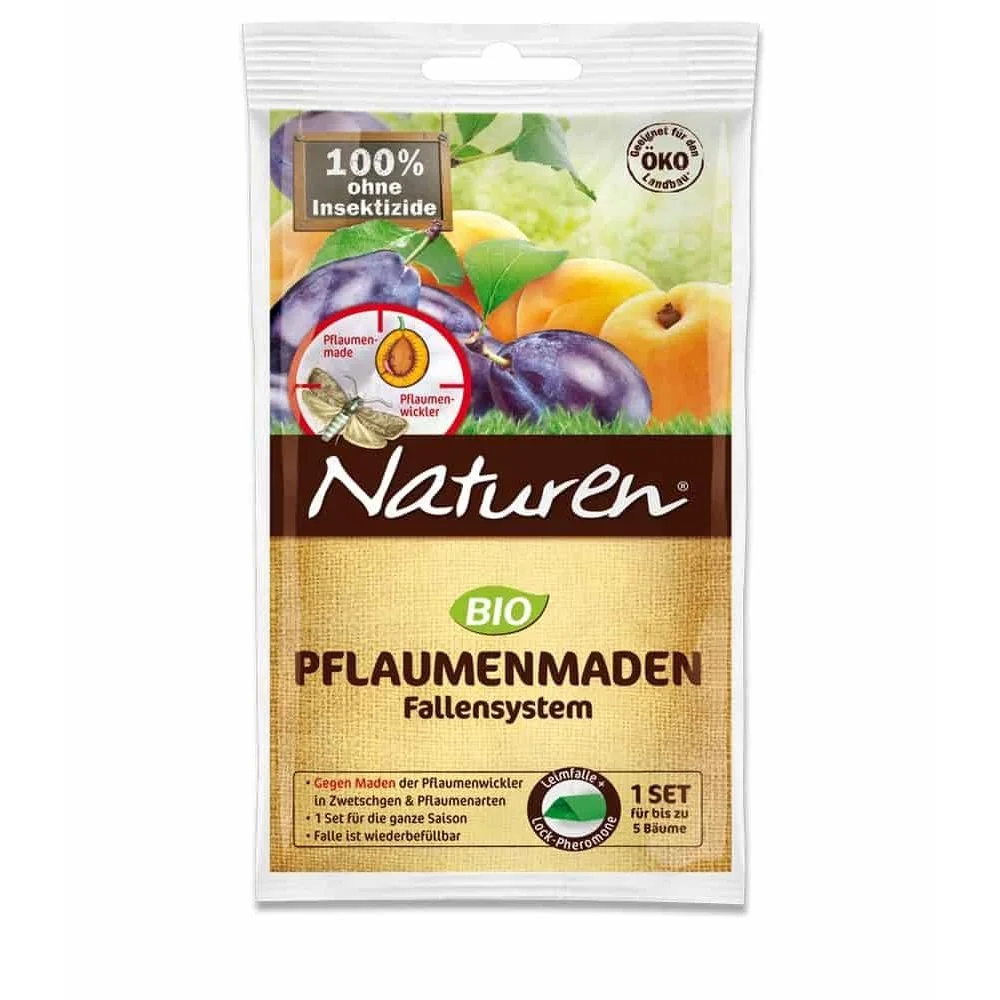
To monitor your garden comprehensively for various pests, you can use pheromone traps. Products such as the
fruit moth trap or the plum moth trap can help you control pressure from other important fruit pests. An electronic UV insect trap can also help reduce the overall insect population, including male winter moths.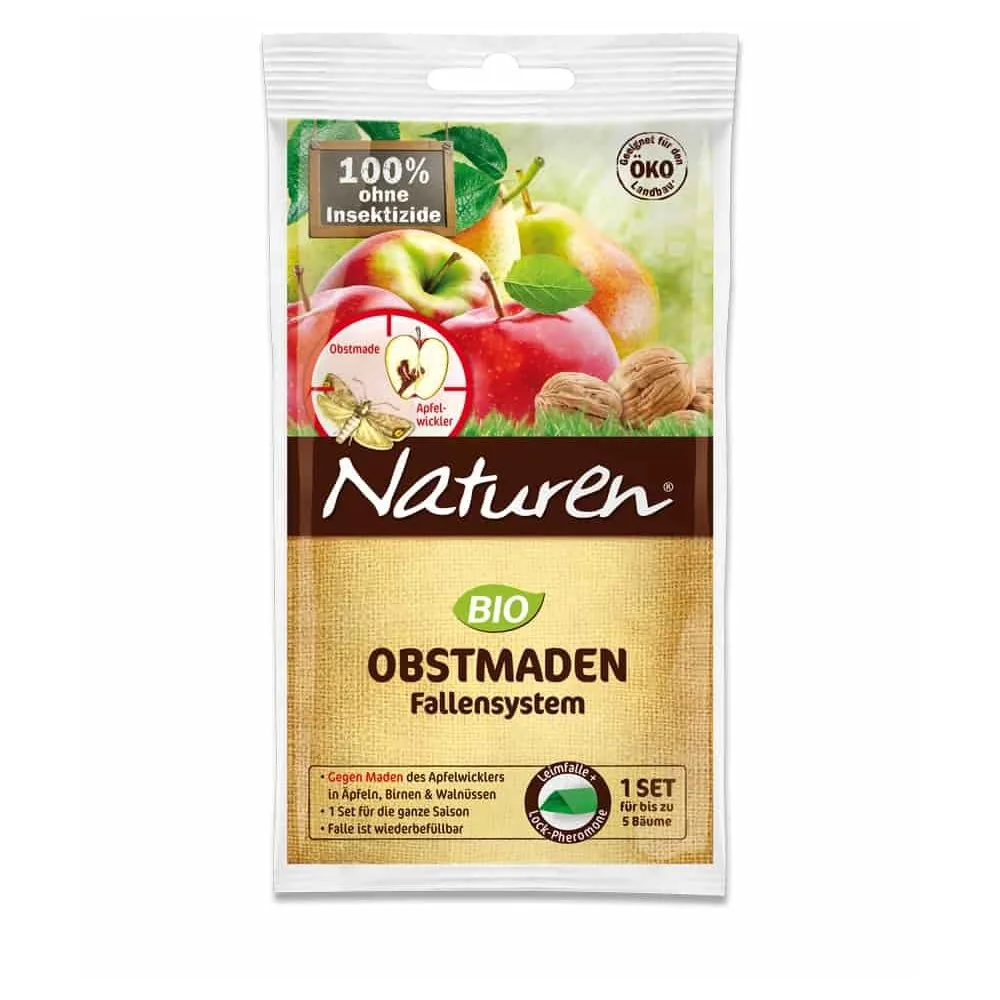
Chemical Products: When Are They Useful?
The use of synthetic chemical insecticides should remain an absolute last resort in home gardens. They are often non-selective, meaning that they also harm beneficial insects such as bees, ladybirds and hoverflies. Their use should only be considered in the event of an extremely severe infestation that threatens the survival of a tree.
If you choose this option, use only products approved for home gardens and allotments. Read the instructions carefully and follow the dosage and application instructions exactly. You can find the right plant protection accessories in our Garden + Plant Accessories range.
Use plant protection products as little as possible, but as much as necessary. Always favour biological methods and mechanical barriers. Integrated pest management is the key to a healthy and sustainable garden.
A healthy, vigorous tree can often compensate for a light infestation on its own. Strengthen your plants with a good supply of nutrients, sufficient watering and proper pruning. This creates the best foundation for resilient trees and a plentiful harvest, without having to worry about winter moths.
Frequently Asked Questions
- What do winter moth caterpillars prefer to eat?
- Winter moth caterpillars have a broad diet. They mainly attack fruit trees such as apple, cherry and plum, but also many deciduous trees, including oaks, beeches, limes and maples. In severe infestations, they can completely defoliate trees, weakening the plant and significantly reducing the harvest.
- When should I put grease bands on trees to control winter moths?
- The ideal time is from late September to early October, before the first night frosts occur. The flightless females then begin crawling up the tree trunks. Grease bands should remain on the tree until spring to catch late moths as well, and must be checked regularly.
- Are winter moths dangerous to people or pets?
- No, winter moths and their caterpillars are completely harmless to people and pets. They are exclusively plant pests and do not cause any health problems. Control measures are solely intended to prevent damage to plants and preserve the vitality of trees.
- Do birds help control winter moths?
- Yes, birds are important natural predators. In particular, tits feed their young the nutritious caterpillars in spring. By putting up nesting boxes and designing your garden to be bird-friendly, you can encourage these helpful allies and support natural pest control.
- What is the difference between the winter moth and the mottled umber moth?
- Both species cause similar damage. The caterpillars of the winter moth are light green, while those of the mottled umber moth vary in colour from yellow-green to brown. For control in a home garden, this distinction is insignificant, as the measures are identical for both species.
You may also be interested in
- How to control slugs: Effective methods for your garden
- Understanding ground frost: How to protect your plants effectively
- How to control box tree moths: Effective solutions for your garden
- Moths in the home & garden: Effective control and prevention
- Natural ways to control garden pests
- Leaf miner flies in the garden: How to identify and control them effectively