
In brief: In our 2026 cordless reciprocating saw test, 18V models stand out in particular for their power and versatility. Compatibility with your existing battery ecosystem is crucial. 12V tools are sufficient for light work, while we recommend 18V models for demanding applications. Look for good ergonomics and a sufficient selection of blades.
Are you looking for a powerful cordless solution for cutting wood, metal or plastic? Then a cordless reciprocating saw is the right tool for you. Compared with corded models, they offer maximum freedom and are ideal for use in the garden, on building sites or in hard-to-reach corners. Our 2026 cordless reciprocating saw test and comparison will help you find the right model for your needs among the wide range available. We present the most important criteria and compare selected tools.
Contents
What is a cordless reciprocating saw?
A cordless reciprocating saw, also known as a reciprocal saw, uses a back-and-forth sawing motion. The blade moves linearly forwards and backwards. This motion enables powerful cuts in a range of materials. The main advantage lies in the battery technology. You can work completely independently of a power socket.
This makes the tool particularly versatile. You can use it outdoors or in rooms without a power connection without any problems. Modern lithium-ion batteries provide sufficient power and capacity for most projects. Charging times are short and the batteries are long-lasting.
Tip: Check the compatibility of the battery system. If you already own cordless tools from a manufacturer, buying a bare-tool version is often worthwhile. This allows you to use your existing batteries and conserve resources.
Advantages at a glance
Choosing a cordless reciprocating saw offers clear advantages. The most obvious is the freedom from cables. You are not restricted by a cable and do not have to worry about extension leads. This significantly improves safety and convenience.
Other advantages include:
- Highly versatile: With the right blade, you can cut wood, metal, plastic and even stone.
- Easy to handle: The compact design makes it possible to work in confined spaces.
- Ready to use quickly: No cable to unwind—simply insert the battery and get started.
- Low noise: Compared with many other saws, cordless models are often quieter.
Especially in the area of cordless saws, the reciprocating saw has established itself as an indispensable all-round tool.
Buying tips: What should you look for?
Before buying a cordless reciprocating saw, you should check a few technical details. These features determine whether the tool is suitable for your requirements.
The right voltage and battery capacity
The nominal voltage (e.g. 12V, 18V) provides an initial indication of performance. Higher voltage usually means more power for demanding materials. Battery capacity (in Ah) determines the runtime. A higher capacity is beneficial for longer periods of continuous work.
Impact and stroke rate
The stroke rate (strokes per minute, SPM) determines the cutting speed. The impact rate (blows per minute, BPM) activates an additional hammering action of the blade to cut through hard materials such as metal more efficiently. A variable impact mechanism is a major advantage.
Ergonomics and accessories
An ergonomic handle with a secure grip fits comfortably in the hand and reduces fatigue. An integrated dust blower keeps the cutting line clear. An easy way to change blades (often without tools) saves time. Also consider the availability of suitable accessories for cordless reciprocating saws.
Important: Never buy a reciprocating saw based solely on a high power rating. Ergonomics and handling are at least as important. An unwieldy tool that you no longer want to hold after five minutes is of no use to you.
Cordless Reciprocating Saw Test & Comparison
In the following section, we present selected models to suit different requirements. Our comparison helps you identify the differences.
The highest-rated cordless reciprocating saws in our range compared directly:
| Model | Customer rating | Availability |
|---|---|---|
| Westfalia 18V Cordless Reciprocating Saw ASSG18 – without battery and charger 🏆 Test winner | ★ 4,7 (26) | In stock |
| 12V Li-Ion Cordless Reciprocating Saw "Shark" | ★ 4,7 (15) | In stock |
| 12V Reciprocating Saw (without battery and charger) | – | Currently unavailable |
| ASE 18 LTX (602269850) Cordless Reciprocating Saw without battery pack or charger | – | Currently unavailable |
| Cordless Reciprocating Saw / Pruning Saw – 152 mm Saw Blade WITH 4 Matching Saw Blades | – | Currently unavailable |
For occasional use around the home or garden, a 12V reciprocating saw may be perfectly adequate. The
with its compact design and lithium-ion technology is a good entry-level choice. It is lightweight and easy to handle.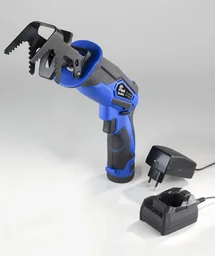
However, if you work more regularly and take on more demanding tasks, it is worth considering 18V systems. The
delivers the power of an 18V battery system. It is suitable for professional applications. It is particularly practical if you already have compatible batteries.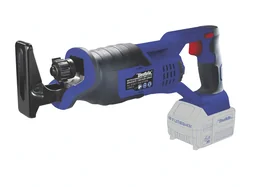

A model such as the
with 14,4V offers a good middle ground. It delivers more power than a 12V model while often remaining easier to handle than some 18V versions. There is a wide range of tools, so you should set your personal priorities.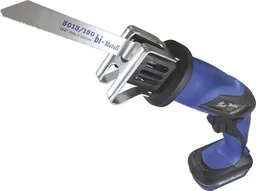
Note: The availability of the battery and charger may vary. Some offers include both, while others do not. Check the product details carefully so that you can get started straight away after purchase.
Care and maintenance
To ensure your cordless reciprocating saw continues to work reliably for a long time, it requires little but regular care. Remove dust and dirt from the tool after every use. Use a dry or slightly damp cloth for this.
The blade holder is particularly important. Keep it clean so that blades can be changed easily. Store the tool in a dry place. Charge the batteries according to the manufacturer's instructions and avoid deep discharge.
Safety when working
Safety comes first when working with a reciprocating saw. Always wear safety goggles to protect your eyes from flying chips. Work gloves protect your hands and improve your grip.
Hearing protection is advisable during prolonged use. Make sure you have a stable stance and hold the tool with both hands. Ensure that the material being cut is securely fixed in place. Never work with a blunt or damaged saw blade.
Conclusion
Choosing the right cordless reciprocating saw depends largely on the projects you have planned. For light, occasional tasks, compact 12V models are an excellent choice. They are affordable to buy and easy to handle.
For more demanding and frequent use, we recommend stepping up to an 18V model. The higher power and cutting performance quickly pay off. Before buying, be sure to check whether the battery and charger are included or whether you need to purchase them separately. With the right buying criteria in mind, you are sure to find the right model for your workshop.
Frequently Asked Questions
- What jobs is a cordless reciprocating saw suitable for?
- A cordless reciprocating saw is an extremely versatile tool. It is ideal for pruning branches, light tree felling, cutting construction timber to size, cutting through metal pipes or removing old roots. Its strengths are its ease of handling and cordless freedom.
- Which voltage (12V or 18V) is right for me?
- The choice depends on how you plan to use it. 12V models are lighter and easier to handle, making them ideal for occasional, lighter jobs in the garden or around the home. 18V reciprocating saws offer significantly more power and cutting performance for regular, demanding projects such as cutting through thick timber or renovation work.
- Do I need to buy the battery and charger separately?
- That depends on the offer. Many reciprocating saws are sold as a "bare tool", particularly in the professional segment. This makes sense if you already own batteries and a charger from a compatible manufacturer. Starter kits including a battery and charger are also available.
- How important are the impact rate and stroke rate?
- The stroke rate (SPM) determines cutting speed in soft materials such as wood. The impact rate (BPM), on the other hand, is crucial for hard materials such as metal. A tool with a variable impact mechanism and adjustable stroke rate gives you the greatest flexibility for different materials.
- Can I use any saw blade?
- No, you need to make sure you use the correct blade fitting, usually SDS or a universal fitting. The blade itself (length, tooth pattern and material) should be selected according to the material being cut. Special blades are available for wood, metal and plastic.