
In brief: The quality of your trimmer blades affects the health of your lawn. High-quality original blades cut grass cleanly instead of shredding it. This helps prevent ragged, yellow tips and reduces the risk of disease. Properly fitting blades also help your cordless trimmer run safely with less vibration and protect its motor.
Table of contents
Introduction: The unsung hero of perfect edges
A well-maintained garden is all about the details. A neatly trimmed lawn edge is the finishing touch to any green space. It separates the lawn from a flower bed, path, or patio and gives the whole garden a clear structure. Yet the key to that perfect finish is often overlooked: the blade on your cordless trimmer. A dull or low-quality blade tears grass instead of cutting it cleanly. The result is ragged, unattractive grass that quickly turns yellow and becomes more susceptible to disease. Cut quality matters for both the look and health of your lawn.
Choose clean cuts and a long service life for your tool. With the right replacement blades, your cordless trimmer works efficiently and safely, delivering reliable results. Investing in quality pays off every time you work in the garden.
For precise results and peak performance from your Westfalia cordless trimmer, we recommend the matching original replacement blades. They ensure compatibility and a clean, consistent cut. The set : Straight replacement blades for cordless trimmer Art. 984031, 10 pcs. keeps sharp blades on hand, so you can avoid interruptions and keep your lawn in great shape all year.
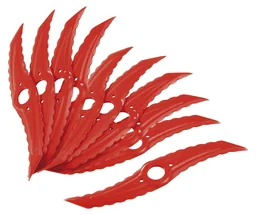
How can you recognize high-quality trimmer blades?
At first glance, many plastic blades look alike. The differences are in the details, and they can have a major impact on performance, safety, and the life of your trimmer. Look for these signs of quality.
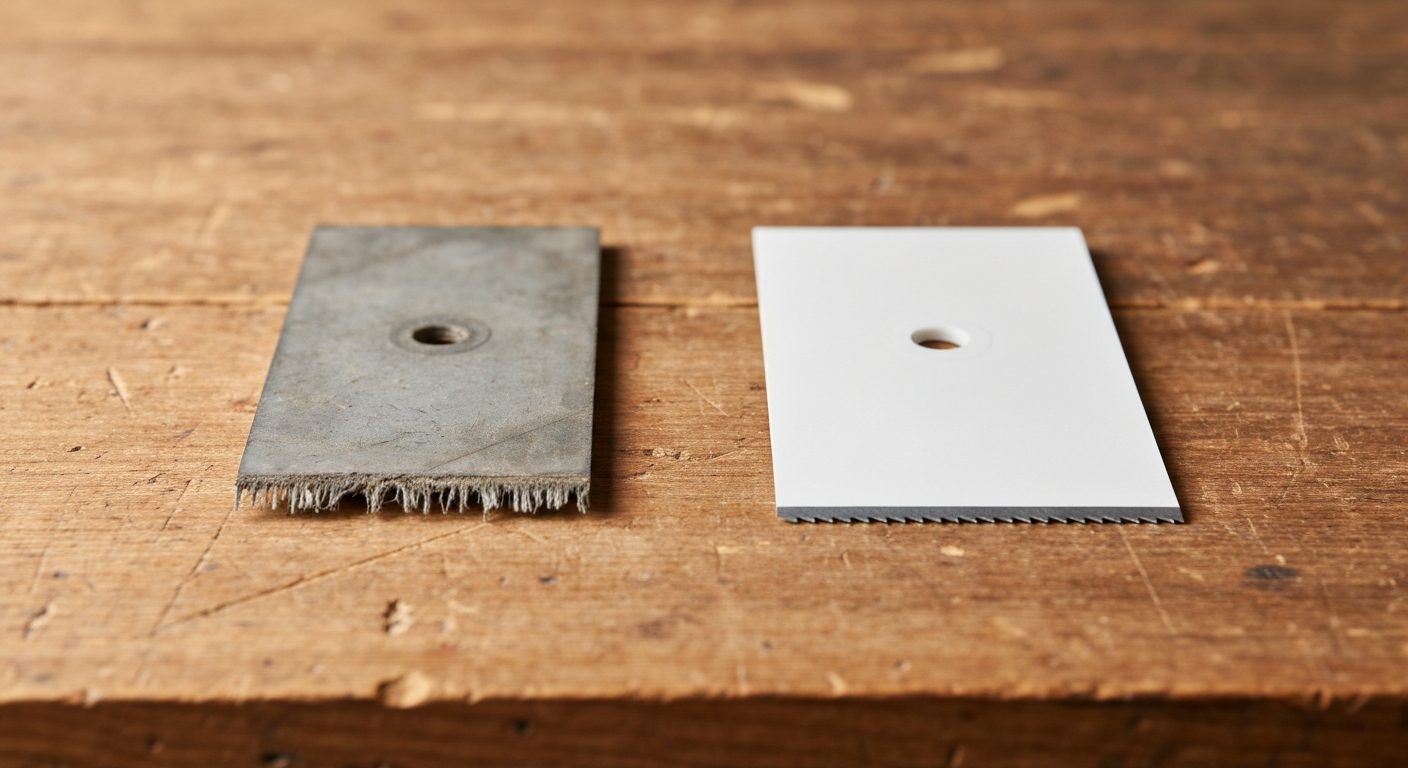
Material and workmanship
Good straight cordless trimmer blades aren't made from just any plastic. High-quality blades are made from impact- and abrasion-resistant plastic, often glass-fiber-reinforced polyamide. This material withstands strong centrifugal forces and contact with grass without breaking or wearing out too quickly. Precise manufacturing, without burrs or uneven spots, helps ensure efficient airflow and smooth operation.
Sharpness and cutting geometry
A sharp cutting edge makes a clean, smooth cut. A dull edge knocks the grass over and crushes its cells. This creates a larger wound, leaving the grass more vulnerable to drying out and disease. The blade's angle and shape are precisely matched to the trimmer's speed for efficient cutting with minimal energy use.
A clean cut is like a minor operation for a blade of grass. A sharp blade leaves a cut surface that heals quickly. A dull blade tears a ragged wound that needlessly deprives the lawn of water and nutrients.
Perfect fit and safety
This crucial point is often underestimated. High-quality replacement blades in the original design fit precisely into the trimmer head's holder, without wobbling or shifting. A poor fit throws the blades off balance, causing strong vibrations that are uncomfortable and put extra strain on your cordless trimmer's bearings and motor. In the worst case, a poorly fitted blade can come loose at full speed, creating a serious safety risk.
Why are original replacement blades the best choice?
Cheaper generic products can be tempting, but they're rarely the better choice over time. A cordless trimmer is a carefully balanced system in which the motor, battery, and cutting tool need to work together. Original trimmer blades are designed as part of that system.
Manufacturers such as Westfalia develop their tools and accessories together. The blades' weight, shape, and material are carefully matched to the motor's output and ideal speed. This helps your tool deliver its full performance and get the most from each battery charge. Third-party products can throw off this balance, reducing performance and increasing wear. Your entire range of tools benefits from compatible accessories.
Additional advice
Store replacement blades in a dry, dark place. UV rays and extreme temperatures can make the plastic brittle over time and shorten its service life. A small, labeled box in your tool cabinet is ideal.
With Westfalia trimmer blades, you can be confident you're choosing the right fit. Guaranteed compatibility saves you the hassle of finding the right model and helps protect your tool from damage. Using unapproved accessories may also void your cordless trimmer's warranty. Original parts are an investment in the reliability and long life of your garden tool.
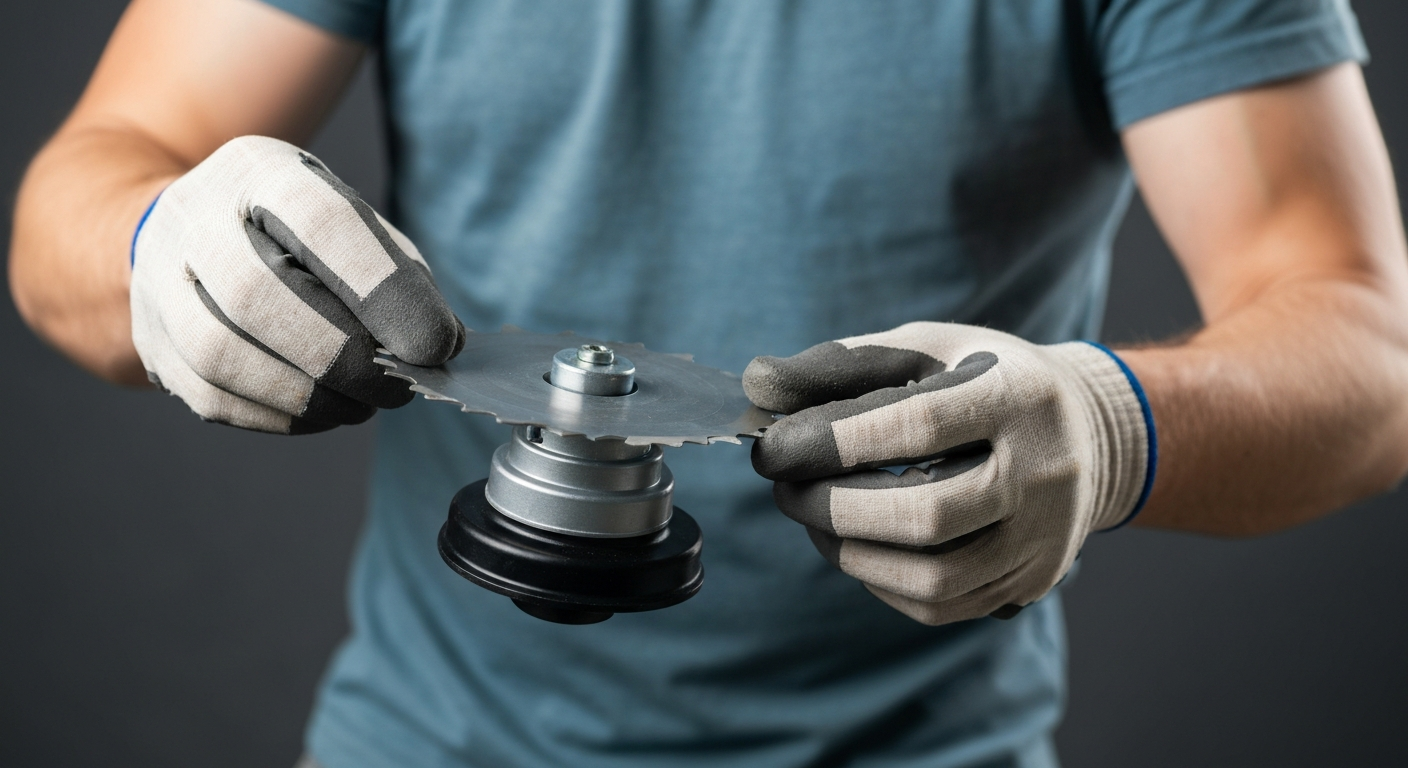
How do you change the blades on your cordless trimmer?
Changing the blades is straightforward and takes just a few minutes. Safety comes first. Follow these simple steps to replace your blades quickly and safely.
Important note
Always remove the battery before doing any maintenance or cleaning on the trimmer head. This prevents the motor from starting accidentally and helps avoid serious injuries.
- Prepare the trimmer: Place it on a stable surface. Wear work gloves to protect your hands from sharp edges and dirt.
- Clean the trimmer head: Remove grass clippings, soil, and other dirt from the trimmer head. This gives you a clear view of the blade holder and helps the new blade lock into place correctly.
- Remove the old blade: The removal method varies by model. In most cases, you can release the blade from its holder by squeezing the retaining tabs or turning it slightly. Don't force it.
- Insert the new blade: Take a new original blade out of the package and insert it into the designated holder. You'll usually hear a clear click when the blade locks securely into place.
- Check the fit: Gently pull on the new blade to make sure it's seated firmly and securely. It shouldn't shift or wobble.
- Finish: Repeat the process for all blades on the trimmer head. Then reinsert the battery, and your trimmer is ready to use.
The most common mistakes and how to avoid them
Even the best trimmer blades will wear out if they are used incorrectly. Avoiding a few common mistakes will significantly extend the life of your blades and help you work more efficiently.
- Contact with hard objects: The most common cause of premature wear is contact with walls, fences, curbs, or garden ornaments. Every hard impact damages the cutting edge and can cause cracks in the material. Always keep a small safety distance when trimming.
- Unsuitable material: Plastic blades are designed for grass and soft-stemmed weeds. Avoid using them on woody shoots, thick branches, or brambles. This overloads both the blades and the motor.
- Using them for too long: Many users wait too long before changing the blades. A dull blade not only reduces cutting quality, it also increases power consumption because the motor has to work harder. Replace the blades at the first signs of wear.
- Incorrect storage: Do not leave the trimmer outdoors permanently. Moisture and UV radiation can damage not only the device but also the plastic blades.
Think of your trimmer blades as precision instruments. Every nick caused by a stone or wall is like a chip in a good kitchen knife. It affects performance and requires more power to achieve a clean result.
Extend service life: blade care tips
With a little care, you can significantly extend the service life of your trimmer blades and achieve consistently good results. Incorporate these simple steps into your gardening routine.
Clean the trimmer head and blades after every use. Dried-on grass sap and soil can affect the balance and become difficult to remove later. A brush and a damp cloth are all you need. This is an important part of caring for your entire range of scrapers + knives and cutting tools.
Inspect the blades for cracks, nicks, or heavy wear before every use. A damaged blade should be replaced immediately, as it could break and be ejected uncontrollably. Keeping replacement blades in stock, such as the 10-pack, is invaluable. This makes changing them quick and allows you to continue working safely. A well-stocked range of operating supplies is the foundation for efficient work.
Pro tip
Some trimmers allow you to turn the blades over. If one cutting edge is dull, you can remove the blade, turn it 180 degrees, and reinstall it. This lets you use both sides and effectively doubles the service life of each blade before it needs replacing.
The key to a well-maintained garden over the long term is consistently using high-quality materials and caring for them properly. Your lawn edges will reward you with lush green growth and a neat appearance. Trust Westfalia original quality to get the most out of your cordless trimmer.
Frequently asked questions
- How often should I change the blades on my cordless trimmer?
- Change the blades as soon as you notice reduced cutting performance or frayed grass blades. It is difficult to give a general recommendation, as service life depends heavily on usage and contact with hard objects such as stones or walls. Check the blades before every use.
- Are these Westfalia replacement blades compatible with trimmers from other brands?
- No, original replacement blades are specially designed for the specified models. Using them on devices from other manufacturers is not recommended, as fit and safety cannot be guaranteed. This could damage the device or create a risk of injury.
- Can I sharpen dull plastic blades?
- Sharpening plastic blades is not recommended. Removing material would affect the balance of the blade, causing strong vibrations and overloading the motor. Always replace dull or damaged blades with new original blades.
- What are the advantages of plastic blades over trimmer line?
- Plastic blades often provide better cutting performance in thicker grass and weeds. They are more robust and wear more slowly than trimmer line. In addition, replacing individual blades is usually easier and quicker than winding a new spool of line.
- Why should I use original blades instead of cheaper alternatives?
- Original blades guarantee a perfect fit, optimum cutting performance, and maximum safety. They are precisely matched to your trimmer's power and speed. Cheap alternatives can damage the motor, reduce battery life, and pose a safety risk.
You might also be interested in
- Changing cordless trimmer blades: an easy guide to a perfect cut
- Curved trimmer blades: the hidden advantage for your lawn
- Neat garden edges: trimming tips with the right blades
- Buy replacement blades: the guide to sharp cuts
- Changing the battery: new power for grass and shrub shears
- 4-in-1 cordless shears: precise edges, neat shrubs