
In brief: Growing cranberries in your own garden is straightforward if you pay attention to the most important factor: acidic soil. The plants need a sunny location and a specially prepared bog bed with a pH value between 4,0 and 5,0. With the right care, you can harvest healthy red berries straight from your garden bed.
Bright red berries that are not only delicious at festive times but also packed with healthy nutrients. Cranberries, also known as large-fruited cranberries, can be grown directly in your garden with the right knowledge. Producing your own harvest is easier than many people think. You do not need a huge swamp, just the right soil preparation and a little patience.
What exactly are cranberries?
The cranberry (Vaccinium macrocarpon) belongs to the heath family. This makes it closely related to blueberries and lingonberries. It originally comes from the raised bogs of North America, which already provides the most important clue about its needs: it thrives in acidic soil.
The plant itself is an evergreen, trailing dwarf shrub. It produces long, slender stems that grow across the ground and form a dense mat. For this reason, it is ideally suited as a robust and attractive ground cover. Delicate pink flowers appear in early summer, developing into the familiar ruby-red fruits by autumn.
Why grow cranberries in your own garden?
There are many reasons to grow cranberries. The fruit itself is naturally the main one. It is rich in vitamin C and antioxidants and can be used in many ways in the kitchen. Whether as a classic sauce with game dishes, as juice, dried in muesli or fresh in cakes, your creativity is the only limit.
But the cranberry also makes an attractive ornamental plant. Its dense, evergreen foliage reliably covers the ground and suppresses weeds. The pink flowers in June and the bright red berries in autumn add attractive splashes of color to the garden. Once established, the plant is also very easy to care for and robust.
Harvesting cranberries is a moment of pure gardening joy. These small, red jewels are proof that patience and proper care pay off. Every single berry is a little powerhouse of flavor and health.
How do you choose the right location for cranberries?
Success when growing cranberries depends largely on the location. Two factors are crucial: sufficient sunlight and the right soil. Take your time choosing and preparing the site, as this lays the foundation for a plentiful harvest for many years.
Sunlight and light requirements
Cranberries need plenty of light to produce lots of flowers and fruit. Choose a full-sun location in your garden. Although the plants also tolerate partial shade, the yield is significantly lower there. The more sun the berries receive, the more intense their red color and flavor will be.
The soil: The key to successful cultivation
This is the most critical point. Cranberries cannot survive in ordinary garden soil. They need acidic, humus-rich and well-drained soil with a pH value between 4,0 and 5,0. Ordinary garden soil usually has a pH value between 6,0 and 7,5, making it far too alkaline.
To determine your soil's pH value, use simple test strips from a garden center. The result will show you whether you need to create a special bog bed. For cranberries, this is almost always the case.
Important note
Never plant cranberries directly in ordinary garden soil. In an alkaline environment, the plants cannot absorb iron, which leads to yellow leaves (chlorosis) and eventually causes them to die. Investing in a bog bed is essential.
Preparing the bog bed
A bog bed may sound complicated, but it is easy to create yourself. It provides an isolated zone with the perfect conditions for your cranberries.
- Dig out the area: Dig a pit about 30 to 40 cm deep. The size depends on how many plants you want to set. Allow about 30x30 cm of space per plant.
- Line the pit: Line the pit with pond liner. This prevents lime-rich water from the surrounding soil from entering and neutralizing the acidic pH value. Be sure to make several holes in the bottom of the liner so excess water can drain away and waterlogging does not occur.
- Fill with substrate: Fill the bed with a mixture of acidic rhododendron soil, sand and peat or a peat-free alternative. A good mix consists of about 60 % rhododendron soil and 40 % sand. This provides the necessary acidic pH value and good drainage.

How do you plant and care for cranberry plants properly?
Once the site has been carefully prepared, planting and subsequent care are straightforward. These robust plants need very little attention to thrive.
The best time to plant
The ideal time to plant cranberries is in spring, after the last frosts. This gives the plants the entire season to establish strong roots. Planting in early fall is also possible, as long as the plants are in the ground several weeks before the first hard frost.
Step-by-step planting instructions
Once you have chosen a variety, such as the proven
, planting is quick. Loosen the prepared bog bed and water the plant's root ball thoroughly.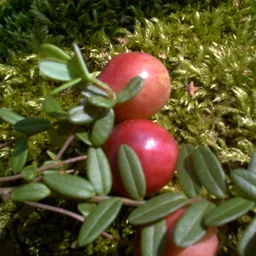
Plant the cranberry plants about 30 cm apart. The planting depth should match the height of the root ball. Firm the soil well around the plant and water generously. Over the following years, the plants will fill the gaps and form a dense carpet.
Creating a bog bed is not just a technical necessity, but an investment in the longevity and yield of your cranberry plants. A properly prepared bed imitates their natural habitat and is the key to healthy plants and a plentiful harvest.
Watering and fertilizing properly
Cranberries like consistently moist soil but do not tolerate waterlogging. Ideally, use rainwater for watering, as it contains little lime and does not affect the soil's acidic pH. Tap water is often too hard.
When fertilizing, less is more. A small application of rhododendron or azalea fertilizer in spring is sufficient. Too much nitrogen only encourages leaf growth at the expense of flowers and fruit. Find the right garden + plant accessories directly in our shop.
Pro tip
Cover the soil around your cranberry plants with a 3-5 cm thick layer of mulch made from bark mulch or pine needles. This helps retain moisture in the soil, suppresses weeds and helps maintain the acidic environment. This saves you watering and weeding work.
Pruning and care
Cranberries do not require heavy pruning. In spring, you can trim back shoots that have grown too long to encourage a bushier shape. Also remove any dead or damaged parts of the plant. A sharp, easy-to-handle tool such as the
is ideal for the job. Otherwise, the plant will naturally grow into a dense carpet.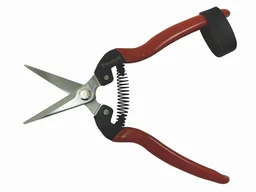
Harvesting and using your homegrown cranberries
The reward for your efforts is a harvest of bright red fruit in fall. Fresh from your own garden, they have an incomparable, intense flavor.
When are cranberries ripe?
Depending on the variety and weather, the harvest season begins at the end of September and can continue into November. You can recognize ripe cranberries by their deep, even red color. An old trick is the “bounce test”: a ripe berry is firm and bounces like a small rubber ball when dropped onto a hard surface.
How to harvest your cranberries
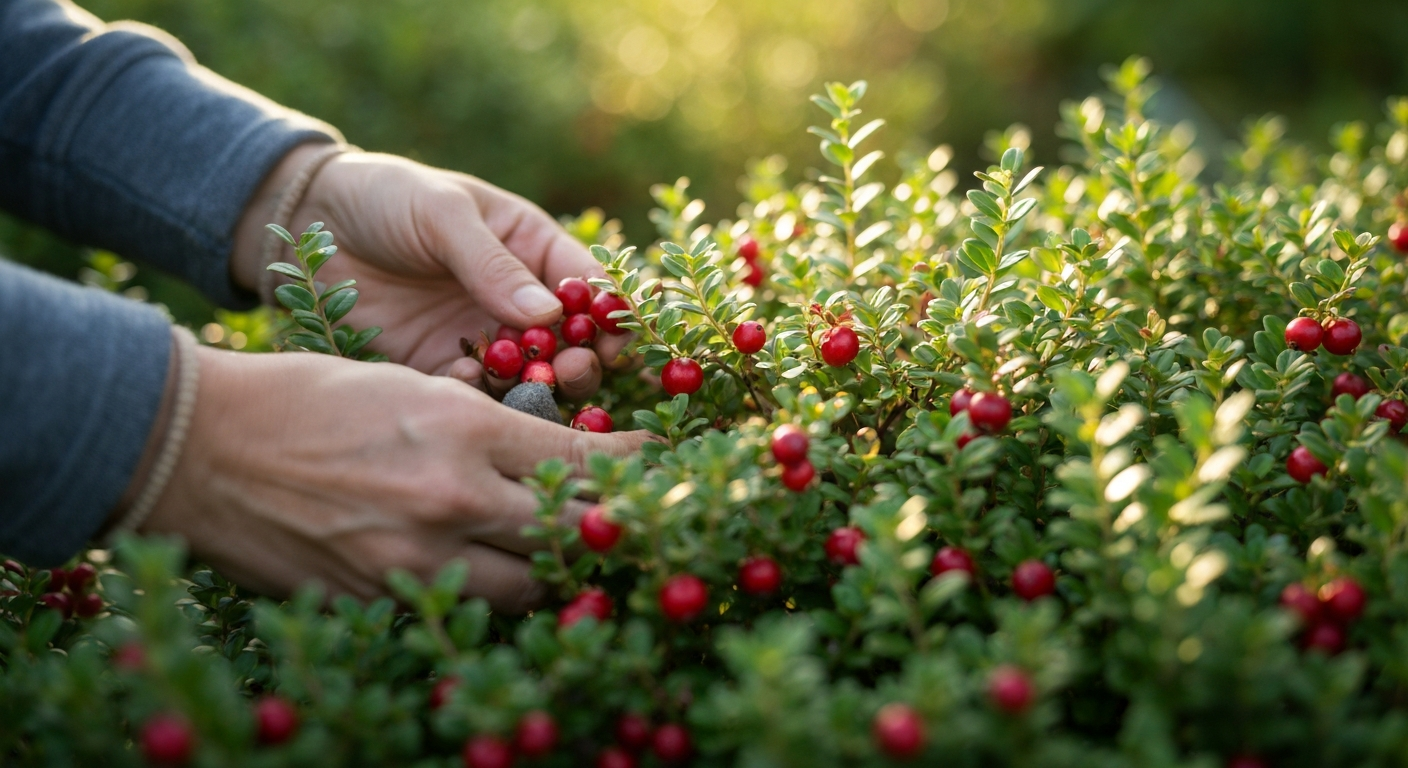
In a home garden, cranberries are harvested by hand. You can simply pick the berries from the shoots. Although this is a little tedious, it is the gentlest method for the plant. Be careful not to damage the long shoots. Harvesting on a dry day ensures that the fruit will keep well.
Storage and processing
Fresh cranberries will keep for several weeks in a paper bag or airtight container in the refrigerator. For longer storage, it is best to freeze the berries. Spread the washed and dried fruit on a tray and let it freeze briefly before transferring it to freezer bags. This prevents the berries from sticking together.
Additional advice
Process some of your harvest straight away into compote or sauce. Freshly cooked, cranberries develop their full tart, slightly sour flavor. A small jar makes a wonderful gift or the perfect accompaniment to many dishes during the colder months.
Common problems and pests
Cranberries are extremely robust plants and are rarely affected by diseases or pests in a home garden. The biggest problem is an unsuitable location, especially soil with a pH that is too high. Make sure there is good drainage to prevent root rot.
With the right preparation and care, growing cranberries is a rewarding experience. Add an unusual and healthy fruit to your Garden + Outdoor repertoire. With the right gardening tools, the work is easy.
Frequently asked questions
- Do cranberries really need acidic soil?
- Yes, this is the most important requirement. Cranberries only thrive in acidic soil with a pH value between 4.0 and 5.0. Ordinary garden soil is unsuitable and prevents the plant from absorbing nutrients, causing it to die. An acidic bog bed is therefore essential.
- Do I need to flood my cranberry bed like the professionals?
- No, that is a myth. Commercial flooding is only used to make harvesting easier, as the berries have air chambers and float. In a home garden, keep the soil consistently moist but well drained. Waterlogging can seriously damage the plant's roots.
- How quickly do cranberries grow, and when can I harvest them?
- Cranberries are ground-cover plants that spread via runners. In the first year, the plant becomes established. You can often expect a small harvest as early as the second year. A good harvest can be expected from the third or fourth year after planting, once a dense carpet has formed.
- Can I also grow cranberries in a container on my balcony?
- Yes, growing them in a container is a good alternative. Choose a wide, shallow container with a capacity of at least 30 litres and good drainage holes. Fill it exclusively with acidic ericaceous compost (rhododendron compost). This allows you to control the soil conditions perfectly.
- Are cranberries hardy?
- Yes, cranberry plants are highly frost-tolerant and hardy down to around -20 °C. They do not need any special winter protection when planted in a bed. For container-grown plants, wrap the pot in jute or fleece to prevent the root ball from freezing through.
You may also be interested in
- Growing strawberries: From sowing to a sweet harvest
- Growing melons in the garden: Sweet fruit from your own harvest
- Planting redcurrants: Location, varieties & care tips
- Preserving berries: Make your sweet harvest last
- Planting blueberries: These neighbours are off-limits
- Growing herbs: Your guide to creating your own herb garden