
In brief: Minor damage such as scratches, cracks or holes in uPVC windows can often be repaired yourself at low cost. Replacement is usually only necessary in cases of broken glass, warped frames or serious structural damage. Repairing your windows saves money and significantly extends their service life.
uPVC windows are robust, easy to maintain and weather-resistant. However, they are not immune to damage. A careless moment while gardening, an attempted break-in or simply the passage of time can leave its mark. Deep scratches, cracks or even holes in the frame quickly raise the question: do you need an expensive new window, or can it be repaired? The answer is often encouraging: with the right tools and a little skill, you can fix many types of damage yourself.
Before contacting a window installer, inspect the damage carefully. In most cases, repair is not only possible but also the much more economical and sustainable solution. You save money, avoid major building work and preserve the appearance of your windows.
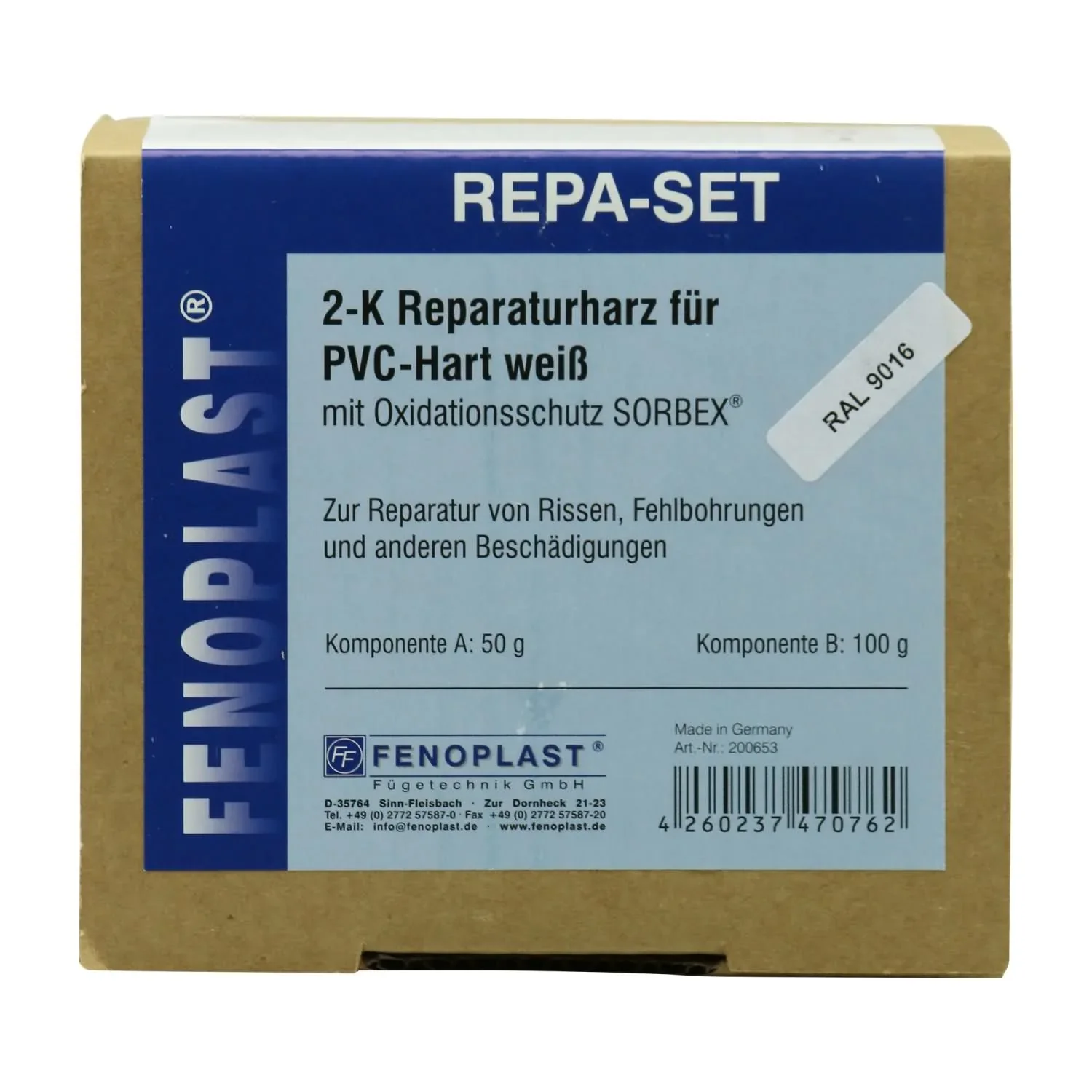
There is a professional DIY solution for deep scratches, cracks and drill holes in PVC frames. With the : FENOPLAST Repair SET RAL 9016 you can permanently fill damage with an almost invisible finish. The set contains a two-component repair resin that becomes extremely durable after curing and can be worked like the original plastic. This restores the stability and appearance of your window frame.
How can you tell whether damage to uPVC windows can be repaired?
A careful assessment of the damage is the first step. Not every blemish requires extensive repair, and not every type of damage can be fixed. Learn how to assess the type and depth of the damage correctly.
Surface scratches and scuffs
Light, surface-level scratches only affect the appearance. They are often caused by unsuitable cleaning products or minor knocks. These fine lines do not penetrate deeply into the material and can usually be removed with specialist PVC polish or a care kit from a specialist supplier.
Deep scratches and cracks in the window frame
Deep scratches and cracks are considerably more problematic. They penetrate the uPVC's top protective layer and can allow moisture to get in. This type of damage is caused by sharp objects or mechanical stress. Filling the damage with a specialist resin is the method of choice for restoring the frame's protective function.
Every crack in a window frame is a potential entry point for moisture. If it is not sealed, it can cause frost damage in winter and weaken the entire structure.
Holes and chips
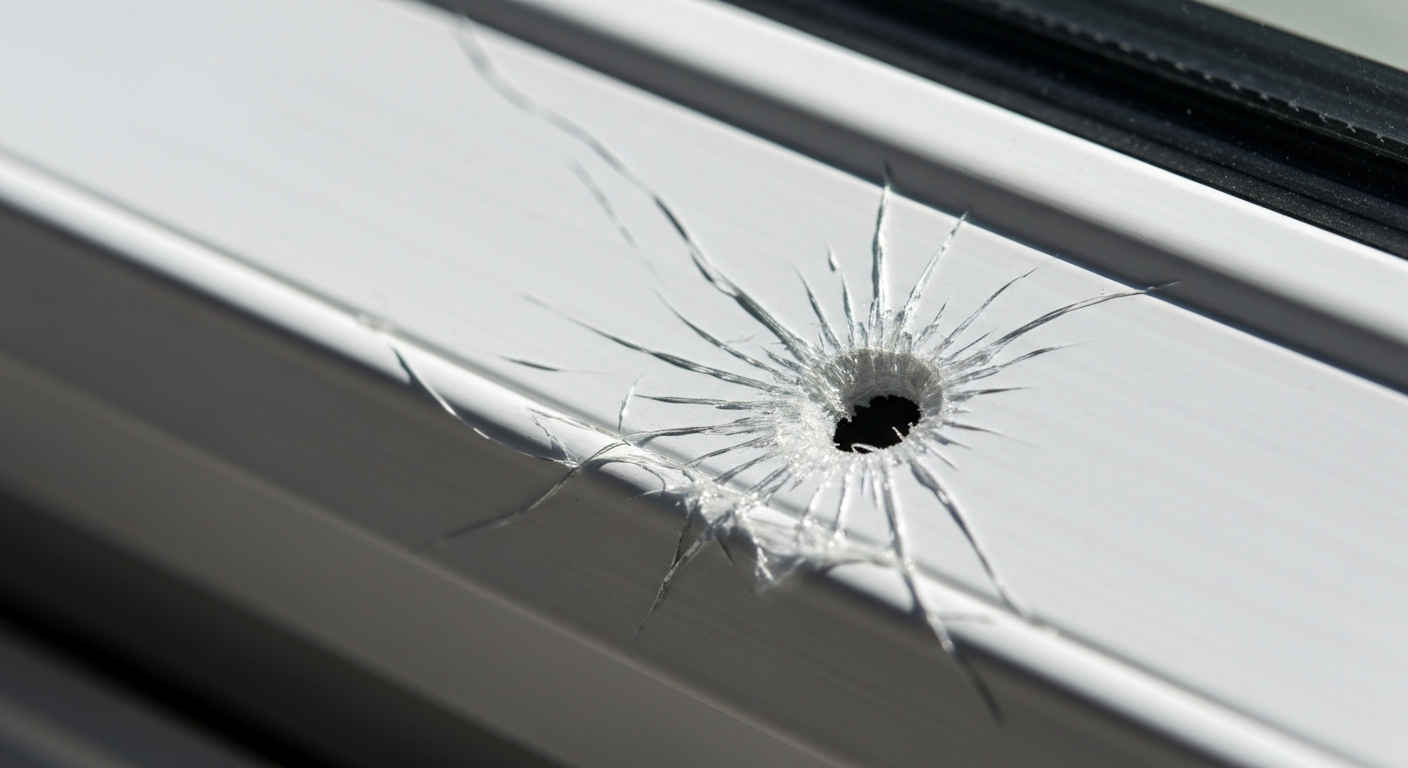
Holes left by old screws, chips caused by a heavy impact or damage from an attempted break-in can look dramatic. However, as long as the frame's basic structure remains intact, these defects can also be repaired. The : FENOPLAST Repair SET is ideal for permanently closing these gaps and ensuring stability.
Yellowing and discolouration
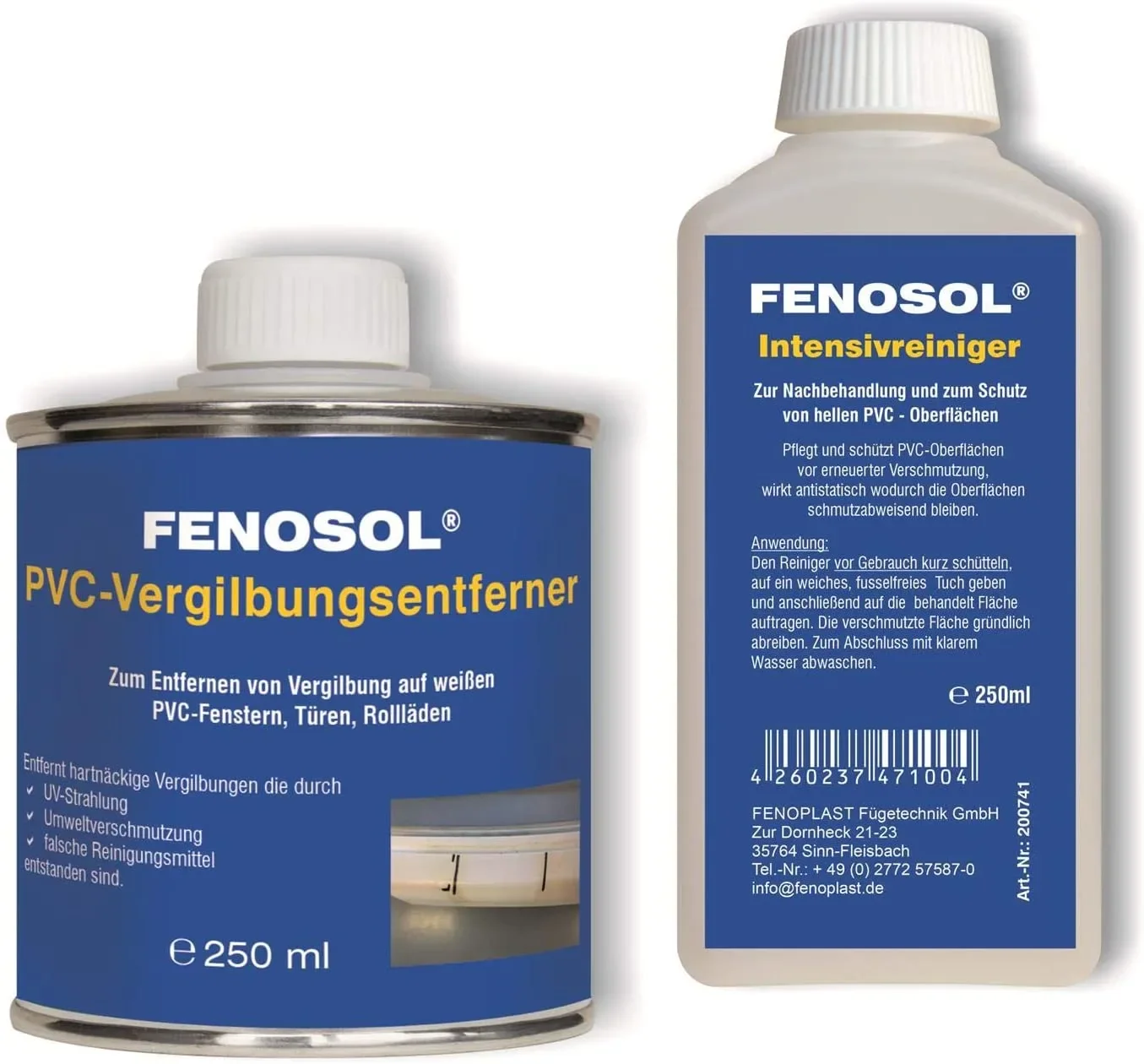
Over the years, white uPVC windows can turn yellow due to UV radiation or develop a grey film. This is purely a cosmetic issue and does not affect their function. Before considering replacement, try giving them a thorough clean. With the : FENOPLAST Fenosol PVC yellowing remover set you can target discolouration and restore the plastic to its original colour.
Pro tip
Before starting any repair, clean the damaged area thoroughly with a degreasing cleaner and a lint-free cloth. Dust, grease and silicone residue prevent the repair material from adhering properly and lead to a poor finish.
How do you repair scratches and cracks in uPVC windows step by step?
Repairing damage with a 2-part repair kit is straightforward. With the right preparation and careful application, you can achieve a result that looks as good as new. Follow the instructions below.
Step 1: Preparing the surface
A clean, sound base is essential. Remove loose particles from the crack or hole using a small screwdriver or brush. Thoroughly degrease the area. Then lightly sand the edges of the damaged area with fine-grit sandpaper. This roughens the surface and ensures better adhesion for the resin.
Step 2: Mixing the 2-part repair resin
The repair kit consists of two components: resin and hardener. Mix both components exactly as instructed by the manufacturer on a clean, non-absorbent surface (e.g. a piece of cardboard). Combine them quickly and thoroughly until you have a homogeneous mixture.
Important note
The chemical reaction begins as soon as the components are mixed. You only have a limited working time of a few minutes (known as the pot life) to apply the resin. Always mix only as much material as you need immediately.
Step 3: Applying and filling the damaged area
Apply the mixed compound to the damaged area using the spatula provided. Press the resin firmly into the crack or hole to prevent air pockets. Slightly overfill the area. The excess material will be sanded down later to create a perfectly level surface.
Step 4: Curing and sanding
Allow the repair resin to cure completely. Refer to the product instructions for the exact curing time; this depends on the ambient temperature. Once the material is rock-hard, start sanding. First use medium-grit sandpaper to remove the excess material. Then work your way up to a finer grit until the repaired area is flush with the surface of the frame.
Patience when sanding pays off. Gentle, even pressure and gradually moving to finer sandpaper are the keys to a surface that will be neither visible nor noticeable to the touch.
Step 5: Final sanding and painting
After the final sanding, clean the area again to remove sanding dust. Many repair kits include a paint pen in a matching colour (e.g. RAL 9016 Traffic White) to blend the repaired area in perfectly. Apply the paint thinly and allow it to dry. The result is a durable, barely visible repair.
When is replacing the window unavoidable?
Despite the excellent repair options available, there are some types of damage where replacement is the only sensible solution. Repairing the frame is of no use if other essential window components are defective.
Damage to the glazing
A crack in the pane or completely shattered glass cannot be repaired. The glazing unit must be replaced. Condensation between the panes of an insulated glazing unit is a particularly clear sign that replacement is necessary. This means the seal has failed and the insulating gas has escaped. The window has lost its insulating properties.
Warped window frame
Does your window no longer close properly, stick or let draughts in at the sides? The frame may be warped. Major temperature fluctuations or settlement in the masonry can cause this. A professional can often readjust the hardware, but severe warping can only be resolved by completely replacing the window to restore its airtightness and security.
Severe structural damage
If the frame is broken at a load-bearing corner or has been severely damaged during an attempted break-in, the stability of the entire window is at risk. Such serious structural damage can no longer be repaired reliably. Replacement is essential for safety reasons.
Additional advice
For major damage, for example caused by a storm, hail or a break-in, check your insurance cover. Contents or buildings insurance will often cover the cost of repairing or replacing the window.
Outdated technology and poor energy efficiency
Sometimes it is not a single defect but the overall condition of the window that makes replacement necessary. Windows with single glazing or old double glazing no longer meet today's energy-efficiency standards. A modern window with triple glazing and an insulated frame can noticeably reduce your heating bills and improve living comfort. The investment pays for itself over the years.
Prevention and care: How to keep your uPVC windows looking good for longer
The best repair is the one you never need. With regular care and a little caution, you can significantly extend the service life of your uPVC windows and actively prevent damage.
Regular cleaning
Clean your window frames at least twice a year. Use lukewarm water with a mild, non-abrasive cleaning product and a soft cloth. Aggressive cleaners, scouring cream or hard sponges can scratch and permanently damage the PVC surface. You can find suitable cleaning and care products in our business supplies section.
Proper care for seals and hardware
A window's performance depends heavily on intact seals and smoothly operating hardware. Treat the rubber seals once a year with a specialist care product to keep them supple and prevent cracks. A drop of oil on the moving parts of the hardware ensures that the window can be opened and closed effortlessly. The : FENOPLAST Fenosol Pflege-Set PVC-Hart-weiß MAXI offers a complete solution for maintaining frames, seals and hardware.

Protection against mechanical damage
Carefulness is the best protection. Take care when working with tools near the window in the Garden + Outdoor area. A slipping grass trimmer or hedge trimmer can quickly cause deep scratches. You should also carefully mask off window frames during renovation work in the house. Working with high-quality power tools gives you greater control and helps prevent accidents that could cause damage.
In summary, damage to a uPVC window does not necessarily mean the end of its service life. Many common problems, such as scratches, cracks and holes, can be repaired yourself with the right repair kit. Repairing the window is a quick, cost-effective and sustainable alternative to replacement. Complete replacement only becomes unavoidable in the case of severe structural defects or outdated, energy-inefficient windows.
Frequently Asked Questions
- Can I make a deep scratch in a white uPVC window invisible?
- Yes, you can fill deep scratches with a two-part repair resin such as the FENOPLAST Set. After the repair has cured and been carefully sanded, the repaired area is barely noticeable. However, matching the exact colour of aged PVC can be challenging.
- What can I do about yellowing on a window frame?
- Yellowing is caused by UV radiation. Use special PVC cleaners or a yellowing removal kit. These products brighten the plastic and remove the grey haze without damaging the material. Regular care helps prevent yellowing from returning.
- Is it worth repairing a window that no longer closes properly?
- If the frame is only slightly warped, a professional can often readjust the hardware. However, if the frame is severely deformed, repair is usually not worthwhile. In this case, replacement provides better sealing and energy efficiency.
- How do I repair a small hole in a plastic window frame?
- A small hole, for example from an old screw, is an ideal application for a 2-part resin repair kit. Clean the hole, fill it with the mixed compound, allow it to cure and sand the surface smooth.
- There is condensation between my window panes. Can I repair it?
- No, condensation between the panes indicates a failed seal in the insulating glass unit. Its insulating performance has been lost. The only solution is to replace the complete glazing unit. If the frame is still intact, it can usually be retained.
- How to repair uPVC windows: Guide to the FENOPLAST Set
- How to care for uPVC windows: Extend their service life
- Buying uPVC windows: Tips for making the right choice
- Scratches, holes and dents: When a laminate repair kit is worthwhile
- How to care for vinyl flooring and PVC after repair: Top tips
- How to maintain and repair roller shutters: A guide to extending their service life