
In brief: You can build an effective privacy screen with planter boxes by choosing sturdy boxes, securing them safely and filling them with climbing or tall-growing plants. The boxes can be mounted on the balcony railing or stacked on a frame you build yourself. Adequate watering and choosing plants that reach the required height are essential for the desired level of privacy.
Build a DIY Privacy Screen with Planter Boxes
A DIY privacy screen made from planter boxes creates privacy on your balcony or patio. It also gives you a vibrant green wall. This solution is flexible, affordable and easy to customise.
Why use planter boxes as a privacy screen?
Planter boxes offer several advantages over fixed privacy walls. They are mobile and can be repositioned at any time. The plants bring nature into a small space and improve the microclimate. Material costs are often lower too.
You can determine the height and density yourself. Choosing different plants allows the privacy screen to adapt to the seasons. Evergreen plants continue to provide good coverage in winter.
Expert tip
Plan for an irrigation system from the start. A simple drip irrigation system saves time and ensures consistent moisture, especially for boxes positioned higher up. You can find the necessary materials in our garden irrigation category.
Which planter boxes are suitable?
Choosing the right box is crucial for stability and plant growth. Select boxes with sufficient capacity. More soil stores more water and gives the roots room to grow.
Plastic boxes such as the
(100 cm) or (40 cm) are lightweight, weather-resistant and affordable. They are well suited to mounting on balcony railings. Choose sturdy models with integrated water reservoirs.
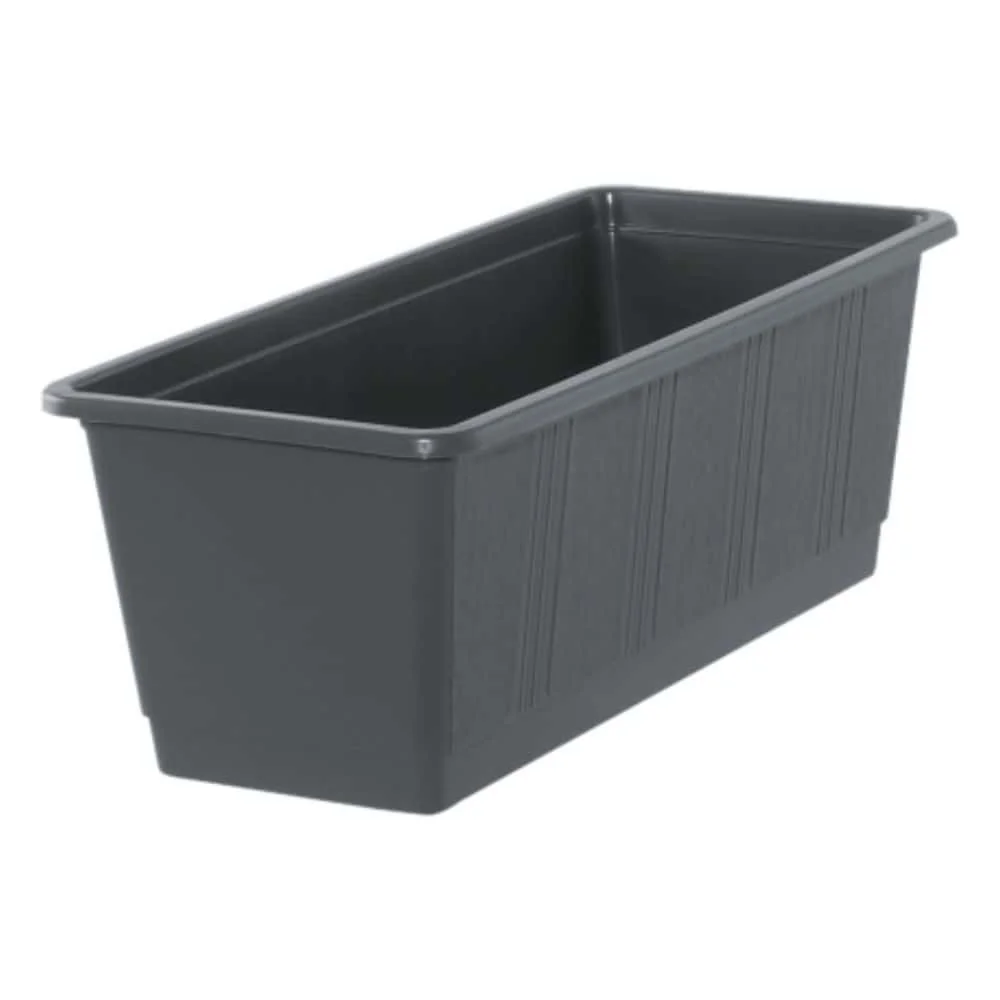
For a dense, tall privacy screen, combine several boxes. Long models such as the cover larger areas. Shorter boxes such as the offer more flexibility when designing your screen.
Materials compared
Plastic is lightweight and easy to care for. Terracotta is breathable but heavy and susceptible to frost. Wood has a natural look but requires regular maintenance. Metal boxes are modern and durable, but can become very hot in the sun.
The depth of the box is at least as important as its length. For most privacy-screen plants, 20 centimetres of soil depth is the absolute minimum; 30 to 40 centimetres is better.
How do I plan the structure?
First, measure the desired length and height of the privacy screen. Decide whether the boxes will stand on the balcony railing, hang from it or require a separate frame.
Sketch your idea. Take the weight of the filled boxes into account. Balcony railings can often support only a limited load. If in doubt, consult a structural engineer or use floor-standing solutions.
Make sure the boxes have enough drainage holes. Waterlogging damages the roots. A fleece layer on the bottom prevents soil from being washed out.
Important note
Check the maximum load of your balcony railing before mounting heavy, planted boxes. Never exceed the permitted weight. If you are unsure, place the boxes on a separate, floor-standing frame.
How do I secure the planter boxes?
Mounting on a balcony railing
For this method, you need sturdy balcony planter brackets. Secure them to the masonry using wall plugs and screws. Choose corrosion-resistant materials such as stainless steel or coated steel.
Position the brackets at even intervals. The box should rest securely and must not wobble. Particularly long boxes such as the require a bracket in the centre for additional support.
Building your own frame
You can build a simple shelving unit from wooden slats or metal profiles. It stands freely on the balcony floor or patio. The boxes are then placed in the shelves.
This solution is very stable and allows you to stack several boxes on top of one another for extra height. You can build the frame to your own dimensions. Use treated wood or hot-dip galvanised metal.
Our garden equipment range includes suitable basic materials and garden tools for the build.
A DIY frame made from Euro pallets is a quick and affordable solution. Stand the pallets upright and place the boxes in the openings. This immediately creates a green wall with depth.
Which plants should I choose for privacy?
Your choice of plants determines the overall effect. Climbing plants that grow quickly upwards and produce dense foliage are ideal. These include ivy, honeysuckle and the annual hyacinth bean.
For fast summer coverage, choose tall-growing annuals such as sunflowers, sweet peas or flowering tobacco. Perennial plants such as Chinese silver grass or bamboo in large containers offer a long-lasting solution.
Combine different plants. Place bushy varieties at the bottom and climbers at the top. This creates dense coverage from top to bottom. Explore our garden and plant accessories category.
Additional advice
Mix flowering and evergreen plants. This gives you an attractive privacy screen all year round. In autumn and winter, conifers in containers or ivy provide greenery while annual flowers lie dormant.
Plants for sunny and shady locations
Plants that tolerate full sun include black-eyed Susan, nasturtiums and Mediterranean herbs such as rosemary and lavender (which form bushy hedges).
Suitable plants for shade include busy Lizzies, begonias, hostas and especially ivy. Ivy is hardy, evergreen and grows reliably even in areas with little sunlight.
How do I plant and care for the boxes?
First, fill the boxes with a drainage layer of expanded clay or gravel. Place a water-permeable fleece over it. Then add high-quality, structurally stable potting soil.
Do not plant too densely. Give the plants room to grow. Water thoroughly after planting. During the first few weeks, the plants need plenty of water until they have rooted.
Fertilise regularly during the growing season. Liquid fertiliser in the irrigation water or slow-release fertiliser sticks provide nutrients. Our fertiliser range offers suitable products.
How do I combine planter boxes with other privacy screen elements?
Planter boxes are the perfect complement to fixed privacy screen elements. Mount the boxes in front of a half-height wall or trellis. The plants will climb up it and visually soften the hard structure.
Products such as the balcony privacy screen "Wall"
or "Wall Flowers" provide a sturdy base. Planter boxes placed in front of or on top of them increase privacy and add colour.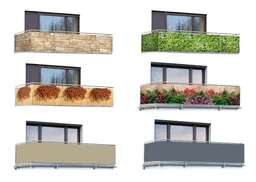
This combines the benefits of both: the stability of the fixed element and the vitality, fragrance and individuality of the plants. You can also green only parts of the area to create focal points.
How much does a DIY privacy screen made from planter boxes cost?
The cost includes the boxes, soil, plants, fixing materials and possibly a frame. Affordable plastic boxes such as the start at just a few euros.
For a privacy screen three metres long and one metre high, you can expect to need the following:
- 3 planter boxes, 100 cm each (e.g. )
- Balcony brackets or materials for a wooden frame
- Several bags of potting soil and drainage material
- 12-15 plants, depending on size
- Fertiliser and watering accessories
A budget of 80 to 200 euros is realistic. The investment pays off because you can replace the plants several times, while the boxes will last for many years.
A ready-made privacy screen such as costs around 14 euros per element. Combining it with planter boxes significantly increases its usefulness and appeal.
Conclusion: Create your own green privacy screen
A privacy screen made from planter boxes is a rewarding DIY project. You gain privacy while creating a vibrant, green atmosphere.
Start by planning your space. Choose suitable boxes such as the or and the right plants. Make sure they are securely fixed and have a reliable water supply.
The result is a unique focal point that transforms your balcony or patio into a private haven. Start your project now and browse our Garden + Outdoor and Garden and Plant Accessories categories.
Frequently Asked Questions
- Which plants are best for a privacy screen made from planter boxes?
- Choose climbing plants such as ivy, black-eyed Susan or runner beans. For fast, dense growth, tall grasses such as Chinese silver grass or bamboo in frost-resistant planters are also suitable. Combine different species for year-round appeal and greater stability.
- How can I safely attach heavy planter boxes to a balcony railing?
- Use sturdy metal brackets designed to support the weight of filled boxes. Secure them firmly to the masonry or balcony using suitable wall plugs. For wooden railings, use long screws and check the load-bearing capacity of the structure before installation.
- Can I use planter boxes as a privacy screen without drilling?
- Yes. Place the boxes on a sturdy homemade shelf or frame made from wood or metal. Alternatively, use heavy planters on the ground and arrange them as a green wall. Make sure they are stable, especially in windy conditions.
- How much does a DIY privacy screen made from planter boxes cost?
- Costs vary considerably. Simple plastic boxes such as PRODUCT_20980 or PRODUCT_26200 are inexpensive. You will also need soil, plants and possibly brackets. With 50-150 euros, you can create an effective, long-lasting privacy screen that costs less than many ready-made solutions.
- How do I water stacked planter boxes efficiently?
- Install an irrigation system. Simple drip irrigation with a central water connection or an irrigation pump saves time and water. Saucers in the boxes collect excess water. Our range of garden irrigation products offers suitable solutions.
You may also be interested in
- Build your own wooden privacy screen: Instructions and ideas
- Build your own raised bed: The complete guide
- Garden fences and privacy screens: Design, materials and construction
- More than just opaque: 5 creative ideas for your privacy screen netting
- Installing privacy screen netting: How to do it properly
- Build a raised bed with seating: Practical and beautiful in the garden