
In brief: The choice between a drill and a milling machine depends on the material and the desired shape. Drills create round holes with drill bits or hole saws. Milling machines, by contrast, use rotating tools to create complex contours, grooves or steps. For precise deep drilling in metal, a machine with continuously variable speed control and low speeds is ideal.
Drilling & Milling Machines: Precision for Your Project
The right machine determines the result. Whether you are drilling a hole for a screw or milling a precise recess, the requirements for speed, power and guidance are completely different. We explain the differences and show you which tool to use for each job.
The fundamental difference: Drilling vs. Milling
A drill is designed for one simple movement: it rotates a pointed or crown-shaped tool and drives it axially into the material. Its goal is a round hole. A milling machine works differently. Its rotating tool, the milling cutter, moves sideways through the material. It removes material to shape edges, cut grooves or mill pockets.
Imagine that you want to create a recess for a door hinge in wood. If you drill many holes next to one another and chisel out the remainder, the result will be imprecise. With a milling cutter and a stable guide, you can create a smooth, rectangular recess in a single pass. A milling machine is the tool for complex shapes and precise, dimensionally accurate work.
The biggest source of error when drilling is inaccurate marking of the starting point. A properly made centre-punch mark prevents the drill bit from wandering, especially on metal.
Which drill is right for each material?
Not every drill performs equally well on every material. The choice depends on hardness, thickness and the required hole size.
For wood and soft materials
A simple, powerful drill is often sufficient here. For large holes, such as cable pass-throughs, choose a hole saw. For thicknesses over 40mm, use a machine with a low speed and high torque to prevent jamming. Sharp tools are essential for clean holes without tear-out.
Pro tip
Drill into the wood from both sides to avoid ragged breakout edges. As soon as the tip of the drill bit becomes visible on the back, stop and finish the hole from the other side.
For metal and steel
Metal requires patience and precision. Use a drill with continuously variable speed control. For steel, the rule is: the harder the material, the lower the speed. An HSS drill bit must always be cooled with cutting oil. For precise, deep holes in metal profiles, a pillar drill or a combined drill and milling machine is essential. It prevents the drill bit from "wandering".
For large diameters in thin sheet metal, use step drill bits. They are more expensive than hole saws, but produce little vibration and create several hole sizes with one tool.
For masonry, concrete and stone
This is where an impact drill or rotary hammer comes into play. Its short hammer action breaks up the brittle material while the drill bit carries the dust out of the hole. For breakthroughs or drilling holes for wall plugs, the 2-speed impact drill
is a solid choice. Its second gear provides the necessary power at low speed.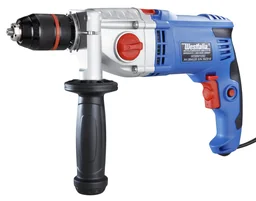
Use only carbide-tipped drill bits for stone. For core drilling in concrete, for example to route pipes, you need a diamond core bit and a water-cooled machine.
The milling machine: more than just precise holes
A milling machine opens up new possibilities for machining. It shapes, chamfers and creates precise fits. In model making, you can use it to produce precise housings; in furniture making, clean joints such as mortise-and-tenon joints.
Basic milling work for DIY users
With a simple router table and a hand-held router, you can already round over edges, cut grooves for glass panels or install veneers. For metalworking, you need a sturdy pillar or bench milling machine. It provides the necessary rigidity to withstand the forces involved in milling steel.
Important safety note
Always wear safety glasses when milling, and never wear gloves! Rotating tools can catch gloves and pull your hand into the machine. Always secure the workpiece firmly with clamps, never just hold it by hand.
Choosing the right milling cutter
The shape of the milling cutter determines the profile of your work. Straight-fluted end mills create flat pockets and edges. Rounding cutters form semicircular grooves or rounded edges. For milling aluminium or wood, you need cutters with large flute spaces to clear the chips produced. Blunt cutters cause burnt wood or smeared aluminium.
The speed must match the cutter diameter. A large cutter running at too high a speed will overheat immediately. As a rule of thumb: the smaller the cutter, the higher the permissible speed.
Specialist Tools for Specific Jobs
Not every job can be handled with a standard drill. Specialised solutions are available for installation and gardening work.
The Tapping Saddle: Tapping into a Pressurised Water Pipe
If you want to tap into an existing water pipe for a new outdoor tap or irrigation line without draining the entire system, the tapping saddle
is the tool of choice. This plastic saddle is clamped around the pipe. A special drill supplied with the saddle penetrates the pipe through a rubber seal and seals it tightly again at the same time.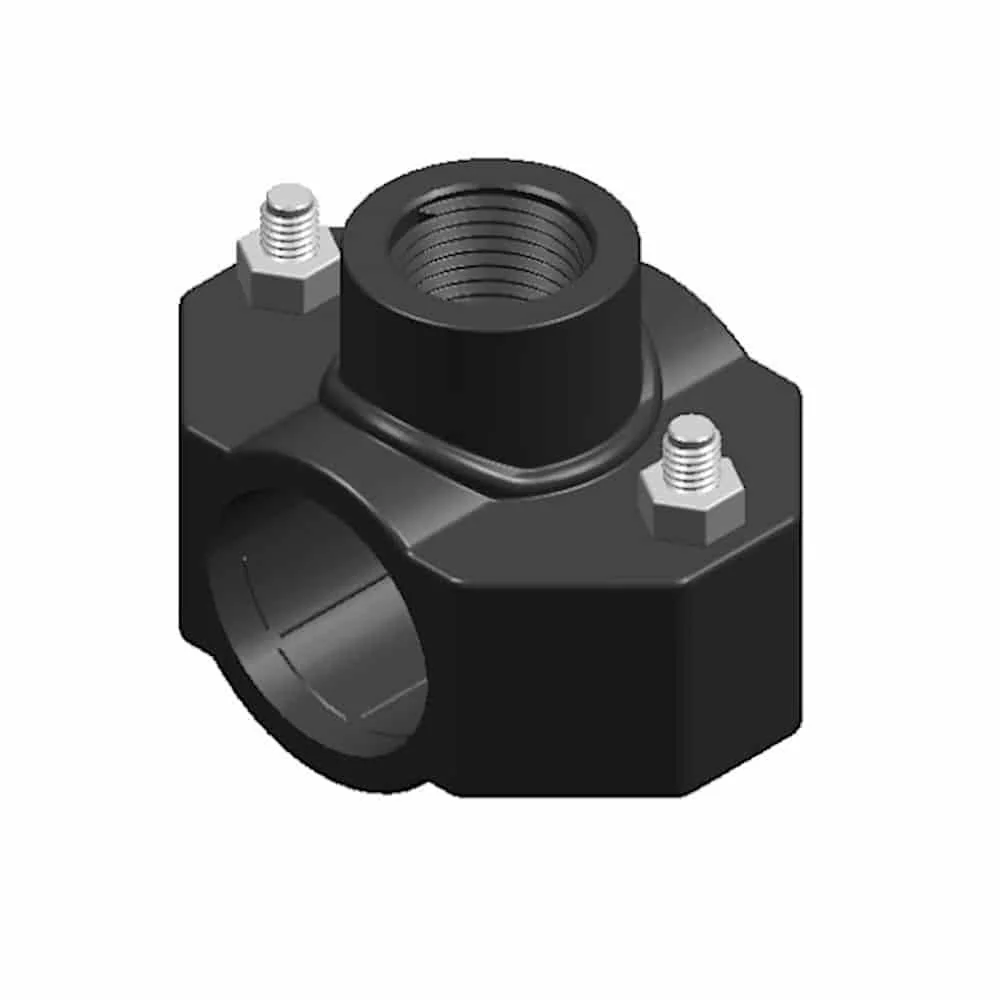
This job requires care but saves a great deal of time. Find more accessories for garden irrigation in our Plumbing + Irrigation category.
Additional advice
Always test the tapping saddle under pressure after fitting it, before finally burying it in the ground or covering it up. A small, controlled jet of water will immediately reveal any leaks.
Diamond Core Bit for Clean Large-Diameter Holes
For perfectly round, large-diameter holes in tiles, concrete or natural stone, the diamond core bit
is ideal. Unlike chiselling, it does not risk cracking the surrounding material. The core bit uses diamond-tipped cutting edges to cut a clean ring from the material.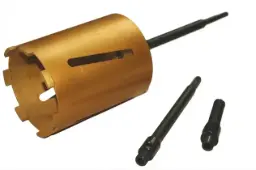
For this type of work, you need a powerful drill with a low speed setting and a side handle to control the torque. Always use water for cooling to protect the diamond segments and suppress dust.
Proper Care for Your Machines and Tools
A well-maintained tool works more accurately and lasts longer. After each use, clean drill bits and milling cutters to remove resin, plastic residue or aluminium chips. Store them in a dry place protected from knocks.
For cordless tools, pay attention to how you store the batteries. Modern lithium-ion batteries are best stored at around 50% charge in a cool room. Never leave them completely discharged for extended periods. For spare parts and workshop supplies, visit our Workshop Supplies category.
Regularly lubricate moving parts such as the keyless chuck with a light oil. Check the brushes on corded tools according to the manufacturer's instructions. A motor that produces heavy sparking at the commutator indicates worn brushes.
Workshop Organisation for Efficient Work
Keep your work area well lit and free of obstacles. A clean, tidy workspace prevents accidents and helps you work precisely. Store your drill bits and milling cutters in an organised manner in toolboxes or on magnetic strips.
For Garden + Outdoor projects, where you often work with different materials ranging from wood and metal to plastic, a mobile tool trolley is well worth considering. This keeps the right machine and tool close at hand at all times.
Conclusion: Precision Starts with the Right Choice
A drill is your all-rounder for making holes. A milling machine is your specialist for shaping. Invest in high-quality basic machines and then adapt them with the right accessories. The two-speed hammer drill meets many basic DIY requirements. The tapping saddle and diamond core bit provide elegant solutions to specific problems.
Think in terms of the individual steps: what does the finished result need to be? Then choose your machine and tool accordingly. Precision is no accident; it is the sum of the right tool, correct settings and focused execution.
Frequently Asked Questions
- What is the difference between drilling and milling?
- Drilling creates round holes using a spiral drill bit. Milling, on the other hand, is a machining process that removes material with rotating tools to create contours, grooves, pockets or flat surfaces. A milling machine can also drill, but a drill cannot mill.
- What type of drill do I need for metal?
- A variable-speed drill with a low speed and high torque is suitable for metal. Use HSS drill bits and sufficient cutting fluid. For precise results, a pillar drill or combined drill and milling machine is ideal because it prevents twisting.
- Can I use a regular drill for milling?
- No. A hand-held drill is unsuitable and dangerous for milling work. It cannot withstand the lateral forces generated during milling, which can result in tool breakage and injury. For milling work, you need a stable milling machine or a milling cutter mounted in a stationary machine.
- When do I need a hammer drill?
- You only need a hammer drill for drilling into masonry, concrete or natural stone. Its short-stroke hammer mechanism breaks up the brittle material. For wood, metal or tiles, always switch off the hammer action to protect the tool and material.
- What is a tapping saddle and what is it used for?
- A tapping saddle is a fitting made of plastic or metal. It allows you to drill into a pressurised water pipe or other pipe to create a branch without having to shut off the main line. A special drill penetrates the pipe through a seal.