
In brief: The e-mobility market in 2026 offers a wide range of solutions, from compact e-bikes to practical enclosed mobility scooters. The key is choosing according to your primary use, range requirements and comfort expectations. This comparison analyses the best available models in categories such as three-wheelers and enclosed mobility scooters to help you make an informed buying decision.
Electric mobility is evolving rapidly. In 2026, you can choose not only from e-bikes, but also practical mobility scooters and comfortable enclosed mobility scooters. These vehicles open up new ways to get around independently, particularly in urban areas or for people who value a relaxed, environmentally friendly ride. This test and comparison helps you keep track of the wide range of models.
We present the current top models in various categories and provide clear buying advice. This way, you are sure to find the electric vehicle that perfectly suits your needs.
Table of contents
What types of e-mobility are there?
The term e-mobility today covers much more than just the classic electric car. In the field of light electric mobility, three main categories have become established, each meeting different needs.
Electric bicycles (e-bikes and pedelecs)
E-bikes provide assistance when you pedal. They are ideal for sporting activities or longer commutes. The range extends from city bikes to mountain bikes. Our comprehensive e-mobility range also includes suitable models.
Three-wheeled mobility scooters
Thanks to their third wheel, these vehicles offer excellent stability, even when stationary. They are ideal for shopping trips, city rides or people who feel unsteady on two wheels. They often come with a luggage rack or basket.
Enclosed mobility scooters
These are the most comfortable variants. They offer a fully enclosed, weather-protected interior, often with heating. They feel like a very small car, but are considerably more manoeuvrable and cheaper to run.
Tip: Before you start looking, think carefully about what you primarily want to use the vehicle for. Is it the weekly shop, your daily commute or a leisurely ride in the countryside? This question immediately narrows down the right category.
These are the technical specifications to look out for
Technical specifications determine driving enjoyment and everyday practicality. Understand the key terms.
Speed and registration
The top design speed is decisive in determining whether you need a licence. Models up to 6 km/h do not require a driving licence. Vehicles up to 25 km/h generally require a moped licence. Always check this information in the data sheet.
Range and battery
The range is the holy grail of e-mobility. It depends on battery capacity (in watt-hours, Wh) and drive efficiency. Lead-gel batteries are more robust and cheaper to buy, but heavier and have a shorter service life. Lithium-ion batteries are lighter, longer-lasting and often more powerful.
Motor power and drive
Motor power is specified in watts (W). A more powerful motor helps on hills and provides stronger acceleration. The motor position (hub motor in the wheel or mid-drive motor) affects the riding experience and weight distribution.
Warning: Do not rely blindly on the maximum range stated by the manufacturer. It is determined under ideal conditions. Factors such as headwinds, hilly terrain, rider weight and temperature can significantly reduce the practical range. Always plan in a safety buffer.
Electric mobility scooters tested and compared
In this category, we compare two outstanding models that meet different needs.
The all-round electric mobility scooter: Bologna 25 km/h
The
stands for solid everyday practicality. At a speed of 25 km/h, you can get around town quickly. The three-wheel design guarantees stability when getting on and off, as well as when loading. It is the ideal choice for regular shopping trips or relaxed outings.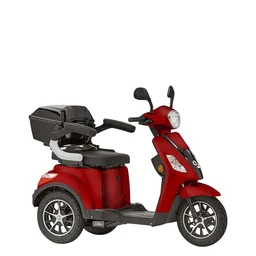
- Advantages: Good value for money, manoeuvrable, good standard equipment.
- Ideal for: Urban mobility, senior citizens, people with limited balance.
The touring electric mobility scooter: Modena 25 km/h
For those looking for greater range and comfort, the
is an excellent option. Equipped with a powerful 60V system and a spacious seat, it offers more power for longer trips or hilly terrain. Its copper-coloured finish gives it an elegant appearance.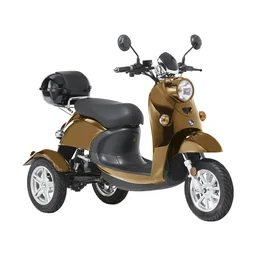
- Advantages: Higher system voltage for more pulling power, more comfortable seat, appealing design.
- Ideal for: Longer leisure rides, areas with gentle inclines.
The most-reviewed e-mobility products in our range, compared directly:
| Model | Customer rating | Availability |
|---|---|---|
| 28-inch aluminium city bike Edelweiss 3.1 for women | – | Currently unavailable |
| 3-wheel electric mobility scooter Bologna 25 km/h red | – | Currently unavailable |
| 3-wheel electric mobility scooter Bologna 25 km/h silver | – | Currently unavailable |
| 3-wheel electric mobility scooter Bari 6 km/h: 48V/20Ah lead-gel, blue | – | Currently unavailable |
| 3-wheel electric mobility scooter Bari 6 km/h: 48V/20Ah lead-gel, red | – | Currently unavailable |
Note: The models mentioned are available in various colour options. The technical specifications are identical across colour variants. Choose the colour that best suits your personal taste.
Electric cabin vehicle comparison
If you want maximum comfort and protection from the weather, this category is your first choice.
The comfort package: eLizzy Comfort
The
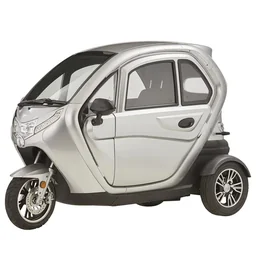
- Advantages: Complete protection from the weather, high safety and comfort standards, including instruction for safe riding.
- Ideal for: Year-round mobility, commuters who want to be independent of buses and trains, and people with limited mobility.
Making the right buying decision
Make your choice systematically. Work through this checklist.
- Define how you will use it: Daily use or occasional leisure trips?
- Calculate the range: How many kilometres do you typically travel? Double this figure for worry-free use.
- Check the charging options: Can you conveniently charge the battery from a power socket? Is the battery removable?
- Test the comfort: Sit on the vehicle before buying. Is the seat comfortable? Can you easily reach all the controls?
- Service and warranty: Is there a dealer near you? How long is the warranty on the battery and drive system?
Browse our main electric mobility category to see all the options at a glance.
Maintaining and caring for your electric vehicle
A little care can significantly extend the service life of your vehicle.
The battery: the heart of the vehicle
Take care of the battery. Avoid deep discharges and recharge it as soon as possible after each journey, even if it is not completely empty. In winter, store it in a dry, frost-free place.
Mechanical components
Check the tyre pressure regularly. Correctly inflated tyres extend the range and make riding easier. Check the brake pads and chain (if fitted) for wear at regular intervals.
What the future holds: electric mobility after 2026
Development is continuing. We expect lighter and more powerful solid-state batteries to offer even greater range with shorter charging times. Vehicle connectivity will increase, with more driver assistance systems and smarter route planning. Integration into public spaces, for example through dedicated parking and charging zones, will continue to advance.
The trend is clearly towards individual, clean and efficient mobility solutions. With the right choice today, you will be well prepared for the future. Discover the right electric mobility solution for you in our shop now.
Frequently asked questions
- Which electric mobility solution is best for daily shopping?
- Three-wheeled mobility scooters are an excellent choice for regular shopping trips. Models such as PRODUCT_106649 offer stability, ample storage space and a speed suitable for urban traffic. They are more manoeuvrable than a car and allow you to park directly outside the shop.
- Do I need a driving licence for an electric mobility scooter?
- For most electric mobility scooters and enclosed electric vehicles with a design speed of 25 km/h, you need at least a moped licence (category AM). Models with a maximum speed of 6 km/h are an exception and can be ridden without a licence. Check the exact registration requirements before buying.
- How far can I travel on a single battery charge?
- The range varies greatly depending on the model, battery capacity, terrain and riding style. While lightweight e-bikes can cover more than 100 km, comfortable mobility scooters often have a range of between 30 and 60 km. Pay attention to the battery technology (lead-acid gel or lithium) and the stated capacity in watt-hours (Wh).
- Can enclosed electric vehicles also be used in winter?
- Yes, modern enclosed electric vehicles such as PRODUCT_78759 are designed for year-round use. They offer a fully enclosed, often heated interior, protection from rain and wind, and good lighting. Before buying, check whether heating is included as standard or available as an accessory.
- How much does it cost to run an electric mobility scooter?
- Running costs are significantly lower than for a car. The electricity cost for a charge is just a few cents. Maintenance costs cover brakes, tyres and occasional service checks. The largest variable cost is the battery, which loses capacity after several years and needs to be replaced.