
In brief: A good earth auger combines high torque, solid construction and suitable accessories. Our 2026 comparison shows that there is no one-size-fits-all machine. The right choice depends largely on your intended use: smaller diameters are ideal for planting trees and shrubs, while fence posts or larger foundations require more powerful machines and interchangeable augers. The stability of the connection between the auger and drive machine is a key safety factor.
Planning to install a fence, anchor posts for a pergola or plant lots of trees? Then an earth auger is an indispensable tool. Compared with using a shovel and spade, it saves a great deal of time and effort. However, the range of models, diameters and designs is extensive. Our 2026 test and comparison will help you find the ideal earth auger for your specific requirements.
We focus on handheld systems powered by a high-performance two-handed drill. These offer the best balance of purchase price, ease of use and performance for demanding DIY projects and semi-professional applications.
What makes a good earth auger?
A high-quality earth auger must meet three main criteria: durability, efficient soil removal and a secure connection to the drive. The cutting tips and blades should be made of high-quality hardened steel to withstand stones and roots.
The spiral must reliably transport loosened soil upwards. A blunt or poorly shaped spiral means you will constantly have to pull the auger out of the hole and clear it by hand.
Material makes all the difference
Budget models are often made from thin rolled steel sheet. They bend easily and lose their cutting performance. High-quality earth augers use forged spirals or spirals made from thick steel. The cutting edges are sharpened and often protected against corrosion with special coatings. A solid central shaft is also essential for stability.
The drive connection is crucial for safety
The connection between the auger and drill is a critical point. Common systems include SDS-plus or square drives with locking pins. SDS-plus allows for quick changes but requires compatible machines. Square drives with a through-pin provide an extremely secure connection and prevent twisting. Make sure the connection is firm and free from play.
How do you choose the right auger diameter?
Choosing the diameter is one of the most important decisions. An auger that is too small means extra work, while one that is too large requires unnecessary effort and removes more soil than needed.
- 80-100 mm: Ideal for planting small trees, shrubs or perennials. Also suitable for small wooden or plastic fence posts.
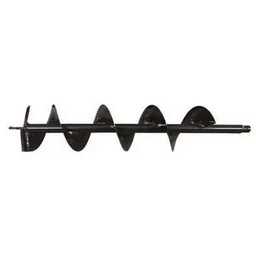
- 150-200 mm: The standard range for installing fences with wooden and metal posts. Perfect for chain-link fence posts or trellises. The with a 200 mm diameter falls into this category.
- 250 mm and more: For large foundations, e.g. for carport posts, heavy gates or pergolas. Powerful drive machines and physical strength are required here.
Flexibility with sets
If you regularly tackle different projects, investing in a set is worthwhile. A set such as the
offers two different auger head diameters on one central shaft. This allows you to respond flexibly to different requirements without having to buy two separate tools. It saves space and is often more economical.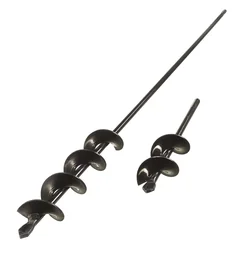
What drive machine is required?
Your drill is the heart of the system. An underpowered machine will be overloaded, overheat and may even be damaged.
- Minimum power: You need a corded two-handed drill with a power rating of at least 1500 Watt, preferably 1700 Watt or more. Battery-powered models are only suitable for earth auger work in light soils and with specialist models.
- Torque: The figure in Newton metres (Nm) is more important than the no-load speed. High torque allows the auger to penetrate resistant soil without stalling.
- Safety clutch: Absolutely essential. It disengages if the auger jams, e.g. on a root, protecting both the machine and your wrists from sudden kickback.
Reach greater depths with extensions
Standard earth augers usually reach depths of around one metre. For deeper holes, for example for certain fence posts or foundations, you need an extension such as the
. This is fitted between the drive machine and auger head. Make sure the connection between all parts is completely secure and free from play. The longer the overall system, the greater the leverage exerted on the connections.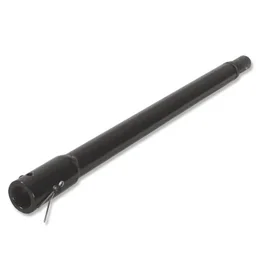
Hands-on test: How do you drill?
The right technique extends the life of your equipment and conserves your energy. Start by clearing the ground of coarse dirt and stones. Position the running auger vertically with moderate pressure.
Let the machine do the work and do not apply excessive pressure. Pull the auger out every 20-30 cm to empty the spiral. This relieves the motor and speeds up the process.
Working in difficult soil conditions
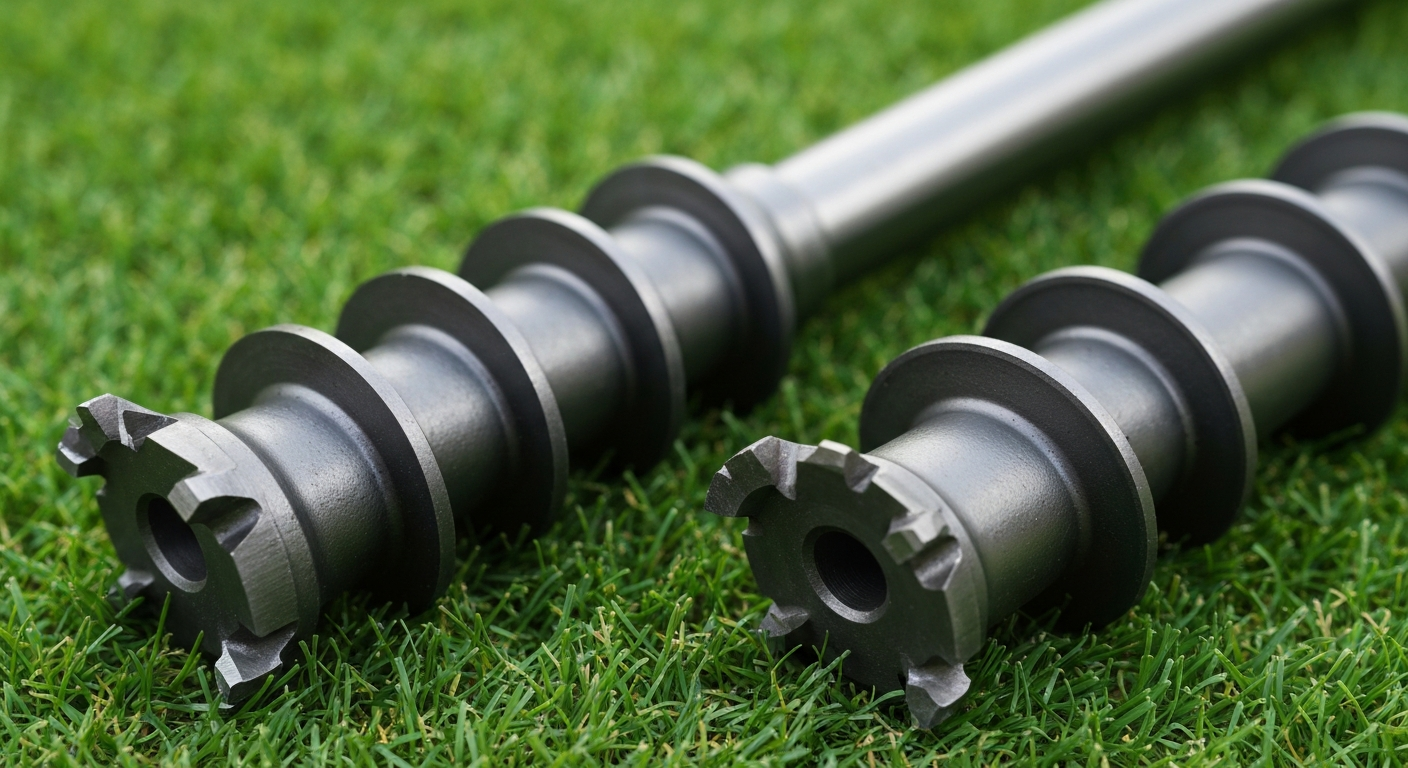
Stony or clay soils are a challenge. Work here in short, careful intervals. If the auger jams, immediately engage reverse and loosen it. Wet clay can clog the spiral. Regular cleaning helps prevent this. In extremely rocky terrain, consider using a powered post driver adapter for heavy-duty machines.
Care and maintenance of your earth auger
A high-quality earth auger is a long-term investment. Clean it thoroughly of soil and stones after every use. Dry it to prevent rust.
Regularly check the sharpness of the cutting tips and the leading edges of the flights. Blunt cutting edges significantly increase the effort required. Have them sharpened or replace them if the auger is worn. Lightly lubricate moving parts such as retaining bolts with a protective oil.
Storage
Store the earth auger in a dry place. Ideally, hang it up or position it so that the sharp edges cannot damage anything or become a trip hazard. A simple wall hook in the garage or tool shed is perfect.
Conclusion: Our 2026 comparison recommendation
Choosing the best earth auger always depends on the project. For general use in a large garden or occasional fence-building work, a set with two diameters like the is an excellent solution. It offers maximum flexibility.
For fence building with standardised posts, a single, robust auger with a diameter of 150-200 mm, for example the , is the direct and often more efficient choice. If you know that you will regularly need to drill deep holes, you should invest in a suitable extension such as the from the outset.
Always consider the complete system: A powerful, safe drill and high-quality, compatible accessories are just as important as the auger bit itself. With the right combination, your earthworks will be completed quickly and safely. For a comprehensive overview of different systems, visit our Electric Fences & Accessories category.
The most-reviewed earth augers in our range compared directly:
| Model | Customer rating | Availability |
|---|---|---|
| Planting auger set, 2-piece | – | In stock |
| Aluminium post driver adapter up to 120 mm | – | Currently unavailable |
| Auger 200 mm | – | Currently unavailable |
| Auger 250 mm | – | Currently unavailable |
| Auger diameter 100 mm EB1700 | – | Currently unavailable |
Frequently asked questions
- Which auger diameters are suitable for which jobs?
- Diameters of 80-100 mm are sufficient for setting small fence posts or planting perennials. For sturdy chain-link fence posts, 150-200 mm augers are recommended. Larger foundations for pergolas or carports often require augers measuring 250 mm or more. The key factor is the diameter of the post that will be installed later.
- Can I attach an earth auger to a standard drill?
- No, this is dangerous and can cause damage. Standard cordless drills have neither the necessary torque nor the power. You need a powerful two-handed drill (e.g. in the 1700 W class) or a drive unit specifically designed for earth augers. Check that the mounting profile is compatible.
- What should I bear in mind when working in stony or root-filled soil?
- In difficult terrain, robust forged spiral augers with hardened tips are essential. Operate the machine at a low speed and use plenty of its own weight. Any jolting or jamming means you should stop. Pull the auger out regularly to clear stones from the hole. An extension can provide greater leverage.
- What is the advantage of a multi-part earth auger set?
- A set with different auger diameters and, if applicable, an extension offers maximum flexibility for various garden and landscaping projects. You do not have to buy a separate tool for every task. The individual parts are also often easier to transport and store than one large auger.
- How deep can I drill with a hand-held earth auger?
- Depending on the soil conditions, a standard earth auger can reach depths of 70-100 cm. With a drill extension, depths of up to 140 cm are possible. For deeper work, such as foundation piles, tractor-mounted or self-propelled post drivers are the better choice.
You may also be interested in
- Drill Test & Comparison 2026
- Weed Puller Test & Comparison 2026: The Best Models Reviewed
- Petrol Chainsaw Test & Comparison 2026
- Tool Box Test & Comparison 2026: The Best Models in Practical Testing
- Spade Test & Comparison 2026: The Best Models in Practical Testing
- Random Orbital Sander Test & Comparison 2026