
In brief: Our 2026 review and comparison of electric quad bikes and electric trikes highlights clear differences between compact leisure models and comfortable enclosed vehicles. While lightweight electric trikes such as the Bari are designed for short trips on private property, fully enclosed electric vehicles such as the eLizzy series offer all-weather usability and greater comfort. Your choice largely depends on how you plan to use the vehicle, the range you need and local registration requirements.
The world of electric two- and three-wheelers is developing rapidly. Electric quad bikes and trikes are increasingly taking to roads and paths as practical, eco-friendly alternatives. They offer a unique combination of driving fun, everyday usability and accessibility. Our 2026 review and comparison takes a close look at the best models and helps you find the right vehicle for your needs.
Whether for relaxed outings, trips to the shops or sustainable mobility on your own property, there is a wide range to choose from. We focus on practical aspects such as riding comfort, everyday usability, range and handling. This helps you make an informed decision.
Table of contents
Models compared
The market can broadly be divided into two categories: open electric trikes and enclosed electric vehicles. Both types have clear advantages and target groups. The following table gives you a quick overview of the models tested and their key features.
The highest-rated electric quad bikes and electric trikes from our range compared directly:
| Model | Customer rating | Availability |
|---|---|---|
| 3-wheel electric vehicle Bari 6 km/h: 48V/20Ah lead-gel, red | – | Currently unavailable |
| 3-wheel electric vehicle Bari 6 km/h: 48V/20Ah lead-gel, silver | – | Currently unavailable |
| 3-wheel enclosed electric vehicle eLizzy Comfort 25 km/h silver including on-site instruction | – | Currently unavailable |
| 3-wheel enclosed electric vehicle eLizzy Comfort 45 km/h black including on-site instruction | – | Currently unavailable |
| 3-wheel enclosed electric vehicle eLizzy Premium 25 km/h red, with on-site instruction | – | Currently unavailable |
For a comprehensive overview of the market, take a look at our electric quad bikes and trikes category. There you will find all available models in detail.
Electric trikes for beginners
Electric trikes such as the Bari and the Bologna stand out with their compact dimensions and easy operation. They are ideal for use on private property, in parks or on quiet paths. With a top speed of 6 km/h or 25 km/h, they are perfect for relaxed rides.
The (Bari 6 km/h) is a typical example of this category. It has a 48V/20Ah lead-gel battery, providing enough energy for regular short trips. The open design offers a direct riding experience but is dependent on the weather.
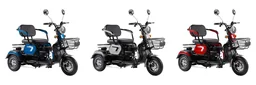
Warning: Open models such as the Bari offer no protection from rain, wind or cold. Plan to use yours primarily during periods of good weather, or add weather protection later.
The (Bologna 25 km/h) goes a step further. It comes with wind and weather protection as standard. This significantly improves its everyday usability. The higher speed of 25 km/h allows faster travel on suitable paths.
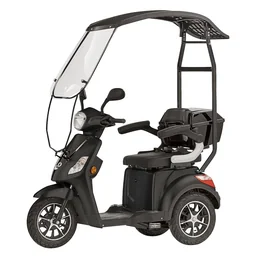
Advantages of classic electric trikes
- Low weight: Easy to manoeuvre and load.
- Easy maintenance: Straightforward technology, often with low-maintenance components.
- Good visibility: The open design provides an excellent field of vision.
- Low purchase price: Compared with enclosed vehicles.
Electric cabin vehicles tested
For users looking for independence from the weather, electric cabin vehicles are the first choice. Models in the eLizzy range set the standard here. They combine the comfort of a small car with the manoeuvrability and efficiency of an electric trike.
The (eLizzy Comfort 45 km/h) is a genuine alternative for shorter commutes or use in rural areas, with its black paintwork and top speed of 45 km/h. The included on-site instruction ensures a safe start.
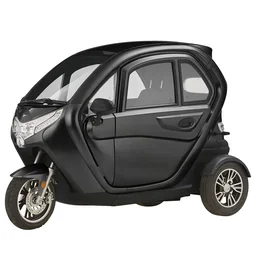
Tip: Make sure you take advantage of the on-site instruction offered with cabin vehicles. You will learn not only how to operate the vehicle, but also about the special handling characteristics of trikes, which significantly improves safety.
For anyone who does not need 45 km/h, the (eLizzy Premium 25 km/h) is an excellent choice. The premium red finish often comes with additional comfort features. At 25 km/h, it generally remains licence-free in the light vehicle category.
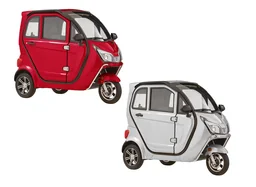
Comfort and features
Cabin vehicles impress with fully equipped interiors. These include:
- Comfortable, often adjustable seats.
- An effective heating and ventilation system.
- Ample storage space behind the seats.
- Good all-round visibility through large windows.
- Durable windscreen wipers and lighting.
Buying guide: what should you look for?
Before choosing a model, clarify a few basic questions. The intended use is the most important factor. Do you want to use the vehicle all year round or only in good weather? Do you need storage space for shopping or luggage?
Another critical point is range. Calculate your typical daily distances realistically and add a safety margin of at least 20%. Bear in mind that manufacturers' range figures are based on ideal conditions. Hills, headwinds and low temperatures noticeably reduce the range.
You should also check the charging options. Can you conveniently charge the battery from a standard household socket? Is a separate charger required? How long does a full charge take? These practical aspects determine how convenient the vehicle is to use every day.
Note: Battery technology is crucial. Lithium-ion batteries are lighter, last longer and charge faster than lead-gel batteries. However, they are more expensive to purchase. Weigh up the advantages and disadvantages for your needs.
Find out more about e-mobility to understand all aspects of sustainable transport.
Technology and range
The drive technology used in electric quads and electric trikes is robust and low-maintenance. An electric motor usually drives the rear axle. Power ranges from around 1 kW for slower models to 4 kW or more for the 45 km/h variants. Power is often transferred directly or via a simple gearbox.
The battery is the heart of the vehicle. Pay attention to the rated capacity in ampere-hours (Ah) and the voltage (V). The product (V * Ah) gives the energy in watt-hours (Wh). A higher Wh figure generally means more range. Ask the dealer about the battery's expected service life and the cost of a possible replacement.
Optimising energy consumption
- Drive proactively and use regenerative braking (the recovery of braking energy).
- Avoid high speeds and sudden acceleration.
- Keep the tyre pressure within the recommended range.
- Reduce unnecessary weight on board.
Registration and insurance
The legal classification is complex and must be clarified before purchase. The decisive factors are the vehicle's design, unladen weight and top speed. Vehicles up to 25 km/h often fall into the light vehicle category (Class L6e). They require an operating permit, an insurance plate and usually only a moped licence.
Vehicles up to 45 km/h (Class L7e) are classed as four-wheeled light motor vehicles. A Class B driving licence is usually required here. They receive a standard official registration plate and are subject to regular vehicle tax and the main inspection (TÜV).
Contact your local road traffic authority or an experienced dealer at an early stage. They can advise you on the specific registration requirements for your chosen model. The same applies to insurance. Obtain comparison quotes for motor vehicle liability insurance.
Conclusion
Choosing the right electric quad or electric trike depends on your individual priorities. For the occasional Sunday outing on your own property, a compact and affordable electric trike such as the Bari is perfectly adequate. If, on the other hand, you want to stay mobile whatever the weather, the eLizzy cabin vehicles offer the perfect solution.
Our test shows that the technology is mature, the vehicles are reliable and running costs are low. Base your decision on your typical driving profile, your comfort requirements and local registration regulations. With the right preparation, nothing stands in the way of a new driving experience in the world of electric quads and electric trikes.
Frequently Asked Questions
- Do I need a driver's license for an electric quad bike or electric trike?
- Whether you need a driver's license depends on the vehicle's design and maximum speed. Light mobility vehicles with a maximum speed of up to 45 km/h often only require a moped license. Faster models or those with more than four wheels generally require a Class B driver's license. Be sure to clarify this with your vehicle registration office before purchasing.
- How far can I travel on a single charge?
- Range varies greatly, from 30 to more than 100 kilometers. It depends on battery capacity, riding style, terrain and load. Lightweight electric trikes with smaller batteries are designed for short everyday journeys. Enclosed vehicles with large lithium-ion batteries offer enough range for longer trips. Always check the manufacturer's stated range under ideal conditions.
- Can I ride an electric quad bike in winter?
- Enclosed vehicles such as the eLizzy series are suitable for year-round use, with heating and defrosting systems. Open models without weather protection are only suitable for limited use in rain, snow and cold weather. If you plan to use your vehicle all year round, make sure it has heated windows, sturdy windscreen wipers and an effective heating system.
- How much does it cost to run an electric trike?
- Running costs are significantly lower than those of comparable petrol-powered vehicles. Electricity, maintenance and insurance costs are low. The biggest expense is the battery, which will need to be replaced after several years. Also budget for any costs related to installing a wallbox, winter tires and regular safety checks.
- Are electric trikes and electric quad bikes safe?
- Modern models feature numerous safety features, including three-point seat belts, roll bars, disc brakes and LED lighting. The low center of gravity and wide track improve driving stability. Safety depends largely on adapting your riding style to the conditions and regularly maintaining all safety-critical components.