
In brief: The right extension cord depends on where you plan to use it. For indoor use, a standard 3 m cord rated for 10-16 amps is often sufficient. For outdoor use or powerful equipment, choose a heavy-duty CEE extension cord with the appropriate current rating and a thick, weather-resistant rubber jacket. Make sure the plug type and cord length suit your needs.
Contents
Extension cords are handy, but there are many options to choose from. Our 2026 test and comparison shows you what to look for. We compare different types and offer recommendations for your needs.
Which extension cord do I need?
Start by asking yourself three questions: What will you use the cord for? Where will you use it? Which devices will you plug in?
For occasional use at home, such as powering a lamp or laptop, a basic cord with Schuko plugs is sufficient. An electrical installation professional, on the other hand, needs specialized solutions.
Choose the right plug connection
Schuko plugs are standard in many households. CEE plugs offer added safety: they lock in place and are splash-proof. They are essential for powerful equipment.
Conductor cross-section and current rating
The cross-section in mm² determines how much current a cord can safely carry. The thicker the conductor, the higher its load capacity. 1,5 mm² is sufficient for a drill. A welding machine requires more.
Tip: Check your device's rating plate for its maximum power consumption in Watt. Divide that value by 230 (Volt) to estimate its current consumption in Ampere. Choose a cord with a current rating above that value.
Key buying criteria at a glance
Compare extension cords using these criteria. They affect both safety and service life.
- Length: A cord that's too short is inconvenient, while one that's too long can be dangerous. Longer cords have a greater voltage drop.
- Current rating: 10A or 16A are typical for household cords. CEE cords are also available for 32A or more.
- Conductor cross-section: 1,5 mm² for standard loads. 2,5 mm² for heavy loads or longer runs.
- Jacket material: PVC for indoor use; rubber cable such as H07RN-F for outdoor use and demanding applications.
- Ingress protection rating: IP44 means splash protection, which is important for outdoor use.
Compare the best extension cords
Our comparison includes models for a range of uses. The table below lets you compare their features at a glance.
Top-rated extension cords in our range, compared:
| Model | Customer rating | Availability |
|---|---|---|
| 10m extension cord, white | – | Currently unavailable |
| 3m extension cord, white | – | Currently unavailable |
| 5m extension cord, white | – | Currently unavailable |
| CEE extension cord 16A, black - 50 m extension cord | – | Currently unavailable |
| CEE extension cord 230V, 25m, black | – | Currently unavailable |
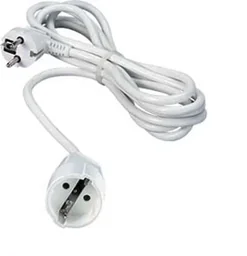
For everyday household use, the is a solid choice. At 5 m long with Schuko plugs, it can reach many spots around a room.
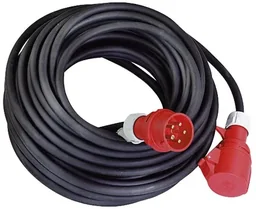
For demanding outdoor jobs or construction sites, a heavy-duty CEE cord is essential. At 50 m long, the provides plenty of reach for professional applications.
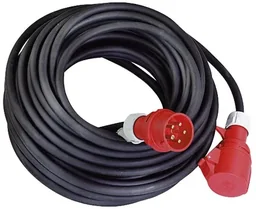
Models with special features can be especially useful. The has a phase inverter plug, which may be needed for certain machines.
Uses and recommendations
We group common uses into three categories to help you find the right product in our extension cord range.
Home and office
Cords up to 10 m long with Schuko plugs are common for home and office use. Look for a spring-loaded strain relief at the plug to extend the cord's service life. Avoid running the cord under rugs.
Warning: Don't leave heaters such as space heaters or kettles plugged in through an extension cord. These appliances draw a lot of power and can overload the cord, especially when used with other devices.
Garden and outdoor use
For the garden, choose a cord with at least IP44 protection. A cord designed for garden tools in a bright, highly visible color is an even better choice. Always coil the cord after use.
Workshop and construction site
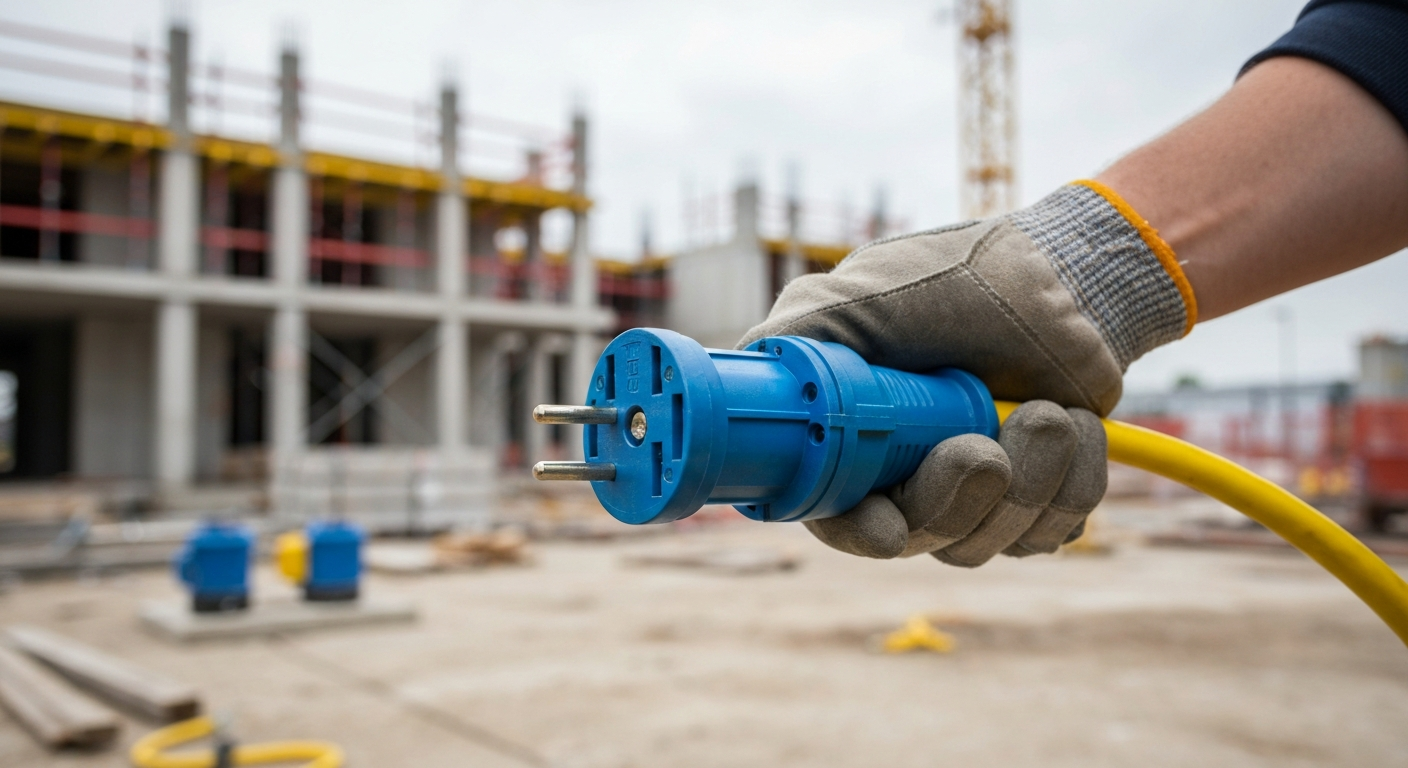
CEE connectors are ideal for these demanding settings. They are impact-resistant and lock in place. Choose a cord made from durable rubber cable such as H07RN-F. A cross-section of 2,5 mm² is recommended for many machines.
Note: Construction sites often have stricter requirements. Check the applicable accident prevention regulations (UVV) issued by the German Social Accident Insurance. They may specify particular cable and plug types.
Safety comes first
Electricity can be dangerous. Always follow these safety rules.
- Check the cable for damage before each use. Cracks, crushed sections or exposed wires are warning signs.
- Use only cords rated for outdoor use outside.
- Pull the plug out by its body, never by the cable.
- Don't leave the cable in puddles. Even with IP44 protection, this isn't a long-term solution.
Learn more about this topic in our Technology section.
Care and Storage
Proper care helps protect your extension cord. After using it outdoors, wipe it clean with a dry cloth. Coil it loosely on a cord reel or lay it in large loops.
Avoid tight knots and sharp bends, which can damage the internal wires. Store the cord in a dry place away from direct sunlight.
Conclusion
Choosing the right extension cord means balancing how you plan to use it with safety and convenience. Standard models are often enough for household use. But if you’re working outdoors or in a professional setting, rugged CEE cables with the appropriate protection rating are essential.
Our comparison shows there’s no one-size-fits-all solution. Consider your appliances’ maximum load and the conditions where you’ll use the cord. Invest in quality: electrical safety is not something to compromise on. With the right choice, you’ll have a reliable cord for years to come.
Frequently Asked Questions
- What length extension cord do I need for the garden?
- The right length depends on your needs. Measure the distance from the outlet to the farthest point where you’ll use the cord. Allow some extra length, but avoid an excessively long cord, as voltage drops over long distances can affect appliance performance. For medium-sized gardens, 25 to 30 metres is often enough.
- What’s the difference between a household outlet and a CEE outlet?
- Household outlets (Schuko) are designed for a maximum of 16 amps and everyday appliances. CEE outlets (often blue for 230V/16A and red for 400V) are industrial connectors. They’re more rugged, splash-proof and lockable, making them ideal for outdoor use, construction sites or powerful equipment such as welding inverters.
- Can I install an extension cord permanently?
- No. Extension cords are intended for temporary use. Permanent use increases the risk of damage, overloading and tripping hazards. For a fixed installation, hire an electrician to install permanent wiring and suitable flush-mounted or surface-mounted outlets.
- What does H07RN-F mean on a cable?
- This designation refers to an especially rugged rubber cable. It’s oil-resistant, weatherproof, flexible in cold temperatures and abrasion-resistant. These cables are designed for heavy-duty use outdoors, in workshops or on construction sites, and offer significantly more protection than standard PVC cables.
- Can I connect multiple extension cords together?
- We strongly advise against it. Connecting several cords in series increases contact resistance and the risk of heat building up at the plug connections. Voltage drop also accumulates over the total length, which can damage connected appliances. It’s better to use a single cord that’s long enough.