
In brief: A good moisture meter delivers accurate readings, has a durable housing, and is easy to use. Choose the right measuring method for your needs, whether you’re checking wood, building materials, or agricultural products. Our comparison will help you find the right meter.
Moisture is an invisible enemy. It can cause costly structural damage, spoil crops, or ruin woodworking projects. A moisture meter reveals hidden moisture, making it an essential tool for contractors, builders, and farmers. But which meter is right for you?
Our 2026 comparison will help you choose. We review leading models and technologies and explain what to look for when buying a moisture meter. That way, you can find the right one for your needs.
Table of contents
What types of moisture meters are available?
Moisture meters use two basic measuring methods, each suited to different applications.
Pin-type moisture meters (resistance meters)
These meters have two or more metal pins that you push into the material. They measure electrical resistance. Because wet material conducts electricity more easily, the meter can calculate moisture content from the resistance reading.
Advantages: Highly accurate readings, especially deeper inside the material. Ideal for wood, masonry, and other solid materials.
Disadvantages: The measurement is invasive and leaves small holes, so pin meters aren’t suitable for delicate surfaces.
Pinless moisture meters (capacitive meters)
These meters work without pins. Hold the device against the material’s surface, and it measures dielectric properties that change with the moisture content.
Advantages: Nondestructive and fast, making these meters a good choice for large areas and delicate materials.
Disadvantages: They mainly measure surface moisture and may be less accurate on uneven surfaces.
Tip: For most DIYers and building professionals, a pin-type moisture meter is a good first choice. Its accuracy outweighs the drawback of leaving small pinholes. If you’re checking finished surfaces or valuable wood, a capacitive meter is a useful addition.
Key buying criteria: What to look for
Not every moisture meter suits every project. Here are the features that matter most.
Accuracy and measuring range
Accuracy is the most important factor. Check the stated tolerance. A good measuring range for wood is between 5% and 60% moisture. For building materials such as concrete, screed, or plaster, the range can be higher, often up to 100%.
Material presets
Look for meters with settings for different types of wood (e.g., pine, oak, and beech) and building materials (concrete, brick, and plaster). These presets can improve accuracy by accounting for each material’s density.
Controls and display
An easy-to-read display is essential, even in low light. A backlit LCD or an LED display, such as the
can be helpful. The controls should be easy to navigate.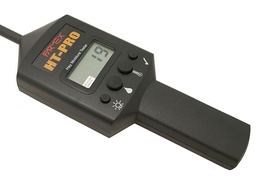
Durability and accessories
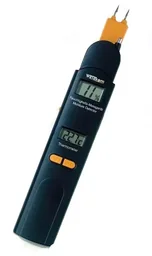
The housing should be impact-resistant. Check whether the meter comes with a protective case. Long, sturdy pins are important for taking readings deeper inside a material. Some meters also measure temperature, like the
.
Important: Inexpensive generic meters without clear specifications often give unreliable readings. That can lead to serious mistakes on building projects. Choose a quality meter from an established manufacturer.
The best devices tested
We took a close look at current models. Here are our recommendations for different needs.
Our top-rated moisture meters, compared side by side:
| Model | Customer rating | Availability |
|---|---|---|
| Moisture meter 0-60% /Thermometer -10 to +50°C 🏆 Top pick | ★ 4,7 (13) | In stock |
| Digital hay and straw moisture meter with LED display | – | Currently unavailable |
| Fritz Göbel high-pressure hose 19mm inner diameter - sold by the meter | – | Currently unavailable |
| Fritz Göbel 300 Meter Lite remote trainer - basic obedience training | – | Currently unavailable |
| Fritz Göbel suction hose 30mm inner diameter - sold by the meter | – | Currently unavailable |
Our top pick for general use is an accurate pin-type moisture meter with a wide range of material presets. It delivers reliable readings and is easy to use. It’s especially useful for checking wood moisture before starting a project.
For agricultural use, the digital hay and straw moisture meter stands out. Its specialized measuring mode and clear LED display make it easy to check moisture in harvested crops. This can help prevent self-heating and quality loss during storage.
A reliable entry-level meter at a good price is the
. It covers the most common materials and is built to last. It’s more than adequate for occasional checks at home or in the workshop.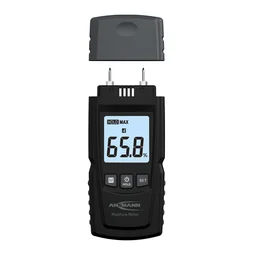

How to Measure Accurately
Using the right measuring technique is essential for reliable results. Here's how.
- Select the material: Set the correct material group on the device, such as "softwood".
- Choose your measuring points: Don't measure in just one spot. Take readings at several representative points. Avoid edges, knots and visibly damp areas when calculating the average.
- Measure at the right depth: With pin-type meters, insert the pins fully and vertically. For deeper readings, use longer pins or measure at a freshly cut edge.
- Calculate the average: Record several readings and calculate the average. A single outlier isn't meaningful.
- Consider the surroundings: Measure at room temperature. Extreme cold or heat can distort the results.
Common Uses
A moisture meter has many uses. The most common include:
Woodworking and Carpentry
Checking moisture is essential for woodworking. Wood that's dry enough for its intended use (typically below 10–20%) is less likely to warp and is less likely to prevent paint or glue from adhering properly. Check the moisture level before every woodworking project.
Building Renovation and New Construction
Check whether a concrete subfloor is dry enough before installing flooring, look for residual moisture in plaster and masonry, or locate water damage. The with its temperature function is a good choice for these jobs.
Agriculture and Horticulture
Hay, straw, grain and compost need the right moisture content to prevent rot and mould. Specialised devices such as the are designed for this purpose.
General Household Checks
Check moisture levels regularly in basements, behind cupboards on exterior walls and beneath windowsills. This can help prevent mould.
Note: A moisture meter is a diagnostic tool. It identifies problems but doesn't solve them. If readings remain high, find and address the source of the moisture, such as rising damp or a leak.
Care and Maintenance
A little care will keep your moisture meter in good working order for years.
- Wipe the measuring pins with a dry cloth after each use. Remove resin or plaster residue right away.
- Store the device in a dry place at room temperature. Extreme conditions can damage the electronics and battery.
- Replace the batteries before they run out. Weak batteries can cause inaccurate readings.
- Check the calibration regularly, using a reference material if possible.
Buying Guide: How to Choose the Right Moisture Meter
Before you buy, ask yourself these three questions.
1. What do I mainly want to measure?
For wood and building materials, choose a pin-type moisture meter. For surface checks or delicate materials, a non-contact model is a better choice. For agriculture, choose a specialised device.
2. How often will I use it?
A reliable entry-level model is enough for occasional DIY projects. If you use it professionally every day, it's worth investing in a high-quality, durable device with a wide range of features and high accuracy.
3. Which extra features will I use?
A temperature display, data-hold function, memory for readings or an interface for recording results can make your work easier. Think about which features you actually need.
Ultimately, the best moisture meter is the one that suits your specific tasks and feels intuitive to use. Use this guide to find the right model in our range of technology and measuring equipment.
Frequently Asked Questions
- How does a moisture meter work?
- Most moisture meters use electrical resistance to measure moisture. They send a weak electrical current through the material using two electrodes. Because damp material conducts electricity better, the device can estimate its moisture content from the measured resistance.
- Which materials can I measure with a moisture meter?
- Moisture meters are mainly used for wood, plaster, concrete subfloors, masonry and other building materials. Specialised devices can also measure hay, straw and grain. They aren't suitable for liquids or very dense materials such as metal.
- How accurate are moisture meter readings?
- Accuracy varies by device and material. High-quality models have a margin of error of less than 1%. For reliable results, select the correct material type and take readings at several representative points.
- Can a moisture meter help prevent mould?
- Yes, indirectly. Regular readings in areas at risk, such as exterior walls and bathrooms, can help you spot rising moisture early. You can then improve ventilation or take other steps before mould develops.
- What's the difference between pin-type and non-contact moisture meters?
- Pin-type models measure inside the material using pins and provide precise readings at greater depths. Non-contact models scan the surface and are faster, but only measure near the surface. Choose based on the required measuring depth and the type of material.