
In brief: A food dehydrator gently removes water from fruit and vegetables, depriving microorganisms of the conditions they need to survive. You cut the food into even pieces, place it on the trays, set the time and temperature, and wait until it is completely dry. This process preserves nutrients and flavor and keeps food usable for months without refrigeration or preservatives.
Why dehydrate food yourself?
A food dehydrator puts you in control. You decide where your food comes from, which additives it contains and how thickly it is sliced. This method preserves food without sugar, oil or chemical preservatives.
The process is simple: warm air circulates around the food and slowly removes water. Without moisture, bacteria, mold and yeast cannot multiply. The result is concentrated flavor and a long shelf life.
A good dehydrator, such as the offers precise temperature control. This is essential for consistent results.
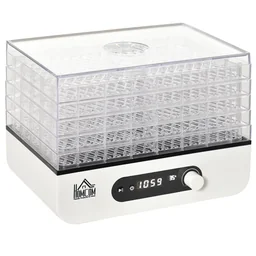
How do you choose the right food dehydrator?
Entry-level models often have fixed trays. Models with adjustable-height trays are better, such as the . This means they can accommodate whole bunches of herbs or thick apple slices.
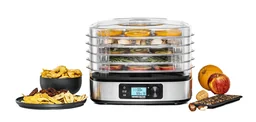
Pay attention to the wattage. 400 to 600 Watt is sufficient for home use. A timer that switches the appliance off when the time is up is important. This prevents over-drying and saves energy.
Air circulation matters more than heating power alone. A rear-mounted fan distributes heat more evenly than models with heating only in the base.
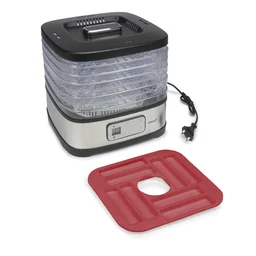
Stainless steel housings, like the one on the , are hygienic and easy to clean. Plastic can absorb odors over time.
How do you prepare fruit and vegetables before dehydrating?
Start with flawless, ripe ingredients. Overripe fruit can spoil during dehydration. Wash and dry everything thoroughly. Remove pits, stems and any damaged areas.
Important note
Cut all the ingredients in a batch to roughly the same thickness. Pieces of different thicknesses dry unevenly. Some may still be moist while others are already burnt. A sharp knife or mandoline is essential.
For apples and pears, a brief soak in lemon water prevents browning. Blanch broccoli, carrots or beans briefly in boiling water. This step shortens the dehydration time and preserves the color.
What temperature and time should you set?
The settings depend on the food. As a general rule, the higher the water content, the lower the starting temperature should be.
Start juicy fruits such as pineapple or tomatoes at 50-55 degrees. After a few hours, increase the temperature to 60-65 degrees to finish the process. This prevents the surface from drying too quickly and trapping moisture inside.
Pro tip
Dehydrate herbs and delicate leaves separately or on the top level. Otherwise, their aromas can transfer to everything else. Set the appliance to its lowest temperature setting (35-40°C) to protect the essential oils.
For vegetables such as zucchini or mushrooms, 55-60 degrees is ideal. Firmer varieties such as beetroot can handle 65-70 degrees. Check the progress regularly, especially toward the end of the drying time.
What are the most common mistakes when dehydrating food?
Overloading the trays is a classic mistake. Never overlap the pieces, and leave enough space between them. Air must be able to circulate around every side. An overcrowded food dehydrator greatly extends the drying time and produces uneven results.
Another mistake is setting the initial temperature too high. This creates a hard, crusty outer layer. Moisture inside can then no longer escape. The food spoils despite its dry outer skin.
Patience is the most important ingredient. Slow drying at low temperatures not only preserves nutrients but also creates the desired chewy or crispy texture. Faster is rarely better here.
Avoid dehydrating different foods with significantly different drying times together in one run. Do not mix apples with herbs.
How do you test whether dehydrated food is ready?
When the estimated time is up, remove a piece and let it cool. Warm dehydrated food often feels moister than it really is. Once it has cooled, press it between your fingers.
Fruit should be leathery and flexible but should not release any moisture. Tear a piece apart. You should not see any moist strands inside. Vegetables are usually crispy and brittle.
Additional advice
If some pieces in the batch are still moist while others are already done, simply sort them out. Put the moist pieces back in the food dehydrator. This selective additional drying often saves an entire batch.
Place a test piece in a sealable jar. If condensation forms on the inside of the jar after a few hours, the dehydrated food is not ready yet.
How should dried food be stored correctly?
Storage determines how long your food will ultimately keep. Only place completely cooled and dry food in containers. Glass or metal tins with rubber seals are ideal. Avoid plastic if the dried food still retains heat.
Clearly label each container with its contents and the date it was prepared. Store the tins in a cool, dark and dry place. A pantry or cellar shelf is ideal.
Check your supplies regularly for signs of moisture or mould during the first few weeks. This ensures that the drying process was truly complete. When stored correctly, your supplies will keep for many months.
Dried food is also perfect as a healthy snack on the go or for adding to muesli. Discover suitable storage options in our play food category, which often offers practical storage ideas.
Frequently Asked Questions
- What temperature is ideal for dehydrating fruit?
- For most types of fruit, such as apples, pears and berries, 50 to 60 degrees Celsius is ideal. This low temperature preserves vitamins and enzymes. For sugary fruit such as pineapple, you can increase the temperature to 70 degrees to prevent it from sticking. Slow, gentle drying is essential.
- How long does it take to dehydrate vegetables?
- The time varies considerably. Tender herbs are ready in 2-4 hours, while thinly sliced courgettes or mushrooms need 6-8 hours. Firmer vegetables such as carrots or beetroot cut into thin slices can take 8-12 hours. Consistent slice thickness and complete moisture removal are crucial.
- How can I tell when dehydrated food is ready?
- Finished dried fruit should be leathery and flexible, but release no moisture when you squeeze it. Vegetables should be crisp to brittle. The most reliable test is to let a sample cool. If it still feels moist or cold afterwards, it needs more time in the food dehydrator.
- How should I store dried fruit and vegetables correctly?
- Store completely cooled and dry food in absolutely airtight containers, such as glass or metal tins. The storage area should be cool, dark and dry. Label the containers with their contents and the date. When stored correctly, most dehydrated foods will keep for 6-12 months.
- Can I also dry meat or herbs in a food dehydrator?
- Yes, for meat (jerky), you need temperatures of at least 70 degrees Celsius for food safety. Herbs are best dehydrated at a low 35-40 degrees Celsius to preserve their essential oils. Use fresh, lean meat and season it before dehydrating.
You may also be interested in
- Food Dehydrator Review & Comparison 2026
- How to Preserve Homemade Food for Long-Lasting Results
- Preserving Your Harvest: How to Stock Your Pantry
- Fermenting Vegetables: An Introduction to Food Preservation
- Canning in a Pot: How to Preserve Fruit and Vegetables
- How to Dry Garlic: Keep It Fresh and Full of Flavour for Longer