
In brief: To find the right Forstmeister Titan chainsaw chain, you need three specifications from your old chain or guide bar: the pitch (e.g. 3/8"), the drive-link gauge (e.g. 1.3 mm) and the number of drive links. These values must match the specifications of the new chain exactly.
A sharp, correctly fitted chainsaw chain is the heart of your chainsaw. It determines cutting performance, safety and working comfort. A blunt or incorrect chain makes the job difficult, dangerous and causes your machine to wear out. Yet choosing the right chain can often seem like a science in itself. Terms such as pitch, drive-link gauge and cutter type can be confusing. This guide provides clarity. It shows you how to find the exact chain for your saw and what to look for when buying.
For users who value excellent value for money, the Forstmeister "Titan" chainsaw chain is an excellent choice. It combines durability with high cutting performance, making it ideal for all common jobs around the home and garden. Before you buy, however, you need to make sure it is compatible with your equipment.

- How can you tell when your chainsaw chain needs replacing?
- Which measurements are essential when choosing the right chainsaw chain?
- How do you find the right Forstmeister Titan chain for your saw?
- Which cutter types are available and which one is right for you?
- How do you care for your new chainsaw chain for maximum service life?
How can you tell when your chainsaw chain needs replacing?
Even the best chainsaw chain will eventually reach the end of its service life. Look out for clear signs that replacement is necessary. Do not ignore these signals, because working with a worn chain is inefficient and poses serious safety risks.
The most obvious sign is declining cutting performance. If the saw no longer pulls itself into the wood and you have to apply significant pressure, the chain is blunt. Another clear indication is the type of chips it produces. A sharp chain produces coarse, clearly defined wood chips. A blunt chain produces fine sawdust. Also observe the cutting direction: if the saw pulls to one side and the cut becomes crooked, the teeth on one side are more worn or damaged than those on the other.
Also inspect the chain visually. Missing or badly damaged cutter teeth, cracks in the connecting links or bent parts are immediate reasons for replacement. Every cutter tooth also has a wear indicator. Once sharpening has reached this mark, the chain has exceeded its maximum service life. If the chain can no longer be tensioned correctly because the tensioner has reached its limit, it is also time for a new one.
A chain is only as good as its sharpest tooth. Regular checks and timely replacement are not optional but essential for safe and effective work.
Which measurements are essential when choosing the right chainsaw chain?
Three technical measurements are crucial when buying the perfect chainsaw chain. These three values must match exactly. A deviation in just one of these parameters means that the chain will not fit your guide bar or may cause serious damage to the saw during operation.

Pitch: The key measurement
Chain pitch is the most important measurement. It describes the distance between the links. It is measured between the centres of three consecutive rivets and divided by two. The result is given in inches. Common pitches are 1/4", .325", 3/8" and .404". The chain pitch must match the pitch of the drive sprocket on the saw and the sprocket nose at the tip of the guide bar. An incorrect combination causes immediate wear and can make the chain jump.
Drive-link gauge: The key to the guide bar
Drive links are the fin-shaped parts on the underside of the chain that run in the groove of the guide bar. Their thickness, also called gauge, is specified in millimetres or inches. Common sizes are 1.1 mm (.043"), 1.3 mm (.050"), 1.5 mm (.058") and 1.6 mm (.063"). The drive-link gauge must match the width of the groove in your guide bar exactly. If the drive link is too thin, the chain has lateral play, wobbles and cuts unevenly. If it is too thick, the chain will not fit into the bar or will jam, causing extreme friction and heat build-up.
Drive-link count: The length of the chain
The number of drive links determines the exact length of the chain. This number is not standardised and depends on the combination of saw model, bar length and chain pitch. The only reliable way to determine the correct length is to count the drive links on your old chain. Lay the chain out straight and count each individual link that protrudes downwards. A chain with even one drive link too many or too few cannot be tensioned correctly.
Pro tip
The three key measurements (pitch, drive-link gauge, drive-link count) are almost always stamped or printed directly on the guide bar near the saw body. Look for a sequence such as „3/8" 1.3mm 56DL“ (DL stands for Drive Links). This is the quickest way to find the correct specifications for your replacement chain.
How do you find the right Forstmeister Titan chain for your saw?
Once you know the three key measurements, choosing the right chain is easy. Follow a systematic approach to avoid buying the wrong product. Take a moment to check the details of your existing equipment. This small effort will save you a lot of trouble later and ensure that your new chain works perfectly.
The first step is always to read the measurements from the old guide bar or old chain. As explained in the pro tip, you can usually find the pitch and drive link gauge information on the bar. Then count the drive links on the old chain. Write down these three values. Alternatively, you can check the manual for your chainsaw, which lists the compatible chain and guide bar types.
With these three values (e.g. 3/8\", 1,3 mm, 56 drive links), visit the product page for the Forstmeister \"Titan\" chainsaw chain. You will find exactly these details in the product description and technical data. Compare the values you noted with the product specifications. If all three measurements match, you have found the right chain and can be sure that it fits your saw. This approach is universal and applies to all types of power tools in the Garden + Outdoor range.
Important note
Never use a chain whose measurements do not exactly match the specifications of your saw and guide bar. The wrong pitch or drive link gauge can cause the chain to jam, come off the bar and result in serious injury. Do not rely on estimates or the guide bar length in centimetres alone.
What types of cutter shapes are available, and which one is right for you?
In addition to the technical measurements, the shape of the cutter also affects cutting performance. The two most common types are semi-chisel and full-chisel. The right choice depends on your application and experience.

The semi-chisel chain is the all-rounder and the best choice for most private users. Its cutter has a rounded side edge, making it less sensitive to dirt in the wood and allowing it to stay sharp longer than a full-chisel chain. Cutting performance is very good, and it cuts more smoothly and forgivingly. The Forstmeister Titan chain is generally designed as a robust semi-chisel chain, ideal for cutting firewood and general garden work.
The full-chisel chain, recognisable by its sharp, right-angled cutting edge, is the tool of choice for professionals. It cuts more aggressively and quickly, but only in clean, debarked wood. Contact with dirt or soil makes it blunt extremely quickly. It is also more prone to kickback and requires more precise filing technique when sharpening. For professional use in business supplies, it is often the first choice, but for home use it is usually more than you need.
Additional tip
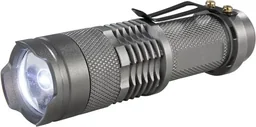
Good visibility is essential for your safety when working at dusk or in shaded areas. A robust, focusable flashlight such as the 3 Watt Titan LED flashlight helps you illuminate the work area and see the markings on the chain or guide bar even in poor lighting conditions.
How do you maintain your new chainsaw chain for maximum service life?
Buying the right chain is only half the job. Careful and regular maintenance is essential to maintain high cutting performance, maximise service life and work safely. Do not neglect these simple steps.
The best chain is useless without proper lubrication. A constant film of oil protects against friction, heat and premature wear on the chain and guide bar.
Lubrication is the most important maintenance measure. Make sure that your saw's oil tank is always filled and that the chain lubrication system works properly. Use high-quality chainsaw chain oil that adheres well to the chain and does not fling off at high speed. An excellent and environmentally friendly choice is the Bio chainsaw chain oil. It provides reliable lubrication and is biodegradable.

Regular sharpening is just as important. Sharpen the chain when necessary, not only once it has become completely blunt. Use a suitable round file with the correct diameter for your chain pitch. Make sure you use the correct sharpening angle, which is usually specified on the chain packaging or in the manual. After sharpening the chain several times, remember to adjust the depth gauges with a flat file as well, so that the cutter can engage properly with the wood again.
Check the chain tension before every use. A cold chain should still be easy to pull along the guide bar by hand and should rest against the underside of the bar. When you lift the chain in the middle of the guide bar, around one to two drive links should be visible outside the groove. A chain that is too loose can come off, while one that is too tight causes excessive wear. Also clean the guide bar groove and oil holes regularly to ensure smooth operation.
Frequently Asked Questions
- What do the numbers on the guide bar mean?
- These numbers indicate the key measurements needed to find the right chainsaw chain: pitch, drive link gauge and often the recommended number of drive links. They are the quickest way to find the correct specifications for a replacement chain such as the Forstmeister Titan.
- How often should I sharpen a chainsaw chain?
- Sharpen your chain as soon as cutting performance drops or the saw produces fine sawdust instead of coarse chips. With regular use, this may be necessary several times a day. A sharp chain is safer and puts less strain on both the material and your saw's motor.
- Can I use a chain with a different pitch on my saw?
- No, this is not possible and is extremely dangerous. The chain pitch must match the pitch of the sprocket and the nose sprocket at the tip of the guide bar exactly. An incorrect pitch causes rapid wear, chain derailment and serious accidents.
- What is the difference between semi-chisel and full-chisel chains?
- Semi-chisel chains have rounded cutters, stay sharp for longer and are less sensitive to dirt. Full-chisel chains, with their square-cornered cutters, cut more aggressively and quickly in clean wood, but they also become blunt faster. For most users, a semi-chisel chain is the better choice.
- Why is chain tension so important?
- Correct chain tension ensures optimum cutting performance and safety. A chain that is too loose can jump off the guide bar (dangerous!), while a chain that is too tight places excessive strain on the guide bar, sprocket and motor bearings, leading to premature wear.
You may also be interested in
- Titan Chainsaw Chain vs. Standard: Which Chain Is Right for You?
- 45 cm Chainsaw Chain: How to Find the Perfect Chain
- Full-Chisel vs. Semi-Chisel Chainsaw Chain: Making the Right Choice
- How to Use a Petrol Chainsaw Safely: The TITAN Beginner's Guide
- How to Change a Chainsaw Chain: The Expert Guide for 50 cm Guide Bars
- How to Change a Chainsaw Chain: Step by Step to Perfect Chain Tension