
In brief: During the Garden Bird Count, spend one hour counting all the birds you see in your garden or from your balcony. For each species, record the highest number you observe at the same time. Submit your results online or by post to NABU. Your count helps identify population trends among native bird species and develop conservation measures.
How does the Garden Bird Count work?
The Garden Bird Count is a citizen-science campaign run by NABU. Choose a quiet observation spot in your garden, on your balcony or in a park. Record every bird you see for one hour.
For each bird species, enter the highest number you observe at the same time. This prevents double-counting. A sparrow that flies to the bird feeder three times is still just one sparrow.
You can conveniently submit your results online via the NABU website, by post or through the "NABU Vogelwelt" app. The campaign takes place every May and provides valuable long-term data.
Why is counting birds important?
Scientists alone cannot record which birds live in our gardens across the entire country. Your observation as a citizen scientist helps fill this gap.
The data collected shows how populations are changing. You can see whether common species such as house sparrows are becoming less frequent or whether new species are spreading.
These trends are early warning signs. A decline in insect-eating birds such as tits or swallows points to a larger problem in the ecosystem. Your count provides the basis for conservation measures.
Every single report is an important piece of the puzzle for bird conservation. Only with this broad data base can we identify where action is needed.
How do I prepare for counting birds?
Plan your hour. Choose a time of day when bird activity is high, ideally the early morning. Make sure you have an unobstructed view of your garden.
Prepare the necessary equipment. Binoculars are essential for identifying details such as bill colour or breast markings. A field guide or app can help with identification.
Print out the official NABU recording sheet or open the app. Take notes as you count. A pen and clipboard make working outdoors easier.
Expert tip
Start observing regularly a few days before the count. This helps you get to know the regular visitors to your garden and feel more confident identifying them on counting day. A feeding station makes your garden more attractive to birds.
The right equipment for nature watching
A good pair of binoculars with 8x or 10x magnification is the basis. Look for a wide field of view and a bright image, even under cloudy skies.
Weatherproof paper or a dedicated outdoor app on your smartphone is ideal for taking notes in the garden. A small folding chair or garden bench makes the hour more comfortable.
With the
you can quickly and cleanly trim troublesome branches that obstruct your view. This gives you a clear view of feeding stations and nesting sites.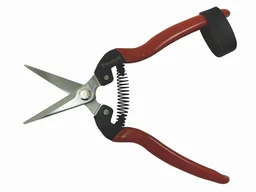
How do I identify garden birds correctly?
Focus on distinctive features. Size and shape provide the first clues: Is the bird sparrow-sized, blackbird-sized or pigeon-sized? Then pay attention to its silhouette in flight.
The plumage provides the decisive details. Learn the characteristic markings: the black head of the great tit, the red breast of the robin and the yellow stripe around the eye of the serin.
Do not forget birdsong. Many species, such as chaffinches or blackcaps, reveal themselves by sound before you see them. Apps can identify calls in real time.
Important note
Only count birds you can identify with confidence. An unclearly recorded "grey bird" has no scientific value. It is better to have one fewer species on your list and know that every entry is correct.
The most common garden birds at a glance
House sparrow: A classic. Males have a grey crown and black throat, while females are an unassuming brown-beige. Sociable and noisy.
Blackbird: Males are black with an orange-yellow bill, while females are dark brown. They like to search the ground for earthworms. Their fluting song is unmistakable.
Great tit: Green-yellow plumage with a black head and a striking black stripe running down the yellow breast. A frequent visitor to bird feeders.
Blue tit: Smaller than the great tit, with a blue crown and yellow breast without a vertical stripe. Very agile and acrobatic.
How do I count correctly? The method step by step
Clearly define your observation area. This could be the entire garden, the view from your balcony into a park or a particular tree. Keep to this area for the full hour.
Record every species you observe during the hour. Alongside the name, note the highest number seen at the same time. If five great tits are at the bird feeder at one point and only two later, enter "5".
Birds that only fly through your garden without landing do not count. Birds you hear but do not see are also excluded, unless you can identify the species with absolute certainty by its call.
The highest number seen at the same time is the key. It indicates the minimum number of birds present and is the only reliable method for nationwide comparisons.
Common mistakes when counting birds
The most common mistake is estimating. Two observed blackbirds do not become "about five". Science is based on facts, not guesses.
Another mistake is confusing young birds with separate species. A young sparrow looks different from a fully grown bird. Learn the juvenile plumage of common species.
Giving up too quickly when you see an unfamiliar bird is not worthwhile. Take your time and observe it with binoculars. The mystery often clears up after a minute of quiet observation.
How can I make my garden bird-friendly?
A bird-friendly garden provides three things: food, water and shelter. Plant native shrubs such as elder, blackthorn or hawthorn. Their berries are a natural source of food for birds.
Avoid pesticides. They kill insects, the most important food source for many young birds in spring. It is fine to leave a wild corner with nettles.
Water is vital. A shallow bird bath or small pond quickly becomes a popular stopping place. Clean it regularly.
Additional advice
Feed birds all year round, but do so appropriately. Energy-rich seeds and suet feed help in winter. In summer, soft foods such as suet balls without nets are suitable. You can find high-quality wild bird food in our shop.
Creating nesting sites and hiding places
Put up nest boxes. Nest boxes with an entrance hole measuring 28 mm in diameter are ideal for great and blue tits. Clean the boxes in autumn.
Create natural hiding places. Dense hedges, climbing plants on the house wall or a pile of leaves provide protection from cats and sparrowhawks.
Do not mow your lawn too often or too short. Longer grass is home to more insects and provides cover for ground-nesting birds such as dunnocks.
What happens after the count?
Submit your data promptly. The sooner the results reach NABU, the sooner the evaluation can begin. Online submission is the easiest option.
NABU usually publishes the first results as early as the weekend after the count. You can immediately see which birds were reported most frequently in your region.
The long-term analysis is published in specialist reports. You can track how your favourite species develops over the years. Your contribution becomes part of a major scientific story.
Use the findings in your garden. Did you count only a few insect-eating birds? Then plant more insect-friendly perennials. Every count is also a survey for your personal species conservation project.
Further ways to get involved
The Garden Birdwatch is a starting point. NABU and LBV offer projects throughout the year, such as the "Winter Bird Count" in January or the "Insect Summer" counting campaign.
Get involved yourself. Document nesting birds in your garden or join a local conservation group. Every garden is a small wildlife corridor.
Share your enthusiasm. Show your children or grandchildren how to identify birds. Building a bird feeder together helps create a connection with nature. You can find inspiration for garden projects here.
Your one-hour count can have a big impact. It sharpens your awareness of the nature on your doorstep and provides data to help protect it. Take part.
Frequently asked questions
- When does the Garden Birdwatch take place?
- NABU's nationwide main event takes place every year over a weekend in May, typically around 10 May. The exact date is announced well in advance. You count for one hour on one of the event days.
- What should I do if I don't know a bird?
- Use identification apps such as "NABU Vogelwelt" or the "Kosmos Vogelführer". Binoculars can help you recognise details. Make a note of unknown birds with a brief description or photo and try to identify them later. Only count species you have identified with certainty.
- Do I count birds that are only flying past?
- No. For the scientific evaluation, only count birds that settle in your observation area – in the garden, in trees, at feeders or on the ground. Birds merely flying past, such as migrating swallows or birds of prey flying at great height, are not included.
- Can I count from my balcony?
- Yes, you can easily count from a balcony, terrace or window with a good view of the garden. The important thing is to have a clearly defined area in view. Note all birds that land or stay in this area during the hour.
- What happens to the data I collect?
- NABU analyses all reports statistically. The results show population trends among native bird species. They help identify negative developments, such as the decline of insect-eating birds, at an early stage and develop targeted conservation programmes. The results are published.
You may also be interested in
- Counting insects in the garden: How you can help species conservation
- Identifying garden birds: Which species visit your garden?
- Choosing Bird of the Year: How it works and why you should take part
- Bird conservation in the garden: How to help native species
- Watching winter birds in the garden and feeding them correctly
- Feeding birds in the garden: How to do it correctly all year round