
In brief: The right choice depends on what matters most to you. Solar lights are easy to install, need no cables and have no running costs, but their performance depends on sunlight. Wired lights provide consistent, bright and reliable illumination in any weather, but need professional electrical installation. Solar lights work well along paths and as accent lighting, while wired lights are better for larger areas and security.
Garden Lighting: Solar or Wired – Which Is Better?
Whether you want to enjoy your garden after dark, light paths for safer walking or highlight a favourite feature, the right garden lighting makes all the difference. The key question is whether to harness the sun or rely on a wired power supply. Here’s how the two options compare.
Find out where solar lights shine and when wired outdoor lighting makes more sense. We cover everything from brightness and cost to installation.
What are the key differences between solar and wired lights?
Solar and wired outdoor lighting work in very different ways. One system generates and stores its own energy, while the other draws power from the electrical supply.
A solar garden light has a solar panel, a rechargeable battery, an LED and electronic components. It collects sunlight during the day, stores the energy and uses it to light up at night. It works as a self-contained unit.
Wired lights connect to a power source. This could be a permanently installed cable underground, an outdoor outlet or a low-voltage transformer. They draw power from the electrical supply whenever they are switched on.
Choosing solar or wired lighting is a key decision when planning your garden. Solar lights are easy to add later, while wired lights are part of your garden’s infrastructure. Plan ahead, especially if you want permanent, bright lighting.
Power source and independence
Solar lights are self-sufficient. Set them up and they’re ready to use, as long as they get enough sunlight. That makes them easy to position wherever you need them.
Wired garden lighting depends on an outlet or a fixed connection. In return, it provides steady power regardless of the time of day, season or weather. The lights deliver the same level of brightness night after night.
Installation and effort
Installation is one of the biggest practical differences. Push solar lights into the ground or screw them into place. There are no cables to run.
For fixed, wired garden lighting, you need to install cables. This takes more planning and work, and often requires an electrician. The result is a permanent, powerful lighting system.
Pro tip
Combine the two systems. Use solar lights as flexible path markers and decorative accents. Add wired lights in key areas such as the patio and front door, or where you need security lighting. That way, you get the benefits of both.
How bright will the lights really be?
Brightness is a key factor. It’s measured in lumens (lm): the more lumens, the brighter the light.
Wired LED lights can easily deliver several hundred lumens or even 1,000 lumens. A bright outdoor lighting spotlight for a house wall can provide 1000 lm or more. Its output is reliable and consistent.
What to expect from solar lights
The brightness of solar garden light models is limited by the size of the solar panel and the battery capacity. High-quality solar lights produce 80-150 lumens. Basic path markers often provide less than 50 lumens.
Solar lights only reach their stated brightness when the battery is fully charged. Their light output gradually fades during the evening, and may drop significantly after several cloudy days.
When comparing solar lights, look beyond the price. Check the specifications for lumen output, battery capacity in mAh and solar panel size. A larger panel charges the battery faster and more fully.
Light color and atmosphere
Both types of lighting are available in different colors, usually warm white or cool white. Wired lights often offer more options, such as dimming or color-changing features.
Solar lights often have a fixed light color, so check the product description. Warm white (2700-3000 Kelvin) creates a cozy atmosphere and works especially well in seating areas.
What does garden lighting cost? The full picture
Consider the total cost: purchase, installation and operation.
Comparing upfront costs
Basic solar lights are often inexpensive. You can buy a set of several path lights for little money, although high-quality solar lights with brighter output cost considerably more.
Wired lights come in a wide range of prices. The fixtures themselves may be inexpensive, but installation adds costs for cables, digging, junction boxes and professional labor.
If you want to light several areas at first, solar lights are often the more affordable option. For a powerful, permanent setup, investing in wired lighting can pay off over time.
Important note
Only trained electrical professionals should work on an outdoor 230V power supply. Faulty installations can be life-threatening and cause significant property damage. Include professional installation in your budget, and have the work inspected and approved.
Running costs and maintenance
This is where the solar garden light has a clear advantage. Sunlight is free, so there are no electricity bills. You may need to replace the battery after a few years.
Wired lights use electricity, but modern LEDs are highly energy-efficient. Garden lighting typically uses little power over the course of a year. Maintenance usually just means cleaning the fixtures.
How much installation and maintenance do they need?
Installation is often what tips the balance between the two options.
Easy setup with solar
Solar lights are simple to install. Choose a sunny spot, push the stake into the soil or screw the light into place, and you’re done. You can move the lights whenever you like.
That makes them a great choice for renters or anyone who wants flexible garden lighting. They’re also handy for impromptu garden parties. Find suitable accessories in our garden equipment category.
Planning a wired installation
A fixed installation using wired power in the garden needs careful planning. Where should the lights go? Where will the cables run? How will power reach them? Will you need to dig under paths or paving?
Planning takes time, but you only have to do it once. The result is a professional, discreet and permanent solution. Find useful wiring tools in our garden tools section.
More advice
Plug-in low-voltage systems offer a middle ground. Place a weatherproof transformer near an outlet, then run low-voltage cables (12V/24V) from it to the lights. You can install these systems yourself. They provide consistent lighting without the hazards of 230V voltage.
Reliability and lifespan: Which lasts longer?
Both systems use long-lasting LEDs, but each has a different weak point.
The Achilles' heel of solar lights
For solar lights, the battery is the part that wears out. After 2-5 years (approx. 500-1000 charging cycles), its capacity drops significantly, shortening the time the light stays on. Many models let you replace the battery.
Solar lights also depend on the weather. In winter, when there are fewer hours of sunshine, they may work poorly or not at all. Dirty solar panels also reduce performance. A product such as the
, a portable solar panel, can be useful for trickle-charging garden light batteries.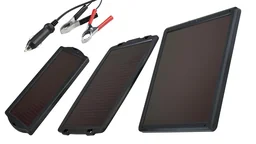
The longevity of wired lights
Hardwired outdoor lights have no batteries to worry about. High-quality models are designed to last for decades, and their electronics are better cooled and protected.
They are highly reliable: when the power is on, the light comes on. Their components are better protected against voltage fluctuations, so the investment can last longer.
Where is each system best used?
The best approach is often a combination of both. Here’s a guide to typical uses.
Solar lights are ideal for
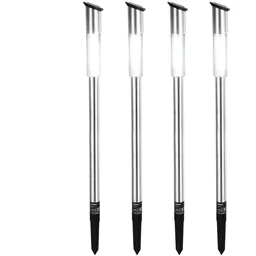
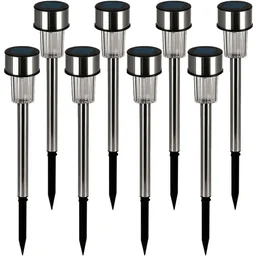
- Path lighting: For marking paths and steps. Sets such as the or the are perfect for this.
- Decorative accents: In flower beds, to backlight bushes, or as table lights.
- Flexible areas: Spaces that haven’t been permanently landscaped or that change with the seasons.
- Hard-to-reach corners: Places that a power cable can’t reach.
Wired lights are better for
- Main patio lighting: For bright, reliable light while reading or eating.
- Security lighting: At entryways, garage driveways, or dark corners with motion sensors.
- Lighting trees or facades: These areas need higher light output.
- All-night lighting: For lights that need to stay on throughout the night.
When planning your garden, think about protecting your furniture, too. Suitable covers for patio furniture protect your outdoor furnishings.
Conclusion: Your decision checklist
Answer these questions to find the ideal system for your needs.
Choose solar if: Easy, wireless installation is important to you. You want to avoid ongoing electricity costs and stay flexible. The lighting is mainly decorative or for side paths. You want to avoid the time and expense of installing power cables.
Choose wired lighting if: You need bright, consistent, reliable light. Lighting is important for safety, such as at an entrance or on stairs. You’re planning a permanent, professional setup. You want lighting that works regardless of the weather or season. The lights need to stay on for long periods.
For most gardens, the smartest solution is a combination. Get the best of both worlds with functional, atmospheric outdoor lighting. Start with solar lights for decorative accents, then plan permanent power connections for key areas. This lets you create a beautifully lit garden one step at a time.
Frequently Asked Questions
- How long do solar garden lights stay on at night?
- Run time varies considerably. After a sunny day, high-quality models with large batteries can provide 8-12 hours of light. Basic path lights often stay on for only 4-6 hours. In winter or on overcast days, they may stay on for much less time or not turn on at all.
- Can I install 230V garden lighting myself?
- Have a qualified electrician install permanently wired 230V cables in your garden. Outdoor outlets and lights must meet strict requirements, including IP44/IP65 protection ratings. You can install ready-made, tested low-voltage systems (12V/24V) with a transformer yourself.
- Which garden lights are the brightest?
- Wired LED spotlights and fixtures provide the brightest, most consistent light. They produce more lumens per light than solar options. For solar lights, look for a high lumen rating (e.g. 80-150 lm) and a large solar panel. Even then, their brightness rarely matches that of wired lights.
- Does stainless steel rust when used for garden lighting?
- High-quality stainless steel (e.g. V2A or 304) is highly rust-resistant and ideal for garden lighting. Cheaper fixtures made from non-stainless steel with a stainless-steel-look finish can still rust. Check the material specifications. Plastic and aluminum housings are also good, weather-resistant options.
- How do I clean the solar panel on my garden light?
- Clean the panel regularly with a soft, damp cloth. Don’t use abrasive cleaners. Dust, bird droppings, and leaves can significantly reduce charging performance. Position the light where rain can naturally rinse the panel. Keeping it clean is key to longer run time.
You may also be interested in
- Solar energy in the garden: The ultimate guide to solar lights
- Patio lighting ideas for a warm, inviting glow
- Garden lighting: How to create an inviting atmosphere
- Solar lights review and comparison 2026
- Outdoor lighting for home security: Tips for your home
- Reduce your electricity bill: Simple tips for your home and garden