
In brief: Safely identifying mushrooms in your garden requires systematic observation of the cap, gills, stem and habitat. Only collect mushrooms you can identify beyond any doubt. A good field guide and advice from a mushroom expert are essential. Many garden mushrooms are inedible, and some are deadly poisonous. This article will help you understand the basics of mushroom identification.
Garden Mushrooms: Identify Species Safely
A lawn full of brown caps, a mysterious fairy ring beneath the birch or colorful fruiting bodies on the compost heap—mushrooms in the garden fascinate and unsettle many people. Are they harmful, edible or simply beautiful? The answer begins with correct identification.
This guide takes you through the key features, common species and necessary precautions. You will learn what to look for and where to find help.
Why do mushrooms grow in my garden?
Mushrooms are not plants. They form their own kingdom and are the fruiting bodies of an extensive underground network called mycelium. This mycelium lives in symbiosis with trees, breaks down dead wood or feeds on organic material in the soil.
Their sudden appearance after rain or in fall is completely normal. It indicates healthy soil life. Most garden mushrooms are harmless and even useful. They recycle nutrients and improve soil structure.
Additional advice
Do not treat mushrooms in your lawn with fungicides. They damage soil life, and the result is often only temporary. It is better to understand the cause: a dense flush of mushrooms often indicates compacted soil, a lot of organic material or constant moisture. Scarifying and aerating the lawn can help. You can find the right tools for this in our garden tools category.
The four keys to mushroom identification
Safe identification never relies on a single feature. Look at the mushroom as a whole and examine it systematically.
1. The cap: shape, color and surface
Start with the cap. Is it domed, flat, umbonate or funnel-shaped? The surface provides further clues: Is it smooth, wet and slimy, velvety, scaly or covered in fibers? Pay attention to subtle color variations, which often change from the center toward the edge.
For example, the field mushroom has a hemispherical, later flat, white to brownish cap with a finely fibrous surface. The poisonous panther cap, by contrast, has distinctive white flakes on a brown cap.
2. Gills, pores or spines?
Carefully turn the mushroom over. The underside of the cap is crucial. Most familiar mushrooms have gills. Their color, spacing and how they attach to the stem are important features.
In boletes such as the cep or bay bolete, the gills are replaced by many tiny pores that look like a sponge. Spine mushrooms such as the hedgehog mushroom are rarer, with spores developing on soft spines.
“The color of the gills and how they change as the mushroom ages are often underestimated identification features. Young field mushrooms have pinkish gills that later turn dark brown to black. This clearly distinguishes them from the deadly death cap, whose gills always remain white.”
3. The stem: ring, bulb and more
Examine the stem carefully. Is it cylindrical, club-shaped or swollen into a bulb at the base? Does it have a ring or a sack-like cup (volva)? These features are pronounced in many poisonous mushrooms.
The death cap has a bulbous stem base with a sack-shaped volva, often partly hidden in the soil, and a membranous ring on the stem. A field mushroom has a ring around the stem, but no such volva.
4. The habitat: soil and surroundings
Where is the mushroom growing? Directly on the lawn, on a tree stump, beneath a beech or in bark mulch? Mushrooms are often associated with particular partners. The birch bolete is almost always found near birch trees, while the cep frequently lives in symbiosis with spruce or beech trees.
Make a note of this information. It can greatly narrow down the possible species. Good documentation also helps experts with remote identification.
Important note
Never eat a mushroom you cannot identify with absolute certainty. The consequences of a mix-up can be fatal. Even experienced foragers leave unfamiliar specimens alone. When in doubt, identify mushrooms by all means—but do not eat them.
Common yard mushrooms and how to identify them
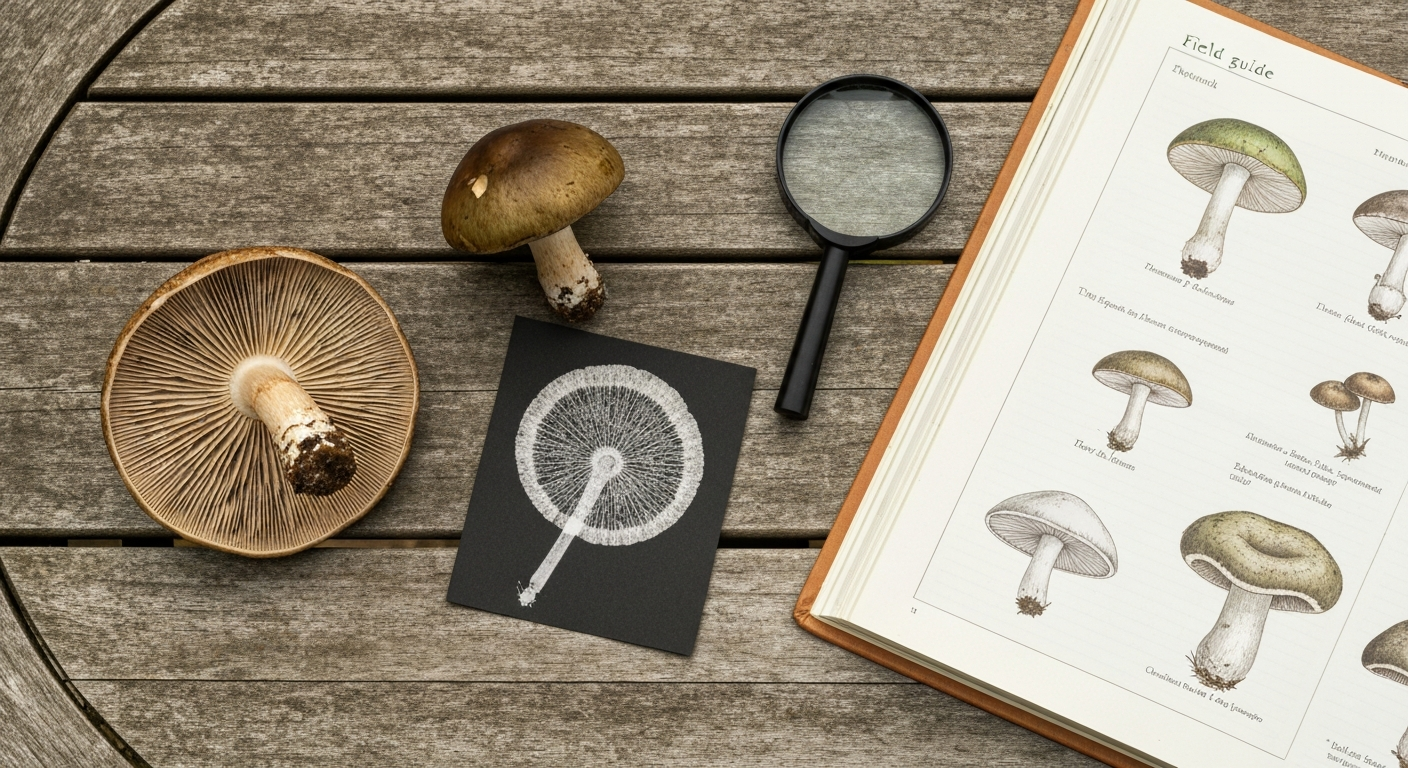
Here are some familiar faces you may encounter in German gardens. This list is not a shopping list, but a guide to help you classify what you find.
Field mushroom (Agaricus campestris)
This popular edible mushroom appears from summer to fall in nutrient-rich meadows and lawns. The cap is white to cream-colored, hemispherical when young and later flat. The gills are pink when young, then dark brown to black. The stem has a distinct, hanging ring.
Beware of confusion: It can be confused with the poisonous yellow-staining mushroom, which smells unpleasantly of ink or chemicals, or with young death caps, whose gills always remain white.
Mower's mushroom (Panaeolus foenisecii)
A small, slender mushroom that appears in large numbers in fertilized lawns. The bell-shaped cap is light to dark brown and often hygrophanous, becoming darker when damp. The gills are gray to black and mottled.
It is considered inedible and mildly poisonous. Its abundance makes it a useful mushroom for beginners learning to recognize the typical growth pattern of small lawn mushrooms.
Fly agaric (Amanita muscaria)
The classic mushroom with a red cap and white spots. It grows in symbiosis with birch and coniferous trees, often at the edge of a garden bordering woodland. Its white gills and ringed stem with a bulbous base are typical.
It is highly poisonous and hallucinogenic. It is an unmistakable mushroom that you should simply learn to recognize. Its appearance can be particularly dangerously attractive to children.
“Fly agaric is a mycorrhizal mushroom, meaning it lives in partnership with trees. If it appears in your garden, it indicates that a healthy tree is growing there and connected to it. Only remove it if there is a safety risk for children; otherwise, you can appreciate this ecological sign.”
Shaggy ink cap (Coprinus comatus)
An eye-catching, elongated mushroom with a scaly white cap that soon dissolves into an inky liquid. It favors nutrient-rich soil, often along paths or on disturbed ground. When young and before the cap opens, it is a good edible mushroom.
Important: It is edible only when fresh and before it turns black. Drinking alcohol around the meal can cause an unpleasant reaction.
What to Do with Collected Mushrooms: Documenting and Storing Them
Found a mushroom you want to identify? Take a methodical approach. Use a knife to carefully lift the mushroom from the ground, including the entire base of the stem. The base is an important identification feature.
Transport different mushrooms separately, for example in paper or cloth bags. Plastic bags quickly make them sweat and spoil. At home, lay out your finds for inspection. A sharp knife such as the
is ideal for making precise cuts and checking features such as the stem structure.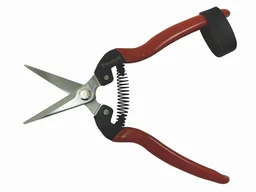
Expert tip
Always photograph the mushroom where you found it. Take several pictures: the top of the cap, the underside with its gills or pores, the entire stem including the base, and a wider shot of the surrounding habitat. These photos are invaluable if you later consult an expert online or want to verify your identification.
When and How to Seek Professional Help
Mushrooms are a complex subject. Even after careful research, you may still have questions. Seek help in these situations:
- You are considering eating the mushroom but are not 100% certain of its identity.
- The mushroom is growing within reach of small children or pets.
- You want to check and expand your knowledge.
Mushroom experts often offer identification advice. The DGfM lists qualified experts by ZIP code. Many also offer identification help by email using photos. Take advantage of these resources.
For a playful introduction to the world of mushrooms, including for children, attractive decorations such as the
or the . They inspire an appreciation for the shapes and colors of nature.
Mushrooms as Indicators of Your Garden Soil
Mushrooms are bioindicators. Their presence can reveal a lot about your soil's condition.
Lots of small brown mushrooms in the lawn can indicate compacted, possibly acidic soil. Dense thatch encourages them to grow. Measures such as lawn lime or regular dethatching can help restore the balance.
Beautiful large mushrooms growing on tree stumps, on the other hand, are signs of healthy decomposition. They help break down deadwood and return its nutrients to the natural cycle. Leave these mushrooms in place unless they pose a risk to the stability of the tree or stump.
Equipment for Getting Started with Mycology
You don't need much to get started. A good, up-to-date mushroom identification guide with photos and detailed descriptions provides the foundation. A sharp knife, a basket or cloth bag for collecting, and a notebook complete the basic equipment.
For detailed work in the garden, such as exposing the mushroom base or cutting fruiting bodies for examination, a precise, sharp tool is worth its weight in gold. The is a versatile helper here.
Also consider practical helpers for general garden care. A suitable irrigation system or a garden fleece can influence the microclimate and, in turn, affect mushroom growth.
The Fascinating World Right on Your Doorstep
Observing and identifying mushrooms in your garden opens up a new way to appreciate nature. It sharpens your eye for detail and teaches humility in the face of nature's complexity.
Start with curiosity and caution. First, learn to confidently identify the most common and most dangerous species. Exchange ideas with others, and don't hesitate to seek expert advice. Over time, you'll come to appreciate the diverse forms and functions of these hidden garden inhabitants.
Exploring mushrooms combines practical gardening with the fascination of natural history. You'll find everything you need for a well-equipped garden in our Garden + Outdoor and Garden Equipment categories. We wish you every success and plenty of enjoyment as you explore the world of mushrooms.
Frequently Asked Questions
- Which mushrooms growing in the garden are edible?
- Edible mushrooms growing in gardens, such as meadow mushrooms or shaggy inkcaps, are rare. There is a high risk of confusing them with poisonous lookalikes, such as the death cap. Only eat mushrooms you can identify with 100% certainty. If in doubt, leave them alone or ask a mushroom expert.
- How can I tell if a mushroom is poisonous?
- There is no single feature that identifies all poisonous mushrooms. Learn how to recognise deadly poisonous species such as the death cap. Warning signs include a bulbous stem base with a volva or white gills on a mushroom with a brown cap. A good mushroom identification guide is essential.
- Why are mushrooms suddenly growing in my lawn?
- Mushrooms in your lawn are the fruiting bodies of underground mycelium. They appear in warm, damp weather, often after rain. Their presence indicates that there is active life in the soil. They break down organic matter such as old roots or mulch and are usually a sign of healthy soil.
- Can I grow mushrooms in my garden?
- Yes, you can grow some edible mushrooms, such as oyster mushrooms or Shiitake, on wood or special substrate blocks. You will need suitable spawn and a damp, shady spot. Complete mushroom growing kits make it easy to get started.
- What should I do if I suspect mushroom poisoning?
- Keep any leftover mushrooms or vomit for analysis. Call the poison control centre immediately or go to the nearest hospital. Do not give milk or activated charcoal unless advised to do so. Do not wait for symptoms—act immediately if you suspect poisoning.
You may also be interested in
- How to identify and avoid poisonous mushrooms in the garden
- Types of garden flowers: A practical overview
- Identifying garden birds: Which species visit your garden?
- Discover plant diversity in the garden
- Identifying and gathering wild herbs: A guide to nature's treasures
- Mushroom season: Top tips for safe foraging and identification