
In short: The best rake for you depends on your garden and the main task. For large areas and lots of leaves, wide leaf rakes with flexible tines are ideal. For precise work in flower beds, narrower models with rigid tines are better. Telescopic handles provide comfort at different working heights. Combination systems are ideal if you want to use several tools with one handle. Our comparison will help you decide.
A rake is an indispensable helper in every garden. But the choice is extensive. Should you choose a wide leaf rake, a fine lawn rake or a versatile combination system? Our 2026 test and comparison examines the different models and shows you which tool suits your needs. We present tried-and-tested rakes and provide specific buying recommendations for your garden.
Table of contents
What types of rakes are available?
Not every rake is designed for every task. Its design determines how it is used. Here are the most important types.
Leaf rakes: The classic for autumn
You can identify leaf rakes by their long, springy and usually angled tines. This design allows you to collect large quantities of leaves gently without damaging the lawn. The working width is often generous for efficient work over large areas. They are the first choice for autumn gardening.
Lawn rakes or scarifying rakes
This type has short, rigid and closely spaced tines. Its job is to comb out moss, thatch and dead grass after winter. It aerates the turf. These rakes are essential for healthy lawn care.
Garden rakes and soil rakes
Use garden rakes to loosen and level soil in flower beds. They have short, robust and rigid tines that can also penetrate firmer soil. They are considerably more solidly built than leaf rakes and are part of the basic equipment for preparing beds.
Combination system rakes
These are rake heads that attach to a universal handle from a combination tool system. This saves space and is cost-effective if you need several tools such as a shovel or broom anyway. The working widths are often somewhat smaller.
Tip: For leaf collection alone, a dedicated leaf rake is usually better than a combination system model. Its tines are optimised for the job, and the greater width saves time.
Our rake testing criteria
How can you recognise a good rake? We defined the most important quality features for our practical test.
Build quality and durability
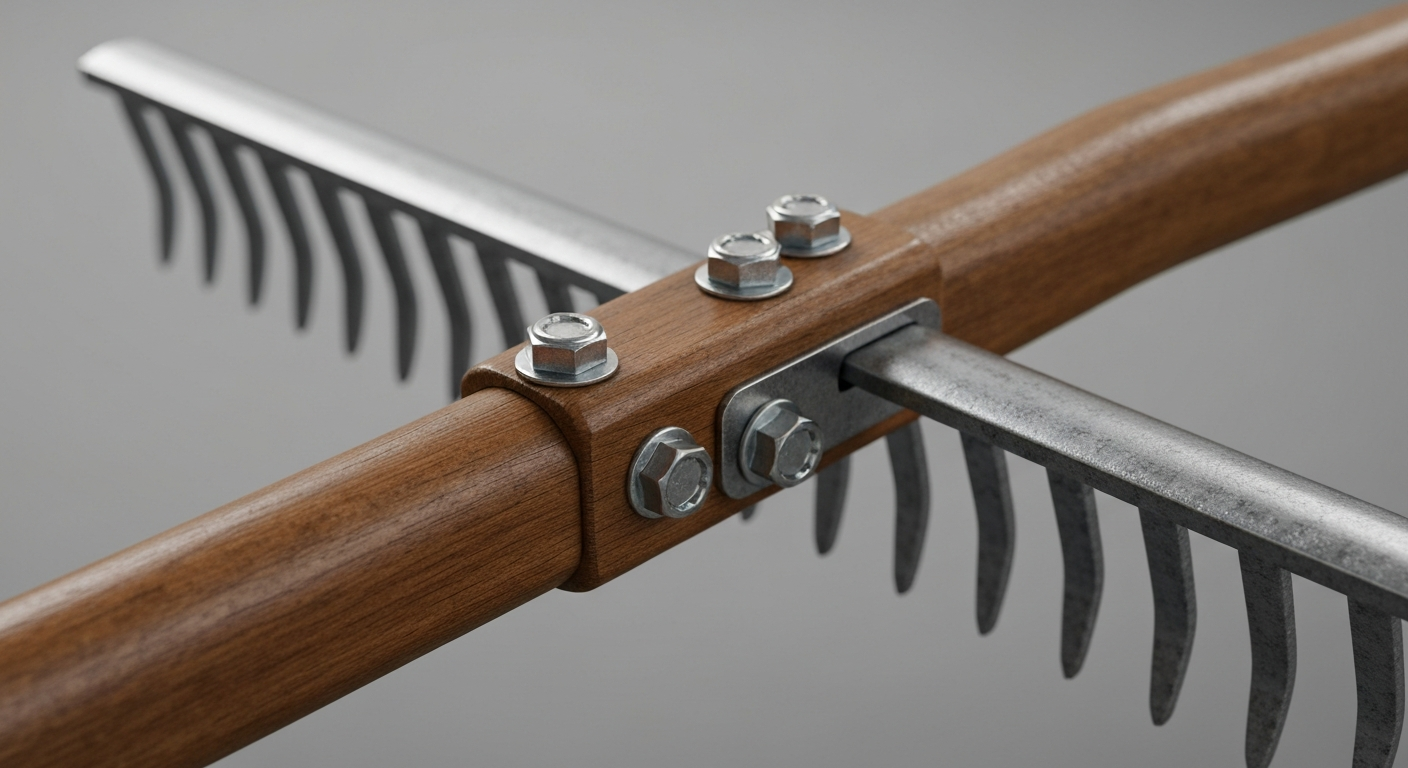
The connection between the handle and rake head must be completely secure and robust. The tines must not bend or break when they hit roots or stones. High-quality spring steel in leaf rakes and sturdy steel in lawn rakes are indicators of durability.
Handling and comfort
The handle should be a comfortable length for your height. An ergonomic grip helps prevent blisters. The overall weight of the rake is crucial for fatigue-free work. Adjustable telescopic handles are particularly comfortable.
Cleaning and care
A good rake should be easy to clear of soil and plant debris. Closely spaced tines should not become permanently clogged. Simple care extends the service life of every garden tool.
Important: Always check the strength of the tines before buying. If individual tines are already loose in the shop, the problem will only get worse under load in the garden. Quality shows in the details.
Comparison of the best rakes
There are many models on the market. We put current rakes through a practical check. The following table gives you a direct overview of the tested models and their strengths.
The highest-rated rakes in our range compared directly:
| Model | Customer rating | Availability |
|---|---|---|
| 2 in 1 XXL Garden Rake (handle not included) 🏆 Top pick | ★ 4,8 (20) | In stock |
| Universal rake with grabber, 25 tines, telescopic | ★ 4,6 (5) | In stock |
| 22-tooth leaf rake 165cm | – | Currently unavailable |
| Rake attachment | – | Currently unavailable |
| Combisystem lawn rake, 60 cm wide | – | Currently unavailable |
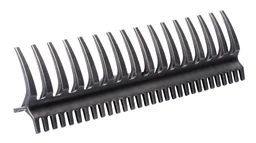
Our top pick for large gardens is the . Its XXL width and 2-in-1 function make it an efficient workhorse. Please note that the handle must be purchased separately.
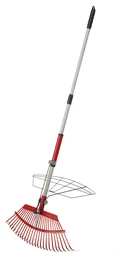
For anyone who values an adjustable working height, the is an excellent choice. The telescopic handle and integrated grabber offer unbeatable versatility for a range of tasks.
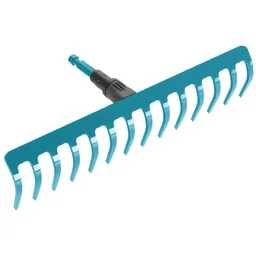
Our test also rated the from the Combisystem. It is the ideal solution for anyone who already owns a Combisystem handle or wants to expand their garden tool set while saving space. The 36 cm width is a good compromise for medium-sized areas.
Buying guide: How to find the right garden rake
Choosing the right rake depends on your specific needs. Ask yourself these questions before buying.
What is your main task?
- Raking leaves from the lawn: Choose a classic leaf rake with flexible tines.
- Scarifying the lawn: A lawn rake with short, dense, rigid tines is essential.
- Loosening or levelling soil: Choose a garden rake with sturdy tines.
- Various tasks: A combination system or telescopic multifunction model could be the right choice.
How large is your garden?
For large properties, investing in a wide rake is worthwhile. You can work faster and with less effort. In small gardens or vegetable beds, narrower, more manoeuvrable models are often the better choice.
How do you store your garden tools?
Do you have limited storage space in your garden shed? Combination systems with a shared handle and interchangeable heads are a space-saving alternative to several individual tools.
Note: Ergonomics are often underestimated. A handle that is too short forces you to work in a bent posture. Check that the handle is long enough for you to work upright. Your back will thank you.
Use and care: Practical tips
With the right technique and care, your rake will remain a reliable helper for many years.
The right raking technique
Work with smooth, pulling movements using your legs and upper body, not just your arms. Keep your back as straight as possible. When dealing with leaves, you can use sideways sweeping movements to gather large quantities efficiently.
Cleaning after use
After working, remove coarse dirt with a brush or garden hose. Allow the rake to dry completely before storing it to prevent rust. This is particularly important for models without a special coating.
Storage and maintenance
Store the rake in a dry, protected place, ideally hanging by its head. Before the gardening season begins, check that the connection between the handle and head is secure. For wooden handles, occasional sanding and treatment with linseed oil can extend their service life.
Special features and accessories reviewed
Some rakes offer special features. We explain which ones are genuinely useful.
Telescopic handles and adjustable grips
An adjustable handle is a real comfort advantage, particularly in gardens with uneven terrain or when the tool is shared by family members. It allows you to set the ideal working height and protects your back.
Folding or dismantlable models
For campers or allotment gardeners with very limited storage space, there are rakes that can be folded down to save space. They are often less stable than fixed models, but practical for occasional use.
Accessories such as leaf collectors or grabbers
Some models, such as the one we tested, come with integrated grabbers. These are useful for picking up raked leaves and putting them in the bin without having to bend down constantly.
Conclusion: The ideal rake for your garden
Choosing the perfect rake is no mystery when you analyse your property and the tasks you have planned. For a classic large garden with plenty of leaves, a wide, high-quality leaf rake such as the remains a recommended basic tool. If you want maximum flexibility and space-saving storage, a combination system such as the or a multifunction tool such as the is the right choice. Invest in quality that shows in sturdy construction and comfortable handling. A good rake will serve you for many years and make gardening easier and more efficient.
Frequently asked questions
- What is the difference between a leaf rake and a lawn rake?
- A leaf rake has long, flexible and often angled tines that collect leaves gently without damaging the lawn. A lawn rake or scarifying rake has short, rigid, closely spaced tines that comb out moss and lawn thatch. Its design is therefore optimised for the specific task.
- What working width should a rake have?
- For large lawns and lots of leaves, wide rakes from 60 cm are ideal for working efficiently. In narrow beds, under shrubs or for precise work, narrower rakes with a width of 30-40 cm are easier to handle. The size of your property and the vegetation will determine the best choice.
- Are telescopic handles useful for rakes?
- Yes, telescopic handles offer great convenience. You can adjust the working height to your individual body height, helping to protect your back. Longer handles can also be extended for greater reach and leverage, while shorter settings provide more control during detailed work. A universal handle is a useful bonus.
- Can I also use a rake to loosen soil?
- Use caution. Classic leaf or lawn rakes are not designed for digging or loosening hard soil. For this, you need a garden rake or cultivator with strong, rigid tines. The flexible tines of a leaf rake can bend or break if you apply too much force.
- What should I look for in a high-quality rake?
- Look for sturdy materials. The handle should be made from robust wood or durable metal and securely fixed to the head. The tines must be firmly anchored and made from spring steel for leaves or hard metal for lawns. Good workmanship without sharp edges ensures a long service life.