
In brief: A dog-proof yard fence is tall enough, has narrow mesh, and is firmly anchored. Pay particular attention to the bottom edge, gates, and corners: your dog must not be able to squeeze through, jump over, or dig underneath. Remove toxic plants and secure tools, ponds, and gaps where your dog could escape. Check the fence regularly, and pair it with exercise and supervision.
A dog-proof yard fence is tall enough, has narrow mesh, and is firmly anchored. Pay particular attention to the bottom edge, gates, and corners: your dog must not be able to squeeze through, jump over, or dig underneath. Remove toxic plants and secure tools, ponds, and gaps where your dog could escape. Check the fence regularly, and pair it with exercise and supervision.
Your dog can enjoy more freedom in the yard when the boundary reliably keeps them safe. However, a fence alone is not enough. Your dog may squeeze through mesh that is too wide, jump over a low section, dig under the bottom edge, or open the gate with their nose.
Plan the boundary from your dog's perspective. This guide explains how to check the fence height, mesh, ground clearance, and gate. You'll also learn which hazards may remain in the yard and how to make them safer. You can also find suitable solutions in the garden and outdoor range.
How can you tell if your yard fence is dog-proof?
First, observe your dog in everyday situations. Do they jump onto walls, climb fences, chase birds, or investigate every loose spot in the ground? These habits affect the design more than shoulder height alone.
Which measurements and weak points should you check first?
Measure the clear distance between the bars or mesh openings. A puppy needs significantly smaller gaps than a fully grown dog. Also keep in mind that flexible mesh can bulge under pressure.
- Fence height: Don't consider only your dog's size. An athletic dog can reach considerably higher with a standing jump.
- Distance from launch points: Move rain barrels, boxes, patio furniture, and raised beds away from the fence.
- Bottom edge: Check every dip, patch of loose soil, and gap where the fence meets the gate.
- Mesh and bars: Your dog's head must not fit through. Also check the gaps against their paws and claws.
- Posts and connections: Screws, clips, and wire ends must be secure and must not stick out.
- Corners: Many dogs test the boundary there because mesh or fence panels may be easier to move.
Walk along the entire boundary in a crouch. This helps you spot gaps that are easy to miss at eye level. Check the fence again after heavy rain, frost, and storms, since softened ground and loose posts can affect its safety.
Pro tip
Record your dog during their first off-leash sessions from a distance. Watch where they sniff, jump, or dig. Reinforce those specific areas before leaving your dog unsupervised in the yard for longer periods.
Which fence suits your dog's size and behavior?
A suitable dog fence must do three things: keep your dog on your property, prevent injuries, and remain stable with daily use. Choose the material and height based on your dog's behavior, not just their breed.
What height and mesh size does your dog need?
A height of around 1,20 metres may be sufficient for a small, calm dog. However, it leaves no safety margin for a jumper. For medium-sized, agile dogs, you'll often need to plan for 1,50 metres or more; large dogs and experienced jumpers often need a taller fence with no nearby takeoff points.
The mesh openings must be small enough to keep your dog from getting their head or paws caught. Check the construction regularly as puppies grow, since their proportions change quickly. A fence that seems safe today may have a gap just a few weeks later.
- Small dogs and puppies: Choose close-mesh material and pay particular attention to the lower 40 centimetres.
- Medium-sized dogs: Make sure the fence is tall enough and the mesh is securely attached to the posts.
- Large dogs or enthusiastic jumpers: Avoid crossbars and objects next to the fence. Plan for extra height.
- Diggers: Combine the fence height with a deep ground barrier or an inward-facing apron.
Which products are suitable for enclosing the yard?
Sturdy wire mesh works well for upgrading an existing fence if you tension it properly and attach it to every post. Don't simply cut the material off at fence height. Bend sharp ends outward, cover them, or guide the mesh into a safe frame.
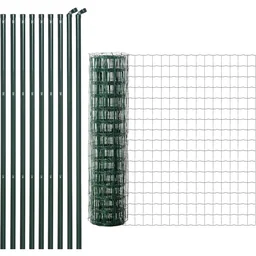
- is green aviary wire mesh measuring 10 x 1,5 meters. Its height is a good starting point for many medium-sized dogs, provided your dog doesn't jump and the bottom edge is secured.
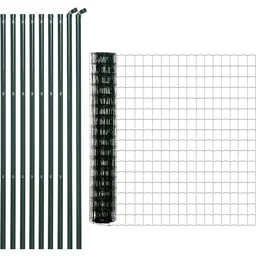
- offers more height at 10 x 1,68 meters. This can be useful for larger dogs or yards with little space for takeoff points.
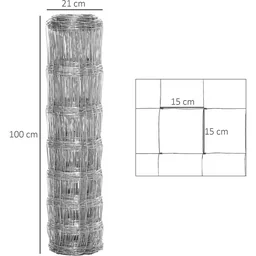
- is silver aviary wire mesh measuring 52 x 1 meter. It's better suited to small, calm dogs, inner yard areas, or additional partitions than as the sole boundary for large jumpers.
Tension wire mesh evenly and attach it so that no sagging pockets form. Check the edges during installation. The color is a design choice, but safety depends on the height, mesh, stability, and bottom edge.
“Dogs must be given sufficient exercise outdoors outside a kennel.”
How do you secure the fence, ground and garden gate?
Most escapes don’t happen in the middle of a fence. Dogs take advantage of loose soil, sunken sections, wide gaps under gates and poorly secured corners. Secure the points where the fence meets the ground, posts and gate first.
How do you stop dogs from digging along the fence?
A dog that digs needs a physical barrier. Bury the mesh at least 30 centimeters deep in the ground, or lay a sturdy apron extending inward from the fence. You can bury the apron or cover it with a suitable material that has no sharp edges.
- Buried mesh: Run the mesh vertically into the ground and compact the soil in several layers.
- Inner apron: Lay the material flat toward the garden, 30 to 50 centimeters wide. This keeps your dog from reaching the fence line directly.
- Solid ground slabs: Lay slabs beneath especially vulnerable sections and seal the joints neatly.
- Post areas: Reinforce corners and gate posts, where dogs often start digging.
Fill in any new holes right away. Don’t leave loose soil, piles of bark mulch or sandy areas directly beside the boundary. These spots encourage more digging and can hide new gaps.
How should a dog-proof garden gate close?
The gate should fit securely in its frame and close by itself. Keep the latch out of your dog’s reach. Check the height from your dog’s point of view: a clever dog may be able to work a simple lever with its nose or paw.
- Install a latch your dog can’t lift or push to the side.
- Use a self-closing mechanism if the gate gets frequent use.
- Secure the gap beneath the gate with a solid ground barrier.
- Check the gaps around the hinges and latch.
- Add a small second gate at an open access point if children, visitors or contractors regularly pass through.
Test the gate by applying firm pressure from the inside. It must not come away from the post, and the latch must stay secure. Also practise having your dog wait reliably at the door so they don’t take every opportunity to slip out when the gate opens.
Important note
Avoid barbed wire, sharp protrusions and unsecured wire ends. Electric fencing is no substitute for a sturdy fence and can be dangerous for animals. Choose a secure, animal-friendly physical barrier.
What garden hazards need additional safety measures?
A sturdy fence keeps your dog from escaping, but it doesn’t protect them from hazards in your yard. Dogs often chew, lick, dig and drink in places you might overlook. Inspect the garden as you would any area a curious animal can explore.
Which plants, substances and tools are dangerous for dogs?
Remove or secure toxic plants such as yew, foxglove, oleander and autumn crocus. Fertilizers, weed killers, slug pellets, wood preservatives and antifreeze must also be stored in a locked cupboard. Never leave packaging out in the garden shed.
- Tools: Store shears, saws, nails and rakes with their sharp ends facing inward, or keep them in a locked cupboard.
- Compost: Secure the container so it can’t be opened. Spoiled food, bones and moldy scraps can be dangerous.
- Water features: Cover water butts and secure ponds with a firm edge or suitable grating.
- Mulch and soil: Check the ingredients and avoid products that contain substances harmful to animals.
- Cables and hoses: Route them so your dog can’t pull on them or trip over them.
Items from the garden supplies range can help keep everything safely organized. Store sharp equipment with your garden tools, and keep your dog’s bed, bowls and toys from dog supplies away from the fence.
How can you create a safe retreat?
Set up a shady place to lie down with constant access to fresh water. Your dog shouldn’t have to lie in direct sunlight or on hot paving slabs. Make sure the surface is nonslip, especially around water bowls and exits.
Divide the garden into zones. Set aside a quiet area for sleeping, an open space for play and a sheltered section for toileting. Keep the resting area as far from the fence as possible so your dog doesn’t spend hours reacting to passersby, neighboring dogs or wildlife.
Additional advice
Arrange the garden so your dog doesn’t constantly patrol the fence. Privacy screening along selected sections, a resting area away from the boundary and short activity sessions can reduce stress and unwanted barking.
How can you keep the garden safe over time?
A fence stays safe only if you inspect it regularly. Weather, plant growth, gardening work and your dog’s behavior can all change the situation. Set regular inspection dates and don’t wait until a gap becomes obvious.
Which checks should be part of your daily routine?
Check the gate and the area right along the fence before each time you let your dog run free. A quick visual inspection takes just a few seconds and can reveal an open latch, fallen objects or a freshly dug hole. Once a week, check the connections, posts and wire tension too.
- Daily: Close the gate, check the water, and clear away holes and new objects.
- Weekly: Check the mesh, clips, screws, posts and bottom edge of the fence by hand.
- After storms and frost: Check stability, sunken ground and bent fence sections.
- After gardening work: Remove strings, plant supports, tools and open beds from your dog’s run area.
- As plants grow: Trim branches that could help your dog jump over or push out the fence.
Why aren’t a fence and gate enough on their own?
A secure fence doesn’t replace exercise, training and interaction. Give your dog opportunities to run outside the garden, explore new scents and spend time working with you. Keep an eye on them in the garden, especially while they’re getting used to it and when new distractions appear.
Watch your dog’s body language and behavior. Restlessness, constant pacing, scratching at the fence or fixating on passersby can mean the garden layout needs adjusting. Making the fence taller won’t solve every problem if the real causes are visual distractions, boredom or a lack of activity.
“No one may cause an animal pain, suffering or harm without reasonable cause.”
Which checklist should you use before letting your dog out for the first time?
- The gate is closed, and the latch is out of reach.
- There are no gaps between the ground and the fence.
- The mesh is taut and secured to every required post.
- No wire ends, screws or sharp edges protrude into the run area.
- Your dog can’t reach crates, furniture or flower beds that could serve as a launching point.
- Water, shade and a dry place to lie down are available.
- Toxic plants, chemicals, tools and open water features are secured.
- You’ve observed your dog’s behavior around the gate, fence and neighboring boundary.
Check the enclosure from your dog’s point of view and adapt it as soon as their behavior changes. A suitable fence, safe garden supplies and responsible supervision can create a garden where your four-legged friend can move around freely and safely.
Frequently Asked Questions
- How tall should a fence be for a dog?
- For small, calm dogs, 1.20 meters is often enough, while large, athletic, or agile dogs usually need a fence that is 1.50 to 1.80 meters tall. Your dog's behavior is the key factor. Leave enough space between the fence and walls, flower beds, or furniture that could give your dog a boost.
- What size fence openings will keep a dog from squeezing through?
- The openings should be smaller than your dog's head, especially for puppies and small breeds. Check the narrowest opening against your dog's head size, with some room to spare. Heavy-duty welded wire mesh makes it harder for dogs to push through or widen the openings. Also check for sharp wire ends that could injure your dog's paws or muzzle.
- How can I secure a garden gate for my dog?
- Install a self-closing gate and a latch your dog can't reach. Check for gaps near the ground, posts, and gate stop. Your dog shouldn't be able to open the latch with its muzzle or paw. Cover wide gaps with sturdy mesh, then test the gate by pushing on it from inside the yard.
- Can I leave my dog alone in the yard?
- Only if the fence, gate, and yard are secure and your dog is familiar with the surroundings. Heat, toxic plants, ponds, tools, and neighboring dogs can all pose risks. Don't leave your dog alone for long periods. Provide shade, water, a safe place to lie down, regular interaction, and exercise outside the yard.
- How can I stop my dog from digging under the fence?
- Extend the mesh at least 30 centimeters into the ground, or install it as an inward-facing skirt 30 to 50 centimeters wide. Pack down the soil along the fence and remove loose dirt. Check your dog's favorite digging spots daily until the behavior stops.
You may also be interested in
- Build Your Own Garden Fence: Colorful Ideas for a Child-Friendly Yard
- Garden Fences: Neighbor Disputes and Design Tips
- Garden Fences: How to Protect Hedgehogs in Your Yard
- How to Build a Garden Fence: Materials, Tips, and Instructions
- Planting Along a Garden Fence: Privacy and Design Ideas
- Garden Fence Ideas: Choosing Wood, Metal, or Stone