
In brief: You apply for a gas connection with your local network operator, ideally early in the building process. Costs consist of the house connection (1.500-3.000€) and the internal installation. A certified heating engineer installs the pipework and gas meter in your home. Final approval follows a pressure test by the network operator.
Gas Connection to Your Home: Application, Costs & Installation
You are planning a new home or replacing your old heating system. A gas connection is a key decision for your energy supply. This guide takes you through the process from application to commissioning.
Why choose gas at all?
Natural gas is an efficient and comparatively clean fuel. Modern gas condensing technology achieves high efficiency levels. For many people building a home, gas remains a cost-effective option compared with other systems.
Availability depends on your location. First, check with your local council or network operator.
How do I apply for a gas connection?
The first step is always to contact the responsible gas network operator. This is not necessarily the same company as your future gas supplier.
You can find the network operator via the Market Master Data Register or by contacting your local council.
“Submit your gas connection application with your planning pre-application. This helps avoid delays because excavation work for the road and site access can be coordinated.”
Submit the application in writing using the provider’s forms. Important details include the requested house connection point and the expected annual consumption.
Your heating installer can help estimate consumption. List all planned appliances: heating, hot water production and a gas cooker.
Important note
Most network operators will not process your application without a valid planning permission or proof of land ownership. Have these documents ready.
The house connection: from the street to your home
The network operator is responsible for the pipe up to the property boundary. On your property, they usually install it as far as the main isolation valve (HAE) at the building.
This work is known as a house connection. It includes laying the underground pipe and installing the house connection box.
You, as the applicant, are responsible for the cost of this work. You will receive a detailed quotation.
What does a gas connection cost?
The total cost consists of several items. It is difficult to give a general figure.
Cost item 1: The house connection
The network operator charges for connecting the property. The amount depends on the distance to the nearest existing main pipe.
Allow 1.500 to 3.000 euros for a standard connection. Costs can increase significantly for very long distances.
The quotation is binding. Check it carefully.
Cost item 2: The internal installation
The heating installer becomes responsible from the main isolation valve onwards. These costs must be calculated separately.
They include installing the pipes inside the house, fitting the gas meter and connecting the appliances.
Materials and labour inside the house can easily add another 1.500 to 2.500 euros. The pipes must be installed and secured professionally. You can find suitable accessories such as fittings and PE pipe compression connectors in our range.
“The cost of creating wall penetrations and sealing them properly is often underestimated. Make sure you set aside enough budget for qualified professional work.”
Cost item 3: Meter and metering equipment
The gas meter is usually supplied and installed by the network operator. Fees apply for installation and regular calibration.
These charges will later appear on your monthly or annual gas bill.
Professional tip
Always obtain several quotes for the internal installation. Make sure the company is a registered gas installation service provider. This is a legal requirement.
How does the installation work?
Once your application has been approved and you have accepted the quotation, the practical work can begin.
Step 1: Excavation work
The network operator coordinates the excavation work. On public land, they need a special-use permit.
On your property, their contractor lays the pipe at a frost-free depth (at least 60 cm). You must provide an accessible route for the trench.
The pipe ends in the house connection box on your external wall.
Step 2: The internal installation
Now your heating engineer takes over. They run the pipe from the HAE through the wall and into the house.
Inside, they install the safety train: main isolation valve, pressure regulator, gas meter and then the distribution pipes to the rooms.
For secure connection technology, you can find high-quality brass threaded fittings at Westfalia.
The pipes are installed visibly or in service ducts. Each branch is fitted with an isolation valve. This allows future maintenance without shutting off the entire supply.
Additional advice
Have an additional potential connection point installed for a terrace or outdoor fireplace. Retrofitting it later is more expensive and time-consuming.
Step 3: Pressure testing and sign-off
Pressure testing takes place before commissioning. The installer uses overpressure to check that the entire internal installation is leak-tight.
Only after the test has been passed does the network operator authorise the connection to the public network.
This takes place during the final inspection. A network operator representative commissions the house connection box and the meter.
What do I need to consider after installation?
Your new heating system is ready for operation. However, a few points remain important.
Maintenance and safety
Gas pipes and fittings are not subject to a regular statutory inspection requirement like a chimney. Nevertheless, you should take responsibility for basic checks.
Check regularly that the isolation valves move freely. If you are away for an extended period, you can close the main isolation valve.
For cleaning collection trays or drains on your heating system, a robust
can be helpful.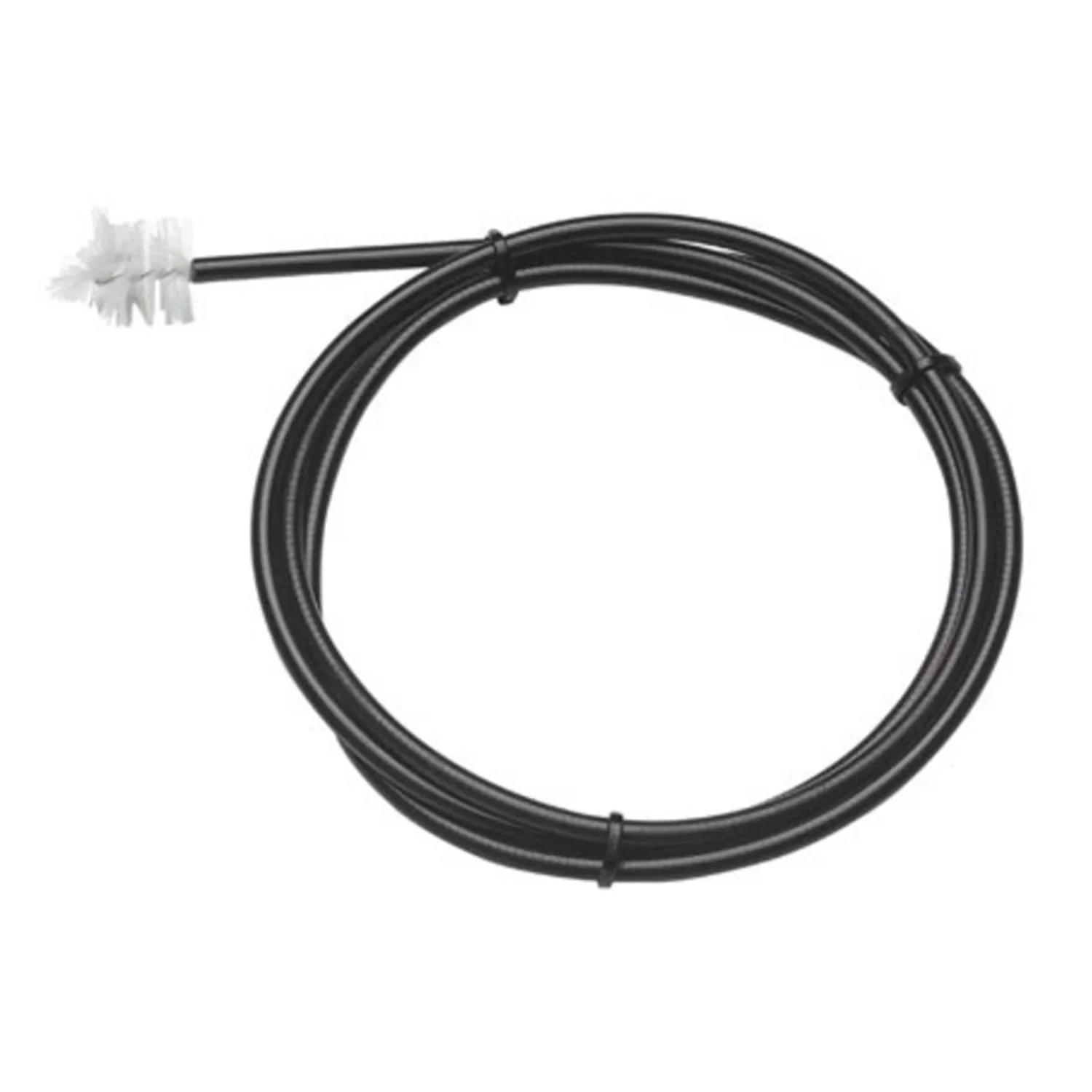
Smell of gas: What should I do?
Natural gas is odorised. You can smell it clearly if there is a leak.
What to do: No flames, do not operate electrical switches, open the windows, leave the house and call the gas emergency service (116 116) or fire service (112) from outside.
Stay calm. Most incidents occur at flexible hoses or connections.
Alternative: Liquefied Petroleum Gas (LPG)
If no natural gas network is available, LPG from a tank is an option.
This fundamentally changes the planning process. You will need a tank, which can be installed above ground or buried.
The home installation is similar, but requires a different pressure regulator. Condensing technology also works with LPG.
Costs are higher due to tank rental, refilling and more complex logistics.
Pros and cons at a glance
LPG makes you independent of the gas network. You can choose your supplier freely.
The disadvantages are higher fuel costs per kilowatt-hour and the space required for the tank.
A detailed cost-effectiveness calculation is essential before making a decision.
For work outdoors or around the tank, a reliable
versatile tool can provide valuable assistance.
Planning aids and checklist
Proceed systematically. This checklist will help you.
Early planning (12+ months before construction/start)
- Clarify the availability of a natural gas connection.
- Contact the network operator and request preliminary information.
- Involve an energy consultant or heating engineer in developing the plan.
- Decide between natural gas, LPG and other energy sources.
During construction planning (6-12 months beforehand)
- Submit the formal application to the network operator.
- Review and accept the quotation.
- Coordinate the schedule with the excavation work.
- Commission a heating installer to prepare the detailed plans.
- Discuss the required fittings and safety technology. Our range of ball valves and shut-off valves provides quality components for this purpose.
Before installation (4 weeks beforehand)
- Coordinate the schedules of all trades (civil engineering, heating and, if required, electrical work).
- Keep access to the trench route clear.
- Have all documents ready for acceptance.
Once the work is complete, you can enjoy your new system. For cosy evenings on the patio, an
effectively protects you from annoying insects.
Choosing a gas connection is a long-term investment in your home. With careful planning and the support of certified professionals, you can create a safe and efficient energy supply for your house.
Frequently Asked Questions
- How long does it take to install a gas connection?
- Allow several weeks to months from submitting the application to commissioning. The external installation by the network operator often takes 2-4 weeks after approval. The internal installation by the heating engineer can be completed within a few days. The total duration depends largely on the contractors' workload and the complexity of the excavation work.
- Can I install the gas connection myself?
- No. Gas connection work is subject to strict legal requirements and may only be carried out by certified specialist companies. This applies both to laying the main pipe to the house (by the network operator) and to installing the internal system and meter (by a registered heating engineer). DIY work is excluded for safety reasons.
- How much does a gas connection cost per metre?
- For public pipe construction up to the property boundary, the network operator often charges a flat rate. Installation on the property (the house connection pipe) can be estimated at 80-150€ per metre, depending on the ground conditions and depth. The pipework inside the house costs extra. Always obtain a detailed quotation.
- Do I need a gas connection for a gas boiler?
- Yes. A gas condensing boiler requires a gas connection. Alternatively, you can use LPG from a tank, although this involves different requirements and costs. The decision between a natural gas connection and an LPG tank should be made early during energy planning, as it affects the entire building services design.
- What documents do I need for the application?
- You will need the network operator's completed application form, a site plan showing the desired connection point, proof of ownership or planning permission, and a sketch of the planned points of use in the house. The planned annual consumption is also often requested. Your heating installer can help you compile the technical documents.
You may also be interested in
- Planning utility connections: your guide to electricity, water & more
- Gas heating for your home: costs, benefits and efficiency
- District heating for your home: everything you need to know about the connection
- Installing gas heating: the correct installation step by step
- Gas hybrid heating: costs, benefits and installation
- Gas boiler prices: types and costs at a glance