
In brief: To read your gas meter correctly, identify the meter register. Record only the numbers in the black section before the decimal point, from left to right. The red numbers after the decimal point are not used for billing. Also note the meter number printed on the device so you don't confuse it with another meter.
Introduction: More than just numbers on a display
Once a year, your natural gas utility asks you to submit a meter reading. For many people, it feels like a chore. But the numbers on your gas meter are more than just the basis for your next bill. Your meter reading is a useful tool. It gives you direct control over your energy use and is the first step toward lowering your heating costs. When you know how much energy you use, you can manage it.
This guide walks you through how to read your gas meter correctly, understand the readings, and use that information to make informed decisions for your budget and the environment. It's easier than you might think.
Where can you find your gas meter?
Your gas meter is usually installed where the gas pipe enters your home. Look in these places:
- Basement: The most common location, often near the main gas shutoff valve and furnace.
- Utility room: Newer homes often have a dedicated room for utility connections, including electricity, water, and gas.
- Stairwell or hallway: In apartment buildings, meters are sometimes installed in a central meter cabinet in the hallway or basement.
- Apartment: Less common, but a meter may be in a recessed area or cabinet inside the apartment, often near the kitchen or furnace.
The meter is usually a gray or white box with two pipes leading from it. It belongs to your local utility, not your natural gas supplier.
How is a gas meter designed? The important components
Whether old or new, the essential parts of a gas meter are always the same. You just need to know what to look for to find the right information.
The meter number: The unique identifier
Every meter has a unique meter number. It's like a license plate and ensures your usage is assigned to the right address. You'll usually find the number printed near a barcode. Compare it with the number on your last gas bill to make sure you're reading the correct meter.
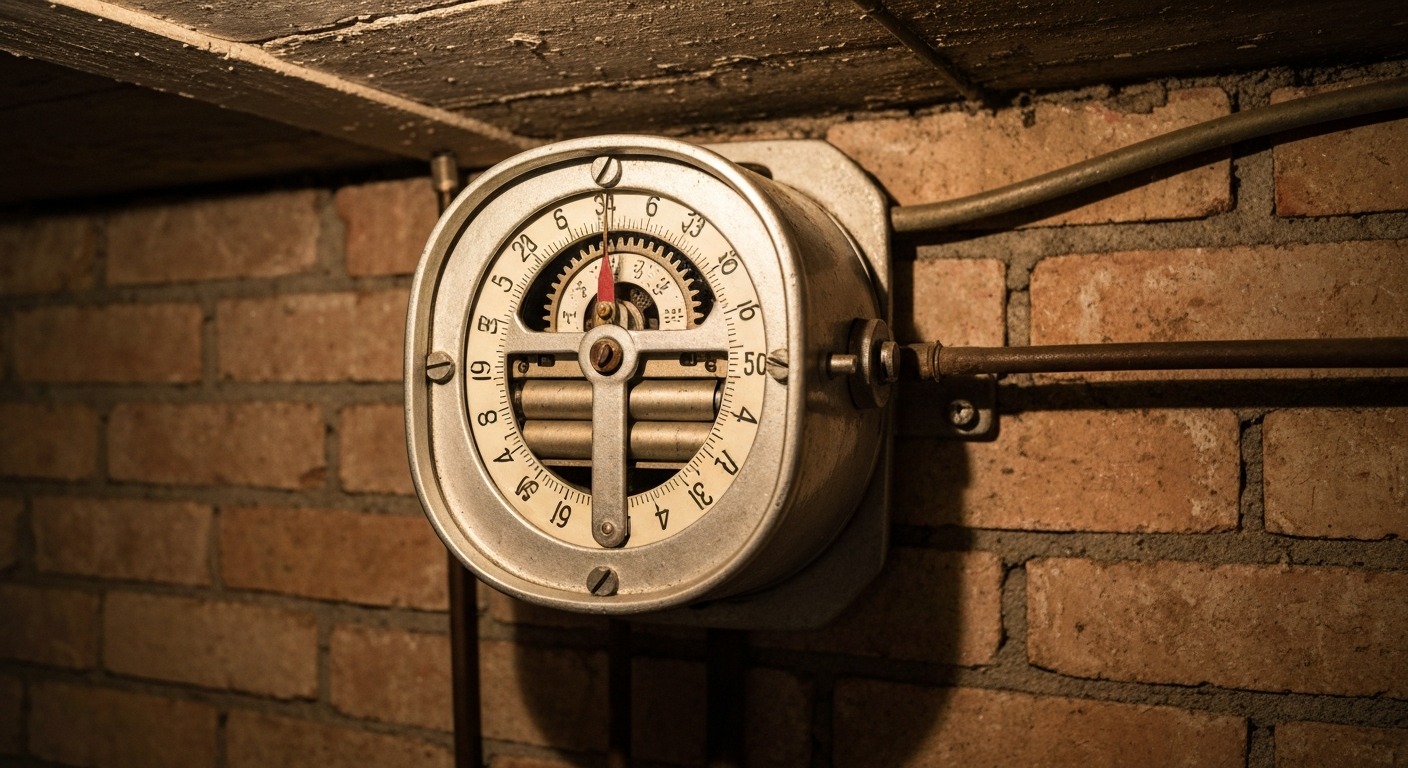
The meter register: Where your usage is displayed
The heart of the meter is the register, which measures the flow of gas. There are two main types:
- Mechanical roller register: This is the traditional type. You'll see several digits on small rotating wheels. Usage is displayed in cubic meters (m³).
- Digital display: Modern meters have a digital display (LCD). The meter reading appears electronically. You may need to press a button to activate the display or cycle through the menu options.
Regardless of the type, the value you need is the meter reading. It shows how many cubic meters of gas have flowed through the pipe since the meter was installed.
Pro tip
Take a photo of the meter reading with your smartphone. It gives you a digital record with a timestamp and helps prevent transcription errors when you write down the numbers. The photo also makes it easy to compare readings later.
Step-by-step guide: How to read your meter correctly
Reading your meter is straightforward. Just record the correct numbers and ignore the decimal places.
Step 1: Find the reading on the roller register
On a mechanical meter, you'll see a row of numbers. Focus on the section before the decimal point, which usually has a black background. The numbers after the decimal point are often outlined in red or shown on a red background. You don't need these decimal places when submitting your reading to your supplier.
Read the numbers in the black section from left to right and write down the complete number. This is your meter reading in whole cubic meters.
Step 2: Read a digital meter
With a digital meter, it's even easier. The meter reading usually appears right on the display. Look for the decimal point. Record only the digits before it. Some models require you to press a button to navigate to the correct reading. Look for the “m³” symbol.
Step 3: Check and record the meter number
Along with the meter reading, record the meter number. This helps prevent mix-ups when you submit the reading, especially in apartment buildings with multiple meters.
Why is it so important to read your gas meter regularly?
Taking an annual meter reading is required. However, checking it regularly on your own offers significant benefits and turns you from a passive consumer into an active energy manager.
Regularly checking your meter reading helps you keep track of your own usage and review your supplier's annual bill. That way, you can spot unexpected additional charges early.
Control over your energy use
If you record your meter reading every month, you'll get a feel for your usage. You can see right away how a colder period or changes in your heating habits affect the numbers. This transparency is the basis for saving energy consciously. Compare your usage with the same month last year to spot trends.
Spot billing errors early
Your annual bill is based either on the reading you submitted or an estimate. Estimates can differ significantly from actual usage and lead to high additional charges. With your own records, you can check whether your supplier's bill looks reasonable and raise an objection right away if you find discrepancies.
Actively reduce heating costs
You can only improve what you measure. If you make energy-saving changes, such as adjusting the heating curve or installing new thermostats, you can see the results clearly on your meter. This direct evidence is motivating and helps you find more ways to save energy at home. The right plumbing and irrigation technology can also improve efficiency.
From Meter Reading to Kilowatt-Hours: How Is Consumption Calculated?
You read your gas usage in cubic meters (m³), but your bill is issued in kilowatt-hours (kWh). Why? Natural gas is a natural product, and its energy content can vary. To ensure fair billing, the volume supplied (m³) is converted into the actual amount of energy (kWh).
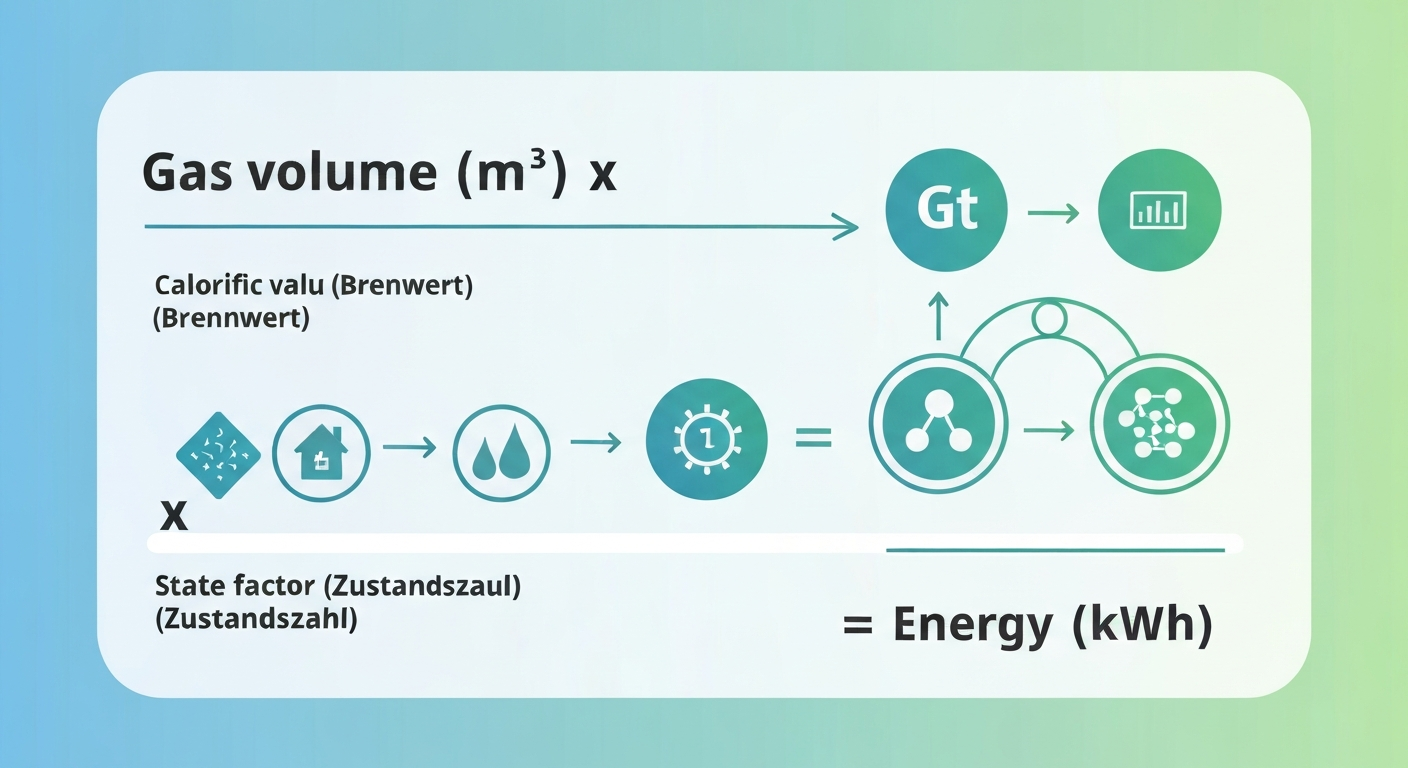
Two factors are decisive:
- Calorific value: This value indicates how much energy is contained in one cubic meter of gas. It varies depending on the gas's source and composition (H-gas or L-gas). A higher calorific value means more energy per cubic meter.
- Volume correction factor: This adjusts for the effect of local air pressure and temperature on the volume of gas. Gas expands when warm and contracts when cold. The volume correction factor standardizes the volume to a defined reference state.
The formula is: Usage in m³ × calorific value × volume correction factor = usage in kWh
Your energy supplier performs this conversion. The calorific value and volume correction factor must be clearly shown on your annual bill.
The calorific value indicates how much energy is released when one cubic meter of gas is burned. Because this value varies depending on the gas source, it's essential for fair billing.
What Should You Do If Your Meter Reading Is Incorrect or Your Meter Is Faulty?
Sometimes things do not go as planned. If something seems unusual, act right away. First, check that you read the meter correctly. Transposed digits are a common source of errors.
If your gas use is inexplicably high even though your habits have not changed, you may have a leaking pipe or a faulty appliance. If the meter does not move at all while the heat is on, it may be faulty. In either case, contact your local gas utility, not your gas supplier. You can find the contact information on the meter or your gas bill.
Important notice
If you smell gas, open windows and doors immediately. Do not operate electrical switches or use telephones, and leave the building. Contact your gas utility's emergency service from outside. Never tamper with the gas meter or gas pipes yourself.
Energy-Saving Tips After Reading Your Meter
Now that you know how much gas you use, you can take targeted steps to reduce it. Small changes can often make a significant difference on your next bill.
- Optimize your heating: Lower the room temperature by just one degree Celsius and save around 6% on energy. Set your thermostat to lower the temperature at night, and only heat rooms you use.
- Ventilate properly: Air out rooms briefly instead of leaving windows tilted open for long periods. Open windows wide for 5-10 minutes to replace the air without cooling down walls and furniture.
- Keep up with maintenance: Have your heating system serviced regularly. Bleed your radiators so hot water can circulate freely. You can often find suitable tools and accessories for this type of work in the maintenance supplies section.
- Check your insulation: Drafty windows and doors waste energy. Seal gaps and cracks. Even simple weatherstripping can make a big difference.
Additional advice
Record your meter readings in a simple spreadsheet or app. Enter the date and reading each time. Over time, you will build a valuable record that helps you understand your gas use and track the impact of energy-saving measures.
Understanding your gas use is the key to greater control and lower costs. Take a few minutes to check your meter regularly. It is a small effort that can lead to significant savings. Visit our shop for a wide range of useful products for your home, garden, and workshop that can help you save energy and handle maintenance.
Frequently Asked Questions
- What is the difference between a meter reading and a meter number?
- The meter number is the unique identification number of your gas meter, much like a license plate number. The meter reading is the changing value that shows your gas consumption in cubic metres (m³) and keeps increasing. Both details are important for accurate billing.
- Do I also need to read the numbers in the red section?
- No. Only the numbers before the decimal point, usually in the black section, are used for your annual bill. The numbers in the red box or after the decimal point show fractions of cubic metres and are not needed by your utility company for billing.
- My meter is not moving. What should I do?
- If you are sure that gas-consuming appliances, such as your heating system, are running but the meter is not moving, there may be a problem. Contact your gas utility right away. It is responsible for maintaining and replacing the meter.
- How often should I read my gas meter?
- Your gas supplier will usually ask for a meter reading once a year. However, it is a good idea to record the reading yourself monthly or quarterly. This helps you track your gas use and spot unusual readings or leaks early.
- Why is my gas consumption billed in kWh but measured in m³?
- The meter measures the volume of gas (m³). However, the amount of usable energy (kWh) depends on the gas quality (calorific value) and local pressure (volume correction factor). Your supplier therefore converts the volume into an amount of energy for accurate billing.
You may also be interested in
- Calculate gas consumption: How to save on heating costs
- How to use a gas burner correctly
- Install a gas heating system: Proper installation step by step
- Choose the right gas boiler: How to get it right
- Understand heating costs: The heating cost guide for efficient heating
- How to use a paint thickness gauge correctly