
In brief: Granular iron fertilizer works slowly but lasts longer, making it a good choice for routine lawn care and large areas. Liquid iron fertilizer greens up grass quickly, but its effects are short-lived. The best option depends on your goal: long-lasting care with granules or a quick green-up with liquid fertilizer.
A lush, deep green lawn is a source of pride for any gardener. But yellow patches, weak growth, and moss can soon take hold. One possible cause is a lack of an essential nutrient: iron. Iron fertilizer can help, but choosing between granular and liquid formulas can be tricky. Each has its own strengths and drawbacks.
This guide compares the two options and explains when to use granules and when liquid fertilizer is the better choice. You’ll have the information you need to choose the right product for a lawn full of color and vitality.
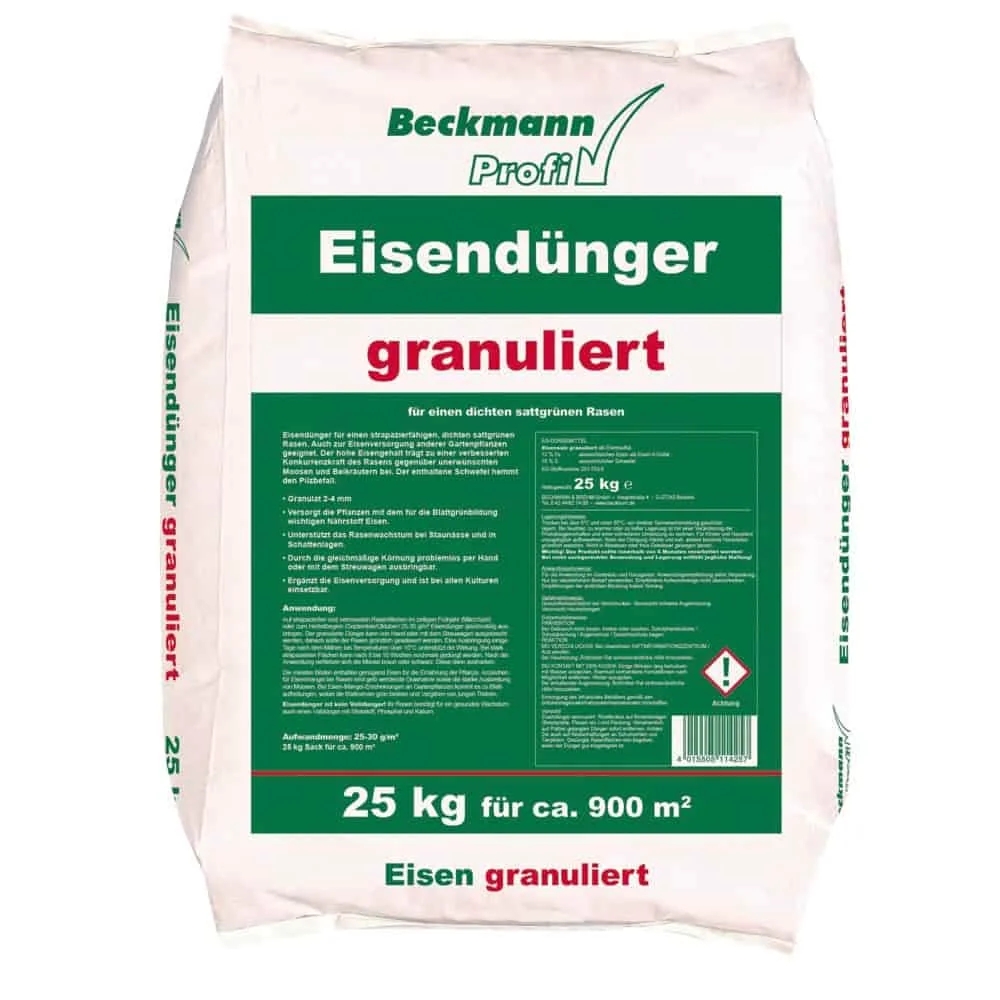
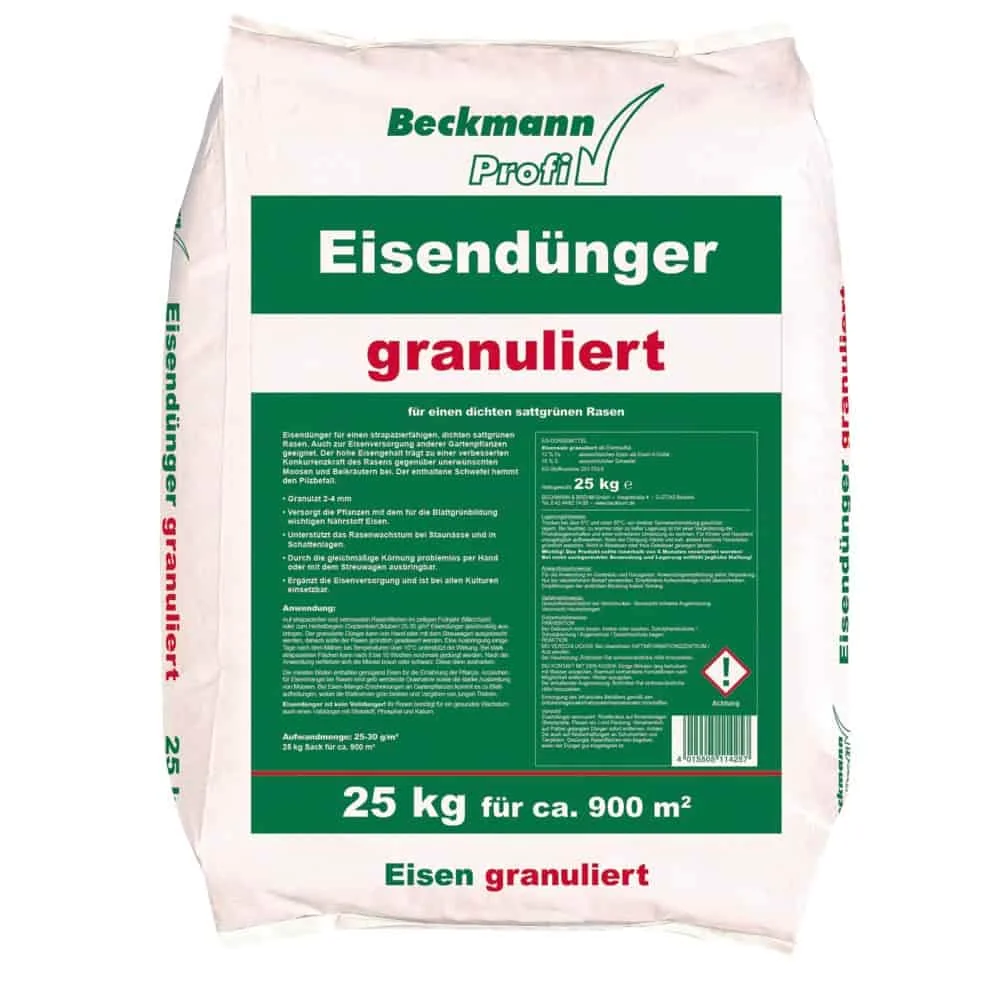
For a reliable, long-lasting supply of nutrients, many gardeners rely on tried-and-true granules. The 25 kg granular Beckmann iron fertilizer () is a great example. Its 2-4 mm granules are easy to spread evenly, and the 25 kg bag covers up to 900 m²—ideal for routine lawn care throughout the season.
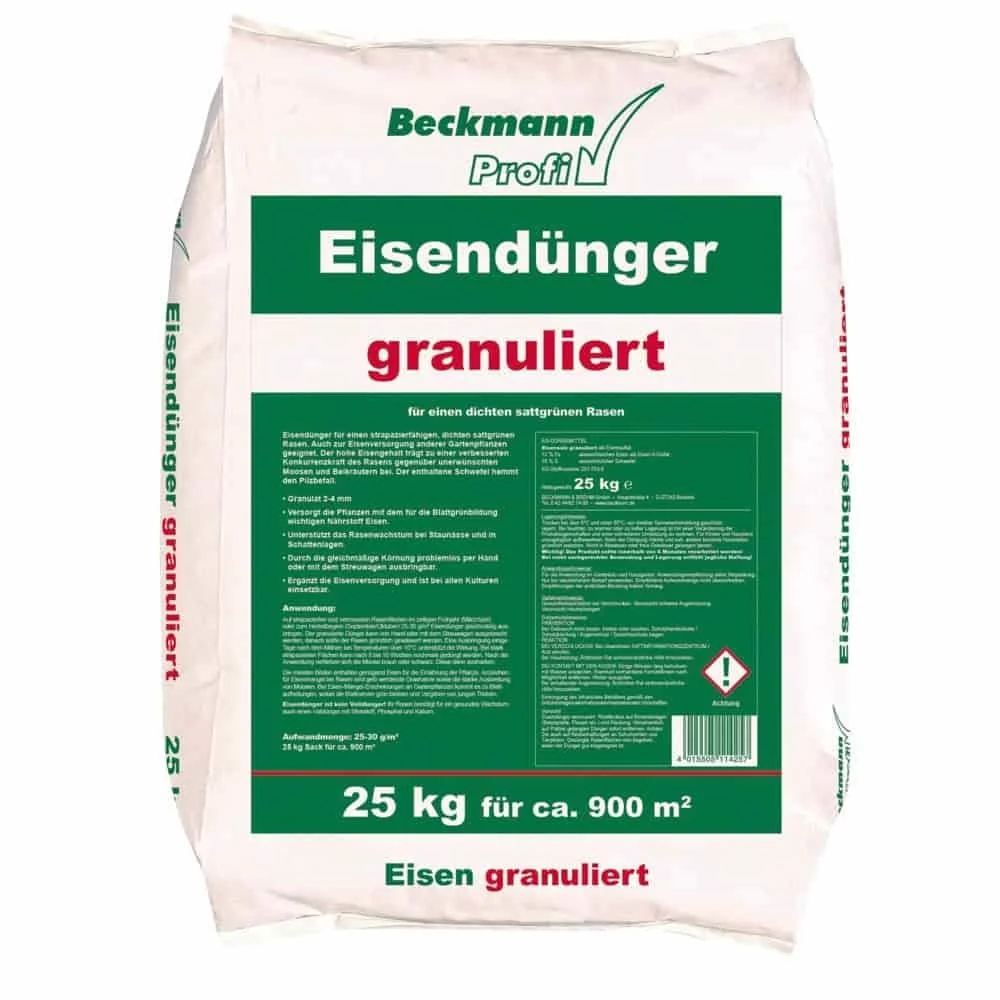
Table of contents
- What is iron fertilizer, and why does your lawn need it?
- Granular iron fertilizer: A closer look at the long-lasting option
- Liquid iron fertilizer: A quick green-up boost
- How do you apply granular and liquid iron fertilizer?
- Granular vs. liquid fertilizer: A side-by-side comparison
- Which type of fertilizer is right for you?
What is iron fertilizer, and why does your lawn need it?
Iron fertilizer is not a general-purpose growth fertilizer like an NPK product (nitrogen, phosphorus, potassium). Its main purpose is to support a specific process in grass: chlorophyll production. Chlorophyll is the green pigment plants need for photosynthesis. Without enough iron, grass cannot produce enough chlorophyll.
Iron deficiency, also known as chlorosis, is easy to spot. Grass blades turn pale green or yellow, even when they get enough light and water. The lawn may look weak and become more susceptible to disease and moss. Iron helps strengthen grass cell walls and makes the plants more resilient.
The main ingredient in iron fertilizer is iron(II) sulfate. This water-soluble compound can be absorbed through plant roots or leaves. It also works as iron fertilizer for moss. The sulfate scorches sensitive moss, causing it to die and turn black. The grass, meanwhile, gets stronger and can quickly fill in the resulting bare patches.
A healthy lawn needs balanced nutrition. Iron is the micronutrient that helps grass maintain its rich green color and vitality. It’s essential for an attractive, resilient lawn.
Granular iron fertilizer: A closer look at the long-lasting option
Granular iron fertilizer is the most common type for home use. It consists of small, solid granules that you spread over the lawn. The nutrients are bound in the granules and released gradually. Rain or watering dissolves the granules, allowing the iron(II) sulfate to seep into the soil and reach the grass roots.
Advantages of granules
The biggest advantage is the long-lasting effect. Depending on the product and weather, granular fertilizer can feed your lawn for several weeks or even two or three months. That means fewer applications. It’s easy to apply with a spreader, which helps distribute the product evenly and reduces the risk of overfertilizing and leaving unsightly burn marks.
Granules are often the more economical choice for large lawns. Products such as the 25 kg granular iron fertilizer () offer excellent value for maintaining large green spaces. Releasing nutrients where the roots can absorb them helps develop a deep, strong root system and makes the lawn more drought-resistant.
Disadvantages of granules
Granules take time to work, so you won’t see a greener lawn overnight. It usually takes one to two weeks for the roots to absorb the nutrients and for the results to show. Granules also need water to dissolve. If no rain is expected, water the lawn after applying them.
Important note
Granular iron fertilizer can leave stubborn rust stains on pavers, concrete, wood, and clothing. If granules spill onto paths or patios, sweep them up thoroughly before they get wet. Wear gloves and old shoes when applying the product.
Liquid Iron Fertilizer: A Fast Green Boost
Liquid iron fertilizer comes as a concentrate that you dilute with water and spray directly onto the grass. Granules work through the roots (soil fertilization), while liquid fertilizer is absorbed mainly through the leaves (foliar feeding). This helps your lawn respond quickly.
Advantages of Liquid Fertilizer
Its speed of action is hard to beat. You may see a noticeably deeper green color in as little as 24 to 48 hours. That makes liquid fertilizer a good choice when you want to freshen up your lawn before a backyard gathering or special event. It can also quickly address visible signs of iron deficiency.
A garden sprayer allows for precise application and even coverage. You can target pale patches without treating the entire lawn. Many liquid fertilizers also contain other trace elements that the leaves can absorb.
Disadvantages of Liquid Fertilizer
The fast results come at a cost: the effect does not last long. Because the fertilizer stays on the leaves, mowing and rain can remove some of it. You may need to reapply every few weeks to maintain the results. Over a full season, this can cost more and take more time than applying granules once.
Liquid fertilizer also carries a greater risk of burning the lawn. An incorrect dilution or overlapping spray passes can quickly leave unsightly brown patches. Never apply it in strong sunlight or to a dry lawn, as both greatly increase the risk of lawn burn.
Expert tip
Take advantage of both types. In spring, use a high-quality granular product such as 25kg granular iron fertilizer () to provide lasting nourishment. If your lawn needs a quick color boost before a summer event, add a light application of liquid fertilizer.
How Do You Apply Each Type of Iron Fertilizer Correctly?
Applying fertilizer correctly is essential for good results and a healthy lawn. Using the wrong amount or applying it at the wrong time can reduce its effectiveness or even damage your grass. Always follow the instructions on the product label.
Applying Granules
- Timing: Spring (March/April) and fall (September/October) are ideal. The soil should not be frozen. Avoid applying during hot, dry summer weather.
- Preparation: Mow the lawn to its usual height two to three days before application. The grass should be slightly damp when you spread the product, such as from morning dew.
- Application: Use a spreader to distribute the granules evenly. Set it to the application rate recommended on the label. Cover the area once lengthwise and once widthwise for even coverage.
- Aftercare: Water the lawn thoroughly for 15-20 minutes after application. This washes the granules off the grass and helps them dissolve into the soil. Sweep any granules off paths and paved areas right away.
Applying Liquid Fertilizer
- Timing: You can apply it throughout the growing season, from April to September. Choose a cloudy, calm day. Avoid intense midday sun and temperatures above 25 °C.
- Preparation: The lawn should be dry so the fertilizer can stick to the leaves. Do not mow immediately before or after application.
- Application: Mix the concentrate in a garden sprayer exactly as directed. Spray the lawn evenly, avoiding overlapping passes. Work in steady, even strokes.
- Aftercare: Let the fertilizer sit on the leaves for at least several hours, ideally until the next day, before walking on the lawn or watering it again.
Consistency is key. A spreader is essential for getting good results with granules. With liquid fertilizer, a steady hand and the right nozzle setting help prevent uneven patches.
Granular vs. Liquid Fertilizer: A Side-by-Side Comparison
This table compares the key features of both types of fertilizer to help you choose. Use it as a quick reference.
'table class="table">Which Fertilizer Is Right for Your Lawn?
The best iron fertilizer depends on what you want to achieve. Consider your lawn and your goals when choosing between the two types.
Choose granular iron fertilizer if:
- You want a long-lasting solution to support your lawn throughout the season.
- Your lawn has extensive moss and needs thorough renovation.
- You need to treat a large lawn affordably.
- You prefer a low-maintenance approach with only a few applications per year. A reliable granular lawn fertilizer provides a solid foundation.
Choose liquid iron fertilizer if:
- You want to turn a dull lawn a rich green before a weekend or celebration.
- You need to address visible signs of iron deficiency quickly.
- You want to target small, specific areas.
- You enjoy regular, precise lawn care and want to supplement your regular fertilizing routine.
Additional advice
A soil test can help you check nutrient levels before applying fertilizer. Yellow grass can also be caused by an incorrect soil pH or other nutrient deficiencies. Testing your soil helps you choose the right steps for your entire Garden + Outdoor project.
For most homeowners, granular iron fertilizer makes a good foundation. It supports healthy grass from the roots up and helps keep moss under control. Beckmann Iron Fertilizer () is a reliable, effective choice.
These two types of fertilizer can work well together. Start with a solid base of granular fertilizer, then use liquid fertilizer where and when needed to help your lawn stay healthy, vigorous, and green throughout the year.
Frequently asked questions
- How often should I apply iron fertilizer to my lawn?
- Granular iron fertilizer is typically applied once or twice a year, in spring and fall. Liquid iron fertilizer can be applied every 4-6 weeks during the growing season as needed to refresh your lawn’s color. Always follow the manufacturer’s instructions.
- Can I apply iron fertilizer and regular lawn fertilizer at the same time?
- Yes, but check the ingredients. Many lawn fertilizers already contain iron. If you are using a pure iron fertilizer, it is best to apply it a few days apart from NPK fertilizer to avoid over-fertilizing and scorching the lawn.
- My lawn turned black after applying iron fertilizer. Is this normal?
- Temporary blackening of the lawn, especially moss, is a normal reaction to iron fertilizer. Iron-II sulfate kills moss. After around one to two weeks, rake out or scarify the dead black material.
- Can iron fertilizer stain patio pavers?
- Yes, granules can leave unsightly rust stains on damp stone, tiles or wood. Carefully sweep up any spilled granules immediately. When using liquid fertilizer, make sure you spray only the lawn and cover adjacent surfaces.
- How soon will I see results after applying iron fertilizer?
- With liquid iron fertilizer, you will often see noticeable greening after just 24 to 48 hours. Granular iron fertilizer takes longer because the granules must first dissolve. It can take one to two weeks for the effect to become visible.
You might also be interested in
- Buying iron fertilizer: What to look for in granular fertilizer
- When to apply iron fertilizer: The best time to green up your lawn
- Find the best lawn fertilizer
- Moss in your lawn? How Beckmann iron fertilizer works quickly and effectively
- Granular lawn lime vs. powder: What your lawn really needs
- Fast-acting lawn fertilizer: A turbo boost for your lawn?