
In brief: Algae and moss removers help clear algae, moss, and lichen from patios, paths, and walls. Most are concentrates that you dilute with water, apply to a dry surface, and leave to work. After the recommended contact time, the growth breaks down and can be rinsed away by rain or brushed off.
Table of contents
- What is green growth, and why does it develop?
- How dangerous is green growth for people and materials?
- Which surfaces can you treat with algae and moss remover?
- How do you use algae and moss remover correctly?
- Removing algae and moss: mechanical vs. chemical methods
- Home remedies for algae and moss: what really works?
After a damp winter, patios, garden paths, and walls are often covered with an unsightly green, sometimes slimy film. It’s more than an eyesore: it can also make outdoor surfaces dangerously slippery. Algae and moss removers offer a simple way to clean these areas and make them safer to use.
What is green growth, and why does it develop?
Green growth is a catch-all term for various microorganisms. It consists mainly of algae, but mosses and lichens also thrive on outdoor surfaces. These organisms need just three things to grow: moisture, light, and a surface to attach to.
Shady, damp areas are especially prone to growth. Porous materials such as concrete, natural stone, and wood give these organisms an ideal foothold. In fall and winter, when sunlight is weaker and surfaces stay damp for longer, growth can increase significantly.
Algae and lichens are pioneer organisms that can colonize almost any surface when moisture and at least a small amount of nutrients are available. Their ability to photosynthesize makes them highly adaptable.
This creates a vicious cycle: the growth holds water, keeping the surface damp for longer and encouraging even more growth. That’s why it’s important to remove algae and moss instead of leaving them to spread.
How dangerous is green growth for people and materials?
The unsightly appearance is only part of the problem. Green growth can be hazardous, particularly because of the risk of slipping. When wet, it forms a slimy film that can make paths and steps treacherous. Falls on these surfaces can cause injuries each year.
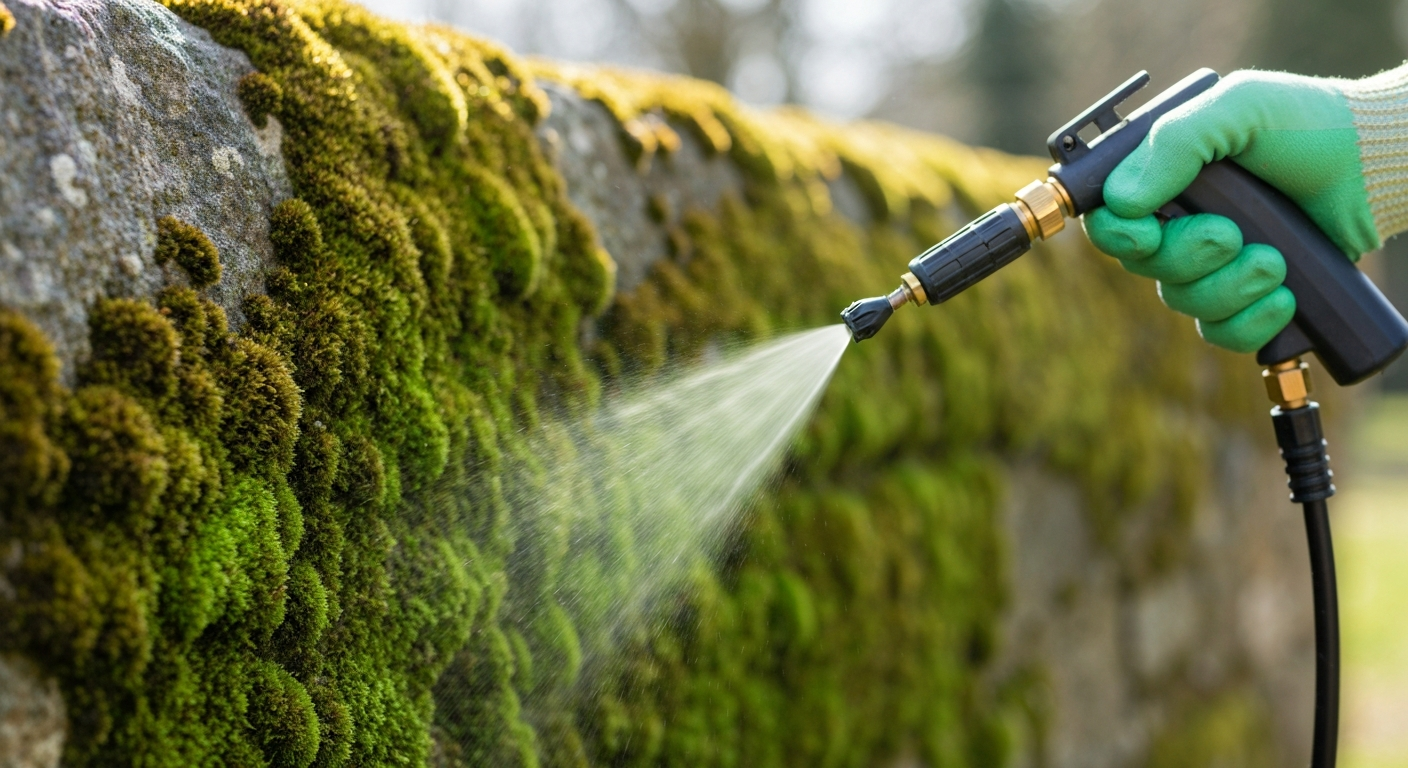
Green growth can also damage the surface beneath it. Algae and moss penetrate the pores of stone and wood, and moss roots can cause fine cracks. Water that collects in these cracks may split the material when it freezes. Persistent moisture also makes wooden patios more prone to rot and fungal damage, which can significantly shorten their lifespan.
Which surfaces can you treat with algae and moss remover?
Modern algae and moss removers are versatile and work on almost any washable outdoor surface. You can get your Garden + Outdoor spaces looking their best again in no time.
- Patios and balconies: Use on stone, concrete, tile, wood, and WPC.
- Garden paths and driveways: Clean pavers, slabs, and asphalt to make them safer to walk on.
- Walls and facades: Remove green streaks from brick, stucco, and natural stone.
- Roofs: Treat roof tiles and roofing felt to help prevent moss growth.
- Garden furniture: Clean plastic, wood, or stone tables and benches.
- Decorations: Treat sculptures and terracotta or stone planters.
Additional advice
Test the algae and moss remover on an inconspicuous area before treating a larger surface. This helps you check that the material can tolerate the product and avoid unwanted discoloration, especially on sensitive natural stone or colored surfaces.
How do you use algae and moss remover correctly?
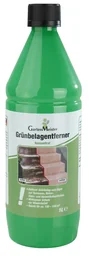
Algae and moss remover is easy to use, and the right approach can deliver great results. Most products, such as the
or the more powerful , are concentrates that you need to dilute before use.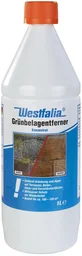
Step 1: Prepare the surface
Use a broom or stiff brush to remove dirt, leaves, and loose moss. Make sure the surface is dry before treatment. Choose a day with no rain in the forecast so the product has time to work.
Step 2: Mix and apply
Dilute the concentrate with water according to the package directions. The mixing ratio varies by product and by the amount of growth. Apply the solution evenly to the affected area using a watering can, pressure sprayer, or brush.
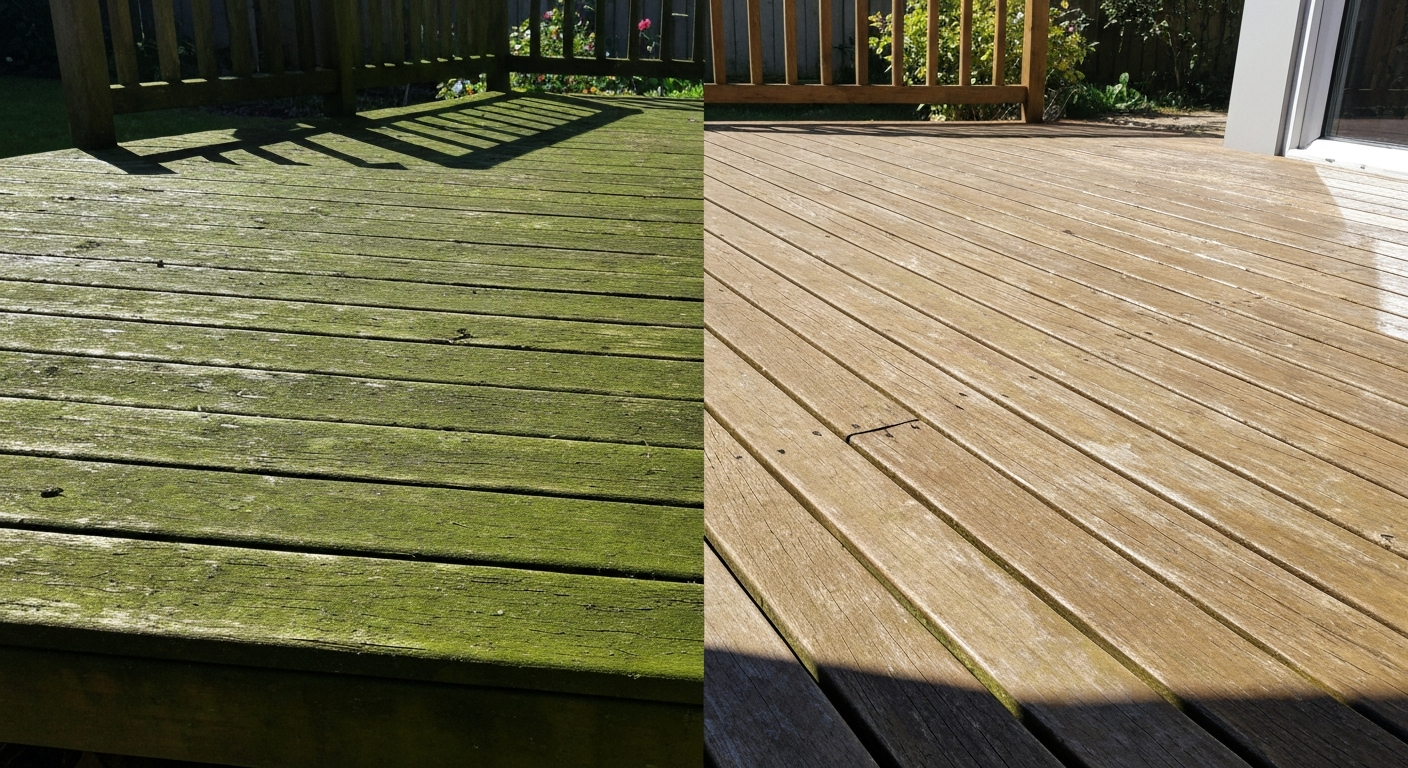
Gentle, regular cleaning helps prevent slippery algae and moss from growing on wooden patios. It also helps extend the wood’s life by clearing moisture-retaining organisms from its pores.
Step 3: Let it work
Leave the algae and moss remover to work for at least 24 hours. During this time, it breaks down the microorganisms. You don’t need to scrub or apply another treatment; the product works on its own.
Step 4: Wait for the results
After the contact time, the green growth will die and may turn brown. The next rain will wash away the dead residue. If the growth is heavy or the surface is vertical, use a brush and water to speed up the process.
Important note
Keep algae and moss remover away from lawns and flower beds, as it can damage plants. Carefully cover nearby plants and grass. Keep pets off treated surfaces until they are completely dry.
Removing Algae and Moss: Mechanical vs. Chemical Methods
There are several ways to clean patios and garden paths. Each method has its pros and cons.
Mechanical Cleaning
The traditional method uses elbow grease and water. A scrub brush, water, and a little patience may be enough for light growth. For larger areas, many people use a pressure washer. It removes algae and moss quickly without chemicals. However, use caution: the powerful water jet can roughen surfaces, especially softer materials such as sandstone or wood. Tiny new indentations give algae and moss an even better foothold, so they can return sooner and become harder to remove. On paved paths with joints, the spray often washes away the joint sand.
Chemical Removers
Algae and moss removers work differently. They penetrate deep into the material and kill algae and moss at the root. This has two key advantages. First, application takes significantly less physical effort. Second, the product works for longer and helps prevent rapid regrowth. It won't damage the surface. For thoroughly cleaning your garden equipment and paths, these products are often the better choice.
Home Remedies for Algae and Moss: What Really Works?
There are countless online tips for homemade algae and moss removers, including baking soda, vinegar, and salt. While these may have some effect, they also come with risks.
Acetic acid can damage limestone-based materials such as marble or concrete, potentially causing permanent harm. It can also damage plants and soil organisms. Salt is also harmful to the environment and can cause efflorescence on stone surfaces. Baking soda (sodium carbonate) is alkaline and gentler, but it often doesn't work as long as a specialist cleaner.
Professional algae and moss removers are tested for effectiveness and material compatibility. They offer a safe and effective way to remove algae and moss from surfaces for the long term, without unwanted side effects.
Expert tip
To prevent algae and moss from growing back, make sure water can drain properly. Don't let water stand on patios and paths. Regularly pruning shrubs and trees that cast shade helps surfaces dry faster and reduces algae growth. With the right garden tools, the job is quick and easy.
Frequently Asked Questions
- How quickly does algae and moss remover work?
- The product usually starts working within 24 to 48 hours. You'll know it's working when the growth turns brown and dies. Weather will gradually wash away the dead growth, which can take anywhere from a few days to several weeks depending on how severe it is.
- Is algae and moss remover harmful to plants?
- Yes, direct contact can damage ornamental and edible plants. Carefully cover nearby garden beds or keep a safe distance when spraying. If cleaner gets on plants, rinse them thoroughly with clean water right away to minimize damage.
- Can I use algae and moss remover in the rain?
- No, it's best not to use it in the rain. The cleaner needs enough time on a dry surface to work effectively. Rain can dilute and wash away the product before it has taken full effect. Choose a dry day.
- Do I need to rinse after using algae and moss remover?
- In most cases, rinsing isn't necessary. The products work on their own, and rain and wind gradually remove the decomposed growth. If growth is particularly heavy, you can brush away the dead residue once the product has had time to work.
- How often should I remove algae and moss?
- Applying the product once a year in spring is usually enough to keep surfaces clean throughout the season. In especially shady, damp areas, a second treatment in fall may help prevent heavy regrowth over winter and reduce the risk of slipping.
You may also be interested in
- Removing Algae and Moss: How to Get Your Patio Spotless Again
- Removing Moss and Stubborn Weeds from Paver Joints: A Guide
- Effective Weed Control: Methods and Tips
- Pressure Washers: Effective Cleaning for Your Home and Garden
- Green Pool Water? Effective Solutions and Prevention
- Spring Garden Cleanup: Clean Paths and Patios with the Power of Vinegar