
In brief: A heat pump works like a refrigerator in reverse. It extracts heat energy from the surroundings – air, ground or water. A refrigerant carries this energy, and a compressor compresses it, causing its temperature to rise sharply. This heat is then transferred to your heating system to warm your home.
A heat pump is more than just a heating system. It is an intelligent system that uses free energy from the environment to warm your home. Instead of generating heat through combustion, it transfers existing heat from one place to another. This principle makes it one of the most efficient and environmentally friendly heating technologies on the market. It can reduce your heating costs and make you less dependent on fossil fuels.
This article explains how heat pumps work in clear terms, introduces the different types and shows what to look for when it comes to efficiency. This will help you make an informed decision about your future home heating system.
The basic principle: How does a heat pump work?
Imagine a refrigerator. It extracts heat from inside and releases it into the room through the cooling fins on the back. A heat pump reverses this principle. It extracts heat from the outdoor environment – whether air, ground or groundwater – and transfers it to your home's heating system.
Even on a cold winter's day, the outdoor air still contains enough thermal energy for a heat pump to use. The key to this process is a physical trick based on the interaction between pressure and temperature: the refrigeration cycle.
Heat pumps are a key technology for decarbonising heating. They use ambient heat and electricity highly efficiently, with an increasing share of that electricity coming from renewable sources.
The refrigeration cycle explained in four steps
Inside the heat pump, a special refrigerant circulates in a closed loop. This fluid has a very low boiling point and passes through four crucial stages to raise ambient heat to a level that can be used for heating.
- Evaporation: The cold liquid refrigerant flows through a heat exchanger (the evaporator), which is in contact with the ambient heat source. The ambient heat, even if it is only a few degrees Celsius, is enough to make the refrigerant boil. It becomes a gas.
- Compression: An electrically powered compressor draws in the gaseous refrigerant and compresses it heavily. This increase in pressure causes the gas to heat up dramatically, reaching temperatures of up to 100 °C. This is the only step that requires a significant amount of energy.
- Condensation: The hot, high-pressure gas now flows to a second heat exchanger (the condenser). Here, it transfers its heat to the water in your heating circuit. It cools down and becomes liquid again. Your home gets warm.
- Expansion: The liquid refrigerant, still under high pressure, passes through an expansion valve. The pressure drops suddenly, and the refrigerant cools sharply, becoming colder than the ambient temperature. The cycle can begin again.
Important note
Correct sizing is crucial. A heat pump that is too small will need to switch on the electric immersion heater too often, destroying its efficiency. An oversized system cycles too frequently, increasing wear and also consuming electricity. Always have your building's heat load calculated by a qualified professional.
What heat sources do heat pumps use?
Heat pumps are named after the heat source they draw from (the first part of the name) and the medium to which they transfer the heat (the second part). For building heating, the output medium is almost always water (for the heating circuit), which is why we refer to air-to-water, ground-to-water or water-to-water heat pumps.
Air-to-water heat pumps: The flexible solution
This type uses the surrounding air as its heat source. A fan draws in outdoor air and directs it over the evaporator. Air-to-water heat pumps are the most widely used because they are comparatively simple and cost-effective to install. No groundworks or drilling permits are required.
The outdoor unit fits easily in the Garden + Outdoor area. However, its efficiency depends on the outdoor temperature. The colder it gets outside, the harder the compressor has to work to reach the desired heating temperature, which slightly increases electricity consumption.
Ground-to-water heat pumps: Consistent energy from the ground
Ground-source heat pumps use solar energy stored in the ground. Just a few metres below the surface, the ground temperature remains relatively constant throughout the year (approx. 7-12 °C). This makes these heat pumps highly efficient and reliable, regardless of the weather.
There are two methods of extracting heat: boreholes, drilled up to 100 metres into the ground, or ground collectors, which are laid across a large area of the garden like a huge underfloor heating system, but only 1.5 metres deep. Both options require extensive groundworks and have higher upfront costs.
Water-to-water heat pumps: The highly efficient option
These heat pumps use the heat from groundwater, which has a constant temperature of approximately 8 to 12 °C. They are the most efficient heat pumps because their heat source has the highest and most stable temperature.
Two wells are required for operation: an extraction well, from which the groundwater is pumped, and a reinjection well, into which the cooled water is returned. Installation is complex, requires approval under water regulations and is only possible where suitable geological conditions exist.
What does the seasonal performance factor (SPF) mean for efficiency?
Heat pump efficiency is not measured as a percentage, but using the seasonal performance factor (SPF). The SPF describes the ratio between the heating energy generated over an entire year and the electrical energy used to operate the system (mainly for the compressor).
An SPF of 4 means that the heat pump has generated four kilowatt-hours (kWh) of heat from one kilowatt-hour (kWh) of electricity. Three quarters of the energy therefore comes free from the environment. The higher the SPF, the more efficiently and cost-effectively your heating system operates. Modern systems achieve SPF values between 3 and 5.
Pro tip
Combine your heat pump with solar panels on the roof. This allows you to generate the electricity your heat pump needs yourself. It makes you even less dependent on electricity prices and maximises your savings and contribution to the energy transition.
Why is the flow temperature so important?
The flow temperature is the temperature of the water flowing from the heating system to the radiators or underfloor heating. For heat pump efficiency, a simple rule applies: the smaller the difference between the temperature of the heat source (e.g. 5 °C outdoor air) and the required flow temperature (e.g. 35 °C for underfloor heating), the less the compressor has to work and the higher the seasonal performance factor (SPF).
Heat pumps are therefore ideal for heating systems that operate with low flow temperatures. These primarily include underfloor or wall heating systems (approx. 30-40 °C). However, in renovated older buildings, sufficiently large radiators (low-temperature radiators) can also be operated efficiently with flow temperatures of approx. 50-55 °C.
The benefits of a heat pump at a glance
Choosing a heat pump offers numerous benefits for your finances and the environment. You are investing in future-proof technology.
- Low running costs: You use up to 75 % free energy from the environment and only have to pay for the electricity needed to operate the system.
- Environmentally friendly: No CO₂ emissions on site. When using renewable electricity, you heat your home in a completely climate-neutral way.
- Independence: You become less dependent on fluctuations in oil and gas prices.
- Eligible for funding: The government supports heat pump installation with attractive grants.
- Greater comfort: Many models can also be used to cool rooms in summer (known as “active cooling”).
- Low maintenance: Compared with combustion heating systems, maintenance requirements are low because there is no chimney or emissions testing.
Additional advice
Before buying, be sure to find out about current government funding programmes, for example from BAFA (Federal Office for Economic Affairs and Export Control). The grants can cover a significant portion of the investment costs and make the switch even more attractive.
Installation and maintenance: What do you need to consider?
A heat pump is a complex technical system. Planning and installation should therefore always be carried out by a qualified specialist company in the Plumbing + Irrigation sector. The expert checks the conditions on site, calculates the exact heat load of your home and selects the right unit.
A well-planned heat pump not only reduces heating costs but also increases the value of the property. Coordinating the entire system—from the heat source to the radiator—is crucial.
After installation, a heat pump is very easy to maintain. A visual inspection by you once a year and professional servicing by a specialist every one to two years are generally sufficient. During servicing, filters are cleaned, pressures are checked and the electrical components are inspected.
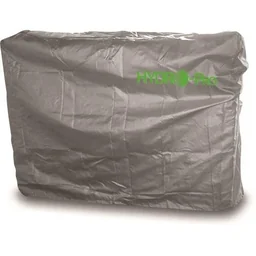
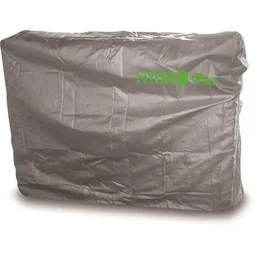
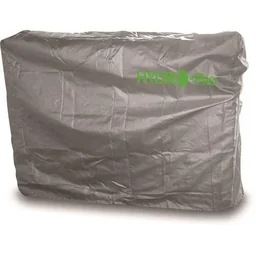
To protect the outdoor unit of your air-to-water heat pump from heavy snowfall, icing or leaves in winter, a suitable cover is a sensible choice. Special Tarpaulins + Nets ensure that operation is not impaired and that the unit remains efficient for a long time. Suitable models include:
Investing in a heat pump is a decision for the future. You heat your home efficiently and in an environmentally friendly way, while preparing for the energy transition. With the right knowledge of how heat pumps work and the key efficiency criteria, you can find the perfect system for your home.
Frequently asked questions
- Does a heat pump work in winter below freezing?
- Yes, even cold outdoor air still contains enough energy for heating. Air-to-water heat pumps remain efficient down to around -20 °C. At extremely low temperatures, an electric heating element switches on when needed to maintain the desired room temperature and protect the system.
- Is a heat pump suitable for an older home?
- Generally, yes, but efficiency depends on the home's condition and level of renovation. Good insulation and the lowest possible flow temperatures are essential. Underfloor heating is ideal, but adequately sized radiators can also work. Professional energy advice is highly recommended.
- How noisy is a heat pump's outdoor unit?
- Modern heat pumps are very quiet. The noise level is comparable to a quiet refrigerator or rainfall. Choosing the right location, such as avoiding placing the unit directly below a bedroom window, and observing minimum distance requirements from neighbours can minimise any potential disturbance.
- How long does a heat pump last?
- With professional installation and regular maintenance, a heat pump typically lasts around 15 to 20 years, and often longer. The main components, such as the compressor, are designed for a long service life. An annual inspection helps maintain the system's efficiency and extend its lifespan.
- Do I need underfloor heating for a heat pump?
- Not necessarily, but it is ideal. Heat pumps operate most efficiently with low flow temperatures (approx. 35 °C). Underfloor heating is perfect for this. Alternatively, special low-temperature radiators or larger standard radiators can be used to ensure efficient heat distribution.
You may also be interested in
- Heat pump buying guide: efficiency and models at a glance
- Heat pumps: how this efficient heating solution works
- Sizing a heat pump: planning an efficient heating system
- Heat pumps: the climate-friendly alternative to gas heating
- Using a heat pump as an air conditioner: how to cool your home in summer
- Using heat pumps efficiently: avoid common mistakes