
In brief: Store your Li-Ion battery at 10-15°C with a charge level of 40-60%. Charge it regularly, but avoid deep discharges and leaving it fully charged for long periods. Protect it from extreme temperatures, moisture and impacts to extend its service life and maintain performance.
Modern cordless tools offer freedom and power without a cord. At the heart of this convenience is the lithium-ion battery. Its service life and performance, however, depend on how you use and care for it. With proper care and storage, you can get the most from your battery, save money and keep your tools ready to work.
A reliable partner for your projects is the 18 Volt Li-Ion 1,5 Ah battery. To keep it performing for longer, it helps to know how to care for it properly. This guide explains how to extend the service life of your 18V battery.
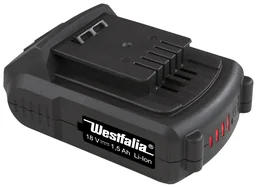
How does a lithium-ion battery work?
Understanding battery care starts with a quick look at the technology. A Li-Ion battery is more than a simple battery; it is a small power plant. Inside, lithium ions move between two poles: the negative anode, usually made of graphite, and the positive cathode, made of metal oxides. Between them is a liquid or gel-like electrolyte that lets the ions move while keeping the poles separate.
When the battery charges, an external voltage moves lithium ions from the cathode to the anode, where they are stored. The battery stores electrical energy in chemical form. When you use your tool, the process reverses and the ions flow back to the cathode. This movement generates the electric current that powers your cordless drill or hedge trimmer.
A Li-Ion battery is a dynamic system. Every charge and discharge is a chemical reaction that puts a small amount of stress on the materials. In development, our job is to keep that stress as low as possible, but users have the greatest influence on battery life through proper care.
How can I tell if a battery is aging or defective?
Every battery ages naturally, and its performance eventually declines. Watch for these clear warning signs so you can take action or replace the battery in good time. This helps prevent reduced performance in the middle of a project and supports safe use.
Significantly reduced runtime
A noticeable drop in capacity is the clearest sign. If a full charge suddenly lets you do only half as much work as usual, the cells have lost a significant amount of storage capacity. The battery no longer provides the usual runtime for your power tools.
Rapid self-discharge
Do you fully charge the battery, set it aside for a week and find it almost empty when you use it again? A high rate of self-discharge can point to internal aging or small short circuits in the cells. An intact battery should retain most of its charge for several weeks.
Excessive heat
It is normal for a battery to get warm during heavy use or fast charging. But if it gets excessively hot during light use or normal charging, use caution. This may indicate increased internal resistance, which can signal a defect and pose a safety risk.
External damage
Check the casing regularly for cracks, deformation or bulging. A damaged casing can no longer adequately protect the internal cells. A swollen battery is a clear warning sign of chemical instability inside and must never be used again.
How should I charge my battery to extend its life?
Charging is one of the most critical moments in a battery's life. Charging mistakes add up over time and can significantly shorten its service life. Follow a few simple rules to maximize your battery's cycle life.
The ideal charge level for everyday use
Lithium-ion batteries perform best at a medium charge level. Avoid constantly charging the battery to 100 % and then immediately running it down to 0 %. Ideally, keep the charge level between 20 % and 80 %. Recharge the battery before it is completely empty, and remove it from the charger before it stays at 100 % for a long time. Modern device electronics help prevent deep discharge, but operating at a low voltage still puts stress on the cells.
Pro tip
For the longest service life, charge the battery to 100 % only when you need its full capacity for a long job. For shorter tasks, a partial charge of around 80-90 % is enough. This is gentler on the cells and can noticeably extend the battery's overall service life.
Use the right charger
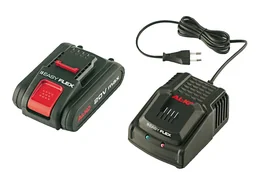
Use only the charger specified or recommended by the manufacturer. It is designed to work with the battery's charging electronics and cell chemistry. The charger and battery communicate to regulate the charging current and voltage. Unapproved or cheap chargers can overcharge or overheat the battery and cause permanent damage. A properly matched system, such as the
"EnergyFlex" value set or the "EasyFlex" value set, helps ensure the battery and charger work in harmony.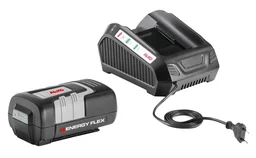
Memory effect: a myth with Li-Ion batteries?
The dreaded memory effect, where a battery “remembers” its charge level and loses capacity if it is not fully discharged, is associated with older nickel-cadmium batteries (NiCd). It is practically nonexistent in modern lithium-ion batteries. You can recharge them at any time, whatever their current charge level. Frequent partial charges are actually gentler on Li-Ion batteries than repeated full charge cycles.
How should I store Li-Ion batteries correctly, especially in winter?
Proper storage, especially during longer breaks such as winter, is crucial for keeping your battery in good condition. Extreme temperatures and incorrect charge levels are the biggest threats during periods of non-use. This applies to all battery-powered devices you use in Garden + Outdoor.
The ideal storage temperature
Store your batteries in a cool, dry and frost-free place. The ideal storage temperature is between 10 °C and 15 °C. A basement, frost-free garage or unheated storage room is often perfect. Be sure to avoid places with major temperature fluctuations, direct sunlight or heat sources such as radiators. High temperatures dramatically accelerate the chemical aging of the cells.
Important note
Never store batteries in sub-zero temperatures. Frost can permanently damage the internal cell structure and cause significant capacity loss. Charging an ice-cold battery is also strictly off-limits. Always allow it to slowly reach room temperature before charging.
The ideal charge level for storage
Never store a battery fully charged or completely flat. A fully charged battery is under high chemical stress, which accelerates aging. An empty battery may undergo harmful deep discharge due to self-discharge. The ideal charge level for long-term storage is around 40% to 60%. Many chargers even have a special storage mode for this purpose. Otherwise, charge the battery to about half full before putting it away.
What should I know about general battery maintenance and care?
Alongside charging and storage, small, regular care measures also help ensure full performance and safety. A battery is a precision component and deserves careful handling to reliably provide energy for devices such as a
10 Watt multi-position rechargeable light.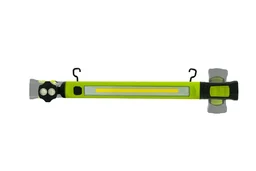

Cleaning and inspection
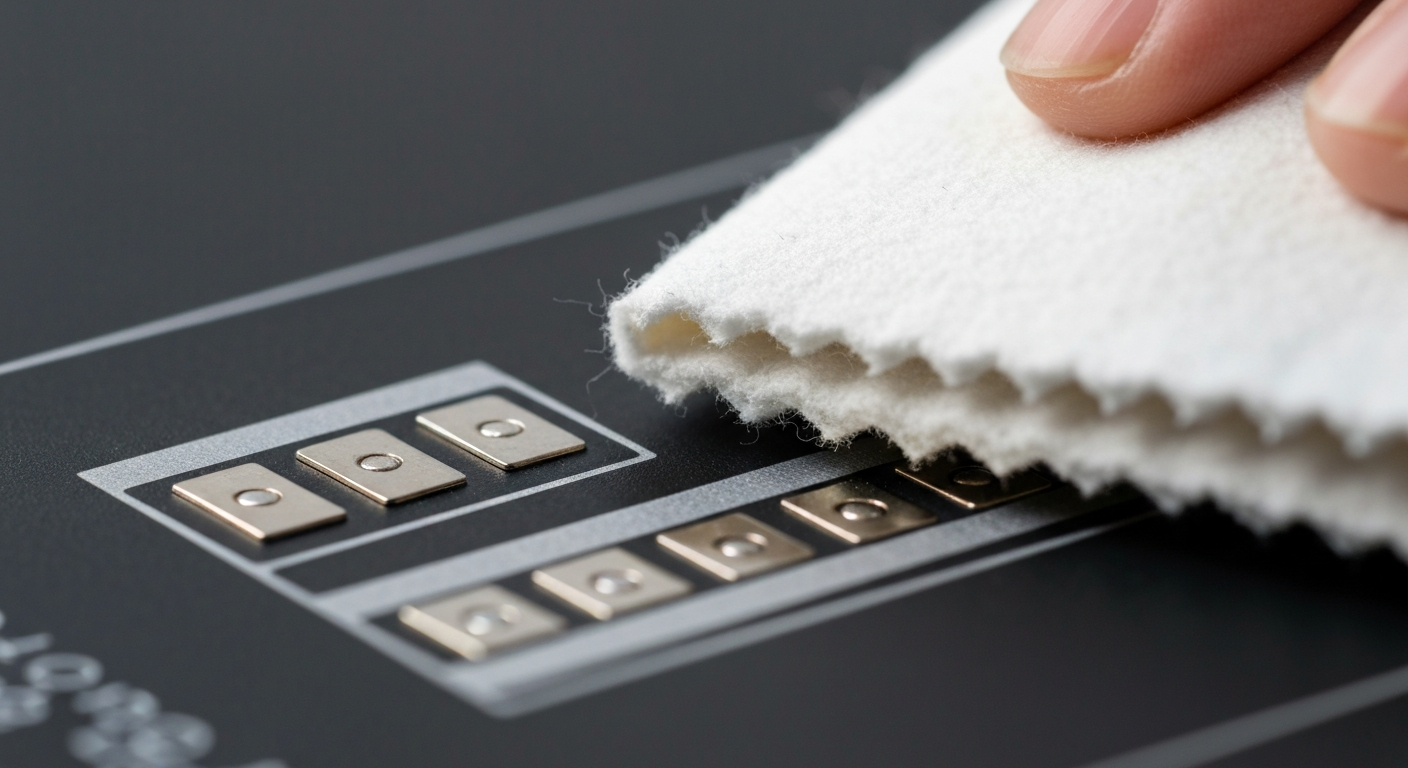
Always keep the contacts on the battery and tool clean and dry. Dirty or corroded contacts result in higher contact resistance. The result: power loss and heat buildup at the contact point. Wipe the contacts regularly with a clean, dry cloth. Also check the casing for damage.
Additional advice
Check the charge level of stored batteries every 2-3 months. If the charge falls below 20%, recharge it to the ideal storage level of 40-60%. This reliably prevents deep discharge during the winter break.
Protection from moisture and impact
Batteries are sensitive to moisture and drops. Water can cause short circuits and destroy the electronics. Always store batteries in a dry place. A fall from a significant height can damage the internal cell connectors or safety mechanisms, even if there is no visible external damage. Such a battery poses a safety risk. Proper handling is also a key safety aspect in the professional workplace.
Proper disposal: What should I do with old batteries?
Even a well-maintained battery eventually reaches the end of its service life. Improper disposal is not only harmful to the environment, but also dangerous. Batteries must never be disposed of with household waste.
Defective or spent lithium-ion batteries are valuable sources of raw materials. They contain lithium, cobalt, nickel and copper, among other materials. Proper recycling allows these materials to be recovered and used in new products. This conserves resources and protects the environment.
Take old batteries to local collection points or recycling centers, or return them to a retailer. Many home improvement stores and electronics shops that sell batteries and rechargeable batteries are legally required to accept them. Before transporting them, cover the terminals with adhesive tape to prevent short circuits.
Every battery returned for recycling is a small but important contribution to conserving resources. Recycling lithium-ion batteries is technologically challenging, but essential for a sustainable circular economy in the electronics sector.
By charging, storing and maintaining your battery carefully, you are investing directly in the longevity and reliability of your tools. You not only ensure consistently high performance for all your projects, but also act economically and sustainably.
Frequently asked questions
- Can I leave a Li-Ion battery on the charger overnight?
- Modern chargers have an automatic charging system that stops charging at 100%. However, leaving the battery connected to the charger permanently still puts minimal stress on it. To maximize its service life, it is best to disconnect it from the charger once fully charged.
- What is deep discharge and why is it harmful?
- Deep discharge occurs when a battery's voltage falls below a critical limit. This causes irreversible chemical reactions in the cells, which can permanently damage the capacity or make the battery unusable. Modern devices switch off beforehand.
- Does it make a difference whether I store the battery in the tool or separately?
- Yes, always store the battery separately from the tool. Minimal leakage currents can occur when it is left in the device, slowly discharging the battery and increasing the risk of deep discharge during long-term storage. Separate storage is safer and gentler on the battery.
- How quickly does a battery age if I do not use it at all?
- A Li-Ion battery undergoes calendar aging even when it is not being used. With ideal storage (cool, dry and at a 40-60% charge level), it loses only a few percent of its capacity per year. With poor storage (hot and fully charged), the loss can be significantly higher.
- My battery gets very hot while charging. Is this normal?
- Slight warming during charging is normal. However, if the battery becomes so hot that you can barely touch it, there may be a fault with the battery or charger. Stop charging and have the components checked.
You might also be interested in
- How to care for a 12V Li-Ion battery: Maximize its service life
- Battery not charging? Fix 18V Li-Ion battery problems yourself
- How to care for your battery: Get the most from your 10.8V Li-Ion batteries
- 18V battery buying guide: How to find the right Li-Ion battery
- 18V fast charger: Charging time and proper use
- Cordless work: 7 professional tips for using your 18V battery