
In brief: You can make dried flowers yourself by bundling fresh, dry flowers and hanging them upside down to dry in a dark, airy place. After around two to four weeks, the stems are usually ready for wreaths, bouquets or other décor. Roses, hydrangeas, lavender, baby's breath, grasses and yarrow are particularly suitable.
Dried flowers add colour to your home, need very little care and can last for many months when handled properly. You can use flowers from your own garden, dry a wildflower bouquet or preserve individual favourite blooms for a personal DIY project.
The most important decision is made when you cut the flowers. Choosing the right time, making small bundles and selecting a dry, dark spot all determine whether the blooms retain their shape or shrink. In this guide, you will learn how to dry flowers, which varieties are especially suitable and which dried-flower décor projects are quick to make.
What do you need to make dried flowers yourself?
You only need a few items for the classic method. Garden shears with a clean, sharp blade prevent crushed stems. String, rubber bands or florist's wire hold the bundles together, while a dark, dry room protects the colours.
Materials for drying flowers
- Flowers and grasses: Choose undamaged stems without wilted leaves or damp patches.
- Garden shears: Cut the stems cleanly at a slight angle.
- String or rubber band: A rubber band stays secure even when the stems become thinner as they dry.
- Hook or washing line: This allows you to hang the bundles upside down without them touching a wall.
- Newspaper or paper: Cover the floor in case individual leaves or seed heads fall off.
- Flower press or heavy books: These items are suitable for flat flowers, cards and picture frames.
Cut flowers at the right time
Cut garden flowers on a dry morning as soon as the dew has disappeared. Many blooms retain their shape best just before they are fully open. If they continue opening as they dry, they will look more natural later than fully open specimens.
Remove the lower leaves, thorns and damaged petals immediately after cutting. Sort the stems by length and thickness. Thick, juicy stems dry more slowly than fine grasses and should not be hung in the same tight bundle.
Expert tip
Tie only five to eight stems in each bundle. Small bundles allow air to circulate better and dry more evenly. Very large bouquets can remain soft inside even though the outer flowers already appear dry.
How can you dry flowers?
Air-drying is the most versatile method for stems, flowers and grasses. It is inexpensive, requires no special equipment and is suitable for roses, lavender, baby's breath, yarrow and many seed heads. Depending on the variety, allow two to four weeks.
Air-drying in five steps
- Prepare the stems: Remove any leaves that would later lie tightly against one another in the bundle. Trim damaged ends with the garden shears.
- Make bundles: Combine similar stems and tie them together with a rubber band. The band must not cut into the stems.
- Hang upside down: Attach the bundles to a hook or line. The flowers should point downwards so that the stems dry as straight as possible.
- Choose a room: A dry loft, a well-ventilated cupboard or a rarely used room is more suitable than a kitchen or bathroom. Temperatures of around 18 to 25 degrees Celsius speed up the process.
- Check the flowers: Carefully test a stem after two weeks. If it feels firm and the leaves rustle slightly, the flowers are usually ready.
Darkness protects the natural pigments. Direct sunlight quickly bleaches red, purple and blue blooms in particular. Air the room regularly, but avoid strong draughts that could damage delicate leaves.
“For drying, choose flowers at an early stage of bloom and hang them in a dry, well-ventilated place.”
Flower pressing, drying salt and glycerine
A flower press is suitable for flat flowers, individual leaves and small grasses. Place the plant parts between absorbent paper and apply pressure evenly. Change the paper after a few days if it has become damp.
Silica gel dries delicate blooms more quickly while preserving their three-dimensional shape. Put a layer of granules in an airtight container, place the flower inside and cover it completely. After three to seven days, carefully check the base of the flower.
Glycerine is mainly suitable for leaves and branches. The solution keeps plant tissue more supple, but often changes its colour and surface. For classic dried-flower bouquets, hanging remains the simplest and most natural option.
Important note
Do not place dried flowers directly next to radiators, fireplaces or open candles. The material is highly flammable. Dispose of flowers with a musty smell, dark spots or soft stems completely to prevent mould from spreading to other arrangements.
Which flowers are suitable for DIY dried flower arrangements?
Sturdy blooms with firm petals retain their shape most reliably. Flower heads with a low water content also dry well. The key is to choose healthy plants that are neither wet nor already wilted when cut.
Sturdy blooms for bouquets
- Roses: Small to medium-sized varieties dry especially well and often retain a delicate fragrance.
- Hydrangeas: Cut them when the blooms look greenish or slightly papery. Fully fresh flowers still contain a lot of water.
- Lavender: Its slender flower heads dry quickly and add colour and fragrance to arrangements.
- Baby's breath: Its many small flowers add lightness to bouquets and wreaths.
- Statice: Its papery flowers retain their intense colour for a long time.
- Yarrow: Its flat flower heads suit natural, country-style arrangements.
- Sunflowers: Small heads are better suited than very large ones, which become heavy when dried.
Grasses and seed heads
Grasses add movement and structure to DIY dried flower arrangements. Lagurus, oats, wheat, fountain grass and Phalaris can be used individually or in small groups. Poppy heads, love-in-a-mist and Lunaria also add interesting shapes to a bouquet.
If you want to dry flowers regularly, plan suitable plants as early as spring. In the Flowers and mixes category, you will find seeds for varied flower beds. Flower seeds are also ideal if you are looking for specific varieties. A good supply of nutrients supports strong stems, so plant and flower fertiliser is a good choice.
Combining colours and shapes
Limit an arrangement to two to four shades. Beige, cream and natural brown create a calm look, while pink, violet and yellow add more contrast. Combine large blooms with delicate sprays and tall grasses so the bouquet does not look flat.
“Fast and even drying helps preserve the natural colour and shape of flowers and leaves more effectively.”
How can you create creative dried flower decorations?
Dried flowers suit modern, rustic, and minimalist interior styles. Start with just a few stems and let the plants' natural shapes take center stage. A small arrangement often looks calmer than an overcrowded bouquet.
Dried flower bouquet in a vase
- Choose the basic shape: Arrange three to five long stems as a framework.
- Add volume: Add grasses, baby's breath, or yarrow around the main flowers.
- Trim the stems: Hold the bouquet next to the vase and only then cut the stems to the right length.
- Arrange loosely: Tie the stems together lightly or place them individually in a narrow opening.
A matte ceramic vase highlights bold colors, while glass vessels complement delicate grasses. Do not add water. Moisture softens dried stems and can dirty the inside of the vase.
Wreath, wall art, and garland
To make a dried flower wreath, use a straw or metal ring. Secure small bundles with floral wire and work in one direction until the base is covered. Trim any protruding stems with scissors at the end.
To create wall art, press individual flowers and arrange them on high-quality paper. Secure the plant pieces with small adhesive dots or a narrow strip of transparent paper. Make a garland from short stems attached with string to a sturdy rail.
Small decorating ideas with dried flowers
- Glass bottles: Distribute individual stems among several small vessels and place them on a shelf.
- Gift wrapping: Tie a short lavender or grass stem under the string.
- Place cards: Attach a small seed head to a folded card.
- Shadow box: Display flat flowers in a deep frame with space between them and the glass.
- Napkin ring: Wrap a narrow wreath of grasses around linen napkins.
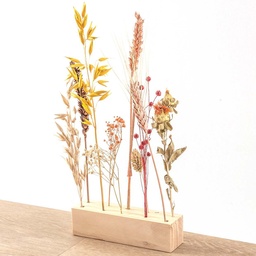
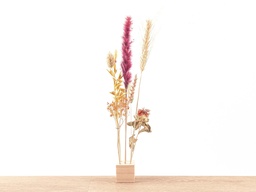
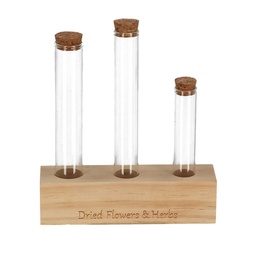
For a tidy display, you can use ready-made dried flower stands. The in size M, made from wood, provides space for a larger arrangement. For individual stems or small bouquets, the in size S is a good fit. The tube shape of the is ideal for clearly separated stems and a minimalist overall look.
How do dried flowers stay beautiful for a long time?
Dried flowers do not need water, but they do need a suitable location. They usually last much longer in a hallway, bedroom, or living room than in the kitchen or bathroom. High humidity, steam, and frequent temperature changes make the flowers brittle or encourage mold.
Removing dust and storing them correctly
- Gentle cleaning: Remove dust with a soft brush or a hair dryer on a cool, low setting.
- Shade: Do not place arrangements on a windowsill that gets constant direct sunlight.
- Distance: Keep dried flowers away from radiators and air vents.
- Less movement: Move the arrangement as little as possible, as many flowers break when touched.
- Dry storage: Store spare stems in a box with paper padding, not in a damp basement.
A light mist of clear hairspray can stabilize very brittle flowers. Test the spray on a single stem first and keep a sufficient distance. Too much liquid makes the surface sticky and attracts dust.
Safety and when to replace them
Regularly check wreaths and bouquets for loose leaves, dust, and brittle areas. Replace individual stems when they lose their color. A complete arrangement does not need to be replaced immediately: often, it is enough to replace the parts that have become dominant or damaged.
Additional tip
Photograph successful arrangements immediately after tying them. This allows you to see later which colors, heights, and flower shapes work well together. Store particularly beautiful seed heads separately and use them next season for new wreaths or small bouquets.
Conclusion: Drying flowers successfully requires cutting them at the right time, using small bunches, and having patience. Roses, hydrangeas, lavender, baby's breath, grasses, and seed heads offer many options for a personalized dried flower DIY project. With vases, wreaths, pictures, or small stands, you can create long-lasting dried flower decor that requires little care.
Frequently asked questions
- How long does it take to dry flowers?
- Air-drying flowers usually takes two to four weeks. Dense flowers like hydrangeas take longer to dry, while delicate grasses often dry faster. Check the stems after 14 days; they should feel firm and dry. If the base of a flower is still soft, leave the bunches hanging instead of putting them straight into a vase.
- Which flowers are best for drying?
- Roses, hydrangeas, lavender, baby's breath, statice, yarrow and sturdy grasses are good choices for beginners. Cut the stems shortly before the flowers are fully open. Juicy flowers such as tulips and fully open peonies often lose their shape when air-dried, so they're better suited to pressing.
- Why are my dried flowers getting moldy?
- Most bunches take two to four weeks to dry. Damp rooms, thick bouquets and large flowers can all extend the drying time. Check the stems and flower bases: if they feel firm and the leaves rustle slightly, you can take the flowers down. Soft spots mean they need more time to dry.
- How should I clean dried flowers?
- Remove dust with a soft, dry brush or a hair dryer on the cool, low setting. Hold it at a distance and blow from top to bottom. Water, damp cloths and direct heat from a radiator can damage delicate flowers. Carefully clean individual stems instead of moving the whole arrangement.
- Can I make a wreath with dried flowers?
- Yes. You can use dried roses, lavender or grasses to make a wreath. Shorten the stems, sort the flowers by color and secure small bunches with florist's wire. Hang the wreath in a dry, shaded spot away from radiators to help it keep its shape and color for longer.
You may also be interested in
- DIY dried flower bouquets: On-trend decor for your home
- Dried flower table decor: Ideas for every occasion
- How to make an advent wreath: Creative ideas for your home
- Autumn wall decor: DIY ideas with dried leaves
- How to make herbal tea: Fresh tea from the garden
- Crafting with kids: Creative DIY ideas for the family