
In brief: Fertilize oleander regularly from March through the end of August. Use a potassium-rich oleander or container plant fertilizer, and water before each application. Apply liquid fertilizer according to the manufacturer's instructions, usually every one to two weeks. Apply slow-release fertilizer in spring. Stop fertilizing in September so the plant can rest over winter.
Fertilize oleander regularly from March through the end of August. Use a potassium-rich oleander or container plant fertilizer, and water before each application. Apply liquid fertilizer according to the manufacturer's instructions, usually every one to two weeks. Apply slow-release fertilizer in spring. Stop fertilizing in September so the plant can rest over winter.
Oleander is a flowering shrub that puts on a spectacular display in summer. This Mediterranean container plant grows quickly and produces lots of leaves, so it needs regular nutrients. Without the right fertilizer, it may produce smaller flowers or just a few buds.
Good oleander care combines fertilizer, water, sunlight and proper pruning. The limited amount of soil in a container can run low on nutrients quickly. These fertilizing tips explain which fertilizer to use, when to apply it and how to avoid overfertilizing.
How often should you fertilize oleander?
Oleander is native to the Mediterranean region, where it grows through long, warm summers. As a heavy feeder, it needs more nutrients during the growing season than many other container plants. In a pot, however, it has only a few liters of soil, so its nutrient reserves run out quickly.
Start fertilizing in March or April, when the oleander puts out new shoots and leaves after its winter dormancy. Through the end of August, apply liquid fertilizer every seven to fourteen days. With slow-release fertilizer, one spring application is enough if the product is designed to feed plants for several months.
| Period | Fertilizing | Purpose |
|---|---|---|
| March to April | Start with half the recommended amount, then follow the label | Encourage growth after winter dormancy |
| May to August | Apply liquid fertilizer every seven to fourteen days, or slow-release fertilizer according to the schedule | Feed shoots, leaves and flowers |
| September | Stop fertilizing | Allow shoots to mature before winter dormancy |
| October to February | No fertilizer | Let the plant rest without encouraging unnecessary growth |
Which nutrients encourage flowering?
Nitrogen mainly promotes leaf and shoot growth. Phosphorus supports root and flower development, while potassium strengthens plant tissue and helps regulate water balance. A balanced fertilizer for flowering or container plants with enough potassium is a good choice for oleander.
Too much nitrogen can produce long, soft shoots and large leaves without increasing the number of flowers. Avoid fertilizers that contain only nitrogen. Magnesium and trace elements can also help if the oleander has been growing in the same container for a long time.
When should you apply the first dose of fertilizer?
Wait until the oleander starts actively growing again. After you move it outdoors, the plant first needs light, warmth and a consistent water supply. Once new shoot tips appear, start with a low dose. If the plant is growing well, gradually increase the amount to the dosage recommended by the manufacturer.
Don't fertilize right after heavy pruning or while the plant is sick. Wait until new leaves appear and the root ball is moist but not soggy. Then the plant can reliably absorb the nutrients.
Expert tip
After winter dormancy, first place the oleander in a bright, sheltered spot. Apply the first dose of fertilizer only after new growth appears, and use no more than half the recommended amount.
Which fertilizer is right for oleander in containers?
A good oleander fertilizer supplies the plant with the main nutrients nitrogen, phosphorus and potassium. A steady supply of magnesium and trace elements is also important for a long flowering period. You can use a fertilizer for flowering plants, Mediterranean container plants or a special oleander fertilizer.
When shopping, you can find suitable products in the plant and flower fertilizers category. The general fertilizer category offers further options for containers, balconies and gardens.
Liquid fertilizer or slow-release fertilizer?
| Fertilizer type | Benefit | What should you look out for? |
|---|---|---|
| Liquid fertilizer | Quickly available and easy to dose | Apply regularly according to the label |
| Slow-release fertilizer | Feeds the oleander for several weeks | Pay attention to the duration of effect and dosage |
| Organic fertilizer | Releases nutrients more slowly and evenly | Work into warm potting mix and water thoroughly |
Liquid fertilizer is ideal if you want to adapt feeding to the weather and the plant's growth. In the liquid fertilizers category, you will find products for quickly supplying nutrients. Slow-release fertilizer is suitable for large containers that cannot be fed every week.
How do you recognize a suitable fertilizer?
Read the nutrient information on the label. A suitable fertilizer should not provide nitrogen alone, but should have a balanced ratio for flowering and container plants. Potassium should be clearly listed because it supports flower and shoot quality.
Use only one basic feeding strategy per season. If you have incorporated slow-release fertilizer in spring, only apply additional liquid fertilizer if the label allows this combination. Otherwise, the salt concentration in the potting mix will rise unnecessarily.
Which oleander plants are suitable for growing in containers?
If you are looking for a new oleander for your patio, balcony or conservatory, choose a size that suits the location. The Mediterranean container plant
at around 110 centimeters tall is easier to move. For a larger focal point, consider at around 150 centimeters or at around 180 centimeters tall.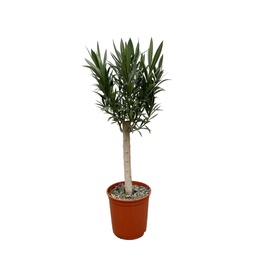
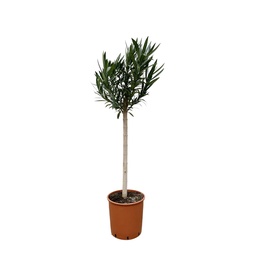
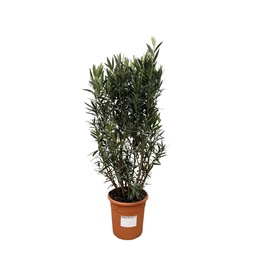
The larger the plant and the smaller the pot, the faster the root ball dries out. For large specimens, plan to use a stable container with a drainage hole and saucer. This links your choice of plant directly to its future watering and fertilizing needs.
Important note
Oleander is poisonous in all parts of the plant. Wear gloves when fertilizing and pruning, wash your hands afterwards and keep plant parts away from children and pets. Store fertilizer securely and do not put cut oleander branches in the compost.
How do you fertilize oleander in a container correctly?
The dosage determines the quality of the flowering. Too little fertilizer causes weak growth, while too much fertilizer damages the roots and leads to salt deposits. Always fertilize moist potting mix and follow the quantity stated on the product label.
How do you apply liquid fertilizer?
Liquid fertilizer works quickly because the dissolved nutrients reach the roots directly with the watering water. Use it only during the active growing season and follow the stated application interval. In very hot weather, fertilize early in the morning or in the evening, not in the blazing midday sun.
- Check the root ball: Water the oleander when the top layer of soil is dry. A completely dried-out root ball absorbs the nutrient solution unevenly.
- Measure the fertilizer: Measure the concentration using the cap or a measuring cup. A stronger solution does not make up for a missed application.
- Distribute the nutrient solution: Water slowly around the root ball. Do not let the solution splash onto leaves, flowers or shoots.
- Check the drainage: Excess water must be able to drain from the container. Empty the saucer after a short time so that the oleander does not remain standing in water.
If your oleander is weakened, start with the lower recommended concentration. If the plant shows healthy growth after two to three weeks, you can return to the product's normal dosage.
How does slow-release fertilizer work?
Slow-release fertilizer usually consists of coated fertilizer granules or slowly dissolving pellets. In spring, distribute the granules evenly over the surface of the potting mix and work them in lightly. Keep them away from the stem so that concentrated nutrients do not lie directly at the base.
The effect depends on warmth and moisture. In warm, regularly watered potting mix, the granules release nutrients more quickly than in cool weather. Therefore, check the condition of the plant in summer and do not automatically add more granules.
What applies after repotting?
Fresh container potting soil often already contains fertilizer. After repotting, pause for around four to six weeks or follow the instructions on the bag. Then start with a reduced dose because the roots first need to spread through the new potting mix again.
Changing the pot does not resolve an acute nutrient deficiency if the plant is also suffering from waterlogging or insufficient light. First check the location, drainage and root health. Only then decide whether additional fertilizing is worthwhile.
Organic products can be an interesting option for long-term feeding. If you use organic fertilizer, work it in according to the instructions and keep the potting mix evenly moist. You can find a selection under organic fertilizer.
Additional advice
If you notice white deposits on the soil, flush the container thoroughly once. Water slowly with clean water until it drains from the bottom, and repeat the process after a few minutes. Do not resume fertilizing until the plant is growing normally again.
Why isn't the oleander blooming despite fertilizer?
Fertilizer alone cannot guarantee flowers. Oleander needs a spot in full sun, plenty of water and warmth to turn nutrients into blooms. If any of these factors is missing, the plant often produces vigorous leaves but only a few buds.
Which location mistakes hold back flowering?
Place the oleander in the sunniest possible spot with several hours of direct sunlight. A house wall or sheltered patio stores warmth and protects it from cold winds. In the shade, the shoots become elongated and weak, producing fewer flowers.
Moving the plant while it is forming buds can also cause stress. Gradually acclimatize overwintered plants to the intense spring sun to prevent leaf scorch. After that, the oleander can remain in a bright, warm location.
How can you identify nutrient deficiency and overfertilization?
Pale green or yellowing older leaves may indicate a deficiency, especially if overall growth remains weak. Yellow leaves combined with constantly wet soil, however, are more likely to indicate waterlogging or damaged roots. Check the soil with your finger and make sure the drainage hole is clear.
Overfertilization is often indicated by brown leaf edges, white crusts on the soil or an oleander that suddenly wilts despite moist substrate. Remove visible deposits, flush the soil and stop fertilizing temporarily. Only remove severely damaged leaves once the cause has been resolved.
What role do pruning, watering and pests play?
Heavy pruning in spring can remove flower buds. Oleander forms flowers mainly at the shoot tips, so prune selectively after flowering rather than cutting back all the shoots indiscriminately. Carefully remove spent flower clusters without damaging the new shoot tips beneath them.
Water generously in summer as soon as the surface has dried slightly. Also check the leaves and shoots for aphids, scale insects and spider mites. If the plant is infested, the plant protection category can help you choose suitable measures.
- Lots of leaves, few flowers: The location may be too dark or the nitrogen content too high.
- Wilting leaves despite wet soil: Check for waterlogging or root damage.
- Dry leaf edges: Possible causes include a lack of water, salt stress or hot drafts.
- Sticky leaves: Check for aphids or scale insects.
“During the growing season, oleander benefits from regular applications of fertilizer, especially when grown in containers.”
What does the oleander fertilizing schedule look like throughout the year?
A consistent annual schedule prevents both nutrient deficiencies and overfertilization. Do not base the timing on the calendar alone; also consider temperature, light and visible growth. If spring is cold, delay the start accordingly.
Spring: Stimulating growth
After bringing the plant out of its winter quarters, first check the shoots, leaves and roots. Remove dead plant material, loosen the top layer of soil and ensure good drainage. Once the oleander starts producing new growth, apply the first weak fertilizer solution.
From April onward, you can switch to the normal product dosage if the plant appears healthy. Work a slow-release fertilizer into the soil now. After repotting, wait before applying additional fertilizer until the nutrient supply in the new soil begins to decline.
Summer: Providing consistent support during flowering
From May to August, oleander needs the most support. Apply liquid fertilizer every seven to fourteen days, adjusting the dosage to the size of the container. A large oleander in a small pot does not automatically need more fertilizer; it often needs more root space first.
Pause fertilizing during prolonged rain if the substrate remains wet. During very hot weather, however, water requirements increase significantly. Always fertilize after watering or use a sufficiently diluted nutrient solution.
Autumn and winter: Allowing shoots to mature
Stop fertilizing at the end of August or by the beginning of September at the latest. The new shoots need to mature and become sturdy before temperatures drop. Late applications of nitrogen encourage soft growth, which is more susceptible to disease and cold damage in winter.
Oleander does not need fertilizer during overwintering. In a bright, cool location, your oleander needs significantly less water than in summer. Nevertheless, check the root ball regularly to ensure it does not dry out completely.
“A sunny location, plenty of water in summer and regular feeding are among the basics for a vigorous container-grown oleander.”
Which oleander care practices complement fertilizing?
The abundance of flowers depends on several care factors working together. A well-fertilized oleander cannot form buds if its roots remain permanently wet or the plant does not receive enough sunlight. Therefore, regularly check its overall condition.
How should you water oleander?
In summer, the root ball should never dry out completely. Check the top layer of soil and water thoroughly as soon as it feels dry. Allow excess water to drain away and empty the saucer if the container remains in water longer than necessary.
Oleander generally tolerates hard tap water well. With very hard water, however, salts can still build up in the substrate. Occasionally flushing the soil with plenty of water keeps it more permeable and reduces residue.
Which container and substrate are best?
Choose a sturdy container with at least one large drainage hole. A drainage layer alone cannot replace good drainage if the hole is blocked. Use structurally stable potting soil for container plants and place the pot on feet or a stand so water can drain freely from the bottom.
Repot young oleanders about every two years, and older plants when the root ball is congested or the substrate has become compacted. The new pot should be only a few centimeters larger. An oversized container retains too much water and delays root development.
How should you prune and overwinter the plant?
Regularly remove spent flower clusters and individual weak shoots. Ideally, carry out heavy formative pruning after flowering, as pruning in late spring can remove the flower buds. Use clean tools and wear gloves because the plant sap is poisonous.
Before bringing the plant indoors, check it for pests and dead shoots. A bright, cool winter location reduces water requirements and prevents soft new growth. In spring, gradually acclimatize the oleander to sunlight and start fertilizing only when new growth begins.
The quick checklist:
- Fertilize regularly from March or April until the end of August.
- Before each application, make sure the soil is moist but not wet.
- Use a potassium-rich fertilizer for flowering plants or container plants according to the label.
- After repotting, pause for four to six weeks.
- Do not fertilize from September onward or during winter dormancy.
- Take sunlight, drainage and pest control just as seriously as nutrient supply.
This schedule provides your oleander with a consistent supply of nutrients and encourages strong shoots, healthy foliage and a long flowering season. The key is combining the right fertilizer with plenty of light and controlled watering.
Frequently Asked Questions
- When should I fertilize oleander?
- Start in March or April, as soon as the oleander begins to show new growth. Fertilize regularly until the end of August. Reduce or stop feeding in September so the plant does not go into winter dormancy with soft new growth. Oleander does not need fertilizer while overwintering in a cool place.
- What is the best fertilizer for oleander?
- A liquid fertilizer for flowering plants or container plants with a balanced NPK ratio and plenty of potassium is a good choice. Apply it according to the label, usually every one to two weeks. Alternatively, use a slow-release fertilizer in spring. A nitrogen-only fertilizer may encourage leafy growth, but it can reduce flowering and weaken new shoots.
- How often should I fertilize oleander in a container?
- When using liquid fertilizer, one application every seven to fourteen days is generally enough during active growth. Follow the manufacturer's instructions and start with the lower dosage for weakened plants. Apply slow-release fertilizer only at the recommended interval. After repotting, wait until the fresh potting mix has fewer nutrients before fertilizing again.
- Why does my oleander have yellow leaves even after fertilizing?
- Yellow leaves are often caused by overwatering, a dry root ball, salt buildup or an unsuitable location. Check the drainage and soil moisture first before adding more fertilizer. Older yellow leaves can also be a sign of nutrient deficiency. If you have over-fertilized, flush the container thoroughly with water and let it drain.
- Can I fertilize oleander with coffee grounds?
- Coffee grounds are not a substitute for a balanced oleander fertilizer. They provide unpredictable amounts of nutrients and, if applied regularly, can affect the potting mix's structure. Instead, use a fertilizer for flowering plants or container plants. This lets you control the amount of nutrients and when you apply them.
You may also be interested in
- Oleander care: How to help this Mediterranean plant thrive in an urban garden
- How to fertilize perennials for a magnificent display of flowers
- How to propagate oleander: A step-by-step guide to growing a new plant
- Dipladenia care: Tips for abundant blooms
- How to identify and treat oleander diseases
- How to fertilize your garden: Give plants the nutrients they need